
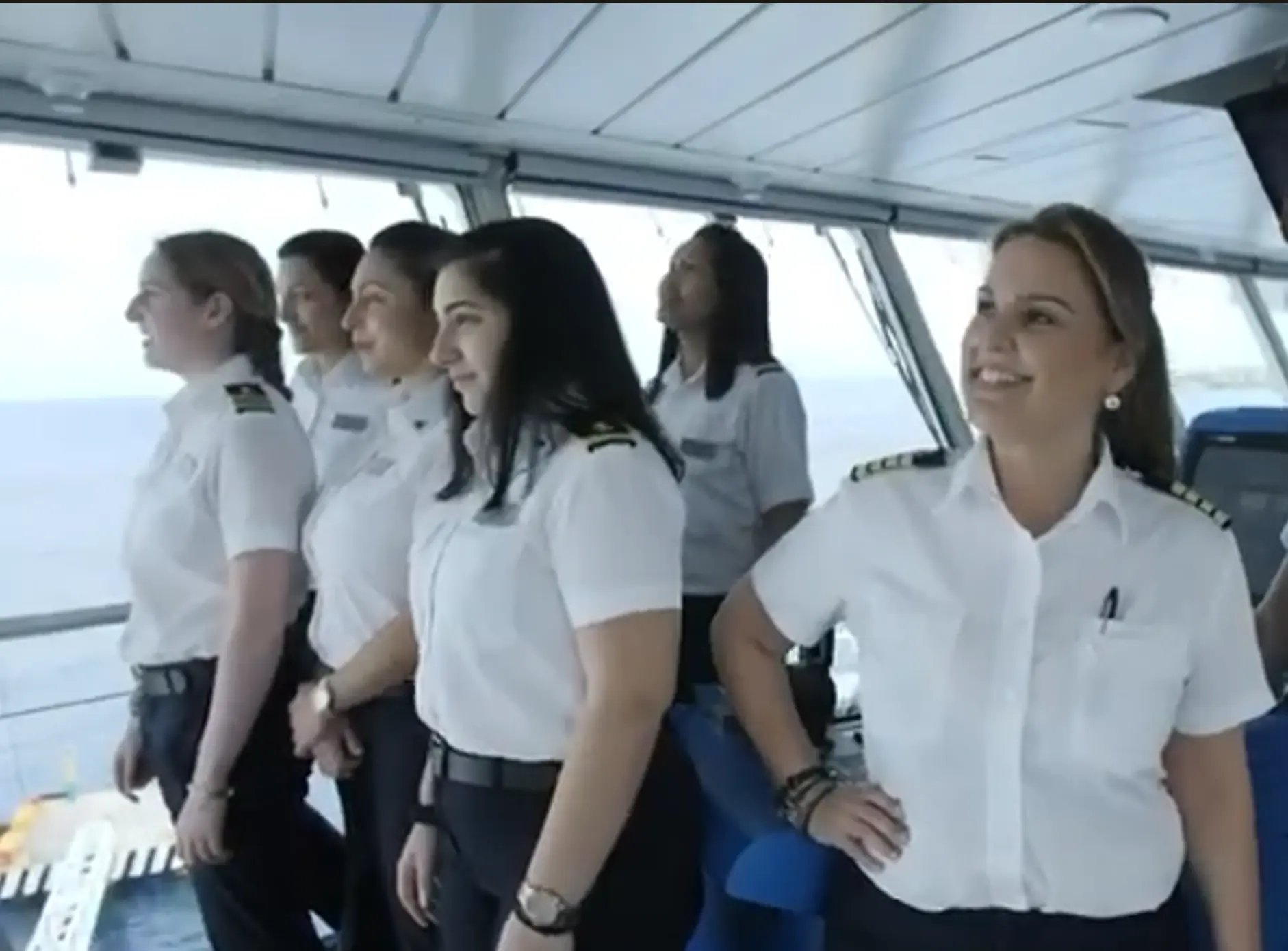
The maritime industry has long been considered a man’s world. For centuries, the image of a sailor, a captain, or a ship’s officer has been overwhelmingly male. Yet, women have always been part of seafaring history, often in the shadows, and today they are increasingly stepping into the light, taking command of vessels, leading engineering teams, and navigating the world’s oceans. From the early pioneers who disguised themselves as men to serve on ships, to the modern-day captains commanding billion-dollar cruise ships, the journey of women in maritime is a story of resilience, determination, and slow but steady progress.
In this post, we will explore two interconnected themes. First, we will examine the broader landscape of women working at sea—the historical context, the current statistics, the challenges they face, and the organizations working to create a more inclusive industry. Second, we will shine a spotlight on a truly historic moment: the day the Celebrity Edge set sail with the first-ever all-female bridge and officer crew, a milestone that captured global attention and inspired a new generation of women to pursue careers at sea. Whether you are a maritime student, a cruise enthusiast, or simply someone who believes in equality and opportunity, this article will provide you with a thorough understanding of why women at sea matter, and why their growing presence is reshaping the future of shipping and cruising.
Women at Sea – A Global Perspective
A Brief History of Women in Maritime
The history of women in maritime is far richer than most people realize. As far back as the 17th, 18th, and 19th centuries, women were present on ships, though their roles were often unofficial and tied to their relationships with men. Historians have identified two main categories of women at sea during this era: those who accompanied their fathers or husbands, and those who chose a seafaring life voluntarily, sometimes disguising themselves as men to gain passage or employment. The latter group included remarkable figures like Mary Patten, who took command of a clipper ship after her husband fell ill, and Grace Darling, who became a national heroine for her role in a dramatic sea rescue. These women mastered navigation, commanded vessels, and saved lives, proving that skill and courage at sea were never exclusively male traits.
For much of the 20th century, however, women were largely excluded from formal maritime employment. Seafaring culture did not welcome women, and the few who managed to ship out as licensed officers on merchant ships were often viewed as strangers or curiosities. It was not until the late 20th and early 21st centuries that women began to gain a more permanent foothold in the industry. The first women entered the commercial shipping industry in significant numbers around the year 2000, and in the 25 years since, they have gradually increased their representation to around 13% of the overall maritime workforce in some sectors. Today, women captain cruise ships as large as small towns and work at the highest levels of the global maritime industry, though they remain a small minority in seafaring roles.
The Current State of Women in Maritime: Statistics and Trends
Despite decades of progress, the numbers tell a story of persistent underrepresentation. According to the International Maritime Organization (IMO), women make up just 1% to 2% of the global seafaring workforce. This figure is even more striking when compared to the broader maritime sector, where women account for approximately 19% of the total workforce, including shoreside roles in shipping companies, ports, and maritime authorities. The gap between shoreside and seafaring representation is significant, and it highlights the unique barriers that women face when they choose a life at sea.
The IMO-WISTA Women in Maritime Survey, published in May 2025, provides the most comprehensive global dataset on women’s participation in the maritime sector. The survey found that women represent just under 19% of the total maritime workforce, or approximately 176,820 individuals in 2024, up from 151,979 in 2021. While this growth is encouraging, the survey also revealed that women make up only 1% of seafarers among the organizations that responded, and just 5% of students pursuing seafaring degrees are women. This last statistic is particularly telling: more women are entering maritime education than are transitioning into seafaring careers, suggesting that retention, not just recruitment, is a critical challenge.
There are also significant regional and sectoral variations. In the offshore sector, for example, companies have reported a much higher proportion of female employees, with some organizations reporting up to 58% women. In the cruise industry, representation is also improving. Celebrity Cruises, for instance, has grown the percentage of women on its bridge teams from just 3% in 2015 to 22% by 2019, and has continued to build on that progress. Carnival Corporation has established a Women Officers Network to support female maritime officers, and other cruise lines have launched similar initiatives. These efforts show that when companies commit to diversity, measurable change is possible.
The Challenges Women Face at Sea
While the statistics reveal a slow upward trend, they also mask the daily realities that women in maritime continue to face. The challenges are multifaceted, ranging from overt discrimination and harassment to more subtle forms of exclusion and bias.
One of the most persistent issues is the gender pay gap. Senior women officers have been found to earn approximately 45% less than their male counterparts, a disparity that reflects both unequal promotion opportunities and discriminatory wage practices. Women are also concentrated in informal, low-wage roles, and they often lack access to the same career advancement pathways as men.
Harassment and violence are another serious concern. Studies have highlighted the high risk of gender-based violence and harassment that women face on board ships, where they may be isolated from support networks and subject to a male-dominated culture that tolerates inappropriate behavior. One seafarer recounted that there was “a lot of alcohol on board ships,” which she felt threatened her personal safety and fostered a lack of respect. The psychological toll of these experiences, combined with the pervasive issue of invisibility—where women’s contributions are overlooked or dismissed—can be profound.
Work-life balance is another significant barrier. The maritime industry’s traditional work patterns, which often require long periods away from home, were designed with men in mind and fail to accommodate the realities of modern families and caregiving responsibilities. This deters both women and men from joining or remaining in the industry, but it disproportionately affects women, who still bear the majority of caregiving duties in most societies. Additionally, women have reported failures in receiving qualified medical care on board, including a lack of medications that account for physiological differences between men and women.
Recruitment bias and lack of promotion opportunities are also well-documented. The IMO’s survey on women in maritime identified recruitment biases and insufficient support for work-life balance as key barriers, noting that more women than men leave before reaching senior positions. The glass ceiling remains firmly in place in many organizations, and women rarely hold roles in ship command.
Organizations and Initiatives Supporting Women in Maritime
In response to these challenges, a growing number of organizations and initiatives have emerged to support women in maritime careers. The International Maritime Organization (IMO) has been a leading force, launching its Women in Maritime programme in 1988 to support women into the sector through training, visibility, and recognition. The IMO has also established regional Women in Maritime Associations (WIMAs) around the world, including PacWIMA in the Pacific, NPWMP-WCA in West and Central Africa, and most recently WIMA Europe. These associations provide networking opportunities, mentorship, and advocacy for women in the industry.
The Women’s International Shipping & Trading Association (WISTA) is another key player. WISTA International works to promote diversity and leadership opportunities across the maritime industry, and it partners with the IMO on research and initiatives such as the Women in Maritime Survey. BIMCO and WISTA have also signed a Memorandum of Understanding to collaborate on sustainability and workforce challenges.
Other organizations include the International Women Seafarers Foundation (IWSF), Women Offshore, which provides resources to foster long-term careers and shares efforts on gender diversity and inclusion, and the International Transport Workers’ Federation (ITF), which launched a dedicated website for women seafarers in 2025. The ITF also launched a helpline to provide female seafarers with access to a trusted, female-led support system. The International Maritime Employers’ Council (IMEC) has launched a $500,000 funding initiative aimed at increasing opportunities for women in commercial shipping and improving their progression and retention at sea.
In the cruise industry, companies have begun to establish their own networks. Carnival Corporation’s Women Officers Network (W.O.N.), launched in 2023, has become a pivotal engagement platform for women officers, including deck, technical, environmental officers, and cadets. These internal networks complement the work of external organizations and provide women with the support and mentorship they need to advance their careers.
The Importance of Visibility and Role Models
One of the most powerful tools for increasing the participation of women in maritime is visibility. As Captain Kate McCue, the first American female cruise ship captain, has said, “You have to see it, to be it”. When young girls and women see female captains, chief engineers, and navigation officers, they are more likely to believe that they can achieve the same. This is why events like the all-female sailing of Celebrity Edge are so important—they provide a highly visible, tangible example of what is possible.
The IMO’s Women in Maritime programme recognizes this, which is why it places such emphasis on visibility and recognition alongside training. The annual International Day for Women in Maritime, observed on May 18, is another initiative designed to raise the profile of women in the sector and promote their recruitment, retention, and sustained employment. By celebrating the achievements of women in maritime and sharing their stories, these initiatives help to shift cultural perceptions and inspire the next generation.
The Historic All-Female Crew of Celebrity Edge
Setting the Scene: Celebrity Edge and the Vision Behind the Milestone
In 2018, Celebrity Cruises introduced Celebrity Edge, a ship that was hailed as a revolution in cruise ship design. With its iconic Magic Carpet, expansive suites, and innovative spaces, Celebrity Edge represented a bold step forward for the brand. But the ship would also become the stage for a different kind of revolution—one that would challenge the gender norms of the maritime industry and capture the world’s attention.
The vision behind the all-female bridge and officer team came from Lisa Lutoff-Perlo, then President and CEO of Celebrity Cruises. Lutoff-Perlo had long been a champion of diversity and inclusion in the cruise industry, and she saw an opportunity to make a powerful statement. “We are all passionate about closing the gender gap,” she said. “Over the last few years, we have worked hard to diversify the crew on board and bring more women than ever into our industry”. Under her leadership, Celebrity Cruises had already made significant strides, growing the percentage of women on its bridge teams from 3% in 2015 to 22% by 2019. But the all-female sailing would be a quantum leap forward.
The Announcement and the Team
On November 19, 2019, Celebrity Cruises announced that it would operate the first-ever sailing with an entirely female bridge and officer team. The historic voyage would take place on International Women’s Day, March 8, 2020, aboard Celebrity Edge. The announcement made headlines around the world and was celebrated by diversity advocates and maritime professionals alike.
The team that would sail on that historic voyage was a remarkable group of women from 17 different countries. At the helm was Captain Kate McCue, who had become the first American female cruise ship captain in 2015. Captain McCue was no stranger to breaking barriers. She fell in love with cruise ships at age 12, enrolled at the California Maritime Academy five years later, and became a captain nineteen years after that. “Excitement does not even begin to describe how I’m feeling about working alongside these incredible, barrier-breaking women on Celebrity Edge for this truly historic sailing,” she said. “I am inspired every day by the amazing women we have working throughout this organization—both on land and at sea. They’re proof that there’s power in diversity”.
Joining Captain McCue were 26 other women, each a leader in her respective field. The team included Staff Captain Maria Gotor from Spain, Hotel Director Niina Hautaniemi from Finland, Guest Relations Director Julie Sherrington from the United Kingdom, F&B Director Byliana Velikova from Bulgaria, Senior Doctor Jennifer Bernardo from the Philippines, Cruise Director Sue Denning from the United Kingdom, Safety Officer Ionela Burduja from Romania, Chief Officer Maria Koliou from Greece, Environmental Officer Maria Karoutsou from Greece, and many others. The full list, which also included Chief Security Officer Mor Segev from Israel, Chief Officer Maria Agius from Malta, and Financial Controller Teresa de Guzman from the Philippines, reflected the global nature of the maritime industry and the diverse talent that women bring to it.
The Historic Sailing: March 8, 2020
On March 8, 2020, Celebrity Edge departed Port Everglades in Fort Lauderdale, Florida, for a seven-day Caribbean journey. The ship was led out to sea by retiring Pilot Boat Captain Cheryl Phipps, one of only a few female pilot boat captains in the United States—a fitting symbol of the day’s significance. As the ship sailed into the Atlantic, it lit up the high seas with a vibrant purple glow, the color associated with International Women’s Day.
The sailing was more than just a symbolic gesture. It was a celebration of women’s achievements in maritime and a powerful statement about what the future of the industry could look like. On board, guests were treated to a series of events that highlighted female achievement, including panel discussions, gallery exhibitions featuring female artists, excursions to women-led businesses in the ports the ship visited, and a cinema series putting female directors, actors, and inspirational narratives center stage. The ship also welcomed trailblazing women from other fields, including Madeline Stuart, the first supermodel with Down syndrome; Kellee Edwards, the first Black woman to host a national adventure travel show; and child prodigy artist Autumn de Forest.
Why This Milestone Mattered
The all-female sailing of Celebrity Edge was historic for several reasons. First, it was the first time in the history of the cruise industry that a ship had sailed with an entirely female bridge and officer team. Every senior officer position—from the captain to the staff captain, chief engineer, and navigation officers—was held by a woman. This was not a token gesture or a partial measure; it was a complete and total demonstration of what women can achieve when given the opportunity.
Second, the event served as a powerful statement for gender equality and diversity in maritime careers. At a time when women made up only about 2% of the world’s mariners, the sight of a fully female bridge team on a state-of-the-art cruise ship was a vivid rebuttal to the assumption that seafaring is a man’s job. It showed that women are not just capable of working at sea—they are capable of leading at sea.
Third, the milestone was a recognition of the growing role of women in STEM (science, technology, engineering, and mathematics) and seafaring professions. The officers on Celebrity Edge were not just figureheads; they were highly qualified professionals who had earned their positions through years of training and hard work. Their presence on the bridge was a testament to the fact that maritime careers offer exciting and rewarding opportunities for women in STEM fields.
Fourth, the event inspired a new generation of maritime professionals. As Captain McCue said, “My hope is that today we inspire a new generation of young girls and women to chart their own course of pushing boundaries and breaking barriers to be whatever it is they want to be”. The images of the all-female crew were shared widely on social media and in the press, and they sent a clear message to girls and young women around the world: if you can see it, you can be it.
The Legacy of the Celebrity Edge Sailing
The historic sailing of Celebrity Edge was not an isolated event. It was part of a broader commitment by Celebrity Cruises and its parent company, Royal Caribbean Group, to increase diversity and inclusion in the maritime industry. In the years since the sailing, Celebrity Cruises has continued to build on its progress. By 2025, the company celebrated achieving 32% female bridge officers, a significant increase from the 3% it had in 2015. Captain Kate McCue has continued to lead the way, and she even led the Celebrity fleet back into operation when Celebrity Edge became the first cruise ship to sail with guests from a U.S. port after the global coronavirus pandemic.
The legacy of the all-female sailing extends beyond Celebrity Cruises. It has become a reference point for the entire cruise industry and a symbol of what is possible when companies commit to diversity. It has inspired other cruise lines to launch their own initiatives to support women in maritime, and it has contributed to a broader conversation about gender equality in the shipping industry as a whole.
Moreover, the event highlighted the importance of mentorship and sponsorship. Many of the women who served on the all-female crew had benefited from the support and guidance of male and female mentors throughout their careers. Lisa Lutoff-Perlo acknowledged this, saying, “None of this could have been possible without the leadership and shared vision of the extraordinary men and women I work with every day”. The success of the sailing was a reminder that gender equality is not a women’s issue—it is a collective effort that requires the commitment of everyone in the industry.
Conclusion: Charting a Course Toward a More Inclusive Future
The story of women at sea is a story of progress, but it is also a story of unfinished business. Women have come a long way from the days when they had to disguise themselves as men to serve on ships. Today, they command cruise ships, lead engineering teams, and navigate the world’s oceans. Yet they remain a small minority in the seafaring workforce, and they continue to face challenges that their male counterparts do not.
The historic all-female sailing of Celebrity Edge was a milestone that showed the world what is possible when women are given the opportunity to lead. It was a powerful statement for gender equality, a celebration of women’s achievements, and an inspiration to a new generation of maritime professionals. But it was also a reminder that there is still work to be done. As Lisa Lutoff-Perlo said on the day of the sailing, “Advancing gender equality in our industry takes a purposeful and focused commitment because it is not easy. This is such meaningful progress and we’re just getting started”.
For those who are considering a career at sea, the message is clear: there has never been a better time to pursue your dreams. Whether you are interested in navigation, engineering, hospitality, or any other aspect of maritime work, there are opportunities waiting for you. The industry needs more women, not just because it is the right thing to do, but because a more diverse workforce is a more competent, safer, and more sustainable one.
For the maritime industry as a whole, the challenge is to build on the momentum of events like the Celebrity Edge sailing and to create lasting change. This means implementing gender-responsive recruitment and retention policies, addressing the gender pay gap, eliminating harassment and discrimination, and creating work environments where women can thrive. It means supporting organizations like WISTA and the IMO’s Women in Maritime programme, and it means celebrating the achievements of women in maritime so that future generations can see what is possible.
The sea has always been a place of adventure, opportunity, and discovery. It is time for it to become a place of equality as well. The women of Celebrity Edge showed us that the future of maritime is female—and that future is already here.