
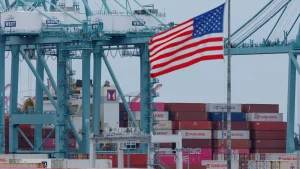
The phrase “U.S. flag fleet” can refer to a specific regulatory category or, more broadly, to the commercial vessels that sail under the flag of the United States. It does not mean every ship owned by an American company, nor does it include only ships that carry domestic cargo. A vessel’s flag determines its state of registration and brings associated legal, safety, labor, and inspection responsibilities. U.S.-flag ships operate in domestic and international trades, while many American companies also charter or operate vessels registered in other countries.
The U.S. maritime presence rests on many types of ships and missions: tankers, container vessels, roll-on/roll-off ships, government sealift vessels, tugboats, ferries, barges, and ships that support offshore energy. The U.S. Maritime Administration (MARAD) tracks the ocean-going, self-propelled merchant fleet that meets specified size criteria. Its fleet dashboard is an authoritative way to understand the current snapshot, but the numbers and categories change as ships are added, removed, sold, or reflagged. The dashboard should be checked directly for the latest count rather than quoting a figure as permanent.
What the U.S. flag means
Flying the U.S. flag is connected to vessel registration and compliance. The United States has laws governing ships engaged in domestic coastwise trade, cargo preference for certain government-supported shipments, and programs that support sealift capacity. The Merchant Marine is not simply a group of private cargo ships; it is part of a broader transportation and national-security system involving vessel operators, ports, shipyards, mariners, regulators, and government agencies.
The Jones Act is often mentioned in discussions of U.S. shipping. In general terms, it reserves transportation of merchandise between U.S. points to vessels that satisfy U.S. build, ownership, documentation, and coastwise endorsement requirements. The exact legal analysis can depend on facts, vessel status, cargo, route, and statutory exceptions. It is not accurate to say that the Act controls all maritime trade involving the United States or prohibits foreign ships from calling at U.S. ports. MARAD describes it as part of the domestic shipping framework, while the statutes and regulations provide the governing details.
Cargo-preference requirements are another part of the picture. MARAD explains that certain cargoes owned, procured, furnished, or financed by the U.S. Government must move on U.S.-flag vessels in specified proportions. This policy supports a pool of commercial ships and mariners that can be available for national needs, while also governing how federal programs procure ocean transportation. Requirements differ among military, civilian, agricultural, and other programs, so shippers must consult official guidance for each shipment.
Chevron Shipping as one example
Chevron Shipping Company provides a useful company-level example of how a large energy business organizes marine transport. Chevron says its shipping company transports crude oil, liquefied natural gas, liquefied petroleum gas, refined products, and chemicals for customers worldwide. Its corporate transportation overview describes a fleet that travels globally and notes that owned and bareboat-chartered ships have double hulls. Chevron’s public information focuses on global operations, cargoes, and safety systems; it should not be confused with a complete registry of U.S.-flagged vessels.
That distinction is important. A company based in the United States may own, charter, or manage ships registered under different national flags, depending on trade, legal requirements, commercial arrangements, and route. The title “The U.S. Flag Fleet: Chevron Shipping and America’s Maritime Presence” places Chevron as an example of a major U.S.-based shipping operation, not proof that its entire fleet is U.S.-flagged. Readers should verify a particular ship’s current flag and ownership through official vessel documentation or the operator’s latest fleet data.
Tankers are central to energy shipping. Very large crude carriers can move substantial quantities over long distances, while product tankers and gas carriers have designs suited to different cargoes. Safe operations require careful cargo segregation, loading and discharge procedures, navigation planning, machinery maintenance, emergency drills, and close coordination with terminals. Double hulls reduce the risk of certain types of cargo release after grounding or collision, but they do not eliminate the possibility of an incident. Prevention and response planning remain essential.
Why the fleet matters
The U.S.-flag fleet supports commerce, government cargo programs, and strategic sealift. In a crisis, ships may transport equipment, fuel, food, or supplies where other modes cannot provide comparable capacity. Commercial mariners bring specialized skills, and ports and shipyards provide infrastructure that is difficult to recreate quickly. MARAD’s programs, including the Maritime Security Program, are intended to maintain certain commercially operated vessels and mariner capacity for national-defense needs. Participation and eligibility vary by program and are published by the agency.
For everyday consumers, the fleet is mostly invisible. Goods arrive through complex chains involving ships, ports, railways, trucks, pipelines, warehouses, and digital scheduling. Maritime transport can move large volumes efficiently, but it depends on dependable terminals, dredged channels, tug assistance, pilots, navigation aids, and weather services. Delays at sea can affect factories, fuel supply, food distribution, and prices. Maritime resilience is therefore an economic issue as well as a defense question.
The size and composition of the U.S.-flag oceangoing fleet have changed over time. Global shipping is highly competitive, and ships can be registered in many countries. The United States maintains domestic trade rules and federal cargo programs, but it also participates in global markets where foreign-flag vessels carry a large share of cargo. This structure produces policy debates about shipbuilding cost, mariner training, port competitiveness, emissions, and the right balance between commercial efficiency and national capacity.
Mariners and maritime careers
Ships depend on professional crews working deck, engine, electrical, cargo, and hospitality roles. Mariners must meet training, licensing, medical, and safety requirements appropriate to their positions. Career pathways include maritime academies, union programs, apprenticeships, and employer training. Work at sea may involve long rotations away from home, challenging weather, and strict safety procedures, but it also offers specialized technical experience and opportunities to travel.
Shore-side roles are equally important: naval architects, port engineers, marine surveyors, dispatchers, vessel schedulers, compliance specialists, safety managers, and shipyard tradespeople all contribute to fleet readiness. The maritime industry faces workforce transitions as ships adopt new propulsion systems, digital navigation tools, and lower-emission technologies. Training needs will evolve alongside regulation and equipment.
Safety and environmental oversight
The flag state has responsibilities for ships registered under its flag, including implementing safety and labor standards. Port states also inspect visiting ships and enforce applicable requirements. International conventions establish baseline rules for pollution prevention, lifesaving equipment, crew competency, and vessel safety. In the U.S., the Coast Guard plays a central role in vessel inspection and port safety, while MARAD focuses on commercial maritime policy and programs. These agencies’ roles are related but not identical.
Environmental concerns include greenhouse-gas emissions, air pollution, ballast-water introductions, underwater noise, spills, and collisions with wildlife. Tankers receive particular attention because a spill can have serious consequences, but containers, bulk cargo, and fuel also pose risks. Operators can improve performance through efficient hulls, route and speed optimization, shore power where available, cleaner fuels, maintenance, and strong safety management systems. Each intervention has tradeoffs, and new fuels require infrastructure and safety standards.
Communities near ports can participate in planning and environmental monitoring. Transparency about ship movements, emissions, spills, and safety incidents supports trust. Emergency exercises help agencies, operators, and local responders understand roles before an event occurs. Preparedness does not mean expecting the worst; it means reducing the time between a problem and an effective response.
How to interpret fleet statistics
When reading a fleet statistic, check its definition and date. Does it include only self-propelled, oceangoing merchant vessels above a tonnage threshold? Are government ships included? Are barges and tugs counted? Does the figure identify ships by flag, owner, operator, or eligibility for a federal program? These distinctions can produce very different totals. MARAD’s dashboard states its scope and update date, making it more useful than an unqualified statement that “the U.S. fleet has X ships.”
Similarly, a company fleet page may combine owned, chartered, managed, and contracted vessels. A charter can be short-term or long-term; a ship may be commercially operated by one company but owned by another. Flag, ownership, management, and commercial control are separate attributes. For a particular voyage or vessel, consult the current company and government record rather than extrapolating from a corporate overview.
A fleet is also a workforce and industrial base
Counting ships alone can obscure the capacity needed to keep a fleet operating. A vessel requires qualified officers, engineers, ratings, shoreside managers, shipyard workers, spare parts, terminals, pilots, and reliable suppliers. When ships are laid up or sold, specialized skills and industrial capacity can also fade. When a vessel is activated for government service or disaster response, it may need trained mariners and port support on short notice. Maritime policy therefore considers the ecosystem behind the hull as well as the hull itself.
Shipbuilding and repair capacity is an important part of that ecosystem. Dry docks, skilled trades, component manufacturers, and design firms support maintenance and modernization. Investment in domestic yards may cost more than sourcing work in some foreign markets, but local capacity can improve control over availability, security, and emergency readiness. The challenge is to maintain a sustainable workload and training pipeline rather than relying on a crisis to rebuild expertise. Federal programs and commercial orders both influence this industrial base.
How maritime capacity is measured and debated
Policy debates often use the phrase “declining fleet,” but that statement needs a defined comparison. One analyst may mean U.S.-flag oceangoing cargo ships; another may include tugs, barges, ferries, coastal vessels, or ships eligible for federal programs. A ship count also says little about carrying capacity, age, readiness, cargo type, or availability for a particular mission. MARAD’s dashboard helps by reporting ship types and program participation for a clearly described subset. Analysts should identify the data date and scope whenever they quote the numbers.
Comparisons with other countries can also mislead if they ignore geography and market structure. Nations differ in domestic trade rules, shipbuilding policy, export profile, port systems, and the share of cargo moved by sea. A larger fleet is not automatically more resilient if it lacks trained crews, repair capacity, or access to terminals. Conversely, a smaller fleet may retain strategic value if it is integrated with sealift planning and can be activated reliably. Capacity is a system property rather than a simple count.
Legislative choices involve tradeoffs among cost, jobs, resilience, competition, and security. Domestic shipping requirements can support U.S. mariners and shipyards but may affect freight rates and route availability. Cargo-preference programs create demand for U.S.-flag carriage on eligible government cargoes, while the Maritime Security Program provides support to designated commercial vessels in return for participation in defense planning. Each program has statutory terms, eligibility conditions, and performance goals. Readers should consult current MARAD guidance and underlying law rather than relying on slogans about what a policy does.
The public has a stake in these decisions because maritime readiness can shape disaster response and supply reliability. Congress and agencies set budgets and eligibility rules, but communities also influence port expansion, pollution controls, workforce training, and emergency plans. A balanced conversation asks both whether the country has enough capacity for critical needs and whether ships operate safely and responsibly. Those questions are connected: a fleet that loses public trust or cannot recruit skilled workers will be less resilient over time.
Ports are another strategic asset. Deep channels, cranes, rail links, secure terminals, fuel systems, and resilient power all determine which ships can be served. Port congestion or a cyber incident can interrupt movement just as surely as bad weather. Preparedness now includes physical security, cybersecurity, backup power, and coordination across public and private operators. Because many terminals are privately owned but serve public trade, cooperation is essential.
Fleet policy also has to account for changing technology. Alternative fuels may reduce emissions but can require new storage, training, and firefighting systems. Wind-assist, battery hybridization, and more efficient engines may fit some routes but not others. Digital tools improve tracking and maintenance while creating new cyber risks. A durable maritime strategy tests promising options while ensuring that safety, crew competency, and infrastructure keep pace.
Frequently asked questions
Does a U.S.-owned company always use U.S.-flag vessels? No. Ownership and vessel flag are distinct. A company may operate ships under multiple flags depending on its business and the relevant rules.
Does the Jones Act apply to every ship entering a U.S. port? No. It generally concerns merchandise transportation between U.S. points and has defined requirements and exceptions. International voyages and port calls are governed by other rules as well.
Is Chevron Shipping’s fleet the same as the U.S.-flag fleet? No. Chevron Shipping is a global operator transporting energy products. Its fleet details should be distinguished from MARAD’s official count of qualifying U.S.-flag merchant vessels.
Where can I find current fleet numbers? MARAD’s U.S.-flag fleet dashboard publishes a dated snapshot and explains the vessels it counts. Consult that page for current figures.
America’s maritime presence is a network, not a single fleet list. U.S.-flag vessels, foreign-flag ships calling at American ports, domestic coastwise carriers, government sealift programs, and global operators such as Chevron Shipping all play different roles. Clear distinctions help avoid common misconceptions: flag is not the same as ownership, a corporate fleet is not automatically a national fleet, and domestic shipping rules do not govern every ocean voyage. The larger question is how the United States sustains safe, competitive, and strategically useful maritime capacity while reducing environmental impacts and supporting skilled mariners.
Sources and further reading
- MARAD: U.S.-flag fleet dashboard
- MARAD: National security and maritime transportation
- MARAD: Cargo preference
- Chevron: Shipping operations and fleet
- Chevron: Transportation operations