
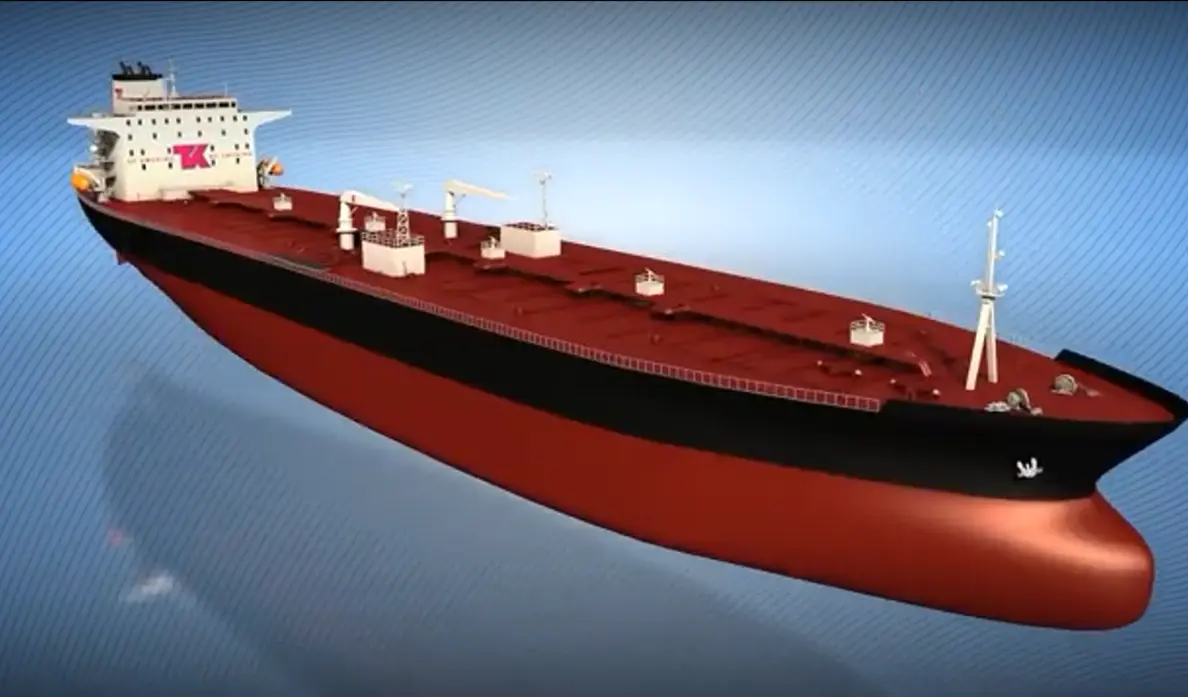
Discover how modern tanker design can cut fuel use and greenhouse-gas emissions through hull optimisation, efficient propulsion, digital tools and future-ready fuels.
The future tanker will not be transformed by one magical device. It will become cleaner through a better combination of naval architecture, machinery, operational intelligence and fuels.
That is the real message behind many videos showing a “revolutionary” tanker design. A new vessel may look familiar from a distance: a long hull, cargo tanks, a bridge and a large main engine. Yet under the surface, small and carefully connected improvements can reduce the energy needed to move every tonne of cargo across the sea.
For tanker owners, charterers, engineers and seafarers, this matters. Fuel remains a major operating cost, while carbon-intensity rules and customer expectations are becoming more demanding. A tanker that needs less power for the same voyage can reduce fuel consumption, lower emissions and give its operator more flexibility.
But green tanker design must remain practical. Tankers carry liquid cargoes safely, operate in varied weather, call at terminals with strict requirements and may need to remain in service for decades. The best designs balance efficiency with safety, reliability, cargo capability and maintainability.
Why tanker design matters in the energy transition
Tankers are essential to global trade. They carry crude oil, refined products, chemicals and, in dedicated trades, other liquid cargoes. Their scale makes every percentage point of fuel saving important. If a large tanker reduces its required propulsion power on a long voyage, the benefit can be repeated on every passage and across an entire fleet.
Shipping has made efficiency gains for many years, but the pressure to improve is now stronger. IMO’s 2023 GHG Strategy sets an ambition to reach net-zero greenhouse-gas emissions from international shipping by or around, meaning close to, 2050. It also includes indicative checkpoints for 2030 and 2040. The strategy is not a design recipe for one tanker; it is a signal that ships, fuels, ports and operations must change together.
For tankers, the transition is especially complex. Some cargoes remain closely linked to the world’s energy system. At the same time, tanker owners must prepare for lower-carbon fuels, better energy efficiency, more transparent emissions reporting and possibly changing trade patterns. A new tanker ordered today should not only meet today’s rules. It should avoid becoming difficult or expensive to operate in the years ahead.
What makes a tanker “revolutionary”?
In reality, revolutionary tanker design usually means an integrated design. It brings several proven or emerging measures together and makes them work as one system. The most important areas are:
- A hull form that creates less resistance in the water
- A propeller and propulsion train designed for the vessel’s real operating profile
- Engines and auxiliary systems that waste less energy
- Onboard energy-saving devices and heat-recovery solutions where suitable
- Digital tools that support better speed, route and machinery decisions
- A fuel and machinery arrangement that can adapt to lower-GHG energy pathways
- Cargo and safety arrangements that remain fully fit for the tanker trade
This is not only about installing new equipment. A duct, propeller upgrade or air-lubrication system may work well on one vessel but deliver less value on another. The vessel’s speed, draught, hull geometry, trade pattern, sea condition, maintenance quality and fuel choice all influence the result.
Watch this video and subscribe to our YouTube channel:
Start with the hull: reducing resistance before adding power
The cleanest unit of energy is the unit a ship does not need to use. That is why hydrodynamic design is often the first and most valuable part of an efficient tanker concept.
As a vessel moves through water, it must overcome frictional resistance along the hull, wave-making resistance, resistance from appendages and losses linked to flow around the propeller and rudder. A modern hull is shaped to manage these forces more effectively at the speed and draught at which the tanker will actually operate.
Smarter hull-form optimisation
Computational fluid dynamics, model testing and operational data allow designers to assess a hull in far more detail than in the past. The bow, stern, bulbous bow, underwater body and propeller inflow can be refined to reduce unnecessary disturbance to the water.
The aim is not simply to create the lowest resistance in one perfect test condition. Tankers rarely sail in one condition. They operate loaded and in ballast, in calm seas and rougher weather, at different trim conditions and sometimes at reduced speeds. Good design seeks reliable performance across the vessel’s likely operating range.
For example, a bulbous bow designed only for one speed and draught may not provide the expected gain in another condition. The design process must reflect real trading patterns rather than an attractive brochure number.
Trim and draught awareness
Even a well-designed tanker can waste fuel if it sails in an inefficient trim. The way the ship sits in the water changes wetted area, wave formation and propeller inflow. Digital trim-optimisation tools can help crews and shore teams choose a better condition, provided that safety, stability, stress limits, visibility and cargo requirements always come first.
This is an example of a wider principle: the ship’s physical design and daily operation must support each other. A future-ready tanker is designed for efficiency, but it is also operated with discipline.
Propeller, rudder and energy-saving devices
The propeller is where engine power becomes thrust. Improving the interaction between hull, propeller and rudder can offer meaningful fuel savings without changing the basic purpose of the tanker.
Possible solutions include pre-swirl ducts, wake-equalising devices, fins, propeller boss-cap fins, improved rudder bulbs, high-efficiency propellers and other flow-improvement devices. These should not be chosen by fashion. They must be assessed for the particular hull and operating profile.
An energy-saving device can improve water flow into or out of the propeller. In the right application, this can reduce losses and allow the vessel to maintain speed with less shaft power. Yet installation, structural integration, dry-docking needs, fouling risk, maintenance and potential vibration effects also need careful review.
Air-lubrication systems are another option. They create a layer of air bubbles or a more continuous air layer beneath parts of the hull to reduce frictional resistance. The potential can be significant on suitable ships, but performance depends on hull form, sea state, draught, compressor energy demand and how the system is operated. It is a design and operations decision, not a universal answer.
Efficient propulsion: right-sized, not simply more powerful
Traditional tanker thinking often valued generous power margins. Safety margins remain essential, but an efficient design asks a more precise question: what power is required for safe, reliable service across the ship’s expected operating profile?
The answer affects engine selection, propeller design, gearbox arrangements, shaft-generator choices and the possible use of shaft-power limitation or power-management measures. The objective is to avoid running machinery inefficiently for long periods while preserving the power needed for manoeuvring, heavy weather and safety-critical situations.
Main engine and machinery optimisation
Large two-stroke engines remain highly efficient for many tanker trades. Their performance can be improved by matching the engine, propeller and expected service speed more closely. Engine de-rating, variable turbocharger arrangements, waste-heat recovery and advanced control systems may all form part of a project, depending on vessel size and duty cycle.
Auxiliary machinery also matters. Pumps, fans, compressors, separators, boilers and generators consume energy every day. Variable-speed drives, better control logic, efficient pumps and reduced unnecessary hotel load can lower the ship’s overall fuel demand. On tankers, these choices must be made without compromising cargo operations, inert-gas systems, heating requirements, redundancy or emergency readiness.
Waste-heat recovery
A conventional engine releases a large share of fuel energy as heat. Waste-heat recovery seeks to use part of that energy for electricity, heating or other useful duties. On larger tankers with sufficient running hours and a suitable load profile, this can be attractive. On other ships, the capital cost, maintenance needs and operational complexity may outweigh the gain.
The practical test is simple: the technology should save energy across the ship’s real life, not only in a design study.
Lower-GHG fuels: design for flexibility, not guesses
Alternative fuels are central to the long-term climate discussion, but tanker owners face real uncertainty. Fuel availability, price, safety requirements, bunkering infrastructure, lifecycle emissions and customer acceptance differ by region and trade.
Potential pathways include biofuels, liquefied natural gas, methanol, ammonia, hydrogen-derived fuels and, in the longer term, other synthetic or renewable fuels. Each has benefits and challenges. A fuel may lower carbon dioxide emissions at the exhaust, but its wider climate effect depends on how it is produced and transported. Methane emissions and nitrous oxide, for example, matter in a full greenhouse-gas assessment.
IMO’s lifecycle GHG approach is important because it looks beyond the ship’s funnel. It considers well-to-wake emissions, including carbon dioxide, methane and nitrous oxide. For shipowners, this means future fuel choices should be assessed on credible lifecycle data, not only on what is visible at sea.
No single fuel suits every tanker immediately. A sensible newbuilding strategy may include fuel readiness: space, structural allowances, pipe routes, tank locations, ventilation, safety zones, control-system capability and class approvals that keep future conversion options open. This can be more realistic than installing an immature fuel system before the fuel supply chain is available.
Electrification and onboard power management
Tanker propulsion on long ocean passages will not become fully battery-electric in the near term. The energy required is too large for most deep-sea routes. However, electrification can still have an important role.
Battery systems can support peak shaving, spinning-reserve reduction, improved generator loading, smoother power response and, in some cases, port or short-duration operations. Shaft generators, power take-in/power take-off arrangements, hybrid auxiliary systems and shore power can also reduce fuel use where the vessel’s profile supports them.
For tankers, every electrical and battery solution must be designed with the cargo hazard environment in mind. Hazardous-area classification, ventilation, fire protection, redundancy, emergency response and crew competence are not afterthoughts. They are part of the design from the beginning.
Digital design and smarter operation
The most efficient tanker is not only well built; it is well informed. Sensors, performance-monitoring systems and voyage data can show whether the vessel is achieving the expected efficiency and where losses are developing.
Useful digital applications include:
- Hull and propeller performance monitoring
- Fouling detection and dry-docking planning
- Weather routing and speed optimisation
- Trim and draft decision support
- Main-engine and generator performance monitoring
- Predictive maintenance for pumps, compressors and rotating equipment
- Energy-efficiency dashboards linked to the ship’s management plan
Data must be trusted before it can guide decisions. Sensors need calibration, data must be interpreted in context and crews should understand what a warning means. A dashboard cannot replace professional judgement on a bridge or in an engine room. Its value is to help people see trends early and make better decisions.
EEXI, CII and the IMO climate pathway
| Measure or framework | What it focuses on | Why a tanker operator should care |
|---|---|---|
| EEXI | The technical energy-efficiency performance of an existing ship | It is linked to the vessel’s design and technical file. |
| CII | Annual operational carbon intensity and rating | It focuses attention on how the vessel is actually operated over the year. |
| SEEMP | The ship’s energy-efficiency management planning | It provides the framework for monitoring and improving operation. |
| IMO 2023 GHG Strategy | International shipping’s direction of travel | It aims for net-zero GHG emissions by or around 2050, with 2030 and 2040 checkpoints. |
| Draft IMO Net-Zero Framework | Proposed global fuel standard and GHG-pricing mechanism | It was approved as draft text in 2025, but adoption discussions were adjourned to 2026; it is not yet binding. |
EEXI and CII became mandatory from 1 January 2023 under MARPOL Annex VI for ships within their scope. EEXI is mainly a technical design measure, while CII is annual and operational. A ship can therefore need both sound engineering and sound operation.
The future policy direction is clear, but individual regulations still need to be followed carefully as they are adopted and implemented. The IMO Net-Zero Framework was approved in draft form at MEPC 83 in April 2025. Formal adoption discussions in October 2025 were adjourned for one year. It should not be described as a binding rule in force today.
Tanker safety cannot be traded for efficiency
There is a danger in discussing green design as if fuel saving is the only objective. It is not. Tanker ships are safety-critical systems. Cargo containment, inerting, cargo pumping, fire protection, navigation, structural strength, stability, pollution prevention and crew safety remain fundamental.
An efficient propeller is of little value if it causes unacceptable vibration. A low-carbon fuel arrangement is not successful if it creates an unmanaged safety risk. A speed-reduction plan cannot be allowed to undermine safe manoeuvring or the ability to respond to heavy weather.
The strongest designs treat safety and efficiency as connected. Better machinery reliability prevents unplanned fuel waste and operational disruption. Better maintenance protects both performance and safety. Skilled crews help systems perform as intended. The greenest tanker is not a fragile experiment; it is a robust ship that uses energy carefully.
From concept to real fleet performance
Before committing to a new design or retrofit, an owner should ask practical questions:
- What is the vessel’s true operating profile? Consider laden and ballast passages, service speed, waiting time, weather routes, cargo heating, port stays and likely trading areas.
- What baseline data is available? Fuel, speed, power, weather and maintenance data are needed to judge whether an improvement is real.
- Does the technology work as a system? Check compatibility with the hull, propeller, machinery, cargo operation and crew workload.
- How will it be maintained? Savings can disappear if the equipment is difficult to inspect, clean, repair or operate correctly.
- What fuel pathway is credible for the trade? Consider lifecycle emissions, supply, safety requirements, price and conversion options.
- Will the ship remain commercially useful? Regulatory compliance, charterer expectations, cargo flexibility and port infrastructure all matter.
This approach helps distinguish a genuine innovation from a visually impressive concept that is difficult to operate in the real world.
Final takeaway
Revolutionary tanker design is not about making tankers unrecognisable. It is about making every part of the vessel work more intelligently: a hull that needs less power, a propeller that converts more of that power into thrust, machinery that wastes less heat and fuel, operations guided by good data, and a design that can adapt to cleaner fuels.
The most successful tanker of the next decade will likely combine several measures rather than rely on one headline technology. It will be efficient in calm water and resilient in real weather. It will be safe to operate and maintain. And it will give owners a credible route toward lower emissions as regulations, fuels and markets continue to evolve.
That is where green shipping innovation becomes meaningful—not in a slogan, but in a vessel that carries cargo safely while using less energy on every voyage.
Further reading
- IMO: 2023 Strategy on Reduction of GHG Emissions from Ships
- IMO: EEXI and CII
- IMO: Lifecycle GHG intensity of marine fuels
- IMO: Net-Zero Framework FAQs
Editorial note: This article is for general maritime education. Technology selection, fuel choice and regulatory compliance should always be evaluated for the individual vessel, trade and applicable requirements.