
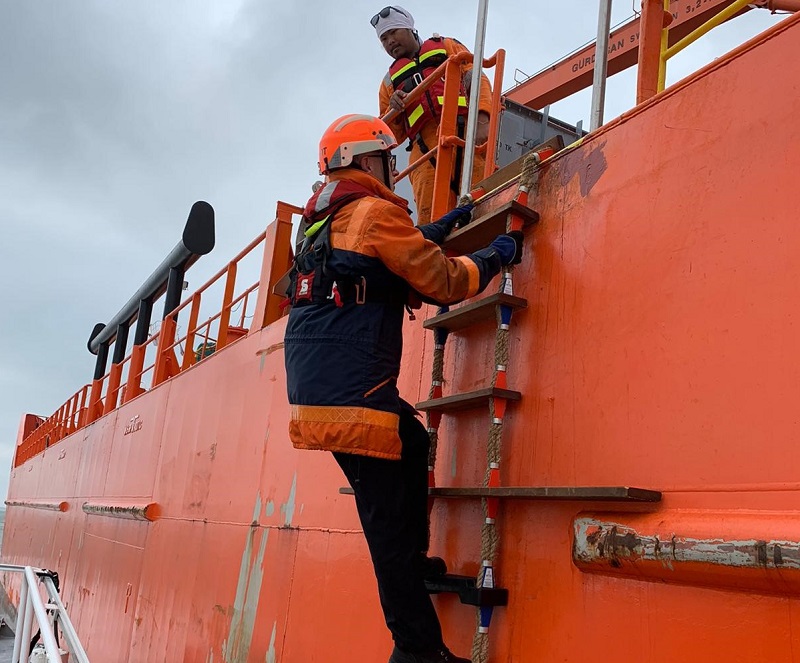
A maritime pilot often boards a moving ship from a small pilot boat in open water, sometimes at night or in difficult weather. The pilot must transfer between two vessels that are moving independently, climb a ladder and step safely onto the ship. Although the operation may last only a few minutes, a small defect or misunderstanding can have serious consequences.
Safe pilot embarkation depends on much more than lowering a ladder. It requires suitable equipment, careful preparation, effective communication and cooperation between the pilot, pilot boat crew, bridge team and personnel at the boarding station. The same attention is needed when the pilot disembarks after completing the passage.
This article explains the main challenges of pilot transfer, the responsibilities of those involved and practical measures that support a safe operation. It also outlines the international regulatory framework and forthcoming changes to pilot transfer requirements.
Note: This article is educational and does not replace applicable regulations, the vessel’s approved procedures, manufacturer’s instructions, flag-state requirements or local pilotage directions. Transfer arrangements and operational decisions must be appropriate to the particular ship and conditions.
Why Do Ships Take a Maritime Pilot Onboard?
A maritime pilot is a qualified professional with local knowledge of a particular port, waterway or approach. Pilots assist the master and bridge team with navigation in areas where local conditions, traffic patterns, tides, currents, berth arrangements and other hazards require specialised knowledge.
Pilotage may be compulsory in certain areas, depending on local legislation and the vessel’s characteristics. Even where it is not compulsory, a pilot may provide valuable support. The pilot’s local expertise complements the ship’s officers’ knowledge of their own vessel, its machinery and its manoeuvring characteristics.
Before that expertise reaches the bridge, however, the pilot must board safely. The transfer is therefore an essential part of the pilotage operation, not merely a routine formality.
Why Is Pilot Embarkation So Challenging?
Pilot transfer usually takes place while the ship and pilot boat are making way or otherwise moving in relation to each other. Waves, swell, wind and current can cause sudden changes in relative position. The pilot boat can rise and fall alongside the ship while the pilot is stepping onto the ladder.
The pilot must then climb while wearing personal protective equipment and carrying any essential equipment. At the top, the pilot needs to move from the ladder to the ship’s deck through a safe access point. Poorly positioned handholds, a slippery deck or an obstruction can make that final movement especially difficult.
Other challenges include darkness, heavy rain, spray, inadequate lighting, fatigue, communication difficulties and pressure to maintain a schedule. Large ships may have high freeboards, while changes in draught and trim can affect the required arrangement. Each transfer needs to be assessed using the actual conditions rather than assumptions based on previous calls.
The International Framework for Pilot Transfer Safety
The principal international requirements are found in SOLAS Chapter V, Regulation 23, which addresses pilot transfer arrangements. They are supported by IMO guidance, relevant standards, flag-state implementation and local requirements. The International Maritime Pilots’ Association (IMPA) also publishes practical illustrations and guidance used across the industry.
The IMO has adopted amendments to SOLAS Regulation V/23 and associated performance standards through resolutions MSC.572(110) and MSC.576(110). These measures are scheduled to enter into force on 1 January 2028. The amendments include transitional provisions, so the applicable requirements depend on the installation and relevant dates. As of November 2026, the existing framework remains important, and the future provisions should not be treated as already in force.
Ship operators should consult the flag administration, official IMO instruments and applicable local guidance when evaluating a specific arrangement. A poster or article can support familiarisation, but it cannot replace the detailed requirements and ship-specific documentation.
The Main Types of Pilot Transfer Arrangement
The arrangement used depends on the vessel’s design, the distance to the water, prevailing conditions and applicable requirements. It should be properly approved or accepted as required, correctly rigged and maintained.
Pilot ladder
A pilot ladder consists of steps supported by side ropes and fitted with spreaders at required intervals. It is designed to hang against the ship’s side so that a pilot can climb between the pilot boat and the ship’s access point.
The ladder must be in good condition and correctly secured. Damaged steps, deteriorated ropes, makeshift repairs or an unsuitable securing method can create an immediate danger. The pilot ladder should be positioned so it can hang properly against the ship’s side, clear of discharges and obstructions, as required for the arrangement.
Combination arrangement
Where the boarding height requires it, an accommodation ladder may be used together with a pilot ladder in a combination arrangement. The arrangement must allow a safe transition between the two ladders and comply with the applicable technical requirements. Particular attention is needed where the pilot passes through or near an accommodation-ladder platform or trapdoor.
The pilot ladder’s securing, its position relative to the platform, the handholds and the condition of the lower platform all matter. An arrangement that appears convenient to the crew can still be unsafe if it does not conform to the approved design and applicable standards.
Other approved arrangements
Certain ships may use other arrangements permitted by the applicable rules, including approved mechanical systems where authorised. Their operation, inspection and maintenance must follow the relevant requirements and manufacturer’s instructions. Crew should never assume that a particular arrangement is acceptable merely because it has been used before.
Before the Pilot Boat Arrives: Preparation and Planning
Preparation should begin well before the ship reaches the boarding position. The bridge team should establish the expected time, boarding location, side, speed and any particular local requirements with the pilot station or pilot boat. These details may change with weather, traffic, vessel movements or instructions from the pilot service.
The master and responsible officers should consider the vessel’s present draught, freeboard, trim and any circumstances that may affect the transfer. The crew must select the appropriate arrangement and have enough time to inspect and rig it correctly. Changes in ballast or loading can alter the height of the access point above the water.
The boarding station should be clear, accessible and properly illuminated when necessary. Lighting must help the pilot and crew see the ladder and access point without creating glare that interferes with navigation or the pilot boat’s operation. Overboard discharges and other shipboard activities that could endanger the pilot boat or pilot must be controlled in accordance with the ship’s procedures and the applicable requirements.
Preparation should also include a review of emergency equipment, communications and the response to a person overboard. Appropriate lifesaving equipment should be ready at the transfer position, as required by the rules and the vessel’s procedures.
Inspecting the Pilot Ladder and Access Point
A responsible officer and trained crew should check the arrangement before use and report defects. Inspection includes the condition of the steps, spreaders, ropes, securing points and any associated equipment. Crew should look for signs of wear, damage, contamination, deformation or unauthorised repairs.
The entire load path matters: a ladder in good condition is not safe if the securing arrangement or supporting structure is defective. The crew should follow the approved method for securing and rigging; improvised knots, unsuitable attachments or modifications can undermine the arrangement. Use and inspection records should be maintained as required by company and flag-state procedures.
At the deck access point, check that handholds and any stanchions or bulwark arrangements are properly secured and usable. The pilot must be able to move safely between the ladder and the deck. The access route should be free of trip hazards, loose objects and slippery surfaces.
If a defect is found, report it and resolve it before the transfer. Substituting an unapproved repair or hoping the ladder will be used only once is not an acceptable approach to safety.
Roles and Responsibilities During Pilot Transfer
The master and bridge team
The master is responsible for the overall safety of the vessel and for ensuring that a suitable transfer arrangement and procedures are in place. The bridge team coordinates with the pilot boat, controls the ship’s movement and monitors weather, traffic and navigational hazards.
The bridge must know when the pilot boat is approaching, when the pilot is on the ladder and when the pilot is safely aboard or clear of the ship. Communications with the boarding station should remain reliable throughout the operation. If conditions become unsafe, the master should reassess the situation with the pilot service and take appropriate action.
The officer and crew at the boarding station
A responsible officer should supervise the transfer in accordance with applicable requirements and remain in communication with the bridge. Trained crew prepare and check the equipment, keep the access area clear and stand by to assist as appropriate.
They should observe the pilot boat and pilot, communicate any difficulty immediately and know the emergency response. Crew should not distract the pilot or introduce a new hazard by attempting to handle the pilot or equipment in an uncontrolled manner.
The pilot and pilot boat crew
The pilot and pilot boat crew assess the approach and transfer from their position. Local procedures, professional judgment and the pilot boat’s operating limits are essential. A pilot who identifies an unsafe arrangement or unacceptable conditions may delay or decline the transfer until the issue is resolved.
Safety depends on cooperation. The ship and pilot service should communicate concerns clearly and agree a practical way forward rather than allowing schedule pressure to dictate the operation.
Communication: A Critical Safety Barrier
Many transfer problems begin with incomplete or misunderstood information. The ship may rig the ladder on the wrong side, set the access at an unsuitable height or misunderstand a change in the pilot boat’s approach.
Before transfer, confirm the agreed boarding side, speed, position, expected time and arrangement using the agreed communication channel. At the boarding station, crew should have a reliable means of speaking with the bridge. Orders and changes should be acknowledged and repeated when needed.
During the operation, short messages are often best: “Pilot boat approaching,” “Pilot on ladder” and “Pilot safely on deck” communicate the progress of the transfer. If there is uncertainty, the team should clarify it immediately. The aim is a shared understanding between the ship, pilot boat and pilot.
Weather, Sea State and the Ship’s Lee
Wind, sea and swell do not always come from the same direction. A ship may provide shelter from the wind while a swell continues to affect the pilot boat. The quality of the lee also depends on the ship’s heading, speed, size and the position of the boarding station.
The master and pilot boat should agree on a suitable approach while considering navigational safety, traffic and available sea room. There is no single heading or speed that is correct for every vessel and every pilot station. A change intended to improve shelter must not create a separate collision or grounding risk.
If the pilot boat is moving excessively, the ladder cannot be used safely or the required lee cannot be maintained, the operation may need to be delayed, moved or otherwise reassessed. A decision to postpone a transfer can prevent a serious accident.
Night Operations and Poor Visibility
Darkness reduces the ability to judge distance, relative movement and the condition of the boarding area. Rain and spray can further reduce visibility and make steps and handholds slippery. Fatigue may also affect concentration, particularly during long port approaches or operations at unusual hours.
A properly illuminated ladder and access point, clear communications and careful supervision are especially important at night. Lighting should be checked before the pilot boat approaches. The bridge team must also maintain an appropriate lookout and continue to comply with the applicable collision regulations while concentrating on the transfer.
Safe Transfer at the Ship’s Side
Once the pilot boat is alongside, the relative motion between the vessels remains a major hazard. The pilot needs a clear and properly rigged ladder and a safe opportunity to transfer. The ship’s crew should monitor the operation without placing themselves in danger.
Bags and portable equipment should be handled using the agreed safe method. Crew should not leave loose gear in the access route or attempt improvised lifting arrangements. The pilot’s movement from ladder to deck deserves the same attention as the climb itself.
After the pilot is safely aboard, the bridge should be informed. The pilot should then be guided safely to the bridge, particularly if the route passes through unfamiliar or poorly lit areas. The boarding equipment remains subject to the ship’s procedures for recovery, inspection and stowage.
The Master–Pilot Exchange After Embarkation
The transfer is complete when the pilot is safely onboard, but the pilotage operation is only beginning. The master and pilot should exchange information about the planned route, vessel characteristics, machinery status, manoeuvring limitations, weather, traffic, tugs and berth arrangements.
The pilot’s local knowledge and the bridge team’s knowledge of the ship must be brought together. The presence of a pilot does not remove the master’s responsibility for the ship or the bridge team’s duty to monitor the passage. If the pilot’s proposed plan differs from the ship’s passage plan, the difference should be discussed and resolved.
Clear roles, communication and monitoring reduce the risk of misunderstandings during the subsequent navigation. A safe pilot transfer and an effective master–pilot exchange are connected parts of the same operation.
Pilot Disembarkation: The Return Transfer
Disembarkation deserves the same planning and supervision as embarkation. Conditions may have changed during the passage: it may now be dark, the weather may have worsened or the ship may have a different draught and freeboard.
Before reaching the disembarkation point, the bridge and crew should confirm the arrangements with the pilot and pilot boat, inspect and rig the equipment, and prepare the boarding station. The pilot boat should not be assumed to have the same position or movement as during boarding.
Continue monitoring until the pilot is safely on the pilot boat and the boat is clear. Only then should the ship proceed with the next stage according to the agreed plan and prevailing navigational circumstances.
Common Problems and Practical Lessons
A common problem is a ladder that is damaged, poorly maintained or incorrectly secured. Regular inspection, correct stowage and timely replacement help prevent defects from being discovered only when the pilot boat is already alongside.
Another is an unsafe transition at a combination arrangement or deck access point. Crews should use the approved arrangement, inspect the full route and compare it with current official illustrations and flag-state guidance. Familiarity should never replace a proper check.
Communication failures can be reduced by confirming instructions and maintaining contact between the bridge, deck station and pilot boat. Pressure to save time should be challenged when it prevents proper preparation or encourages a transfer in unsuitable conditions.
Finally, procedures need practice. Drills, onboard discussions and reviews of lessons learned can help a crew recognise defects, communicate concerns and respond effectively if something goes wrong.
What Should Happen If a Person Falls Into the Water?
A person-overboard situation requires immediate action under the vessel’s emergency procedures. Raise the alarm, inform the bridge and pilot boat, maintain visual contact if possible, and deploy appropriate lifesaving equipment as trained and required.
The master and pilot boat crew must coordinate their response while considering the movement of both vessels, propellers, weather and the person’s position. Rescue actions should follow the ship’s and pilot service’s established procedures; no generic manoeuvre is suitable for every situation. Emergency services and relevant authorities should be contacted as appropriate.
Preparation before the transfer makes a difference. Crew should know their assigned duties, the available equipment and the communication arrangements before an emergency occurs.
Frequently Asked Questions
Who is responsible for providing a safe pilot transfer arrangement?
The ship must provide an arrangement that meets the applicable requirements, and the master and crew are responsible for its safe preparation and use. The pilot and pilot boat crew also have important roles in assessing and conducting the transfer.
Can a pilot refuse to board an unsafe ladder?
A pilot can raise a safety concern and decline or delay a transfer when the arrangement or conditions are unsafe. The parties should communicate the problem and agree an appropriate response under local procedures.
Is a pilot ladder enough for every ship?
No. The arrangement depends on factors including boarding height, ship design and the applicable rules. Some situations require a combination arrangement or another authorised system.
Are the 2028 IMO requirements already in force?
As of November 2026, the adopted amendments and associated standards are scheduled to enter into force on 1 January 2028. Operators should examine the detailed transitional provisions and consult their flag administration.
Does the pilot take command of the ship after boarding?
The pilot provides professional local navigation advice within the applicable pilotage framework. The master remains responsible for the ship, and the bridge team must continue to monitor the passage.
Conclusion
Pilot embarkation is a demanding operation that brings together a moving ship, a smaller pilot boat and a person transferring between them. Safe equipment is essential, but it must be supported by sound preparation, supervision, communication and the willingness to reassess when conditions change.
When masters, ship crews, pilots and pilot boat crews work together, they can reduce avoidable risks and create the foundation for safe navigation throughout the pilotage passage. The same care should be applied every time the pilot leaves the ship.
Sources and Further Reading
- International Maritime Organization: Pilotage
- IMO: SOLAS amendments on pilot transfer arrangements, Resolution MSC.572(110)
- IMO: Performance standards for pilot transfer arrangements, Resolution MSC.576(110)
- IMO: Required boarding arrangements for pilots, MSC.1/Circ.1428/Rev.1
- International Maritime Pilots’ Association: Required pilot transfer arrangements
Pilots on Board Ships: A Critical Role in Maritime Navigation