
10/12/2026
The International Maritime Organization (IMO) has adopted a new framework for the use of Remote Inspection Techniques (RIT) in surveys of bulk carriers and oil tankers under the 2011 ESP Code, effective from 1 January 2028. This framework, established through Resolution MSC.584(111) and supported by the Guidelines on the Use of Remote Inspection Techniques for ESP Code Surveys (MSC.1/Circ.1700), introduces comprehensive standards for RIT certification, survey planning, execution, reporting, and service supplier approvals. The amendments allow RIT to serve as an alternative means of access for close-up surveys and thickness measurements, applying to periodical surveys that commence on or after the effective date regardless of a ship’s construction date.
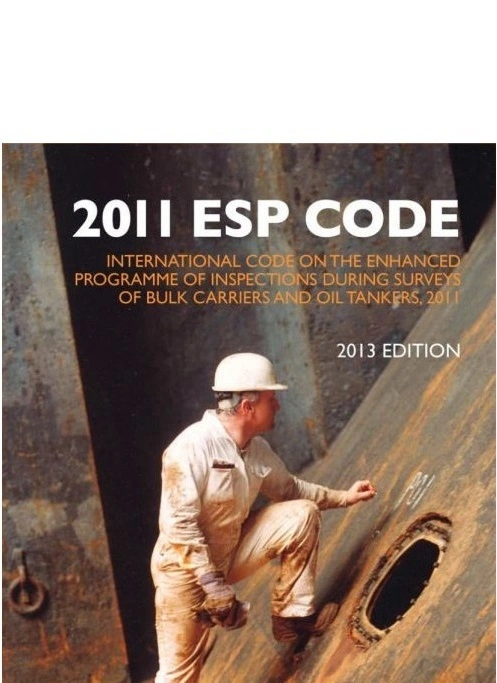
The International Maritime Organisation (IMO) has adopted a new framework for the use of Remote Inspection Techniques (RIT) in ESP Code surveys of bulk carriers and oil tankers. Effective from 1 January 2028, the requirements introduce new standards for RIT certification, survey planning, execution, reporting and service supplier approvals. The International Maritime Organisation (IMO), through Resolution MSC.584(111) , has adopted amendments to the International Code on the Enhanced Programme of Inspections during Survey of Bulk Carriers and Oil Tankers, 2011 (the 2011 ESP Code). The amendments come into force on 1 January 2028 and are supported by the new IMO Guidelines on the Use of Remote Inspection Techniques (RIT) for ESP Code Surveys (MSC.1/Circ.1700). These changes introduce a framework for the use of RIT as an alternative means of access to support close-up surveys (where structural details are examined within the close visual inspection range of the surveyor, i.e. normally within reach of the hand) and associated thickness measurements.
Applicability of ESP Code amendments
The amendments will apply to periodical surveys of bulk carriers and oil tankers subjected to the ESP Code when the survey commences on or after 1 January 2028 and the use of RIT is intended, irrespective of the ship’s construction date. It is anticipated that related IACS publications, including the UR Z10 series, UR Z17 and Recommendation 42, will be updated to align with the new framework.
New requirements for RIT use
The use of RIT to support close-up surveys on ESP ships (bulk carriers and oil tankers) has previously been permitted under the concept of “other equivalent means” subjected to flag agreement on a case-by-case basis. The new IMO framework establishes comprehensive requirements covering RIT systems and equipment, RIT firms, survey planning and programmes, survey execution and reporting.
RIT systems, equipment and assessment
A Remote Inspection Technique System (RITS) is an integrated arrangement of equipment, technologies and procedures that allows a surveyor to inspect a ship’s structure without having to physically access the area being examined. It uses tools such as cameras, screens, drones, robotic devices and sensors to remotely collect visual and other inspection data.
An RITS intended for close-up surveys (and thickness measurements, as applicable) are to be assessed and certified in accordance with the goals set out in Appendix 4 of IMO MSC.1/Circ.1700.
RITS Statement of Capability
Following successful assessment, an RITS Statement of Capability (SoC) will be issued by the flag Administration or by the Recognised Organisation on its behalf, detailing the system’s capabilities and limitations. The RITS SoC will support survey planning and preparation by identifying the capabilities, operational envelope and conditions under which the RITS may be used. Lloyd’s Register (LR) will publish new guidance notes covering the assessment and certification of RITS in due course.
Additional requirements for RIT firms
The approval of RIT firms is already addressed within LR’s Procedures for Approval of Service Suppliers, based on the principles of IACS UR Z17. The procedures include requirements for approval, quality management systems, and the training and competency of operators and supervisors. However, the new IMO framework introduces additional requirements, together with standardised templates for RIT inspection plans, survey reporting and the RIT pre-inspection verification card.
The RIT firm is to use a certified RITS with a valid SoC included within the scope of the firm’s approval certificate. The equipment is to be operated in accordance with the firm’s documented procedures and within any limitations or restrictions stated in the approval.
LR will revise its Procedures for Approval of Service Suppliers to incorporate these new IMO requirements. RIT firms currently approved will need to be reassessed against the new requirements. In the meantime, LR recommends that RIT firms familiarise themselves with IMO MSC.1/Circ.1700, Guidelines on the Use of Remote Inspection Techniques for ESP Code Surveys.
Survey planning when using RIT
The new IMO ESP Code framework includes conditions and limitations governing the use of RIT, taking into account the vessel’s condition history, defect records and the performance of the company. In certain cases, flag Administrations may impose additional restrictions on the use of RIT for close-up surveys from the third special survey onwards (typically on ships over 15 years of age).
Where the use of RIT is proposed, the survey programme is also required to include an RIT inspection plan together with a copy of the applicable RITS SoC, prepared by the RIT firm in collaboration with the shipowner. These new requirements are expected to increase the level of planning and coordination between the shipowner, the RIT firm and LR.
The survey programme should identify the locations where RIT is proposed and specify the means by which thickness measurements will be taken. This should take into account the ESP Code requirement for thickness measurements to be carried out concurrently with close-up surveys. Also to be noted are the capabilities and limitations of the RITS identified in the SoC, such as surface condition requirements for thickness measurements. The survey programme should also describe the alternative arrangements for close-up surveys and thickness measurements to be applied where the limitations of the RITS prevent its use.
Survey execution and reporting
The ESP Code amendments also introduce requirements covering the initial planning meeting, verification of equipment prior to commencement of the survey, operational conditions during the survey, and the conduct of random confirmatory surveys to validate the results obtained through RIT.
The amendments further establish requirements for survey reporting, documentation and the retention of records, ensuring traceability and consistency in the application of RIT during ESP surveys. Upon completion of the surveys, the RIT Firm is to submit a detailed RIT inspection report together with all associated videos and photographs, appropriately labelled and organised. Further guidance on the system and procedures for data submission will be provided by LR in due course.
Additional requirements for RIT firms
Owners, operators, service suppliers and surveyors should familiarise themselves with Resolution MSC.584(111) and MSC.1/Circ.1700 in preparation for the new ESP Code requirements entering into force on 1 January 2028.