
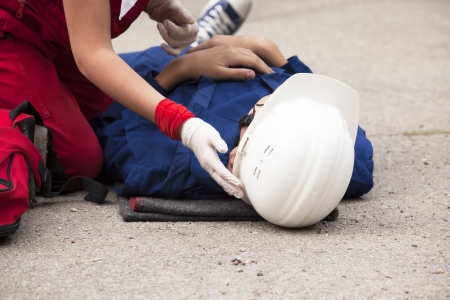
A collision in restricted visibility, a fire in an engine room or a serious injury during mooring can change lives within seconds. Once the immediate emergency has been brought under control, an important question remains: how did the event develop, and what can be done to prevent it happening again?
A marine casualty investigation seeks answers by examining evidence, reconstructing events and identifying safety issues. Investigators look beyond the final action before an accident to consider equipment, procedures, decisions, working conditions and organisational influences. Their aim is to develop a reliable account that supports practical safety improvements.
For seafarers and maritime students, understanding investigations is valuable even without being directly involved in one. Reading an investigation report can reveal how small problems combine, why defences fail and what a crew or company can do differently.
This article is an educational overview. Reporting duties, investigative powers and protections for evidence and witnesses depend on the applicable national law, flag-state requirements and circumstances. In an actual casualty, follow the vessel’s emergency procedures and contact the relevant authorities.
What Is a Marine Casualty?
A marine casualty is an event connected with the operation of a ship that results in specified harm or damage. Depending on the applicable definition, examples include a ship’s loss or grounding, a collision, a serious injury or death, or damage to the marine environment. A marine incident may involve an event that endangered, or could have endangered, the ship, people or environment even if the worst outcome did not occur.
A near miss is an event in which harm or damage was narrowly avoided. Near misses can provide valuable lessons, but not every near miss automatically meets a legal definition requiring an official investigation. Companies should encourage their reporting and check which notifications are required under applicable rules.
Incidents vary greatly in severity. Investigators consider the actual consequences, the potential for recurrence and the safety lessons that may be available when deciding how to proceed, subject to mandatory requirements.
The Purpose of a Marine Safety Investigation
A marine safety investigation aims to prevent future casualties and incidents. It seeks to establish what happened, how it happened, why the defences in place did not prevent the outcome, and what changes may reduce similar risks.
The IMO Casualty Investigation Code states that a safety investigation does not seek to apportion blame or determine liability. This does not mean that investigators ignore decisions or actions by individuals. It means those actions are examined in their operational context to identify causal factors and safety risks.
A report may therefore discuss an officer’s action, a company’s procedure or an equipment design where relevant to safety. Its conclusions should be supported by the evidence, distinguish facts from analysis and recognise important uncertainties.
Safety Investigations and Other Investigations
The same event can lead to several investigations with different purposes. Keeping those purposes separate is essential for understanding the findings.
| Type of investigation | Typical purpose | Possible investigator |
|---|---|---|
| Marine safety | Identify causes and safety lessons to prevent recurrence | Flag-state or other competent safety authority |
| Criminal or enforcement | Examine whether offences or regulatory breaches occurred | Police, prosecutor or enforcement authority |
| Civil or insurance | Examine claims, losses or contractual issues | Parties, insurers, surveyors or courts |
| Company internal | Review company procedures, risks and corrective actions | Ship operator or its appointed team |
These processes can run in parallel. A safety finding does not automatically decide criminal guilt, civil liability or an insurance claim. Rules concerning access to witness statements and other evidence differ between jurisdictions; a witness should not assume that every communication is protected in the same way everywhere.
The IMO Casualty Investigation Code
The IMO adopted the Casualty Investigation Code, Resolution MSC.255(84), to support a consistent approach to marine safety investigations. SOLAS Regulation XI-1/6 makes Parts I and II mandatory within its applicable framework. Part III contains related guidance and explanatory material to be taken into account to the greatest possible extent.
Under the Code’s mandatory provisions, a marine safety investigation is required for every very serious marine casualty. The term means a casualty involving the total loss of the ship, a death or severe damage to the environment. Other casualties and incidents may also be investigated, subject to the applicable rules and the safety lessons available.
The Code encourages cooperation among substantially interested states. The investigating state or states submit final reports for very serious casualties to the IMO, and final marine safety investigation reports are to be made available to the public and the industry under the relevant provisions.
Who May Investigate?
The flag state is the country in which a vessel is registered and has responsibilities concerning its ships. A coastal state may have an interest when an event occurs in its waters or affects its coastline, resources or search-and-rescue services. A port state or a state whose nationals are involved may also have an interest, depending on the circumstances.
For example, a collision between ships of different flags near a coastline can involve several administrations. They may agree how to cooperate and which authority will lead a safety investigation. This coordination does not necessarily prevent separate investigations under the laws of the states concerned.
National investigation bodies differ in their powers and procedures. The United Kingdom’s Marine Accident Investigation Branch, for example, investigates in the interests of future safety and publishes reports and recommendations. Readers should not assume every country uses exactly the same reporting thresholds or investigative process.
From Emergency Response to Investigation
The first priority after a casualty is to protect life, stabilise the situation, notify appropriate authorities and prevent further harm. Firefighting, rescue, medical care, navigation and pollution response take precedence over collecting evidence. Crews should not delay an essential safety action to photograph equipment or preserve a scene.
When conditions permit, the master and responsible officers should follow the ship’s procedures for notification and evidence preservation. Report factual information promptly, including uncertainty and changes in the situation. Required recipients may include the flag administration, coastal authorities, company and other bodies identified in the vessel’s procedures and applicable law.
If equipment or records must be moved or altered for safety, document what was done, when and why, as far as practicable. A safe and honest account of necessary action is more useful than trying to leave an unsafe situation untouched.
What Evidence Do Investigators Examine?
Investigators normally compare several independent sources rather than relying on a single account. The mix depends on the event and what remains available.
Physical evidence may include damaged machinery, failed components, mooring equipment, electrical systems, structural damage, valve positions or the layout of a work area. Specialists may examine materials or conduct tests where appropriate.
Documents and records can include logbooks, maintenance records, permits to work, risk assessments, training records, certificates, cargo information and weather data. Investigators look at the documents that existed at the time as well as how the work was actually performed.
Electronic information may include bridge and machinery data, alarms, radio communications, electronic chart information, tracking data and the voyage data recorder. Time settings, missing inputs and recording limitations matter when comparing electronic sources.
Witness information can explain what people saw, heard and understood. Two honest witnesses may remember the same event differently, especially after stress or confusion. Investigators need to assess each account fairly alongside other evidence rather than assume that differences necessarily indicate dishonesty.
Voyage Data Recorders and Time-Sensitive Evidence
A voyage data recorder, or VDR, can record selected information from the bridge and connected ship systems. It may help investigators reconstruct a vessel’s movements, commands, alarms and communications. The data available depend on the installation, connected sensors and relevant performance standard.
VDRs are not complete records of everything that happened. A connected input may have failed, an event may have occurred outside the recorded area, and recorded information can be misinterpreted without context. Some data can also be overwritten as recording continues.
After an incident, preserve relevant recordings promptly using the vessel’s procedures and the manufacturer’s instructions, and inform the appropriate authority. Do not interfere with equipment or recovery arrangements contrary to instructions. Other time-sensitive material, such as CCTV, electronic logs or temporary data, may also need attention.
Preserving Evidence Responsibly
Good evidence preservation starts with an accurate record of where an item was found and who handled it. When it is safe and permitted to do so, photographs, descriptions, timestamps and identification of equipment can help investigators understand the scene. Original documents and electronic files should be preserved in accordance with the applicable procedures.
Do not alter log entries, delete messages or dispose of damaged equipment to make a situation look better. If a correction is necessary, it should be made transparently under the relevant record-keeping procedure. Repairs that are essential for safety or continued operation should be coordinated with authorities and documented as appropriate.
The term chain of custody describes the documented handling and transfer of evidence. Its formal requirements depend on the investigation and jurisdiction. Crew members should follow the investigating authority’s directions rather than invent their own evidence-handling process.
Reconstructing the Sequence of Events
Investigators build a timeline from available evidence: the vessel’s movements, machinery condition, communications, alarms and actions before, during and after the event. They may compare the reported times of an order, a course alteration and a radar observation to understand how a situation developed.
Time alignment is not always simple. A bridge clock, camera system and engine log may use different time zones or have different clock errors. Investigators should identify these limitations and avoid presenting uncertain timings as exact facts.
The finished timeline supports analysis, but it does not explain the whole event by itself. The next step is to examine why decisions and system responses made sense to those involved at the time.
Immediate Causes, Contributing Factors and Systemic Issues
An immediate cause may be visible: a vessel contacts a berth, a component fractures or a person falls. A useful investigation then asks what contributed to that outcome. A missed warning, an unclear procedure, inadequate maintenance or a poorly designed interface may each be relevant.
A contributing factor is a condition or action that helped create the event or its consequences. Some factors arise close to the incident; others may have developed over months through procurement, maintenance planning, staffing or supervision. There may be several interacting causes rather than one simple root cause.
For example, suppose a cooling-water pump fails and the machinery space overheats. Investigators may examine the failed part, alarms, maintenance history, spare availability, workload and the response. Finding that a valve was incorrectly positioned would be important, but the analysis should also ask how the error became possible and why existing checks did not detect it.
Human Factors and the Wider Working Environment
Human factors involve how people interact with equipment, tasks, other people and their working environment. Investigators may consider fatigue, communication, training, workload, leadership, situational awareness and the usability of procedures.
Describing an accident simply as “human error” often provides little guidance for prevention. A fatigued crew member may have been working under a demanding schedule; an unclear alarm may have been difficult to distinguish from routine messages. Investigators should seek evidence for these conditions, not assume them after the event.
The aim is neither to excuse every action nor to blame a person without context. It is to understand how the system allowed a risk to develop and identify improvements that are realistic onboard.
Interviews and Fair Treatment of Seafarers
Seafarers may be injured, shocked or worried about their careers after a casualty. Interviews should be conducted professionally, with attention to language, fatigue and access to appropriate support. Witnesses should provide truthful accounts and distinguish what they personally observed from what they learned later.
The IMO–ILO guidelines on fair treatment in the event of a maritime accident address the treatment of seafarers during investigations and detention. Separate guidelines adopted in 2025 address seafarers detained in connection with alleged crimes. The applicable legal rights and procedures depend on the jurisdiction and the type of inquiry.
A seafarer who is uncertain about their status or obligations can seek advice from an appropriate lawyer, union or consular representative. Company support may be valuable, but an individual should understand whom any legal representative acts for and whether separate advice is needed.
From Findings to Recommendations
A good safety recommendation addresses a clearly identified problem and names an appropriate recipient. It should be practical enough for the recipient to act on and specific enough that progress can be assessed.
For example, “improve safety awareness” is difficult to measure. A stronger recommendation might ask an operator to review how a particular alarm is presented, test revised arrangements with crews and verify the change during familiarisation. The proposed action must still match the evidence and the recipient’s responsibilities.
Recommendations may be directed to shipping companies, manufacturers, training providers, ports or administrations. Their legal status differs: a recommendation is not automatically a binding international regulation. Follow-up matters because a report alone does not remove the identified hazard.
Practical Example: A Grounding in a Narrow Channel
Imagine a loaded ship approaching a turn in a shallow channel. The vessel moves closer to the channel edge than planned and grounds. This example is fictional and illustrates an investigation approach, not the findings of a real accident.
Investigators might compare the passage plan, position records, VDR information, bridge communications, tide data and witness accounts. They could examine whether the plan considered available depth and squat, whether the turn was monitored effectively, and how the bridge team and pilot shared information.
The eventual findings would depend on the evidence. The investigation should not assume that squat, pilotage or a single person’s action caused the grounding merely because those factors were present. Potential recommendations might address planning, monitoring or communication if the evidence demonstrates a relevant safety gap.
Learning From Published Reports
A report is most useful when readers connect its findings to their own operation. A bridge team can discuss whether a similar route-planning weakness exists in its passage plans. Engineers can compare a reported maintenance failure with the ship’s own records, spare-parts arrangements and alarm response.
Start with the factual account, then read the analysis and recommendations. Ask whether the vessel type, equipment and operating conditions are comparable. Avoid transferring a recommendation mechanically to a different ship without assessing whether it addresses the same risk.
Training discussions should allow questions without ridicule. A crew member may identify a weakness in an existing procedure that would be missed if the discussion focused only on what another ship did wrong.
Frequently Asked Questions
Does every casualty lead to a full international investigation?
No. The Casualty Investigation Code requires a safety investigation into every very serious marine casualty within its framework. Other events may be investigated under applicable national and international rules.
Does a safety investigation determine who is guilty?
Its objective is prevention, not determining criminal guilt or civil liability. Other competent authorities or courts may examine responsibility through separate processes.
Is a VDR the only evidence needed?
No. VDR data are valuable but can have limitations. Investigators normally compare them with physical evidence, documents, environmental information and witness accounts.
Should crew preserve evidence before responding to a fire or injury?
No. Protecting life and controlling the emergency come first. Preserve and document evidence when safe and practicable, following procedures and the investigating authority’s instructions.
Where can seafarers find investigation reports?
Many national investigation authorities publish reports online. The IMO also receives casualty investigation information under its reporting framework. The sources below provide a starting point.
Turning Findings Into Safer Operations
A marine casualty rarely becomes understandable through a single photograph or statement. Reliable investigations bring together different sources, test explanations and examine the working conditions in which people made decisions.
The value of an investigation lies in what happens afterwards. When lessons are shared, recommendations are assessed and crews see practical improvements, a difficult event can contribute to safer ships and better protection for seafarers and the marine environment.
Sources and Further Reading
- IMO: Marine Casualty Investigations and the Casualty Investigation Code
- IMO: Casualty Investigation Code, Resolution MSC.255(84)
- IMO: Applicable Instruments on Casualty Matters
- IMO: Voyage Data Recorders
- UK Marine Accident Investigation Branch: How We Work
- IMO: Fair Treatment of Seafarers in the Event of a Maritime Accident
- IMO: Joint IMO–ILO Work on Seafarer Issues