
Overview
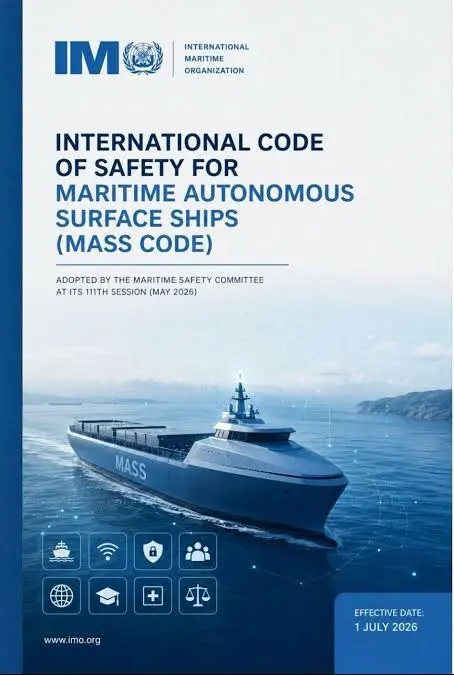
 The International Maritime Organization (IMO) adopted the International Code of Safety for Maritime Autonomous Surface Ships (MASS Code) by Resolution MSC.595(111) at the 111th session of the Maritime Safety Committee (MSC 111), held 13–22 May 2026 in London. The Code took effect on 1 July 2026 as a non-mandatory instrument.
The MASS Code establishes the first international regulatory framework for the design, construction, operation and certification of cargo ships employing autonomous or remotely operated functions. It applies to cargo ships to which SOLAS Chapter I applies and to their associated Remote Operations Centres (ROCs).
This webpage provides shipowners, operators, designers, shipbuilders, equipment manufacturers and flag administrations with a comprehensive guide to understanding the Code’s requirements, compliance timelines, recommended actions and the ABS services available to support implementation.
Background
The formal process began in 2017 (MSC 98) with a Regulatory Scoping Exercise (RSE), which was completed at MSC 103 (May 2021) and identified no major regulatory barriers. In 2019, the IMO approved Interim Guidelines for MASS Trials (MSC.1/Circ.1604). At MSC 104 (October 2021), the three relevant IMO Committees agreed to develop a goal-based MASS Code. Development progressed through MSC 106–110 and intersessional working groups (MASS-ISWG 2–4), with input from Member States, classification societies (including ABS) and industry organizations.
Key Requirements of the Mass Code
Application & Scope
The Code applies to cargo ships to which SOLAS Chapter I applies (≥ 500 GT, international voyages) with autonomous or remote systems, including associated ROCs, when the Administration deems compliance with other instruments impracticable or insufficient. Application to MASS < 500 GT is encouraged. The Code applies to individual autonomous or remote functions even where crew are on board for other tasks.
Exclusions: Cargo HSC (SOLAS Chapter X); warships and government non-commercial vessels; passenger ships (may be addressed in the mandatory Code).
Note: Enhanced automation alone (e.g., ECDIS, autopilot, UMS) does not make a ship a MASS. The qualifier is technology augmenting or replacing functions otherwise performed by onboard crew.
Code Structure
The Code has 24 chapters in three parts, plus an Appendix and Annexes:
| Part | Scope | Chapters |
| Part I – Introduction | Purpose, application, definitions | 1–4 |
| Part II – Main Principles | Universally applicable principles for all MASS approval and certification | 5–15: Surveys & Certificates, Approval Process, Risk Assessment, Operational Context, System Design, Software, Safe Operations Management, Security, Alert Management, Manning/Training/Watchkeeping, Maintenance |
| Part III – Goals & Functional Requirements | Goal-based requirements per function (not all chapters apply to every MASS) | 16–24: Navigation, Connectivity, Remote Operations, Structure/Stability, Fire Protection, SAR, Cargo, Anchoring/Towing/Mooring and Machinery & Electrical |
| Appendix | Certificate and record forms | MASS Safety Certificate, MASS ROC Certificate, Records, Provisional Certificates |
| Annexes | Supporting frameworks | Annex 1: Approval Process; Annex 2: ConOps Framework |
Principal Obligations
- Certification: Every MASS must hold a MASS Safety Certificate (with accompanying MASS Record). Every ROC must hold a MASS ROC Certificate per MASS operated (with MASS ROC Record). Provisional certificates may be issued only by the flag State. Full certificates may be issued by authorized ROs. Survey types: initial, annual, intermediate, renewal and additional.
- Structured Approval Process (Chapter 6): An iterative, evidence-based process requiring philosophy documents, a concept of operation (ConOps), risk assessment, task allocation summary, regulatory gap analysis and a verification/validation plan. The evaluation principle: ensure safety equivalent to a conventional ship.
- Risk Assessment (Chapter 7): Mandatory throughout the approval and operational lifecycle, addressing risks to persons, the environment, the MASS and third parties.
- Concept of Operations (Chapter 8): The central document for any MASS, describing all operational characteristics, the Operational Envelope (OE), fallback states, connectivity, task allocation and human integration. The ConOps is the key reference for certification.
- System Design (Chapter 9): Inherently safe design principles, fail-safe mechanisms, comprehensive testing and cybersecurity protections.
- Software (Chapter 10): Technology-neutral principles requiring reliability, trustworthiness, safety and security, with quality assurance throughout the lifecycle.
- Safe Operations Management (Chapter 11): The Company’s ISM SMS must cover autonomous/remote operations and ROC management.
- Security (Chapter 12): Supplements the ISPS Code; the ship security assessment (SSA) and ship security plan (SSP) must address MASS-specific risks including ROC security and compromised-security fallback states.
- Manning (Chapter 14): A human master retains responsibility at all times, with means to intervene regardless of mode of operation. The ROC may be treated as thebridge or machinery space for STCW purposes. Remote operators must hold equivalent STCW competencies. One Minimum Safe Manning Document (MSMD) is required per MASS per ROC. a MASS ROC Master Plan (MRMP) is required for ROCs operating multiple MASS.
- Navigation (Chapter 16): An Autonomous Navigation System (ANS) must continuously monitor safe navigation. Sub-functions: voyage planning, situational awareness, collision/grounding avoidance and route execution. Override must be possible at all times.
- Fire Safety (Chapter 20): Detection in all fire-risk spaces; confirmation via a secondary source; remote fire location, monitoring and suppression capabilities.
- Search and Rescue (Chapter 21): Ship-specific SAR plan required; rescue equipment usable without crew; persons retrieved on board must be safely accommodated with means to communicate with the ROC.
- Emergency Towing (Chapter 23): SOLAS II-1/3-4 emergency towing requirements apply to all MASS regardless of size or type, with means for remote/autonomous activation.
Technical Requirements
Certification Regime (Chapter 5)
The MASS Code introduces a parallel certification regime that complements existing SOLAS certificates without duplicating them:
| Certificate / Document | Issued to | Accompanies | Key contents |
| MASS Safety Certificate | The ship | MASS Record | Confirms compliance with Code requirements for the vessel |
| MASS Record | The ship | MASS Safety Certificate | Description of ConOps; survey requirements for relevant systems; task allocation summary; regulatory gap analysis; list of approved ROCs |
| MASS ROC Certificate | Each ROC, per MASS operated | MASS ROC Record | Confirms compliance with Code requirements for the ROC |
| MASS ROC Record | Each ROC | MASS ROC Certificate | Description of ConOps; all operational restrictions on the ROC; infrastructure for connectivity including performance and quality of service |
| Provisional MASS Certificate | The ship | – | Interim certification; can be issued only by the flag State |
| Provisional MASS ROC Certificate | Each ROC | – | Interim certification; can only be issued by the flag State |
Survey alignment: Initial, annual, intermediate, renewal and additional surveys, are aligned with the SOLAS harmonized system of survey and certification. ISM and ISPS certification is extended to MASS and ROC operations.
| Survey type | When required |
| Initial survey | Before the first MASS Safety Certificate is issued; Includes complete inspection and testing of the MASS and any associated ROCs. |
| Annual survey | Annually, in alignment with SOLAS harmonized survey and certification system |
| Intermediate survey | Mid-cycle, in alignment with SOLAS harmonised survey system |
| Renewal survey | At 5-year intervals, in alignment with SOLAS harmonised survey system |
| Additional survey | Following significant modifications to MASS systems, ROC infrastructure, or ConOps |
Approval Process (Chapter 6)
The approval process is structured, iterative and evidence-based, modeled on MSC.1/Circ.1455 (Guidelines for the Approval of Alternatives and Equivalents). Key steps include:
- Pre-application engagement: Early dialogue between the Submitter and the Administration to establish the approval basis
- Documentation submission: Philosophy documents, ConOps, risk assessment, task allocation summary, regulatory gap analysis and a verification and validation plan
- Evaluation: The Administration evaluates compliance against the Code’s principles (Part II) and applicable functional requirements (Part III), in combination with the risk assessment outcomes
- Verification and validation: Comprehensive testing of systems and functions, including integrated testing with ROCs
- Certification: Issuance of the MASS Safety Certificate, MASS Record and (where applicable) MASS ROC Certificate and Record
The basic evaluation principle is to ensure the level of safety, security and environmental protection that is expected of a conventional ship (Chapter 6, MASS Code).
Risk Assessment (Chapter 7)
Risk assessment is mandatory and must be conducted:
- As part of the initial approval process
- Whenever significant modifications are made to systems, ConOps or operational profiles
- Throughout the operational lifecycle
The risk assessment must address risks arising from MASS functions (including relevant ROC functions) affecting:
- Persons on board the MASS
- The marine environment
- The safety of the MASS itself
- Third parties (other vessels, port infrastructure)
The assessment must take into account identified goals and functional requirements and ensure a level of safety expected of a conventional ship.
Operational Context (Chapter 8)
The Concept of Operations (ConOps) is the single most important document for a MASS. Per Annex 2, it must include:
- Description of all autonomous/remote functions and the external operating environment
- Operational Envelope (OE): capabilities and limitations, including all foreseeable degraded states
- Operational Design Domain (ODD) for each autonomous system
- Predefined Fallback States: safe states upon OE deviation (multiple may be defined)
- Connectivity architecture and performance requirements
- Control, monitoring and intervention arrangements (on board and at the ROC)
- Task allocation between humans and systems
- Complete risk assessment cross-references
System Design (Chapter 9)
Systems must be designed in accordance with the following principles:
- Inherently safe design: Hazards should be eliminated wherever possible
- Fail-safe mechanisms: All systems used for MASS operations must include fail-safe mechanisms and emergency protocols
- Risk mitigation: Hazards that cannot be eliminated must be mitigated using the Chapter 7 risk assessment process
- Security and cybersecurity: Systems must be protected against unauthorized access, manipulation and cyberattack
- Comprehensive testing and validation: All systems must be tested to ensure compliance with design specifications and operational requirements
Software Principles (Chapter 10)
Chapter 10 establishes principles-based, technology-neutral requirements for software:
- Software must be reliable, trustworthy, safe and secure
- Software quality assurance standards should be used
- Principles apply within the context of Code compliance, including autonomous and remotely operated functions
- Requirements are intentionally flexible to accommodate rapid technological evolution
- Software must be tested and assured throughout its operational lifecycle
Manning, Training and Watchkeeping (Chapter 14)
| Principle | Detail |
| Master responsibility | A human master must be responsible for the MASS at all times, regardless of mode of operation |
| Master location | The master may not need to be on board, depending on technology and human presence on board |
| Master intervention | The master must have the means to intervene when necessary at all times |
| Multiple masters | Several masters may be responsible during a single voyage under certain conditions,but only one at any given time |
| Physical presence | If crew or persons are on board, the master should be physically present |
| ROC as bridge equivalent | Administrations may designate the ROC as a directly associated location to the navigational bridge or machinery space for STCW purposes |
| Remote operator competency | Remote operators must possess competencies equivalent to STCW requirements for the functions they perform |
| Additional training | MASS-specific training and familiarization requirements apply to both onboard and shore-based personnel |
| Shared watchkeeping | Watchkeeping may be shared between onboard personnel and ROC operators, provided safe manning and procedures are documented |
| MSMD per vessel per ROC | One MSMD is required for each MASS operated by each ROC |
| MRMP | A MASS ROC Master Plan required for ROCs operating multiple MASS |
Navigation (Chapter 16)
The MASS Code requires an Autonomous Navigation System (ANS) to continuously monitor all information necessary for safe navigation. The ANS must address four key sub-functions:
- Voyage planning: Route selection, weather routing, and passage planning in compliance with SOLAS Chapter V
- Situational awareness: Continuous monitoring of the navigational environment using integrated sensor arrays (radar, AIS, ECDIS, cameras, LIDAR, etc.)
- Collision and grounding risk avoidance: Compliance with COLREGs; ability to detect, assess and avoid collision and grounding risks autonomously
- Route execution and monitoring: Continuous monitoring of the planned route and execution of course/speed changes
Override must be possible at all times—either from on board or from the ROC.
Fire Safety (Chapter 20)
| Requirement | Detail |
| Detection | All spaces with fire risk |
| Confirmation | Via a different (secondary) source |
| Location | Remote means to locate fire |
| Monitoring | Remote assessment of fire growth and suppression effectiveness |
| Suppression | Remote or autonomous activation |
Search and Rescue (Chapter 21)
The SAR chapter requires:
· The master shall comply with all SOLAS requirements for providing assistance to persons in distress and applicable international law
· The MASS and associated ROC(s) shall be provided with a ship-specific SAR plan and procedures enabling the master to provide assistance when obligated to do so
· Rescue equipment provided on board must be safely usable without crew present
· Persons retrieved on board must be:
- Safely accommodated until delivery to a place of safety
- Provided with information and arrangements to communicate with the ROC
- Provided with access to arrangements for their safety
Cybersecurity (Chapters 7, 9, 10, 12)
Addressed across multiple chapters: risk assessment must include cyber risks (Ch. 7); systems must incorporate cybersecurity protections (Ch. 9.8); software must be secure (Ch. 10); ISPS provisions are supplemented for ROC access control and compromised-security fallback states (Ch. 12). IACS UR E26 and E27 for cyber resilience are also relevant.
Recommended Actions for Shipowners, Operators & Masters
Shipowners & Operators
- Assess Fleet Exposure: Identify vessels that employ or are planned to employ autonomous or remote-control functions that may fall within the Code’s scope.
- Engage Flag State and Class: Initiate dialogue on voluntary implementation, national requirements and ABS certification pathways, including Approval in Principle (AIP).
- Develop the ConOps: Begin drafting a comprehensive Concept of Operations in accordance with Chapter 8 and Annex 2; this is the foundational certification document.
- Conduct Preliminary Risk Assessment: Identify risks from planned autonomous/remote functions, including cybersecurity and connectivity reliability.
- Extend the SMS: Update the ISM Safety Management System to address autonomous/remote operations, ROC management and MASS-specific contingency procedures.
- Develop a Compliance Roadmap: Establish milestones aligned with the IMO roadmap and plan experience-build phase (EBP) participation to position the fleet for mandatory compliance by 2032.
- Budget for Compliance: Allocate resources for system upgrades, ROC establishment, crew training, certification and ongoing surveys.
Ship Managers & Masters
- Understand the Master’s Role: The master retains overall responsibility at all times. Become familiar with Chapters 8 and 14.
- Review Procedures: Evaluate bridge and engine room procedures against requirements for fallback states, alert management and emergency response.
- Develop Ship-Specific SAR Plans: Prepare SAR plans enabling the master to fulfill obligations when crew are absent or reduced.
- Plan Training: Identify training needs for MASS and ROC personnel per Chapter 14 competency requirements.
- Coordinate with the ROC: Establish communication protocols, task allocation and watchkeeping schedules.
Shipyards & Designers
- Design to Code: Ensure system design, fire safety, navigation and connectivity architecture comply with Parts II and III.
- Prepare Approval Documentation: Assemble philosophy documents, task allocation summaries, gap analysis and verification and validation (V&V) plans per Chapter 6.
- Design for Fallback States: Incorporate predefined fallback states and fail-safe mechanisms per Chapters 8 and 9.
- Emergency Towing: All MASS must have emergency towing arrangements with remote/autonomous activation capability.
- Engage Class Early: Seek ABS Approval in Principle to de-risk the approval process.
Equipment Manufacturers
- Align Products with Functional Requirements: Ensure systems meet the Code’s goal-based requirements.
- Prepare for Type Approval: Engage classification societies on MASS-specific type approval pathways.
- Address Software and Cybersecurity: Meet Chapter 10 software principles and Chapter 9.8 / IACS UR E26–E27 cybersecurity requirements.
–
FAQ
1. Is the MASS Code mandatory? No. It is a non-mandatory instrument (Res. MSC.595(111)), with Governments invited to give effect to it from 1 July 2026. It is designed to transition to mandatory status, targeted for adoption by 1 July 2030 and entry into force on 1 January 2032 as a new SOLAS chapter.
2. Which ships does the Code apply to? Cargo ships to which SOLAS Chapter I applies (generally ≥ 500 GT, international voyages) with autonomous or remote systems, including associated ROCs. Governments are invited to apply it to MASS < 500 GT as far as practicable (Res. MSC.595(111), para. 3).
3. Does it apply to ships with full crews using autonomous functions? Yes. The Code applies to individual autonomous or remotely operated functions even where persons are on board for other functions (Chapter 2, para. 2.3). Scope is function-based, not crew-based.
4. Does enhanced automation (e.g. ECDIS, autopilot, UMS) make a ship a MASS? No. The distinguishing qualifier is autonomous or remotely operated technology augmenting or replacing functions otherwise performed by onboard crew (Preamble, para. 3).
5. What is a Remote Operations Center (ROC)? A location remote from the MASS from which some or all ship functions can be operated (Chapter 4, def. 4.31). Each ROC must hold a MASS ROC Certificate per MASS operated, issued by or on behalf of the flag Administration.
6. Who retains responsibility for the ship? A human master at all times, regardless of mode of operation or location. The master must have the means to intervene. If persons are on board, the master should be physically present (Chapter 14).
7. Can ROs issue MASS certificates? Yes. ROs authorized under the RO Code may issue MASS Safety Certificates and MASS ROC Certificates. Provisional certificates can only be issued by the flag State (Chapter 5.5).
8. What is the ConOps? The Concept of Operations is the central document describing all operational characteristics, the Operational Envelope, fallback states, connectivity, task allocation and risk assessments. It is the key reference for approval and certification (Chapter 8; Annex 2).
9. What is the Experience-Building Phase (EBP)? A structured process to collect operational data and implementation lessons to inform the mandatory Code. MSC 112 (December 2026) will develop the framework. EBP completion is not a prerequisite for mandatory adoption.
10. How is cybersecurity addressed? Across multiple chapters: risk assessment must include cyber risks (Ch. 7); systems must be protected (Ch. 9.8); software must be secure (Ch. 10); ISPS provisions are supplemented for ROC security (Ch. 12). IACS UR E26/E27 are also relevant.
11. What about fire safety for uncrewed vessels? Chapter 20 requires detection in all fire-risk spaces, confirmation via a secondary source, remote location/monitoring of fires and remote or autonomous suppression activation.
12. What are the SAR obligations? The master must comply with all SOLAS SAR requirements. A ship-specific SAR plan is required. Rescue equipment must be usable without a crew. Persons retrieved must be safely accommodated and provided with means to communicate with the ROC (Chapter 21).
13. What happens if connectivity is lost? Predefined fallback states must be established for OE deviations, including connectivity loss (Chapter 8.4). Systems must incorporate fail-safe mechanisms to maintain a safe condition without active ROC input (Chapter 9).