
11/23/2026
The EU Commission has approved the project presented by Italy. The Venice port will be the hub of a logistics and industrial network that will include the ports of Trieste and Ravenna and the Interporto Quadrante Europa in Verona.
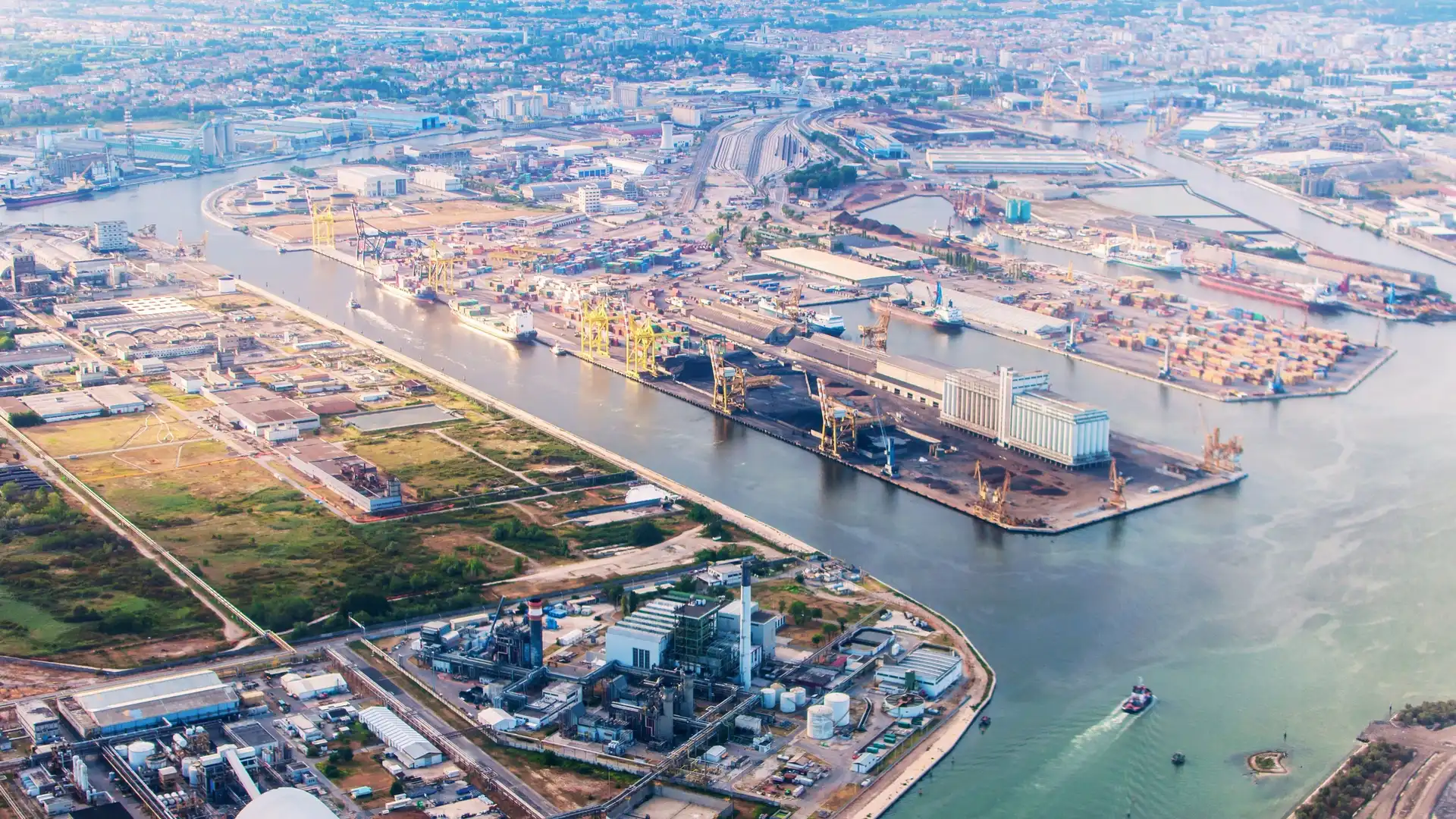
Marghera – Europe has chosen the Northeast to build the first community hub for the strategic storage of critical raw materials. The European Commission has approved the project submitted by Italy, identifying Porto Marghera as the hub of a logistics and industrial network that will also include the ports of Trieste and Ravenna and the Interporto Quadrante Europa in Verona. This marks a successful conclusion to a bid the Meloni government has been working on for months, with the goal of building a reserve of materials essential to European industry and reducing dependence on foreign supplies, particularly from China.
“This is an important recognition for Italy, which is assuming leadership of a major European project to safeguard the business system,” stated Minister of Enterprise and Made in Italy, Adolfo Urso , adding that “now everyone’s commitment is needed to transform it into a major productive driver.”
The initiative, developed by MIMIT with Cassa Depositi e Prestiti and other relevant ministries, aims to ensure the availability of strategic raw materials in the event of geopolitical crises, trade restrictions, or supply chain disruptions. The trial will initially focus on rare earths and tungsten, materials used in sectors such as automotive, electronics, aerospace, and defense. The project is part of the European strategy for industrial autonomy, which aims to develop mining capacity on the continent to meet at least 10% of consumption, 40% of processing capacity, and 25% of recycling capacity by 2030.
The selection of Marghera also represents the outcome of a competition that, earlier this year, pitted the main ports of the Northern Adriatic against each other. Trieste submitted its own proposal, supported by the Port Authority led by Marco Consalvo, highlighting its deep seabed, rail connections with Central and Eastern Europe, free port status, and the presence of scientific and research centers. The dossier was presented to Urso in early June, while Venice was consolidating its lead thanks to the availability of industrial areas for redevelopment in Marghera and the existing expertise in chemistry, processing, and materials recycling.
The June 12th site visit to Porto Marghera by European Commission Executive Vice President Stéphane Séjourné, accompanied by Urso, marked a decisive step. Attention focused on twelve hectares of land owned by the Eni group, identified as a possible site for the depot. Since then, the government has gradually consolidated the various candidatures into a single system project, formalized in October together with the Netherlands.
In the new structure, Marghera will be the hub of strategic storage, while Trieste will contribute to the network as a maritime gateway to the markets of Central and Eastern Europe. Ravenna will provide its expertise in bulk handling, while Verona will ensure integration with the major continental rail and road corridors. The system may also extend to private infrastructure, including the Tassullo dolomite mine in Val di Non.
For Trieste, inclusion in the network maintains an industrial and logistical perspective, even without the assignment of the main depot. The Julian port benefits from natural water depths of up to 18 meters and a rail network already heavily oriented towards Austria, Germany, and Central and Eastern European markets. However, it remains to be determined how much of the material handling, storage, and any initial processing will actually be located within the Trieste port system.
The European project aims not only to build up reserves for emergency use. Italy’s ambition is to encourage new investments in the refining, processing, and recovery of critical raw materials, creating industrial supply chains capable of supporting logistics operations. This is a particularly important prospect for Porto Marghera, which is seeking new production opportunities following the downsizing of large traditional industrial activities.
“I am extremely satisfied with the work accomplished thus far by the Port System Authority, and I thank the Emilia-Romagna Region and the Municipality of Ravenna for their continued support in this important initiative. The inclusion of the Port of Ravenna in a strategic national and European project like the hub for critical raw materials and rare earths is a significant achievement that rewards our efforts and will allow us to consolidate our port’s leadership in solid bulk cargo handling in the coming months and years, and to develop this economic and employment sector for the benefit of the entire port and regional community,” added Francesco Benevolo, President of the Central and Northern Adriatic Sea Port System Authority .