
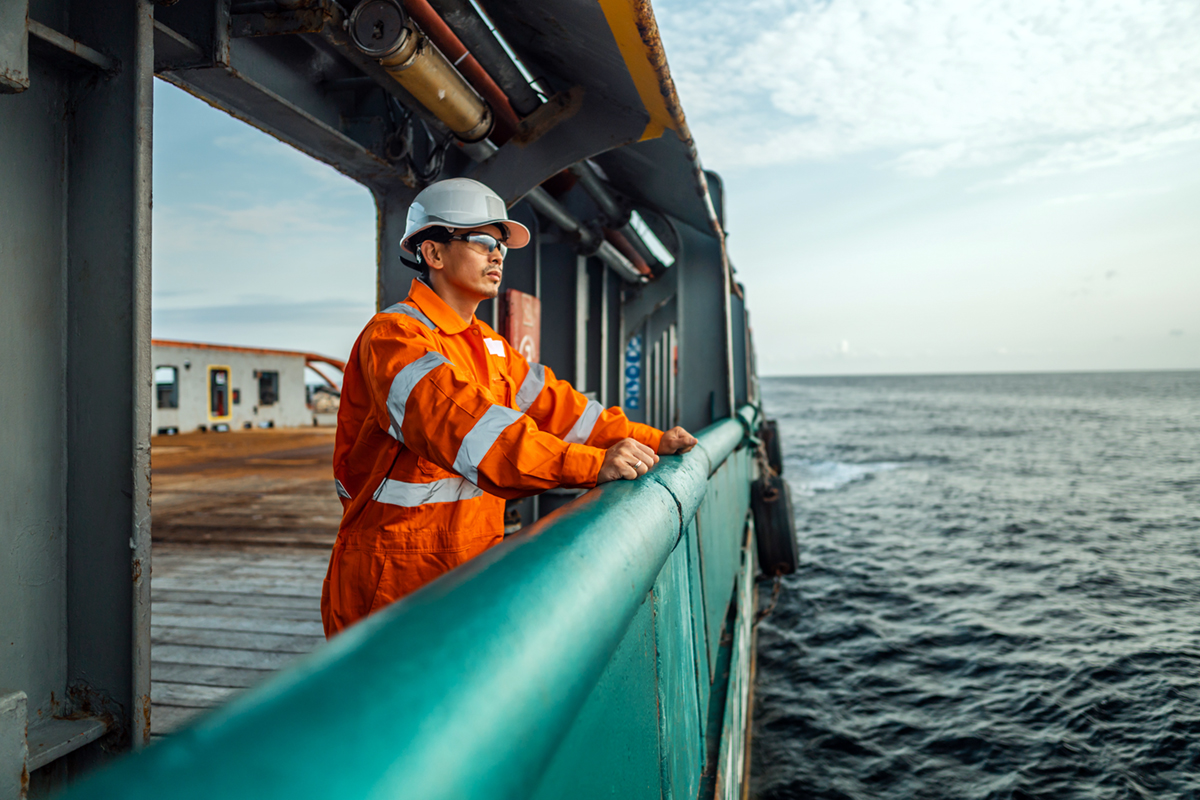

A ship’s environmental performance is shaped by decisions made every day: how machinery is operated, how waste is managed, how carefully fuel consumption is recorded and how the crew responds to a leak or equipment fault. Regulations and new technologies are important, but the people working on board turn these measures into practical action.
Consider a small fuel leak from a transfer line. If it is noticed early, the crew can stop the operation, contain the fuel and repair the equipment. If it is ignored, the consequences may include fire, pollution, lost fuel and damage to the ship’s reputation. Environmental protection and safe operation often depend on the same good habits.
From the bridge to the engine room and from the galley to the deck, seafarers contribute to cleaner shipping. This article explains the main environmental challenges and the practical role crews can play in addressing them.
In this article
- What Does Environmental Sustainability Mean in Shipping?
- The International Framework: IMO and MARPOL
- Reducing Fuel Consumption and Greenhouse Gas Emissions
- SEEMP, CII and the Importance of Reliable Data
- Preventing Oil Pollution
- Garbage, Plastics and Food Waste
- Sewage and Wastewater
- Ballast Water and Invasive Species
- Cleaner Fuels and New Technologies
- The Role of Every Seafarer
- A Practical Green-Ship Checklist
- Building a Greener Maritime Future
- Further Reading
What Does Environmental Sustainability Mean in Shipping?
Environmental sustainability means operating ships in ways that reduce harm to the marine environment and atmosphere while supporting the long-term use of maritime transport. It includes preventing pollution, using energy and resources efficiently, protecting marine life and complying with applicable rules.
Shipping carries a large share of international trade, but it can affect the environment through greenhouse gas emissions, air pollutants, oil spills, sewage, garbage, underwater noise and the transfer of invasive species. The importance of each issue depends on the vessel, cargo, route and operation.
A sustainable approach considers the whole voyage. For example, reducing fuel consumption can lower greenhouse gas emissions, but an energy-saving measure must be compatible with safe navigation, machinery limits and the ship’s operational requirements.
The International Framework: IMO and MARPOL
The International Maritime Organization, or IMO, develops international rules and guidance for maritime safety and environmental protection. One of its principal environmental instruments is the International Convention for the Prevention of Pollution from Ships, commonly known as MARPOL.
MARPOL is divided into annexes addressing different sources of pollution:
| MARPOL annex | Main subject | Example of the crew’s role |
|---|---|---|
| Annex I | Oil pollution | Manage oily bilges, prevent leaks and record relevant operations. |
| Annex II | Noxious liquid substances in bulk | Follow the applicable cargo and tank-cleaning procedures. |
| Annex III | Harmful substances carried in packaged form | Follow cargo documentation, stowage and handling requirements. |
| Annex IV | Sewage | Operate the treatment or holding system and follow discharge requirements. |
| Annex V | Garbage | Segregate, store and dispose of garbage according to the rules. |
| Annex VI | Air pollution and energy efficiency | Manage fuel use, emissions, equipment and energy-efficiency records. |
Requirements depend on the ship, equipment, location and operation. Seafarers should use the vessel’s approved plans, flag-State instructions and current company procedures. Source: IMO MARPOL overview.
Reducing Fuel Consumption and Greenhouse Gas Emissions
Fuel burned in a ship’s engines and boilers produces carbon dioxide and other emissions. Improving energy efficiency can reduce the fuel needed for a particular transport task and can also reduce operating costs.
The IMO’s 2023 greenhouse gas strategy sets an ambition to reach net-zero greenhouse gas emissions from international shipping by or around 2050, taking account of different national circumstances. This is a sector-wide ambition, not a claim that every ship will have zero emissions by that date. Source: IMO 2023 strategy.
The Engine Department’s Contribution
The engine department can identify changes in performance through routine monitoring. Examples include comparing cylinder exhaust temperatures, checking fuel-injection equipment, monitoring cooling-water temperatures, maintaining turbochargers and inspecting compressed-air leaks.
A fouled heat exchanger may reduce cooling performance, while a poorly maintained compressor or pump may consume more energy or create operational problems. Proper maintenance helps preserve the condition intended by the manufacturer. It does not mean that every individual repair will produce the same measurable fuel saving on every ship.
Before drawing conclusions, compare data at similar engine loads, speeds and operating conditions. Weather, sea state, hull condition, cargo, fuel properties and the ship’s route can all influence consumption.
The Bridge and Deck Department’s Contribution
Passage planning, speed management, weather information and coordination with ports can influence fuel use. A vessel that adjusts speed to match an agreed arrival time may avoid unnecessary waiting or excessive speed, provided the plan remains safe and is approved by the master and company.
Deck crews also contribute by monitoring hull and propeller condition, reporting damage and maintaining equipment. Hull cleaning must follow the ship’s approved procedures and relevant port, environmental and biosecurity rules; an inappropriate cleaning method can create its own pollution or invasive-species risks.
SEEMP, CII and the Importance of Reliable Data
The Ship Energy Efficiency Management Plan, or SEEMP, is a ship-specific management tool for improving energy efficiency. Depending on the ship and applicable requirements, it includes arrangements for fuel-consumption data collection and operational carbon-intensity management.
The Carbon Intensity Indicator, or CII, measures operational carbon intensity using an IMO-defined method. The rating framework applies to ships of 5,000 gross tonnage and above in the relevant ship categories, subject to the detailed rules. The rating is not simply the total amount of fuel consumed, and it should not be treated as a complete measure of every environmental impact. Sources: IMO energy efficiency; IMO EEXI and CII guidance.
Accurate data is essential. Engineers may record fuel consumption by machinery group, while bridge personnel record distance and voyage information. The company and verifier rely on consistent records. A reading that is missing or entered incorrectly can make it difficult to understand the ship’s actual performance.
Example: During a monthly review, the second engineer notices that a generator’s measured fuel consumption is higher than expected. The team checks meter readings, operating hours and load before investigating machinery condition. This helps separate a recording error from a possible technical problem.
Preventing Oil Pollution
Oil pollution can occur during bunkering, internal transfers, maintenance or machinery failure. Prevention begins with good housekeeping, leak detection, well-maintained equipment and clear communication between the people responsible for an operation.
Engine-room bilges may contain water mixed with oil. They are generally collected in an appropriate holding tank. Depending on the vessel and circumstances, the mixture may be delivered to a port reception facility or processed through approved equipment. Any overboard discharge must meet all applicable MARPOL, location, equipment and local conditions.
The commonly discussed 15 parts per million oil-content standard is one part of the relevant machinery-space bilge requirements; it is not a general permission to discharge anywhere. Crew members must never bypass pollution-prevention equipment or falsify records. Relevant operations must be entered accurately in the Oil Record Book Part I when required. Source: IMO on MARPOL Annex I.
During bunkering, the team should follow the approved checklist, confirm communications and tank capacity, monitor the transfer and stop the operation if a leak or unsafe condition is identified. Reporting a near miss gives the company an opportunity to prevent a larger spill.
Garbage, Plastics and Food Waste
Waste generated on board includes packaging, food waste, oily rags, domestic waste, maintenance materials and cargo residues. The first step is to reduce unnecessary waste; the next is to segregate and store it according to the ship’s garbage management arrangements.
MARPOL Annex V generally prohibits the discharge of garbage into the sea except as expressly permitted under specified conditions. Discharge of plastics into the sea is prohibited, subject to the limited exceptions stated in MARPOL, such as certain safety emergencies or accidental losses despite reasonable precautions. Food waste and other permitted categories have specific conditions that can vary by area and treatment. Crew members should not assume that biodegradable material can be discharged anywhere. Source: IMO MARPOL Annex V.
A cook, deck rating, engineer and officer may all handle different waste streams. Clear labels, suitable containers, accurate records and planned delivery to reception facilities make compliance easier. Waste should never be concealed or transferred without proper documentation.
Sewage and Wastewater
Sewage systems help protect public health and the marine environment, but their effectiveness depends on correct operation and maintenance. Depending on the ship’s equipment and the applicable rules, sewage may be treated, stored for delivery ashore or discharged under specified conditions.
The crew should monitor the treatment plant, check alarms and carry out maintenance according to the manufacturer’s instructions and the ship’s procedures. Treated sewage is not automatically permitted to be discharged in every port or area; local restrictions and MARPOL requirements must be checked.
Ballast Water and Invasive Species
Ships use ballast water to maintain stability, trim and structural safety. Water taken on in one location can contain organisms that may harm ecosystems if released elsewhere.
The Ballast Water Management Convention addresses the transfer of harmful aquatic organisms through ballast water and sediments. Applicable ships use a ship-specific ballast water management plan and follow the relevant standards, equipment and recording requirements. The crew must understand the installed treatment system, its limitations and the action to take if it is unavailable. Source: IMO ballast water management.
Ballast management must be coordinated with stability and operational safety. Never carry out an exchange or transfer simply to save time without checking the approved plan, weather, structural limits and local requirements.
Cleaner Fuels and New Technologies
The industry is exploring LNG, methanol, biofuels, ammonia, hydrogen, batteries, wind-assisted propulsion and other technologies. Their environmental performance depends on how the fuel or electricity is produced and used, the machinery involved and emissions across the energy lifecycle.
For example, LNG can reduce some air pollutants compared with certain conventional fuels, but methane leakage and methane slip matter when considering its greenhouse gas impact. Biofuels vary in feedstock and production method. Shore power can reduce emissions from onboard engines at berth, while its overall greenhouse gas benefit also depends on the electricity supply.
New fuels introduce different hazards. Cryogenic temperatures, toxicity, flammability and electrical risks vary by technology. Seafarers need appropriate approved training, equipment familiarisation and emergency procedures for the particular vessel. Environmental improvement must be achieved alongside safe operation.
The Role of Every Seafarer
Environmental protection is not the responsibility of one department alone.
| Shipboard role | Examples of practical contributions |
|---|---|
| Master | Coordinate compliance, passage decisions, reporting and the ship’s environmental culture. |
| Deck officers | Plan voyages, monitor cargo and ballast operations, and keep required records. |
| Chief and engineering officers | Maintain machinery, manage fuel and bilge systems, and monitor energy performance. |
| Ratings and cadets | Follow procedures, identify leaks, segregate waste and report unsafe or unusual conditions. |
| Galley and catering staff | Reduce food waste, segregate garbage and follow the ship’s waste procedures. |
The company also has a responsibility to provide suitable equipment, training, spare parts, reception arrangements and realistic operational support. Crew members cannot solve every environmental problem without adequate resources.
A Practical Green-Ship Checklist
- Check for fuel, oil and water leaks during routine rounds and report defects early.
- Maintain machinery and safety devices according to the approved plan.
- Compare fuel and machinery data under similar operating conditions.
- Follow the approved bunkering and transfer procedures.
- Operate the oily-water separator and sewage system only under applicable conditions.
- Segregate waste, protect it from being blown overboard and use reception facilities.
- Follow the ballast water management plan and record relevant operations.
- Use energy efficiently without compromising safety, equipment limits or crew welfare.
- Record environmental operations accurately and report near misses.
- Share improvement ideas during meetings, handovers and training.
Building a Greener Maritime Future
A greener ship is created through the combined work of seafarers, companies, ports, equipment suppliers and regulators. New technology can help, but it must be operated and maintained by trained people using clear procedures.
For seafarers, environmental sustainability begins with practical decisions: preventing a leak, noticing an abnormal trend, managing waste correctly and communicating a concern. These actions protect the sea, support compliance and help the maritime industry make responsible progress toward a more sustainable future.