
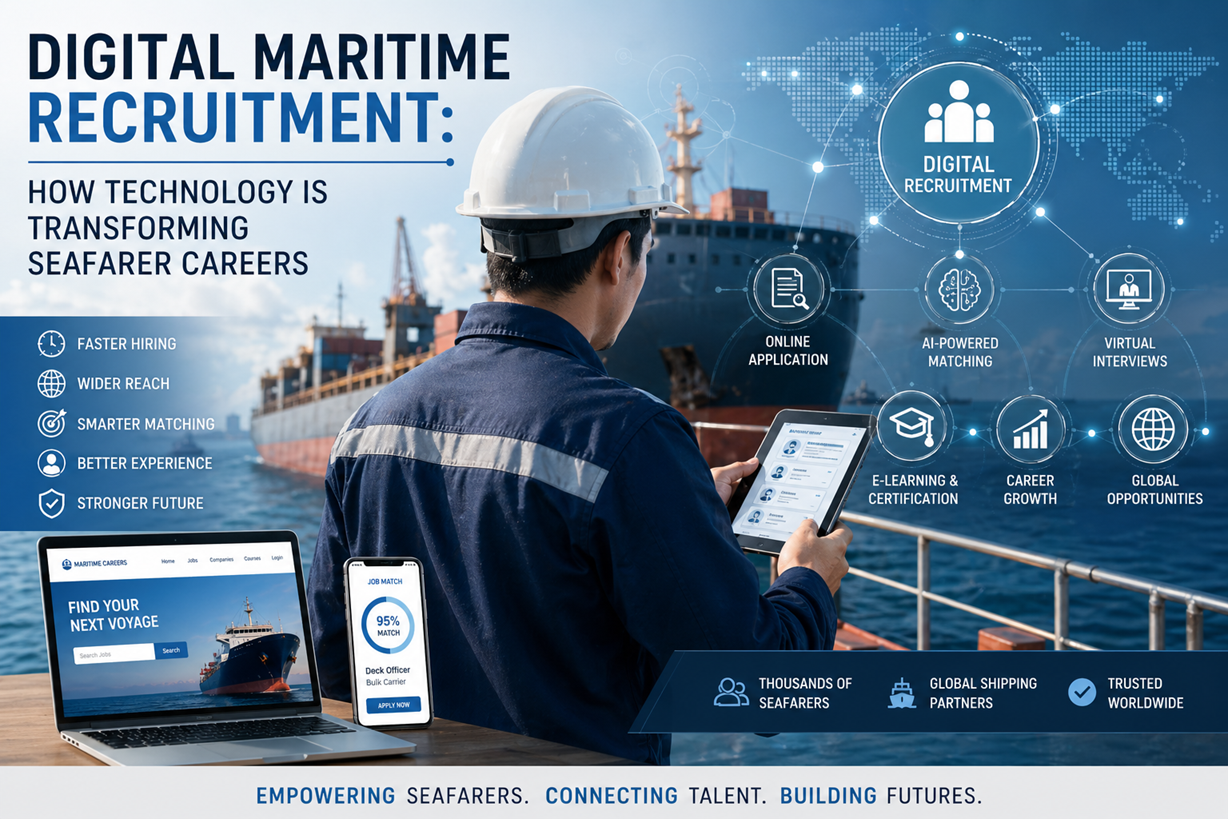
Discover the latest digital tools reshaping maritime job hunting—from AI-powered recruitment platforms to mobile apps, welfare networks, and learning hubs for seafarers.
A New Era for Maritime Job Hunting
The maritime industry has always depended on global mobility, fast decision-making, and trusted networks. Traditionally, seafarers found jobs through crewing agencies, personal contacts, or basic job boards. Today, that model is rapidly changing.
Digital transformation is reshaping maritime recruitment into a more data-driven, connected, and efficient ecosystem. Seafarers can now showcase their skills online, receive real-time job alerts, and interact directly with recruiters. At the same time, shipping companies can identify and select candidates faster using intelligent tools.
This shift reflects broader trends in global employment, where digital platforms and artificial intelligence are redefining how careers are built and managed.
Interactive Maritime Job Platforms and Digital Profiles
Modern maritime job platforms go far beyond traditional CV submission. They function as dynamic professional ecosystems where seafarers can maintain updated digital profiles that include certifications, sea service records, availability, and personal preferences.
Platforms such as Martide, Crewlinker, and Crewell are designed specifically for the maritime sector. These platforms allow users to build structured profiles that can be easily searched and filtered by recruiters.
Instead of static resumes, seafarers can now:
- Upload and manage certificates digitally
- Indicate real-time availability for contracts
- Track application history
- Communicate directly with employers
For recruiters, these platforms offer a centralized database of candidates, reducing the need for manual screening and repetitive paperwork.
In practice, maintaining a well-organized and regularly updated digital profile has become a key factor in improving employability in the maritime sector.
AI-Powered Job Matching in Maritime Recruitment
Artificial intelligence is playing an increasingly important role in maritime recruitment. AI-based systems analyze large volumes of data to match candidates with suitable job opportunities more efficiently than traditional methods.
On platforms like Crewlinker, AI algorithms can evaluate:
- Certification levels and competencies
- Sea service history
- Vessel type experience
- Availability and contract preferences
Based on this data, the system recommends suitable job openings and ranks candidates for specific positions.
For shipowners and crewing managers, this reduces administrative workload and improves hiring accuracy. For seafarers, it increases the chances of being matched with roles that align with their qualifications and career goals.
AI-driven recruitment is particularly valuable in a sector where timing is critical and crew changes must be managed efficiently.
Maritime Job Aggregators: Simplifying the Search
Searching for maritime jobs across multiple websites can be time-consuming. Job aggregators solve this problem by collecting listings from different sources into a single platform.
Websites like Maritime Union and Maritime Zone provide centralized access to job opportunities from shipping companies and crewing agencies.
These platforms typically offer:
- Filters by vessel type, rank, and location
- Mobile-friendly interfaces
- Quick application features
For seafarers, this means faster access to opportunities without the need to visit multiple websites. For employers, it increases visibility and helps attract a wider pool of candidates.
Digital Welfare and Support for Seafarers
Life at sea can be challenging, with long periods away from home, isolation, and high levels of responsibility. Access to welfare support is essential for maintaining mental and physical well-being.
Organizations such as Stella Maris and The Mission to Seafarers have expanded their services into the digital space.
Today, seafarers can access:
- Online counselling and emotional support
- Legal and health advice
- Emergency assistance services
- Virtual community events
This digital transformation ensures that support is available even when physical access to port facilities is limited. For shipping companies, promoting these services is increasingly seen as part of responsible crew management.
Maritime Learning Platforms and Knowledge Sharing
Continuous learning is essential in the maritime industry, where regulations, technologies, and operational practices are constantly evolving.
Platforms such as MySeaTime provide valuable educational content for seafarers and maritime students. These resources often include:
- Technical explanations of ship systems
- Case studies from real operations
- Career guidance and interview preparation
- Industry updates and regulatory changes
For early-career seafarers, these platforms help bridge the gap between theory and practice. For experienced professionals, they support continuous professional development and knowledge sharing.
Mobile Applications for Maritime Careers
Mobile technology has become essential in maritime recruitment, especially for seafarers who may have limited access to computers while onboard.
Applications like Seajob bring key recruitment functions directly to smartphones. These apps typically allow users to:
- Receive job alerts in real time
- Apply for positions quickly
- Store and manage documents
- Communicate with recruiters
Some apps also include offline features, which are particularly useful in areas with limited internet connectivity.
The growing use of mobile platforms reflects the need for flexibility and accessibility in a global and mobile workforce.
Emerging Trends and Future Outlook
Digital maritime recruitment is still evolving, and several emerging technologies are expected to shape its future.
One important development is the use of blockchain for secure document verification. This could reduce fraud and simplify the validation of certificates and sea service records.
Another trend is the integration of virtual reality and simulation tools for training and assessment, which may eventually connect directly with recruitment systems.
At the same time, challenges remain. Limited internet connectivity at sea can restrict access to digital services, and data privacy regulations require careful handling of personal information.
Despite these challenges, the overall direction is clear: maritime careers will increasingly be managed through integrated digital platforms.
Conclusion: Navigating the Digital Maritime Job Market
The maritime industry is undergoing a significant digital transformation. Recruitment is becoming faster, more transparent, and more efficient through the use of interactive platforms, artificial intelligence, mobile applications, and digital support networks.
For seafarers, adapting to this new environment means more than just creating a profile. It requires maintaining accurate data, engaging with platforms regularly, and using available tools to build a strong professional presence.
For shipping companies, digital recruitment offers opportunities to improve hiring efficiency, reduce costs, and access a global talent pool.
In this evolving landscape, those who embrace digital tools will be better positioned to succeed.
Frequently Asked Questions (FAQ)
What is the best maritime job platform?
Platforms like Martide, Crewlinker, and Maritime Union are widely used due to their specialized maritime focus and digital tools.
How does AI help in maritime recruitment?
AI analyzes candidate profiles and job requirements to match seafarers with suitable positions more efficiently.
Are there mobile apps for maritime jobs?
Yes, apps such as Seajob allow seafarers to search, apply, and communicate with recruiters directly from their phones.
Can seafarers access welfare support online?
Yes, organizations like Stella Maris and The Mission to Seafarers provide digital counselling and support services.
References
- Martide – https://www.martide.com
- Crewlinker – https://www.crewlinker.com
- Crewell – https://www.crewell.net
- Maritime Union – https://www.maritime-union.com
- Maritime Zone – https://www.maritime-zone.com
- Stella Maris – https://www.stellamaris.org.uk
- The Mission to Seafarers – https://www.missiontoseafarers.org
- MySeaTime – https://www.myseatime.com
- Seajob – https://www.seajob.net