
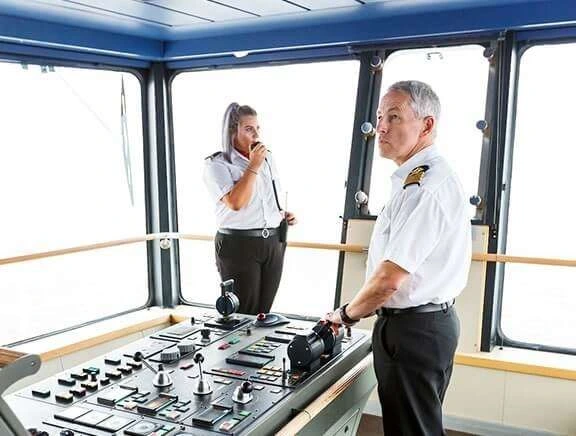
When passengers look out from a cruise ship’s top deck, they may see a wide, calm horizon and a distant port. Behind that experience is a professional bridge team managing a complex operation. Cruise ships are large, high-profile passenger vessels that may call at busy ports, navigate narrow approaches, operate close to shore, manage tight schedules and carry thousands of guests and crew. Safe navigation depends on disciplined planning, clear communication, modern equipment and well-trained officers.
Cruise ship navigation officers are the deck officers responsible for helping the Master navigate the vessel safely, maintain a proper watch, prepare and execute passage plans, coordinate port arrivals, operate or supervise bridge equipment, and support the ship’s wider safety-management system.
Their work is sometimes misunderstood. A navigation officer is not simply “the person steering the ship.” Much of the job is preparation, verification, teamwork and decision-making. On a modern cruise ship, officers combine traditional seamanship with electronic navigation, radar, satellite positioning, bridge-resource management, weather awareness, emergency readiness and close coordination with pilots, tugs, vessel-traffic services and shore teams.
This guide explains what cruise ship bridge officers do, how the bridge is organised, what technology they use and how a person can develop a career in cruise-ship navigation.
What is a cruise ship navigation officer?
A cruise ship navigation officer is a qualified deck officer who takes part in the safe navigation and operation of the vessel. Depending on the company and the individual officer’s certificate of competency, the person may serve as a junior watchkeeping officer, second officer, first officer, chief officer, staff captain or Master. Job titles and exact responsibilities vary between cruise lines and flags, but the core professional foundation is similar.
The officer works within the Master’s authority and the ship’s safety-management system. At sea, they may stand a navigational watch on the bridge. Before a voyage, they may prepare charts, electronic-navigation data, route plans, weather information, publications and port-arrival documentation. In port, they may support manoeuvring, gangway safety, tender operations, cargo and stores coordination, passenger safety or emergency organisation.
On a large cruise ship, deck officers often have important safety responsibilities beyond navigation. One officer may be assigned to lifesaving appliances, another to fire safety, another to navigation publications, environmental protection or security-related duties. These assignments differ by company, but they illustrate a basic truth: a passenger ship’s bridge team is part of a larger safety organisation, not an isolated driving team.
The cruise-ship bridge: a teamwork environment
The bridge is the ship’s command and navigation centre. It is usually high above the water with wide forward-facing windows and bridge wings extending to port and starboard. From there, officers can see ahead, monitor the ship’s course and communicate with the engine control room, deck teams, pilots, tugs, traffic services and port authorities.
During routine open-water navigation, the bridge may be quieter and less crowded. During pilotage, port approaches, restricted visibility, heavy traffic, adverse weather or an emergency, the bridge team expands. The Master may be present, a pilot may embark, additional officers and lookouts may be posted, and communications with tugs, engine control and shore services become frequent.
This is known as bridge-resource management. Safe navigation depends on using all available people, information and equipment effectively. One person may concentrate on the vessel’s position, another on radar targets, another on communications, and another on recording key events. The aim is not to create unnecessary complexity; it is to prevent one person from becoming overloaded or making an unchallenged mistake.
The pilot plays an important role in local waters, but the Master and bridge team remain responsible for the ship’s safe operation. Good bridge teamwork involves a clear master–pilot exchange, agreed passage plan, shared understanding of manoeuvres, open communication and respectful cross-checking.
Typical ranks and roles on a cruise-ship bridge
The exact structure varies, but the following roles are common on many cruise ships.
| Role | Typical navigation and operational contribution |
|---|---|
| Master / Captain | Has overall command; makes key safety and navigational decisions; leads critical manoeuvres and emergencies. |
| Staff Captain or Deputy Master | Supports the Master and often has major responsibility for shipboard safety, operations and emergency readiness; navigation duties vary by company. |
| Chief Officer | Senior deck-management role; may support navigation and port operations while leading operational, safety or deck-department functions. |
| Second Officer / Navigation Officer | Often responsible for voyage planning, chart and publication management, navigational equipment administration and watchkeeping. |
| First or Third Officer / Junior Watchkeeping Officer | Stands bridge watches and may manage assigned safety, lifesaving, fire, environmental or operational duties. |
| Deck Cadet | Trains under supervision, developing practical bridge, seamanship, safety and administrative competence. |
| Pilot | Local specialist who advises and assists the bridge team during pilotage; not normally a member of the ship’s crew. |
These labels should be treated as examples, not a universal rulebook. A cruise line may use different rank names, combine duties differently or assign special roles for expedition operations, dynamic positioning, safety management or shore excursions.
The most important duty: maintaining a safe navigational watch
Watchkeeping is the continuous professional task of monitoring the ship’s movement and its surroundings. A navigation officer on watch must maintain situational awareness: where the ship is, where it will be, what traffic is nearby, how weather and sea conditions are developing, and whether the vessel remains safely within the planned route and operating limits.
The International Regulations for Preventing Collisions at Sea (COLREGs) require every vessel to maintain a proper lookout by sight, hearing and all available means appropriate to the circumstances. For a cruise-ship officer, “all available means” may include visual observation, radar, automatic radar plotting aid (ARPA), electronic chart display and information system (ECDIS), automatic identification system (AIS), satellite position data, echo sounder, speed and heading sensors, communications and information from other bridge-team members.
Technology helps, but it does not make a watch automatic. AIS data can be incomplete or incorrect. Radar targets can be affected by rain, sea clutter, shadows or poor adjustment. A GPS position may look precise but still require sensible cross-checking. ECDIS is a powerful primary navigation tool when properly maintained and used, but it does not replace understanding the chart, the voyage plan, alarms, safety settings, contingency points and nearby hazards.
The officer of the watch must also know when to call the Master. The ship’s standing orders and night orders normally define circumstances requiring immediate notification, such as restricted visibility, heavy traffic, equipment failure, an unexpected route deviation, a developing collision risk, severe weather, doubt about the vessel’s position or an emergency. Calling early is good seamanship, not a sign of weakness.
Passage planning: the work done before the ship sails
Many of the most important navigation decisions are made before departure. Passage planning is a structured process that turns a voyage from an idea into a monitored, risk-aware plan.
A complete plan considers the intended route, charted depths, air draft, under-keel clearance, tidal data, currents, weather forecasts, traffic-separation schemes, no-go areas, environmental restrictions, reporting systems, pilotage, berth details, tug requirements, speed restrictions, contingency anchorages and emergency escape options. On a cruise ship, the plan may also consider scenic passages, tender operations, passenger comfort, operational schedules and the timing of port services.
ECDIS allows officers to display the route, relevant chart data, safety contours, isolated dangers, alarms and sensor information on a single navigation system. But route creation is not enough. The plan must be checked by another qualified officer, approved according to company procedures and briefed to the bridge team. Before critical legs, the team reviews expected hazards, abort points, wheel-over positions, speed profile, communications and contingency actions.
The plan then remains a living document. Weather, traffic, port restrictions, medical diversions, equipment defects or a delayed pilot may require change. A safe bridge team updates the plan in a controlled way, communicates the change and verifies the implications rather than quietly improvising.
Navigation technology on a modern cruise ship
The bridge of a modern cruise ship can look like an advanced control centre, but every system serves a practical navigational purpose. Typical equipment includes:
- ECDIS: displays official electronic navigational charts, route plans and safety information.
- Radar and ARPA: detect and track targets, helping officers assess relative movement and collision risk.
- AIS: broadcasts and receives identification, position, course and voyage-related data from equipped vessels; useful but never a replacement for lookout or radar.
- GNSS / satellite positioning: provides position, speed and time information, normally with cross-checks from other sensors and methods.
- Gyrocompass and magnetic compass: provide heading information; the magnetic compass remains an important independent reference.
- Autopilot or track-control system: holds heading or follows an approved track under supervision.
- Echo sounder: monitors water depth, especially relevant in coastal, pilotage or shallow-water operations.
- Rate-of-turn, speed and wind indicators: help officers understand how the vessel is responding to control inputs and environmental forces.
- VHF and GMDSS communications: connect the bridge with other ships, pilots, tugs, vessel-traffic services and shore stations.
- Voyage data recorder (VDR): records key navigational and bridge information for safety investigation and learning.
Cruise ships may also have integrated bridge systems that link sensors, propulsion controls, thrusters, alarms and route information. Integration can reduce workload, but it can also create a risk of overconfidence. Officers must understand what the system is showing, what it is not showing and how to navigate safely if one component fails.
Port arrivals: where cruise navigation becomes most demanding
Port arrival is often the most concentrated part of a cruise-navigation officer’s day. A large passenger ship may approach a narrow harbour entrance, a river channel, a scenic fjord, an island anchorage or a berth with limited clearance. At the same time, it may need to meet a pilot, coordinate tugs, follow traffic-service instructions, prepare mooring teams, communicate with the engine control room and maintain a safe schedule.
Cruise ships have specific handling challenges. Their high superstructures create a large windage area. A crosswind can exert substantial force even at very low speeds. Some ports have strong currents, tidal restrictions, limited turning basins or nearby passenger terminals. The bridge team needs a detailed understanding of the ship’s draught, manoeuvring characteristics, thruster capability, propulsion response, stopping distance and weather limits.
Before arrival, the bridge team normally reviews the berth plan and pilotage information. During the master–pilot exchange, the Master and pilot discuss the intended route, local conditions, tugs, speed, turning points, clearance, communication channels and emergency arrangements. This shared plan is especially important if conditions differ from the original expectation.
On the bridge, officers may be assigned clearly defined tasks: visual lookout, radar monitoring, position verification, tug communications, pilot assistance, electronic-chart monitoring, recordkeeping or liaison with deck and engine departments. The aim is to keep the Master’s decision-making environment calm, informed and free from avoidable distraction.
Weather, routeing and passenger comfort
Cruise ship navigation is not only about avoiding collision or grounding. It also involves managing weather, sea state and passenger comfort. A route that is technically safe may still expose the vessel to unpleasant motion, strong winds on open decks, delayed tender operations or uncomfortable conditions for guests.
Navigation officers review forecasts, wave models, wind, swell, tropical systems, ice information where relevant and port weather limitations. The Master may adjust speed, route or arrival time to reduce risk and improve comfort. Such decisions must always preserve navigational safety; passenger schedule expectations never override safe seamanship.
Weather awareness is particularly important for large vessels with tall sides and open decks. Strong wind can affect manoeuvring and berthing. Swell can make a tender anchorage unsuitable. Fog may require reduced speed, increased vigilance and a changed bridge manning level. Officers must interpret forecasts alongside real observations and the vessel’s own operating limits.
Cruise-ship navigation and passenger safety
Passenger ships carry large numbers of people, so bridge decisions have a direct human dimension. A safe arrival affects not only the vessel but also guests preparing to go ashore, crew working mooring stations, terminal staff, tug crews and small craft in the vicinity.
Navigation officers contribute to passenger safety through reliable watchkeeping, clear navigational communication, emergency preparedness and coordination with the wider shipboard team. They may participate in drills for fire, blackout, collision, grounding, man overboard, flooding, abandon ship and search-and-rescue scenarios. In an emergency, bridge officers support the Master by maintaining situational awareness, communicating with external parties, recording events and carrying out assigned actions.
Large cruise ships also rely on precise timing. A delayed arrival can affect pilot bookings, berth availability, baggage, shore excursions and passenger connections. Yet professional officers understand the correct hierarchy: safety, legal compliance and sound judgement come before commercial convenience.
What makes cruise-ship bridge work different from cargo-ship navigation?
The fundamental rules of navigation are the same for passenger and cargo ships. Both must comply with COLREGs, SOLAS requirements, flag-state certification rules and the ship’s safety-management system. Both need competent officers, sound passage plans, effective bridge teamwork and reliable equipment.
Cruise navigation has some distinctive features. Passenger ships often make frequent port calls, operate close to populated waterfronts, manage large hotel loads and work in ports designed around tourism rather than cargo. They may use tender boats at anchorages, enter scenic coastal waters, coordinate with shore-excursion operations and carry passengers who have little awareness of bridge activity but are directly affected by it.
The ships themselves can be large and complex. A cruise vessel may combine multiple propulsion units, pods or conventional propellers, bow and stern thrusters, advanced power-management systems and large windage areas. The bridge team must understand how all of this equipment responds in real conditions—not just in a simulator or a manoeuvring booklet.
How to become a cruise ship navigation officer
The usual pathway begins with maritime education and structured sea training. A person normally completes an approved deck-officer programme, meets medical and language requirements, gains qualifying sea service, completes mandatory safety training and obtains a certificate of competency issued by a flag administration. The international framework for these competencies is the IMO’s STCW Convention and Code, while the detailed licence process depends on the issuing country.
For many officers, the first sea-going role is deck cadet. Cadets learn under supervision how to keep a watch, use charts and ECDIS, work with radar, conduct rounds, participate in mooring and anchoring operations, maintain safety equipment, complete records and follow the ship’s safety-management procedures.
After qualifying as an officer of the watch, a person builds sea time and experience before progressing to higher certificates and senior positions. Cruise companies may require additional familiarisation, safety training, crowd-management competence, bridge-team training, passenger-ship experience, language skills and company-specific courses.
Technical ability is essential, but personal qualities matter too. Strong officers communicate calmly, respect procedures, ask for help early, manage fatigue, accept cross-checking, maintain curiosity and learn from near misses. Navigation is a profession in which confidence must be balanced by humility.
Skills that make an excellent cruise-ship navigation officer
An effective officer needs more than a licence. The following capabilities are especially valuable:
- Situational awareness: understanding the ship’s present and future position, traffic, weather, equipment state and operational context.
- Practical seamanship: knowing how wind, current, draught, speed, tug forces and ship response affect manoeuvring.
- Electronic-navigation competence: using ECDIS, radar, ARPA, AIS and integrated bridge systems without becoming dependent on a single display.
- Communication: giving concise, unambiguous instructions and speaking up when something does not look right.
- Bridge-resource management: sharing workload, cross-checking decisions and making full use of pilots, lookouts and fellow officers.
- Emergency readiness: knowing immediate actions, alarms, checklists, communications and the vessel’s emergency organisation.
- Professional discipline: completing plans, records, maintenance checks and handovers properly—even when operations are routine.
Frequently asked questions
Do cruise-ship navigation officers steer the ship manually?
Sometimes, especially during manoeuvring, training or when circumstances require it. At sea, the ship may use autopilot or track control under close supervision. The officer remains responsible for monitoring the vessel and is ready to take action if conditions, traffic or equipment status change.
Is the Captain always on the bridge?
The Master may not be physically present for every routine watch, but remains in overall command and is called for conditions defined by standing orders or when the officer of the watch considers it necessary. The Master is commonly present for critical manoeuvres, pilotage, heavy traffic, difficult weather and emergencies.
What is the difference between a cruise-ship navigation officer and a pilot?
A ship’s navigation officer is a crew member responsible within the ship’s bridge team. A pilot is a local specialist who boards temporarily to provide detailed local knowledge and assist with navigation or manoeuvring. The Master and ship’s officers retain responsibility for the vessel’s safe operation.
Do cruise-ship officers use paper charts?
Many ships navigate primarily with approved ECDIS systems and official electronic charts. Requirements and back-up arrangements depend on the ship’s equipment, flag and operating procedures. Regardless of format, officers must understand chart data, updates, safety settings and independent methods of position verification.
Is cruise-ship navigation more difficult than cargo-ship navigation?
They are different operational environments rather than a simple ranking. Cruise navigation can involve frequent port calls, large passenger numbers, tall ship profiles, tight schedules and complex coastal operations. Cargo ships may face their own demanding challenges, including deep draught, dangerous cargoes, long ocean passages, towing, restricted ports or complex loading conditions.
The bridge team makes safe cruising possible
The visible experience of a cruise holiday depends on work that most guests never see: the passage plan checked before departure, the radar plots reviewed during a night watch, the weather route adjusted offshore, the master–pilot exchange before arrival and the calm coordination of a port manoeuvre.
Cruise ship navigation officers make that work possible. Their role combines traditional maritime judgement with modern bridge technology, structured teamwork and a strong safety culture. For those considering a career at sea, it is a demanding profession with wide responsibility. For passengers and maritime enthusiasts, it is a useful reminder that every safe arrival begins long before the ship comes into view of the port.
Also Watch:
Sources and further reading
- International Maritime Organization: STCW Convention and Code
- International Maritime Organization: SOLAS Convention
- International Maritime Organization: Preventing collisions at sea (COLREGs)
- International Maritime Organization: Electronic charts (ECDIS)
- International Maritime Organization: International Safety Management Code