
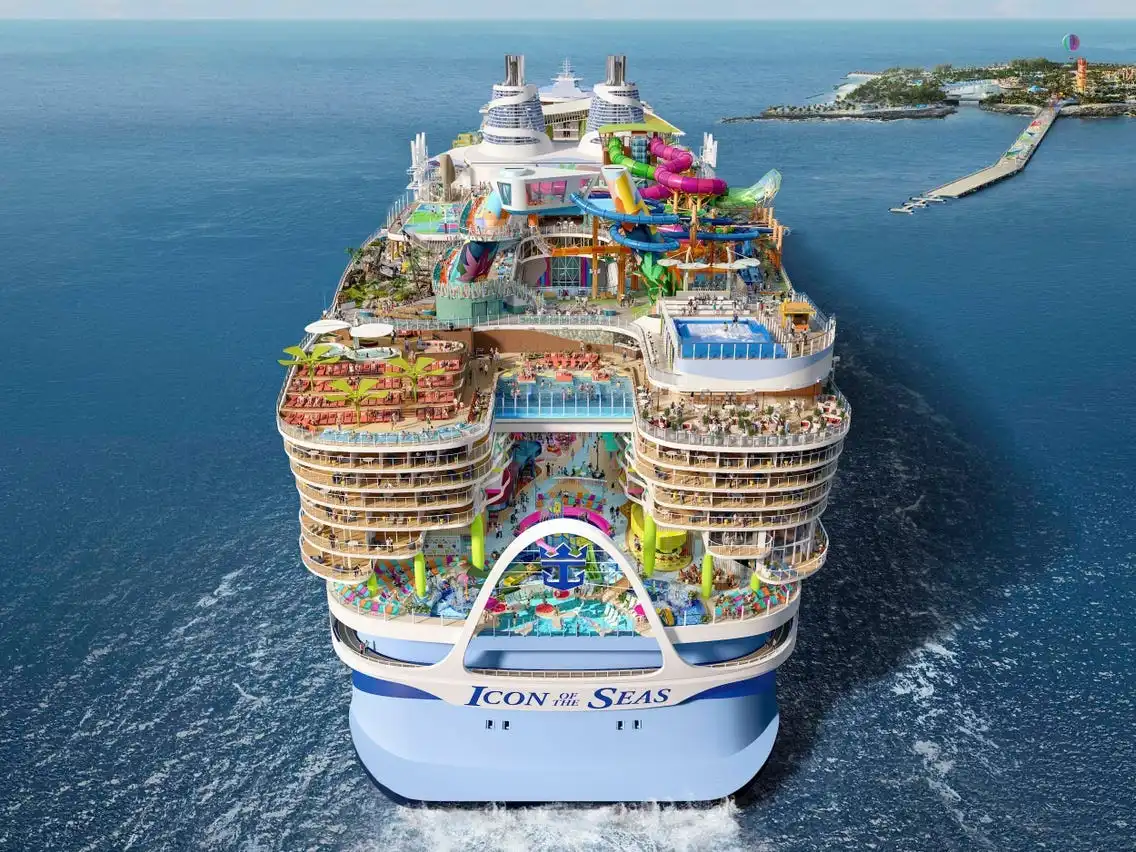
The modern cruise industry stands at a remarkable crossroads. On one hand, passenger expectations have never been higher—travellers seek ever-more spectacular experiences, from suspended infinity pools and indoor waterfalls to expansive open-deck social spaces and immersive entertainment venues. On the other hand, the fundamental obligation to ensure the safety of thousands of passengers and crew members aboard each vessel remains absolute and non-negotiable.
This tension between ambition and responsibility defines the industry’s approach to innovation. Cruise operators, shipyards, classification societies, technology providers, and regulatory bodies must work in concert to transform bold design concepts into safe, operational realities. From next-generation stability systems and AI-powered man-overboard detection to alternative fuel integration and digital mustering, the maritime sector is continuously pushing boundaries—always with safety as the guiding principle.
–
A Collaborative Ecosystem for Safety
The Regulatory Framework: SOLAS and Beyond
At the foundation of maritime safety sits the International Convention for the Safety of Life at Sea (SOLAS), the preeminent international treaty governing ship safety. SOLAS establishes minimum standards for construction, equipment, and operation of ships, covering everything from fire protection and life-saving appliances to navigation safety and damage stability. Complementing SOLAS are agreements such as MARPOL (the International Convention for the Prevention of Pollution from Ships), which addresses environmental protection, and the International Code of Safety for Ships Using Gases or Other Low-flashpoint Fuels (IGF Code), which governs alternative fuel systems.
Yet these regulatory frameworks, comprehensive as they are, cannot anticipate every technological advancement. When designers conceive features that existing rules do not explicitly address, the industry turns to Alternative Design Approval, a process guided by IMO MSC.1/Circ.1455—the Guidelines for the Approval of Alternatives and Equivalents as Provided for in Various IMO Instruments. This framework allows for innovation while ensuring that alternative designs meet or exceed the intent of the original requirements through rigorous risk assessment.
The Role of Classification Societies
Classification societies serve as the independent technical guardians of maritime safety. These organisations develop and maintain rules for ship design, construction, and maintenance, and they verify compliance through survey and inspection. Members of the International Association of Classification Societies (IACS), such as DNV, Lloyd’s Register (LR), Bureau Veritas (BV), and the China Classification Society (CCS), among others, work collaboratively with shipowners, designers, and flag states to ensure that innovative solutions are rigorously evaluated.
Each society brings its own expertise and approaches. Lloyd’s Register, for example, has developed a Risk-Based Certification (RBC) procedure that aligns with the Alternative Design framework, enabling a structured approach to assessing novel systems such as liquid hydrogen fuel cells. Bureau Veritas has issued formal attestations for innovative life-saving appliances, confirming their status under IMO resolutions. The China Classification Society has conducted research on the impact of SOLAS 2020 damage stability requirements on cruise ship design. This diversity of expertise across the classification community ensures that innovation is subjected to thorough, multi-faceted scrutiny.
Flag States and National Authorities
Flag states—the countries under whose laws a ship is registered—hold ultimate responsibility for ensuring that vessels comply with international and national regulations. Authorities such as the Danish Maritime Authority (DMA) and the United States Coast Guard (USCG) provide guidance on Alternative Design approval processes and enforce safety requirements. In the United States, for instance, federal law mandates that passenger vessels integrate technology for capturing images of passengers or detecting individuals who have fallen overboard, to the extent such technology is available. Video surveillance requirements for deterring and recording criminal behaviour must be evaluated by independent third parties accepted by IACS-classified societies.
Emerging cruise destinations are also establishing their own regulatory frameworks. The Saudi Red Sea Authority unveiled Saudi Arabia’s first-ever comprehensive framework for cruise ship operations in 2025, mandating compliance with SOLAS and MARPOL while setting strict environmental protection provisions including zero-discharge waste policies. Such developments demonstrate the expanding global regulatory landscape that cruise operators must navigate.
–
Damage Stability: Engineering Resilience into Megaships
The Evolution of Probabilistic Damage Stability Rules
Perhaps no area of cruise ship design has undergone more profound transformation than damage stability—the ability of a vessel to remain afloat and upright after sustaining hull damage. The SOLAS 2020 amendments introduced significantly enhanced probabilistic damage stability requirements, representing a revolution in ship design. These rules require that ships meet a specific subdivision index, accounting for the probability of surviving damage in various scenarios.
For large passenger vessels, meeting these requirements presents formidable challenges. The probabilistic rules continue to make overall damage stability calculations increasingly complicated, especially in the case of cruise ships with their complex internal layouts and multiple decks. Designers must optimise compartmentation, manage weight distribution, and account for the impact of innovative features—such as the AquaTheater and extensive water features on vessels like Icon of the Seas—that add significant weight to upper decks.
Collaborative Rule Development
The evolution of damage stability rules exemplifies the power of industry-wide collaboration. Royal Caribbean Group (RCG) worked alongside DNV, technical experts, universities, maritime authorities, shipyards, and other stakeholders, actively engaging cruise industry forums to develop new and enhanced damage stability regulations. This collective effort enabled large cruise ship designs to proceed in a safe and responsible manner. Research has explored whether probabilistic approaches could be incorporated into damage stability standards for inland passenger ships, provided their specific design and operational characteristics are carefully considered.
The outcome of such collaboration benefits the entire industry by adding class rules for new design options, creating a safer baseline for all operators.
Advanced Stability Technology in Practice
Modern cruise ships employ sophisticated digital tools to manage stability in real time. Icon of the Seas, for instance, features next-generation NAPA Stability software, which was used to determine the ship’s stability parameters from the earliest design stage. The same models support decision-making during operations, giving captains exceptional accuracy for stability calculations based on the ship’s unique design. This integration of design and operational data represents a significant advancement: real-time safety data is transmitted shoreside, enabling proactive, collaborative approaches to safety management.
The stakes are particularly high for vessels of Icon of the Seas‘ magnitude—nearly 5,600 guests and 2,000 crew, with innovative features that push the boundaries of naval architecture. Advanced stability systems serve as enablers for such innovation, allowing designers to incorporate ambitious features while maintaining rigorous safety standards.
–
Alternative Fuels: Navigating the Energy Transition
The Drive for Decarbonisation
The maritime industry faces mounting pressure to reduce greenhouse gas emissions, and the cruise sector is no exception. Regulatory mandates are already taking effect: since January 2026, all passenger ships below 10,000 gross tonnes must operate without direct CO₂ or methane emissions when navigating Norway’s Geirangerfjord and Nærøyfjord, world heritage fjords that are popular cruise destinations. The EU’s Regulation 2023/1805 on the use of renewable and low-carbon fuels in maritime transport further accelerates the transition.
Alternative fuels—including liquefied natural gas (LNG), hydrogen, ammonia, and biogas—are emerging as key solutions. Icon of the Seas, the first of three LNG-powered ships in its class, sets the tone for the future of cruise with its enhanced onboard experiences and reduced environmental footprint. Yet each alternative fuel presents unique safety challenges that must be addressed through rigorous risk assessment.
Hydrogen: Promise and Peril
Liquid hydrogen (LH2) offers compelling advantages as a marine fuel, producing only water vapour when used in fuel cells and enabling complete elimination of emissions. The EU co-funded sHYpS project aims to develop a hydrogen-based energy generation system onboard a cruise ship, targeting a full day of zero-emission navigation in the Norwegian fjords.
However, hydrogen’s properties introduce significant risks. It is highly flammable and can form explosive mixtures with air; it requires storage at cryogenic temperatures, presenting risks of material brittleness, pressure containment failures, and cryogenic burns; and its low ignition energy means it can ignite more easily than other fuels. The current regulatory framework addresses these concerns only partially, due to significant variations between ship types that complicate a prescriptive approach.
To address these challenges, a risk-based design and certification approach is essential. The sHYpS project employs the Lloyd’s Register Risk-Based Certification procedure, aligned with IMO Alternative Design guidelines, alongside standard assessment techniques such as HAZID, HAZOP, FMECA, computational fluid dynamics, thermal analysis, and quantitative risk assessments.
Fuel Cells and Safety Concepts
Fuel cells powered by hydrogen or ammonia are viewed as key pathways to zero or near-net-zero emissions. Lloyd’s Register has released updated guidance for fuel cell installation on ships, providing shipowners and shipbuilders with comprehensive technical, regulatory, and safety frameworks. The guidance introduces two safety concepts for fuel cell spaces: emergency shutdown-protected fuel cell spaces and gas-safe fuel cell spaces. The gas-safe concept enables installation within conventional machinery spaces, simplifying retrofitting while ensuring compliance with fire protection, explosion prevention, and hazardous zone requirements.
This evolution of regulatory guidance demonstrates how classification societies adapt to emerging technologies, fostering innovation while building confidence in next-generation propulsion systems.
Fuel Flexibility and Operational Readiness
Technology alone is insufficient for safe alternative fuel adoption. Operators must also address bunkering procedures, fuel management systems, and crucially, crew training. As fuel options mature, the task is to translate fuel-specific requirements into safe onboard operations. Comprehensive training programmes, supported by class society guidance, enable crews to handle new fuels safely and respond effectively to potential incidents.
–
Fire Safety: Protecting Lives in Complex Environments
The SOLAS Fire Safety Framework
Fire represents one of the most serious threats to passenger vessel safety, and SOLAS Chapter II-2 establishes comprehensive requirements for fire protection, detection, and extinction. These include the division of ships into main vertical fire zones, each separated by fire-resisting divisions; requirements for fire detection and alarm systems; and provisions for means of escape.
The 2010 amendments introduced “Safe Return to Port” requirements, mandating that passenger ships maintain essential services—including propulsion, steering, and fire-fighting—after a fire or flooding casualty. These capabilities must be evaluated system by system, adding further complexity to ship design.
Innovative Fire Zone Design
Creating large, open social and activity areas while maintaining fire safety presents a fundamental design challenge. On larger new cruise vessels, designers developed an innovative solution: hidden fire doors that deploy from walls during emergencies, segregating spaces into individual fire zones. Concealed smoke extraction systems remove smoke from each zone, ensuring that even expansive open areas can be effectively compartmentalised in an emergency.
This approach required Alternative Design Approval, demonstrating that the innovative solution met the intent of SOLAS requirements through rigorous risk assessment and performance testing.
Advanced Materials and Fire Resistance
Material innovation also contributes to fire safety. European research projects have explored the integration of composite structures into ship interiors, developing modular systems for cruise ship interior partitions based on self-supporting panels with A60 and A0 class fire insulation features. The objective is to develop lighter panels with the same fire resistance, enabling design flexibility without compromising safety.
Risk-based fire safety design frameworks are also emerging, offering integrated approaches to enhanced maritime safety for modern cruise vessels. These frameworks consider the specific characteristics of large passenger ships, enabling more targeted and effective fire protection measures.
–
Life-Saving Appliances: Rethinking Evacuation
The Seahaven Revolution
Traditional lifeboat systems, while reliable, present significant challenges for modern cruise ships. They require extensive deck space, complex davit and release-hook systems, and substantial maintenance. The Seahaven system, developed by Survitec, offers a transformative alternative.
Seahaven is the world’s largest inflatable lifeboat, engineered to evacuate up to 1,060 persons in under 22 minutes through a fully integrated arrangement of two survival craft and four helical slides. The system eliminates the need for traditional davit and release-hook mechanisms, reducing maintenance costs and crew training requirements while ensuring SOLAS compliance.
The system has undergone extensive validation. Bureau Veritas issued a formal Review Attestation for Seahaven, confirming its status as a novel life-saving appliance under IMO Resolution A.520(13). BV conducted an extensive technical review of design, documentation, performance testing, and supporting calculations, including deployment in heavy weather conditions with sea states equivalent to Beaufort Force 6 and three-metre wave heights. The craft demonstrated endurance at 6 knots for 24 hours and the ability to tow a second fully loaded craft at 3 knots.
Design and Operational Benefits
An independent study conducted by naval architecture consultancy Foreship confirmed Seahaven’s potential to enhance cruise ship safety, vessel design, and operational efficiency. The system optimises deck space by eliminating bulky lifeboats, reducing both vertical and longitudinal space requirements, improving bridge visibility, and reducing vessel overhang. Its reduced weight compared to traditional configurations provides design flexibility, potentially lowering construction costs for new vessels and improving stability for retrofitted ones.
This flexibility allows operators to repurpose space for additional passenger cabins, public areas, or leisure facilities, increasing revenue potential. Seahaven’s adaptability across various deployment configurations—including hybrid solutions with Marine Evacuation Systems and tender lifeboats—makes it a versatile solution for cruise lines aiming to future-proof their fleets.
Evacuation Systems on Megaships
Icon of the Seas, like an increasing number of vessels, is equipped with a Marine Evacuation System (MES). When an abandon-ship signal is issued, MES systems deploy escape tubes over the ship’s sides. These systems, alongside advanced life-saving appliances like Seahaven, represent the evolution of evacuation capabilities for high-capacity passenger vessels.
–
Digital Transformation: Smarter, Safer Operations
E-Mustering: Streamlining Safety Drills
The mandatory muster drill at the beginning of every cruise—requiring all guests to report to their assigned muster stations—has traditionally been a logistical challenge of impressive proportions. On vessels carrying up to 6,400 passengers, coordinating the movement of thousands of people while ensuring everyone receives essential safety information is no small task.
RCG’s development of the e-mustering procedure transformed this process. Guests watch an instructional video on the cruise line’s app (or cabin television) and confirm this digitally, then proceed to their muster station to have their SeaPass card scanned. This streamlined approach avoids the disruption of guests returning to cabins for life vests and crew members knocking on every cabin door. Crew members at muster stations can track digitally who has watched the video and reported, and who needs extra instruction.
Other cruise lines have adopted similar approaches. Carnival Cruise Line, for instance, moved to a digital muster drill platform during the pandemic, allowing guests to walk individually to their muster stations after watching a safety video. However, regulatory requirements still mandate traditional in-person emergency exercises at regular intervals.
AI-Powered Safety Systems
Artificial intelligence is increasingly deployed to enhance maritime safety. Zelim, a Scottish firm specialising in maritime safety technology, implemented the inaugural AI-based man-overboard (MOB) detection system on a cruise vessel—the Ambition, operated by Ambassador Cruise Lines. Named ZOE, the system employs infrared and optical cameras, sensors, and advanced software to deliver continuous 360-degree surveillance for bridge officers.
Unlike conventional MOB systems that mainly detect falls, ZOE’s AI-driven models can both identify and track individuals who have fallen overboard, maintaining tracking until rescue operations conclude. The system has achieved a 96.8% detection accuracy rate from distances up to 337 metres during certification tests conducted by Lloyd’s Register.
Digital Permit-to-Work Systems
Digitalisation also extends to onboard operational safety. NAPA, a global provider of maritime software and data services, has launched a digital permit-to-work system that streamlines the mandatory work permit process required for conducting hazardous tasks onboard, such as working at height, performing hot work, or entering enclosed spaces. Such systems standardise risk controls and improve safety culture across the fleet.
Real-Time Data and Shore-Based Monitoring
The integration of real-time ship-to-shore data represents another significant advancement. Fleet operations centres, such as Carnival’s Miami facility, use live ship data to power situational awareness and enable faster, better decisions across the fleet. This capability allows shoreside teams to support vessel crews proactively, identifying potential issues before they escalate.
–
Conclusion: A Shared Commitment to Excellence
The cruise industry’s approach to innovation is characterised by collaboration, rigorous risk assessment, and an unwavering commitment to safety that transcends regulatory minimums. From the Alternative Design framework that enables novel solutions to the advanced digital tools that support real-time decision-making, every advancement is subjected to thorough scrutiny by a diverse ecosystem of stakeholders.
Classification societies, flag states, shipyards, technology providers, and operators each play essential roles in this ecosystem. The evolution of damage stability rules, the development of alternative fuel safety frameworks, the validation of innovative life-saving appliances, and the adoption of AI-powered safety systems all demonstrate how collective expertise transforms ambitious concepts into safe, operational realities.
As passenger expectations continue to rise and environmental pressures intensify, the industry will undoubtedly face new challenges. Yet the collaborative frameworks and rigorous safety cultures established over decades provide a solid foundation for continued innovation. The ambition to lead—while consistently setting new standards of excellence—remains the driving force, always with safety as the guiding principle.
Also Watch: