
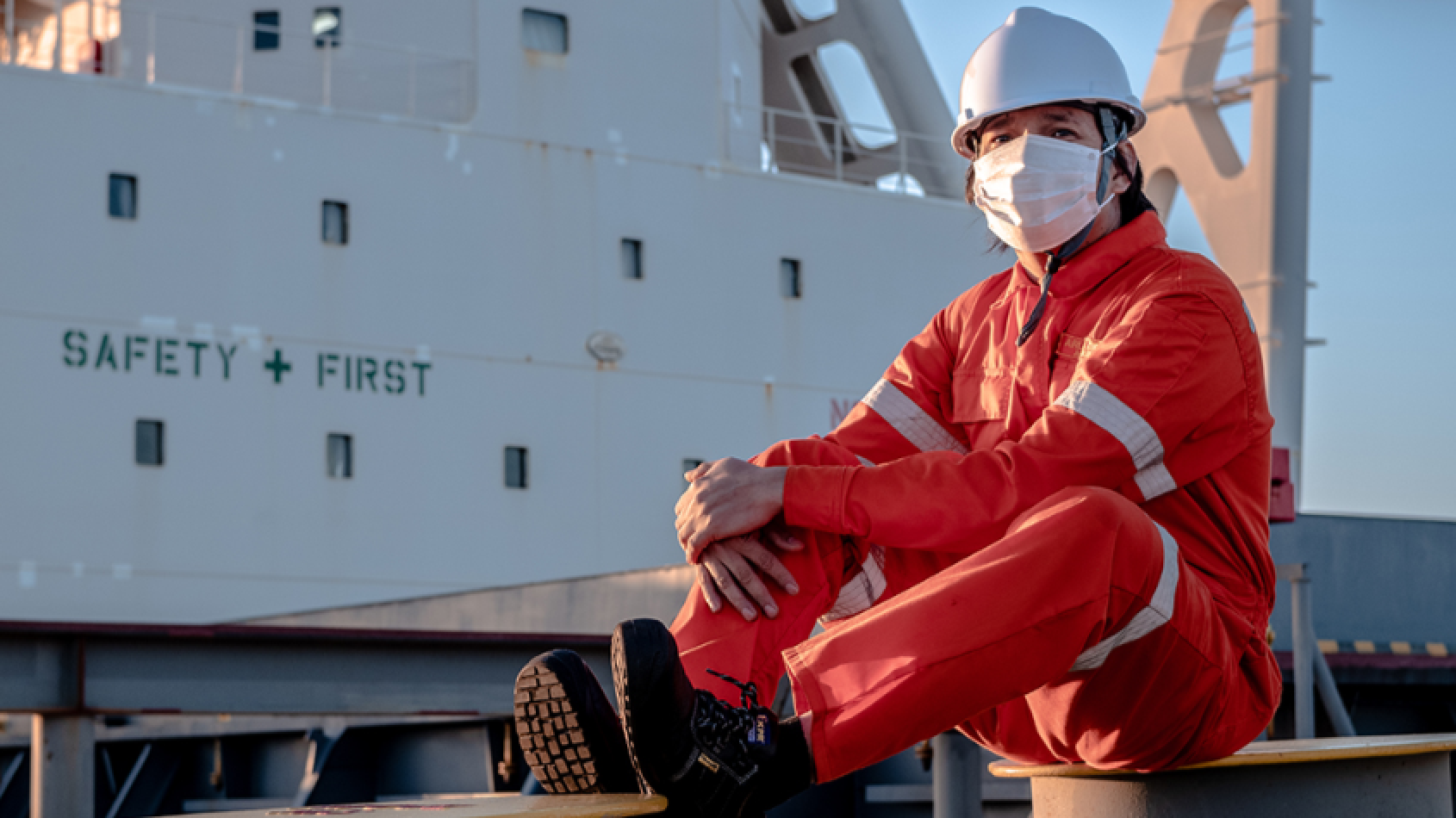
Seafarers work across borders every day. A ship may be registered in one country, managed in another, visit a third and employ crew members from several more. This international environment can make it difficult to know which laws apply and where to seek help when a problem arises.

Imagine a seafarer whose contract has ended but who remains on board because no replacement has arrived. Another crew member has not received wages, while a third is concerned about fatigue after repeated interruptions to rest. These are employment and welfare issues, but they can also affect the safety of the ship and everyone on board.
International conventions, national laws, employment agreements and collective bargaining agreements provide a framework of protections. Understanding that framework helps seafarers ask informed questions, document concerns and seek support before a problem becomes more serious.
This guide describes general international principles. The rights and procedures applicable to a particular seafarer depend on the vessel, flag State, national law, employment agreement, collective agreement and facts of the case. Check the current official requirements and obtain qualified advice when needed.
In this article
- Why Seafarers’ Rights Matter
- The Main International Framework: MLC, 2006
- Who Is Responsible for Protecting Rights?
- Employment Agreements: Read Before You Sign
- Recruitment and Placement Fees
- Wages, Payslips and Accurate Records
- Hours of Work, Rest and Fatigue
- Safe Work and Protective Equipment
- Medical Care and Injury at Sea
- Repatriation: Returning Home
- Abandonment and Financial Security
- Dignity, Equality and Protection From Harassment
- How to Make a Complaint
- Where Can Seafarers Find Help?
- A Seafarer’s Practical Checklist
- Fairness Supports Safety
- Further Reading
Why Seafarers’ Rights Matter
A seafarer’s workplace is also a temporary home. Crew members may live on board for months, work far from their families and depend on the shipowner for accommodation, food and access to medical care. When something goes wrong, they cannot always leave the workplace or visit a local authority easily.
Fair wages, adequate rest, safe equipment and respectful treatment support both human dignity and operational safety. A fatigued officer may struggle to maintain a safe watch; an injured crew member may need urgent care ashore; and a person who fears retaliation may hesitate to report a dangerous defect.
Rights are most effective when crew members understand them and employers and authorities provide reliable ways to apply them.
The Main International Framework: MLC, 2006
The Maritime Labour Convention, 2006, as amended, is an International Labour Organization (ILO) convention addressing seafarers’ working and living conditions. It is often described as an important part of the international framework for quality shipping.
Its provisions address subjects including minimum requirements for work on a ship, employment agreements, wages, hours of work and rest, repatriation, accommodation, food, medical care, welfare, social security and complaint procedures.
The MLC applies through ratifying States and their implementing laws, with definitions, scope and permitted exceptions. It does not apply identically to every person working at sea or every vessel: fishing vessels, traditional vessels and other categories require separate attention under the convention’s scope and other relevant instruments. Check the flag State’s implementation and the vessel’s status. Source: ILO Maritime Labour Convention overview.
Other instruments also matter. The STCW Convention and Code address seafarer training, certification and watchkeeping; SOLAS addresses safety of life at sea; and MARPOL concerns pollution prevention. These frameworks complement, rather than replace, employment rights.
Who Is Responsible for Protecting Rights?
| Organisation or party | General role |
|---|---|
| Shipowner and employer | Provide applicable employment conditions, safe arrangements and support required under law and agreements. |
| Master and senior officers | Implement shipboard procedures, respond to concerns and communicate with the company and authorities as appropriate. |
| Flag State | Implements and enforces applicable requirements for ships flying its flag. |
| Port State authorities | May inspect ships and receive complaints under applicable procedures when a vessel calls at port. |
| Unions and the ITF | Advise and represent workers, support collective bargaining and may assist with complaints. |
| ILO and IMO | Develop and support international conventions and guidance; they are not substitutes for the responsible national authorities. |
A vessel’s registration outside its owner’s country does not automatically mean that its crew is treated unfairly. The relevant question is whether the applicable obligations are actually met and enforced.
Employment Agreements: Read Before You Sign
The seafarers’ employment agreement, or SEA, is a key document. It should be readable, understood by the seafarer and available for reference. Depending on the applicable rules and agreement, it identifies the employer, the seafarer’s duties, wages, leave, termination conditions and other terms.
Before signing, check the vessel or employer details, rank, basic wage, overtime arrangements, leave pay, contract period and conditions for ending the agreement. Ask whether a collective bargaining agreement, or CBA, applies and request access to its terms. Keep a signed copy and ask for explanations of unfamiliar clauses.
A CBA may provide terms negotiated between workers’ representatives and an employer or employers’ organisation. An ITF-approved agreement can apply to a particular ship or crew under its terms, but an ITF agreement does not automatically cover every vessel.
Recruitment and Placement Fees
A job offer should not depend on paying an undisclosed fee to a recruiter. MLC Standard A1.4 requires controls on seafarer recruitment and placement services, including a prohibition on charging seafarers recruitment or placement fees, subject to the listed document-related exceptions.
The standard permits specified personal costs, such as obtaining a national statutory medical certificate, national seafarer’s book and passport or similar personal travel document; it specifies that visa costs are borne by the shipowner. National rules or agreements may provide further protection. Ask for written details of any requested payment and seek advice if the charge appears connected to obtaining the job. Source: ILO MLC recruitment provisions.
Example: A recruiter asks a cadet to pay a substantial “placement fee” before receiving a contract. The cadet should request an itemised explanation, retain the communication and consult the competent authority, an appropriate union or a trusted maritime organisation before paying.
Wages, Payslips and Accurate Records
Under MLC Standard A2.2, ratifying States must require payments due to seafarers on ships flying their flag to be made at intervals no greater than one month, in accordance with applicable agreements. Seafarers should receive a monthly account showing amounts due and paid, including relevant additional payments and exchange-rate information where applicable. Source: ILO MLC employment conditions.
Keep payslips, bank records and a copy of the agreed wage scale. If a payment appears incorrect, compare the documents and ask for an explanation through the available procedure. The fact that a ship is operating normally does not mean that a wage problem should be ignored.
Example: An officer’s payslip shows the basic salary but appears to omit agreed overtime. The officer records the discrepancy, retains supporting work records and asks the company for clarification. If unresolved, a union or ITF inspector may be able to assist.
Hours of Work, Rest and Fatigue
The MLC requires States to establish either limits on work or minimum rest within the convention’s framework. The standard sets the following alternatives:
| Approach | General MLC limits |
|---|---|
| Maximum hours of work | No more than 14 hours in any 24-hour period and 72 hours in any seven-day period. |
| Minimum hours of rest | At least 10 hours in any 24-hour period and 77 hours in any seven-day period. |
Under the MLC rest arrangements, rest may be divided into no more than two periods, one of at least six hours, with no more than 14 hours between consecutive rest periods. Specific provisions concerning emergencies, drills and permitted exceptions must be checked. Relevant STCW watchkeeping rest requirements also apply to personnel within their scope; do not assume that one set of numbers alone resolves every compliance question. Source: MLC Standard A2.3.
The periods are rolling periods, not simply a calendar day or Monday-to-Sunday week. Records should reflect actual work and rest. A seafarer who is repeatedly called out during rest should inform the responsible officer so that fatigue and scheduling can be addressed. Recording rest that did not occur hides the problem.
Safe Work and Protective Equipment
Seafarers should receive information and training appropriate to their duties and have access to suitable protective equipment. Safety management includes identifying hazards, maintaining equipment, using permits where required and responding to reports of unsafe conditions.
Common shipboard risks include enclosed spaces, working at height, electrical energy, moving machinery, pressure, hot surfaces and cargo operations. A cadet should understand whom to ask when an instruction is unclear; a supervisor should make it possible for the team to raise a concern before work continues.
If an immediate danger is identified, alert the responsible officer and follow the vessel’s stop-work and emergency procedures. Flag-State law, company policy and the circumstances determine the detailed process.
Medical Care and Injury at Sea
Seafarers need access to appropriate medical care on board and, where necessary, ashore. The MLC addresses health protection, medical care and shipowners’ liability for sickness, injury and related matters, subject to its detailed conditions and national implementation.
If a crew member is injured or becomes ill, the master and responsible medical personnel should follow the ship’s medical procedures and seek shore-based medical advice or evacuation when appropriate. An injury should be recorded accurately and reported through the required channels.
Entitlements concerning treatment costs, wages during illness, compensation or disability depend on the circumstances, applicable law and agreements. A seafarer should keep relevant medical and employment documents and obtain qualified advice rather than accepting an unexplained waiver of rights. Source: ILO MLC health and medical care provisions.
Repatriation: Returning Home
Repatriation means returning a seafarer to an appropriate destination under the applicable rules and agreement. The MLC provides for repatriation at no cost to the seafarer in specified circumstances, including certain cases where an employment agreement expires abroad, employment is terminated or the person cannot continue duties.
The precise entitlement, destination, timing and expenses depend on the convention, national implementation and the circumstances. An expired contract does not always mean that travel can happen immediately, but the crew member should receive a clear explanation and arrangements should be made in accordance with the applicable obligations. Source: ILO MLC repatriation provisions.
Abandonment and Financial Security
Under the MLC framework, abandonment has a specific meaning. It can include situations in which a shipowner fails to cover repatriation costs, leaves a seafarer without necessary maintenance and support, or otherwise severs ties, including by failing to pay contractual wages for at least two months, in violation of the applicable obligations.
The MLC financial-security system provides assistance in qualifying abandonment cases, including outstanding wages and other contractual entitlements subject to a four-month limit for that part of the financial-security coverage, alongside other specified assistance. This does not automatically erase additional amounts that may be owed through other legal or contractual routes. Source: ILO/IMO abandonment database.
If a crew may have been abandoned, seek help promptly from the flag State, an ITF inspector or affiliated union, the seafarers’ consulate, port authorities or another competent organisation. If food, water, medical care or personal safety is at immediate risk, report the urgency to the appropriate authorities.
Dignity, Equality and Protection From Harassment
A fair workplace treats seafarers with dignity and without discrimination. Bullying, sexual harassment, violence and retaliation can harm health and make it harder for crew members to report safety concerns.
The MLC addresses fundamental rights and working conditions, and national laws and company policies provide additional protections and procedures. Amendments to the STCW Code addressing training on preventing and responding to violence and harassment entered into force on 1 January 2026. Further MLC amendments adopted in 2025 are expected to enter into force on 23 December 2027, subject to the applicable acceptance procedure; they should not be presented as already in force in 2026. Sources: IMO seafarer information; ILO convention amendment status.
A person reporting harassment should be able to use the appropriate complaint procedure and seek an alternative contact if the person involved is their supervisor. A report should be handled fairly, with confidentiality protected as far as possible and without retaliation. If there is immediate danger, seek safety and contact the appropriate emergency authorities.
How to Make a Complaint
The MLC provides for onboard complaint procedures and for seafarers to raise an alleged breach with an authorised officer in a port under the applicable procedure. Seafarers can also approach their flag State, union or another appropriate organisation. The best route depends on the concern and whether the normal onboard chain can be used safely. Source: ILO port State complaint provisions.
A practical approach is to:
- Write down the facts: dates, location, people involved and what happened.
- Keep relevant documents: employment agreement, payslips, records or correspondence, stored securely and obtained lawfully.
- Use an appropriate contact: the designated officer, master, company, flag State, union, ITF inspector or port authority, depending on the case.
- Explain the immediate need: for example, unpaid wages, lack of medical care or an unsafe working condition.
- Keep a record of the response: note whom you contacted and any agreed follow-up.
Ask how confidentiality will be handled. Do not assume that every organisation can promise absolute anonymity in every investigation. Seek local advice before taking collective or legal action, as procedures and rights differ between jurisdictions.
Where Can Seafarers Find Help?
- On board: the master or the person identified in the ship’s complaint procedure.
- Flag State: the maritime administration responsible for the vessel’s registration.
- Port State: an authorised maritime or labour inspector at the port, where applicable.
- Trade union or ITF: the ITF Seafarers look-up service can help identify an inspector or affiliated union. The ITF lists seafsupport@itf.org.uk for seafarers needing support and abandonment@itf.org.uk for suspected abandonment. Source: ITF contact page.
- Consulate or embassy: may advise nationals about consular assistance, travel documents and local contacts.
- Medical or welfare services: use the vessel’s medical arrangements and available shore services for health or welfare needs.
These organisations have different powers and responsibilities. A union inspector can help a seafarer raise a concern, but does not replace the flag State or guarantee a particular outcome.
A Seafarer’s Practical Checklist
| Question | Action |
|---|---|
| Do I have my signed employment agreement? | Keep a copy and identify any applicable collective agreement. |
| Am I being paid correctly? | Compare your contract, payslips and bank records; raise discrepancies early. |
| Are my work and rest records accurate? | Record actual hours and report repeated interruptions or fatigue. |
| Do I know the medical procedure? | Identify the responsible officer and how shore medical advice is obtained. |
| Do I know the complaint route? | Find the onboard procedure and a suitable external or alternative contact. |
| Can I identify my ship and employer? | Note the ship’s name, IMO number, flag, current location and company contacts. |
| What if I need to leave or be repatriated? | Check the agreement, applicable rules and financial-security information. |
Fairness Supports Safety
Seafarers’ rights are most useful when they can be understood and exercised in practice. A clear contract, accurate wage and rest records, accessible medical support and a fair complaint process help protect crew members throughout a voyage.
Masters, chief engineers, companies, unions and authorities all have roles in making those protections effective. When concerns are heard early and handled responsibly, the result can be a safer workplace and a more dependable maritime industry.