
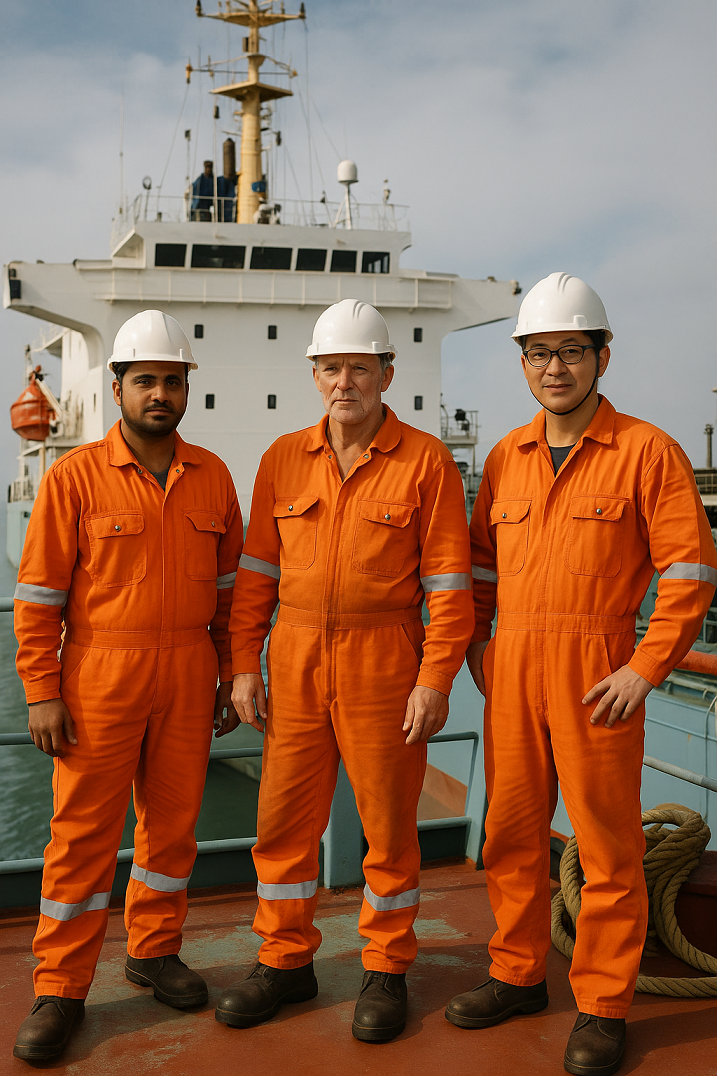
A ship is more than a workplace. For weeks or months, seafarers work, eat, rest and live together in a confined environment. They may come from different countries, speak different languages and have different religions, genders, ages and professional backgrounds. When everyone is treated with respect and given a fair opportunity to contribute, these differences can strengthen the crew. When discrimination, bullying or exclusion are tolerated, they can damage well-being, communication and safety.
Equal treatment onboard does not mean ignoring rank, job responsibilities or differences in experience. A chief engineer and a cadet have different duties, but both deserve dignity, clear expectations and access to fair procedures. A safe and inclusive ship is one where people can perform their duties, ask questions and raise concerns without fear of humiliation or unfair treatment.
This article explains what equal treatment means in the maritime workplace, why it matters and what seafarers, officers and shipping companies can do to support it.
What Does Equal Treatment Mean at Sea?
Equal treatment means making employment and workplace decisions on fair, relevant and consistent grounds. Recruitment, training, assessment, promotion, access to facilities and complaint handling should be based on legitimate requirements, not personal prejudice or assumptions about a person’s identity.
Discrimination may be direct. For example, a qualified seafarer may be refused an opportunity solely because of nationality, religion, gender or another personal characteristic. It can also arise when an apparently neutral practice disadvantages a group without a justified reason. The exact legal definition and protected characteristics depend on the applicable law.
Fairness does not always require identical treatment. Crew members have different roles, medical needs, levels of experience and contractual arrangements. An inclusive approach considers those differences while applying appropriate standards consistently. Providing correctly sized protective equipment, for example, gives crew members an equal opportunity to work safely even though the equipment is not identical.
Why Inclusion Matters for Maritime Safety
Onboard safety depends on people sharing information and responding to problems. A cadet who is repeatedly mocked for asking questions may stop asking. An engineer who fears retaliation may hesitate to report unsafe machinery. A crew member who is excluded from conversations may miss important information about a change in the work plan.
Discrimination and harassment can also contribute to stress, sleep problems, isolation and loss of confidence. On a vessel where seafarers cannot easily leave the workplace, these effects can be intensified. A respectful environment supports well-being as well as the communication and trust needed for safe operations.
Fair treatment also helps companies retain skilled people. Seafarers who believe that assignments, evaluations and promotions are handled fairly are more likely to engage with their work and develop their careers. Good leadership and an inclusive culture benefit the individual, the vessel and the organisation.
Common Forms of Unfair Treatment Onboard
Unfair treatment does not always appear as an obvious argument or explicit insult. It can develop through repeated decisions and everyday behaviour. Understanding the possible forms is the first step towards addressing them.
Discrimination and stereotyping
Stereotyping occurs when assumptions about an individual are based on a group identity rather than the person’s actual skills and behaviour. Comments such as “people from that country cannot lead” or “women cannot work in the engine room” are unfair and can influence assignments, appraisals and promotion decisions.
Seafarers may also face prejudice because of race, ethnicity, nationality, religion, gender, sexual orientation, disability, age or other characteristics. Relevant protections vary by jurisdiction. Whatever the applicable legal framework, professional decisions should be grounded in competence, safety and legitimate job requirements.
Bullying, harassment and sexual harassment
Bullying may include repeated humiliation, intimidation, threats, offensive remarks or the deliberate isolation of a colleague. Harassment may include unwanted conduct that violates a person’s dignity or creates an intimidating, hostile or degrading environment. Sexual harassment can include unwelcome sexual comments, messages, requests, gestures or physical conduct. A single serious incident can also require action; a person should not have to wait for behaviour to become a pattern before seeking help.
A joke is not harmless merely because the person making it intended to be funny. Leaders should consider the behaviour, its impact and the circumstances. Serious incidents, including sexual assault, require immediate protective and medical consideration and appropriate reporting under relevant law and procedures.
Exclusion and unequal opportunity
A crew member may be left out of training, denied access to information or repeatedly assigned undesirable tasks without a fair explanation. For cadets, exclusion can prevent the completion of training tasks and delay professional development. When the same people always receive the best learning opportunities, competence and potential are not being assessed fairly.
Retaliation after raising a concern
Retaliation can include threats, isolation, unfair evaluations or adverse treatment because someone reported a concern or supported another person. Fear of retaliation is a major barrier to speaking up. Employers and officers should make it clear that complaints will be taken seriously and that retaliation itself is unacceptable.
International Protections for Seafarers
Several international instruments support decent work and fair treatment at sea. Their application depends on matters such as the ship’s flag, the relevant country’s ratification and implementation, the seafarer’s employment agreement and applicable national law.
The Maritime Labour Convention, 2006
The International Labour Organization’s Maritime Labour Convention, 2006, as amended (MLC, 2006) addresses many aspects of seafarers’ working and living conditions, including employment agreements, wages, hours of work and rest, accommodation, medical care and complaint procedures. It also recognises principles and rights relating to the elimination of discrimination in employment and occupation.
The convention provides for onboard complaint procedures for alleged breaches of its requirements. Seafarers should receive information about the applicable process and may be accompanied or represented during the procedure. Victimisation for filing a complaint is prohibited under the convention’s complaint-procedure provisions. Available external avenues and remedies depend on the facts and applicable law.
STCW training on violence and harassment
Amendments to the STCW Code’s personal safety and social responsibilities training entered into force on 1 January 2026. They address the prevention of and response to violence and harassment in the maritime sector, including bullying, sexual harassment and sexual assault. Training requirements and implementation should be checked with the relevant flag administration and training provider.
ILO Convention No. 190
The ILO Violence and Harassment Convention, 2019 (No. 190), provides a wider framework for addressing violence and harassment in the world of work. Its legal effect depends on whether and how a country has ratified and implemented it. It should not be assumed to apply in the same way to every vessel or seafarer.
These instruments complement national laws, collective agreements and company policies. Seafarers seeking advice about a particular incident should consult the relevant flag administration, union, competent authority or qualified adviser.
The Role of Shipping Companies
A company’s commitment to inclusion should be visible before a seafarer joins the vessel and throughout the employment relationship. A policy is useful only if it is understood, implemented and supported by the people who make decisions.
Recruitment and promotion processes should use clear criteria related to qualifications, experience, performance and the actual requirements of the position. Interviewers and managers should be trained to recognise bias, document decisions and provide consistent feedback. Where a seafarer is not selected, a useful explanation can help the person understand what experience or training is needed for future progression.
Companies should also provide accessible reporting options. An employee may be uncomfortable reporting to the person directly involved in the complaint, so an alternative shore-based contact is important. Reporting information should be easy to find and available in a language the seafarer can understand.
Onboard facilities deserve attention too. Accommodation, changing areas, sanitation and personal protective equipment should be suitable for the crew and the vessel’s applicable requirements. Consider practical needs such as different body sizes, privacy, cultural practices and access to appropriate medical support. Operational constraints should be addressed through planning rather than used as an excuse to exclude qualified people.
The Master’s and Officers’ Responsibilities
The master sets the tone for the vessel, supported by the chief engineer, chief officer and other senior personnel. Their daily actions show the crew whether the company’s values are taken seriously.
A respectful officer explains tasks clearly, corrects mistakes professionally and invites questions when instructions are unclear. Maintaining discipline and high standards is compatible with treating people fairly. A firm instruction during an emergency can be necessary; repeated humiliation or threats are not an effective substitute for leadership.
Officers should observe whether training opportunities and routine duties are shared fairly, taking account of competence and operational needs. They should also respond promptly when a concern is raised. Ignoring an incident because the people involved are experienced, senior or considered valuable sends a damaging message to the rest of the crew.
Crew meetings, safety briefings and individual discussions can help identify problems early. Leaders should pay attention to quieter members of the team and make sure that everyone has a reasonable opportunity to understand and participate.
Responsibilities of Every Seafarer
A fair workplace is created through everyday conduct. Each crew member can contribute by speaking respectfully, respecting privacy, avoiding offensive language and treating colleagues as individuals. Learning how to pronounce a colleague’s name and listening patiently when someone speaks a second language are small but meaningful actions.
Seafarers can also support colleagues who experience inappropriate behaviour. If it is safe to do so, a witness can interrupt the behaviour, check on the person affected and encourage them to seek support. A witness should avoid spreading rumours or promising outcomes that cannot be guaranteed.
When reporting a concern, provide a factual account to the appropriate person or authority. The person affected should not be pressured to confront an alleged offender alone, and crew members should not attempt to conduct their own investigation.
Fairness Across Cultures and Languages
International crews bring valuable knowledge and experience, but differences in language and communication styles can lead to misunderstandings. Some people may be uncomfortable challenging a senior officer directly. Others may speak English well in routine conversation but find fast technical instructions difficult to follow.
Use clear working language, avoid unnecessary slang and confirm that important instructions have been understood. Closed-loop communication, where an instruction is repeated and acknowledged, is particularly valuable during safety-critical operations. A request for clarification should be treated as responsible behaviour, not a sign of weakness.
Respect for cultural and religious practices can also improve life onboard. Meal planning, celebrations and reasonable arrangements for personal observance can be discussed within the vessel’s operational and safety needs. Inclusion does not require everyone to share the same beliefs; it requires mutual respect and practical cooperation.
Women Seafarers and Other Underrepresented Groups
Women work across the maritime industry as deck officers, engineers, ratings and in many other roles. Yet they may encounter stereotypes, unsuitable equipment, isolation or harassment. Employers can address these barriers through fair recruitment, appropriate protective equipment, suitable accommodation and effective reporting arrangements.
The same principle applies to other underrepresented groups: do not assume that a person’s identity determines their ability or the support they need. Ask about relevant practical requirements, protect privacy and assess competence fairly. Visible role models and mentoring can help younger seafarers see realistic paths for career progression.
Fair Treatment of Cadets and Junior Crew
Cadets join a vessel to learn as well as contribute to its work. They need supervision, constructive feedback and opportunities to complete their training records. Assigning routine duties can be part of learning, but a cadet should not be treated as unpaid labour or permanently excluded from meaningful training.
Senior officers can agree learning objectives at the beginning of a voyage, identify suitable practical tasks and review progress regularly. If a cadet makes a mistake, the response should protect safety while explaining what happened and how to improve. A training environment based on fear discourages questions and can hide gaps in understanding.
Responding to a Complaint: A Practical Approach
When an incident is reported, the immediate priority is to consider the person’s safety and welfare. A serious incident may require urgent medical assistance, separation from the alleged offender where appropriate, and contact with shore management, competent authorities or emergency services. The response should follow applicable procedures and law.
Listen without blame and record the account accurately. Explain the available reporting options, what may happen next and any limits to confidentiality. Information should be shared only with people who need it for protection, support, investigation or legal obligations; absolute secrecy cannot always be promised.
If the usual reporting line involves the alleged offender, use an alternative contact, such as the designated shore-based company representative, flag administration or another competent body. Depending on the circumstances, a seafarer may also seek help from a union, an ITF inspector, a welfare organisation or a port-state authority. The appropriate route depends on the complaint and the relevant rules.
An investigation should be impartial and timely, protect against retaliation, and give those involved a fair opportunity to be heard. Keep relevant records and follow up on protective measures. A complaint should not automatically be treated as proof of misconduct, but it should never be dismissed without proper consideration.
Practical Examples Onboard
Example 1: Unequal training opportunities
Two engine cadets have similar training objectives, but only one is regularly invited to observe machinery maintenance. The chief engineer reviews the training plan, discusses the issue with the responsible officers and arranges suitable supervised opportunities for both cadets. Progress is recorded and reviewed at the next appraisal.
Example 2: Offensive comments about nationality
A rating is repeatedly blamed for minor problems using comments about their nationality. A witness raises the concern through the appropriate channel. The officer addresses immediate welfare and follows the company’s reporting procedure. The issue is assessed fairly, and the crew is reminded that professional feedback must focus on behaviour and performance, not stereotypes.
Example 3: Protective equipment that does not fit
A seafarer reports that the available coveralls and gloves do not fit properly, making work more difficult. The company and vessel identify suitable alternatives. The decision improves the person’s ability to work safely and demonstrates that equal access can require different sizes or designs.
Measuring Progress and Building Trust
A company should examine whether its policies work in practice. Useful information may include training completion, promotion and retention patterns, feedback from departing seafarers and the time taken to respond to concerns. Anonymous surveys can provide insight, although small crews may still fear that their identities can be inferred.
The number of complaints alone is not a reliable measure of culture. A rise in reports can indicate a problem, but it may also mean that people trust the reporting system more. Leaders should look at the quality of responses, recurring themes and whether seafarers feel safe seeking help.
Regular reviews should lead to practical action: improved training, clearer reporting information, better equipment, changes in supervision or revisions to procedures. Where appropriate, communicate what has been improved without disclosing confidential personal information.
Frequently Asked Questions
Does equal treatment mean everyone has the same duties?
No. Duties depend on rank, qualifications, experience and the vessel’s needs. Equal treatment means applying relevant standards fairly and respecting every person’s dignity.
Can an officer correct a crew member’s work?
Yes. Clear instruction and constructive feedback are essential for safety. The concern arises when correction becomes humiliating, discriminatory, threatening or otherwise inappropriate.
What if the person responsible is my supervisor?
Consult the onboard complaint procedure for an alternative reporting route. Depending on the situation, a shore-based company contact, flag administration, union or competent authority may be able to help.
Are jokes about nationality or gender acceptable?
Comments that stereotype, humiliate or make colleagues uncomfortable can damage trust and may amount to harassment or discrimination. A respectful crew considers the effect of its words and responds when someone raises a concern.
How can a seafarer support a colleague?
Listen without judgment, respect the person’s privacy, help them find information about support and reporting options, and avoid pressuring them to take a particular step. If there is an immediate danger, seek appropriate assistance promptly.
Conclusion
Equal treatment onboard ships is a practical part of professional seamanship. It supports communication, learning, well-being and the trust required for safe operations. Policies and international standards provide an important foundation, but their value depends on fair decisions and respectful behaviour every day.
A truly inclusive maritime workplace allows each seafarer to contribute according to their competence, develop their skills and raise concerns without fear. Shipping companies, masters, officers and crew all have a role in making that expectation a reality.
Sources and Further Reading
- International Labour Organization: Maritime Labour Convention, 2006
- International Labour Organization: Maritime Labour Convention text, including 2022 amendments
- International Maritime Organization: New shipping rules in force from 1 January 2026
- International Maritime Organization: Safe Horizons—preventing violence and harassment at sea
- International Labour Organization: Violence and Harassment Convention, 2019 (No. 190)