
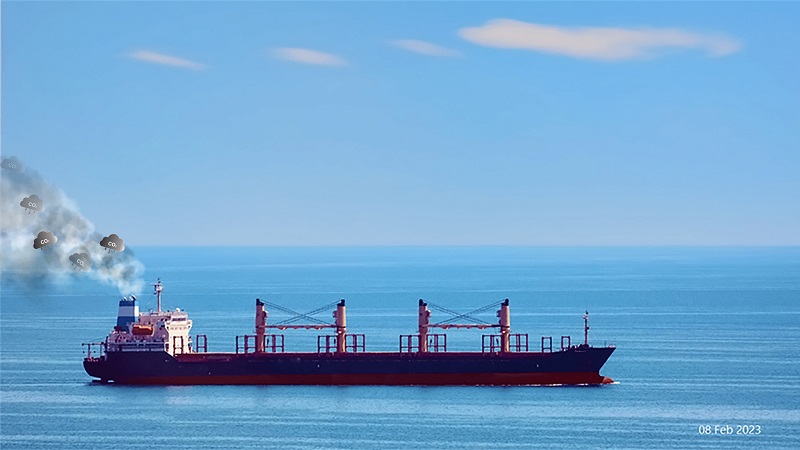
Shipping is entering a period of profound change. The vessels that carry the world’s cargo are being asked to use energy more efficiently, reduce greenhouse gas emissions and exchange information more effectively with ports, companies and regulators. At the same time, new sensors, software and communication systems are changing how ships are operated and maintained.
These developments are closely connected. Digital tools can help crews identify wasted energy, plan voyages and monitor machinery. Cleaner fuels and new propulsion systems can reduce emissions when they are produced and used appropriately. Neither transition, however, will succeed through technology alone. Both depend on trained seafarers, safe procedures, reliable infrastructure and cooperation across the maritime industry.
This article explores what a decarbonized and digital shipping industry could look like, the technologies already being introduced and the challenges that remain for shipowners, ports and seafarers.
What Does Decarbonization Mean for Shipping?
Decarbonization refers to reducing greenhouse gas emissions associated with maritime transport. These emissions come mainly from the production and use of energy, including the fuel burned in main engines, auxiliary engines and boilers. Carbon dioxide is the best-known greenhouse gas, but methane and nitrous oxide also matter when assessing the overall climate impact of some energy pathways.
The goal is not simply to replace one fuel with another. It involves reducing energy demand, improving vessel and port operations, selecting lower-emission energy sources and considering emissions across the fuel’s life cycle. Depending on the pathway, that life cycle can include producing feedstocks, generating electricity, manufacturing and transporting fuel, bunkering, and using it onboard.
A fuel described as “alternative” is not automatically low-carbon. Its actual impact depends on how it is produced, delivered and used. The most suitable solution also varies with ship type, route, energy demand, availability and safety requirements.
The IMO’s Greenhouse Gas Strategy
The International Maritime Organization’s 2023 IMO Strategy on Reduction of GHG Emissions from Ships sets an ambition to reach net-zero greenhouse gas emissions from international shipping by or around 2050, taking different national circumstances into account. It also includes indicative checkpoints compared with 2008: a reduction in total annual emissions of at least 20%, striving for 30%, by 2030; and at least 70%, striving for 80%, by 2040.
The strategy also calls for uptake of zero or near-zero greenhouse gas emission technologies, fuels or energy sources to represent at least 5%, striving for 10%, of the energy used by international shipping by 2030. These are strategic ambitions and checkpoints, not the same thing as a universal legal requirement that every individual vessel meet the same percentage.
Existing measures under MARPOL Annex VI address ship energy efficiency and operational carbon intensity. An additional IMO Net-Zero Framework has been under negotiation. As of 14 November 2026, the proposed framework had not been formally adopted; discussions were scheduled to continue later in 2026. Its final content and timetable should be checked against current IMO announcements before making compliance decisions.
Energy Efficiency: The First Step
The cleanest unit of energy is often the one a ship does not need to consume. Improving efficiency can reduce fuel costs and emissions across many vessel types, including ships that continue to operate on conventional fuels during the transition.
Useful measures include maintaining a clean hull and propeller, optimising trim where safe and appropriate, monitoring engine performance, recovering waste heat and improving the operation of pumps, fans and other auxiliaries. Propeller improvements, air lubrication, wind-assisted propulsion and other technologies may also be suitable for particular vessels.
The actual benefit depends on the ship, route, operating profile and condition. For example, a hull-cleaning programme may reduce resistance, but its timing, cost and environmental controls matter. Similarly, slowing down can reduce fuel consumption on some voyages, but the outcome depends on the vessel’s operating conditions, fleet scheduling, weather and safety requirements.
A successful efficiency programme starts with reliable measurements and a baseline. The crew and shore team should compare performance over time, investigate changes and verify whether a measure is producing the expected result.
Understanding EEXI, CII and SEEMP
Several IMO measures provide a framework for energy management. Their detailed application depends on vessel size, type and the relevant regulations.
EEXI — Energy Efficiency Existing Ship Index: A technical measure used to assess the energy efficiency of applicable existing ships against a required standard. Depending on the vessel, compliance may involve technical modifications or power limitation arrangements approved under the relevant rules.
CII — Carbon Intensity Indicator: An operational indicator for applicable ships of 5,000 gross tonnage and above. It relates a ship’s annual carbon dioxide emissions from fuel use to a measure of transport work and provides a rating from A to E. CII is an operational intensity metric; it is not a complete life-cycle assessment of every greenhouse gas associated with a fuel.
SEEMP — Ship Energy Efficiency Management Plan: A ship-specific management plan that supports improvements in energy efficiency. Applicable requirements depend on the vessel and the relevant part of the plan. Data collection, performance monitoring and corrective actions help connect the plan to actual operations.
For a seafarer, these measures are most useful when they lead to practical questions: Why is fuel consumption increasing? Has the hull condition changed? Are auxiliaries running efficiently? Could a port delay or a different voyage pattern explain a change in the ship’s rating?
Alternative Fuels and Energy Sources
The maritime industry is exploring several alternatives. Each has advantages and limitations, and none is automatically the best option for every ship.
LNG and other methane-based fuels
Liquefied natural gas (LNG) is used in dual-fuel and gas-fuelled vessels. It can reduce some air pollutants compared with conventional fuel oils, and its greenhouse gas performance depends on the engine, fuel supply chain and emissions of unburned methane, often called methane slip. Methane is a potent greenhouse gas, so slip and upstream leakage must be included in a credible life-cycle assessment.
Bio-LNG and synthetic methane may reduce life-cycle emissions when produced using suitable pathways, but their sustainability, availability and cost vary. Crew training, gas detection, ventilation and fuel-handling procedures remain essential.
Methanol
Methanol can be produced from fossil sources, biomass or captured carbon dioxide and low-emission hydrogen. Its climate benefit depends heavily on the production pathway and energy source. Methanol is liquid at ambient temperature, which can simplify some aspects of storage compared with cryogenic fuels, but it requires more storage volume than conventional fuel oil for the same energy.
Methanol is toxic and flammable. Safe operation requires suitable fuel-system design, compatible materials, detection systems, procedures and crew competence. Shipowners must also consider availability at the ports they use.
Ammonia
Ammonia contains no carbon, so its combustion does not directly produce carbon dioxide from the fuel itself. However, its overall climate performance depends on how it is produced and on other potential emissions, including nitrous oxide. Ammonia is toxic and poses serious hazards to people and the environment if released.
Its use requires carefully designed fuel systems, monitoring, emergency arrangements, appropriate regulation and extensive training. The availability of low-emission ammonia at scale remains an important commercial and infrastructure challenge.
Hydrogen
Hydrogen can be used in fuel cells or engines, subject to suitable design and safety arrangements. Its emissions depend strongly on the method of production. Low-emission hydrogen can be produced using low-emission electricity, but its storage and transport present challenges because of its low volumetric energy density.
Depending on the vessel, hydrogen may be stored as a compressed gas or cryogenic liquid, or carried in another form. Space, cost, refuelling infrastructure and operational range influence its suitability.
Biofuels, batteries and shore power
Some biofuels can be blended with or replace conventional marine fuels in compatible systems. Their climate and environmental performance depend on feedstock, land use, production and certification. Compatibility, stability, storage and fuel quality also require attention.
Batteries can support fully electric operation on some short routes or hybrid operation on larger vessels. Their benefit depends on charging arrangements, operational profile, battery safety and the source of electricity. Shore power allows a compatible ship to connect to electricity while alongside, reducing emissions from onboard generators at berth. Its wider climate benefit depends on the electricity mix and the port and ship installations.
Onboard Carbon Capture: A Developing Option
Onboard carbon capture aims to separate carbon dioxide from exhaust gases and retain it for transfer ashore. Several approaches are being investigated, including chemical absorption and other capture processes. Such systems could help reduce emissions from some existing or new ships, but their performance must be assessed across the whole chain.
Capture equipment uses energy and requires space, storage capacity, maintenance and safe handling. Captured carbon dioxide must also be transported, stored or used through a credible downstream pathway. The total benefit depends on capture rate, additional fuel consumption, leakage and the final management of the captured carbon.
Commercial maturity, accounting rules, costs and port reception infrastructure remain important questions. Carbon capture should therefore be evaluated as part of a complete ship and supply-chain solution.
What Does Digitalization Mean in Shipping?
Digitalization is the use of connected data, software and digital systems to support maritime operations. Onboard, it can include electronic navigation, machinery sensors, automated reporting and condition monitoring. Ashore, it can support fleet management, port coordination, cargo tracking and maintenance planning.
A digital system is valuable when it helps people make better decisions. A dashboard displaying hundreds of numbers is not necessarily useful if the data are inaccurate or the crew cannot identify what action to take. Good digitalization starts with a clear operational need, reliable information and a workflow that fits the people using it.
Smart Ships, Sensors and Condition Monitoring
Modern ships can collect data on temperatures, pressures, vibration, fuel flow, power, speed and many other parameters. Engineers can compare readings with expected values and investigate abnormal trends before a component fails.
For example, a gradual increase in bearing temperature or vibration may justify inspection. A rising pressure drop across a filter may indicate contamination. These observations do not automatically identify the cause: sensor condition, operating load and other evidence must also be checked.
Condition-based maintenance uses equipment condition to help determine when maintenance is needed. Predictive maintenance uses data and analysis to estimate the likelihood or timing of a future failure. Both can complement the planned maintenance system, but neither removes the need for inspections, manufacturer guidance and professional judgment.
Digital Twins and Simulation
A digital twin is a digital representation of a physical asset or process that can be updated with relevant data. In shipping, a twin might represent a propulsion system, a vessel’s energy performance or a port operation. It can help users compare actual behaviour with expected behaviour and explore possible changes.
The value of a digital twin depends on the quality of its model and data. An inaccurate sensor or incorrect operating assumption can produce misleading results. Users should understand the model’s limits, validate outputs and retain the ability to operate safely when connectivity or software is unavailable.
Simulation also supports training. Engine-room and bridge simulators allow trainees to practise fuel changeover, power management, abnormal conditions and emergency response in a controlled environment. The objective is to improve competence and teamwork, not simply to demonstrate software features.
Voyage Optimization and Just-in-Time Arrival
Voyage optimization tools combine information such as weather forecasts, currents, ship performance and route constraints. They may suggest routes or speeds that reduce fuel consumption while meeting commercial requirements. Their recommendations should always be assessed against safety, navigational regulations and the master’s judgment.
Just-in-time arrival seeks better coordination between ships and ports so that a vessel can arrive when a berth, pilot and other services are ready. If a ship has reliable notice of a delay, an appropriately planned speed adjustment may reduce unnecessary waiting or fuel consumption.
The result depends on accurate and timely information, contractual arrangements, weather and port operations. Digital coordination can support the process, but a realistic schedule and cooperation among all parties are just as important.
Digital Ports and the Maritime Single Window
A port call involves information exchanges among ships, agents, terminals, customs, immigration and other authorities. Repeatedly entering the same information into different systems creates administrative work and opportunities for error.
Under amendments to the IMO Facilitation Convention, applicable public authorities have been required since 1 January 2024 to establish and use maritime single-window systems for the electronic exchange of information required for ship arrival, stay and departure. Implementation and user experience still vary between locations.
A maritime single window can support more efficient clearance, but interoperability remains a challenge. Ships and ports use different software, formats and communication networks. Consistent data standards, training and reliable technical support are needed if digital reporting is to reduce rather than increase the crew’s workload.
Artificial Intelligence and Autonomous Shipping
Artificial intelligence can help identify patterns in large datasets, forecast maintenance needs, assist route planning or support document processing. Its results are only as useful as the data and assumptions on which they are based. A model trained on one vessel or operating profile may not perform equally well on another.
Autonomous and remotely assisted operations are also being researched and tested. These concepts range from decision-support systems onboard a crewed ship to higher levels of automation. Their deployment raises questions about situational awareness, communications, cyber security, emergency response, liability and regulation.
Automation changes the work of maritime professionals. It does not eliminate the need for competent people to supervise systems, understand their limitations and respond when they fail.
Cyber Security and Reliable Operations
As ships and ports become more connected, cyber incidents can affect navigation, communications, cargo systems, business information and machinery operation. A security problem may begin with a phishing message, an unsafe portable device, an unpatched system or an improperly managed remote connection.
Companies should address cyber risk through their safety and security management arrangements, with clear responsibilities for both onboard and shore personnel. Practical measures include access control, secure updates, protection of portable media, backups and procedures for responding to incidents. Critical operational technology requires ship-specific assessment and coordination with equipment providers.
Training should make it easy for crew to report a suspicious event early. Equally important are fallback arrangements: crews need to know how essential functions will be maintained if a digital service or communication link becomes unavailable.
The Human Element: Seafarers at the Centre
A low-emission, digitally connected vessel will require new skills as well as traditional seamanship and engineering. Officers and ratings may need to understand alternative-fuel hazards, fuel-system alarms, high-voltage equipment, data quality and cyber security in addition to their existing duties.
Training should be practical and appropriate to the equipment onboard. It can combine classroom learning, manufacturer instruction, simulator exercises, supervised familiarisation and emergency drills. A certificate is valuable, but competence also depends on practice and clear procedures.
Digital systems should be designed with the crew in mind. Too many alarms, repeated data entry or unreliable connectivity can increase workload and fatigue. Seafarers should be involved when companies select, test and improve onboard systems. Their operational experience is essential to a fair transition.
Challenges for Shipowners and Ports
The transition requires major investment. Shipowners must make decisions about vessels expected to operate for decades while fuel prices, regulations and technology continue to develop. Ports and fuel suppliers face similar uncertainty when choosing which bunkering and electrical infrastructure to build.
Availability is a key concern. A vessel designed for a particular fuel needs reliable supply along its trading routes, as well as suitable technical and emergency support. Some ports and developing economies may need additional finance, training and infrastructure to participate fully.
Interoperability is another challenge. Fuel specifications, digital platforms, data formats and ship–shore connections need to work together. Cooperation among governments, classification societies, shipowners, charterers, ports, technology providers and seafarers is therefore essential.
A Practical Example: Combining Digitalization and Decarbonization
Consider a commercial ship operating a regular route between two ports. The company first establishes a baseline for fuel use, engine performance and time spent waiting for a berth. The crew checks data quality and reviews maintenance records.
The ports then share more reliable arrival and berth information. The master and shore team assess whether a safe adjustment to the voyage plan could reduce waiting. Engineers monitor machinery trends, while the company evaluates hull condition and potential efficiency improvements.
After a defined period, the team compares results with the baseline, allowing for weather, cargo and operational differences. The exercise shows how digital information can support lower emissions—but only when the data are reliable, the operational context is understood and the people involved can act on the findings.
Frequently Asked Questions
Does a zero-carbon fuel always have zero life-cycle emissions?
No. A fuel may produce little or no carbon dioxide when used onboard while still having substantial emissions from production and transport. A life-cycle assessment is needed to understand the full pathway.
Can digitalization reduce emissions on its own?
Digital tools can identify opportunities and support better decisions, but savings depend on the actions taken and their actual results. Data collection alone does not reduce fuel consumption.
Will alternative fuels replace conventional fuels immediately?
A gradual transition is more likely, with different fuels and technologies used for different ships and routes. Availability, cost, safety, infrastructure and regulations will influence the pace.
Will autonomous ships eliminate maritime jobs?
The effect will differ by operation and level of automation. Some tasks may change or move ashore, while demand for new technical, operational and cyber skills may grow. The pace and scale remain uncertain.
What can seafarers do now?
Develop a strong understanding of energy efficiency, machinery and navigation fundamentals; learn the systems installed onboard; participate in relevant training; and report unreliable data or safety concerns. Practical competence remains central to both transitions.
Conclusion
The future of shipping will be shaped by a combination of efficient vessels, cleaner energy, connected ports and skilled people. There is no single technology that solves every challenge, and choices must be evaluated across the full fuel and operational life cycle.
Digitalization can help the industry understand performance and coordinate operations, while decarbonization gives those improvements a clear environmental purpose. When both are supported by sound regulation, investment, training and the experience of seafarers, they can contribute to a safer and more sustainable maritime industry.