
05/21/2026
Ballast water management is one of the most important environmental compliance areas in modern shipping. Every day, ships take in and discharge ballast water to maintain stability, trim, draught, propeller immersion, structural loading, and safe manoeuvrability. This operational practice is essential for navigation and cargo operations, but it also creates a serious ecological risk: aquatic organisms, pathogens, larvae, plankton, bacteria, and sediments can be transported from one marine region to another. When these organisms survive and establish themselves in a new environment, they may become invasive species, damaging biodiversity, fisheries, coastal infrastructure, aquaculture, tourism, and even public health.
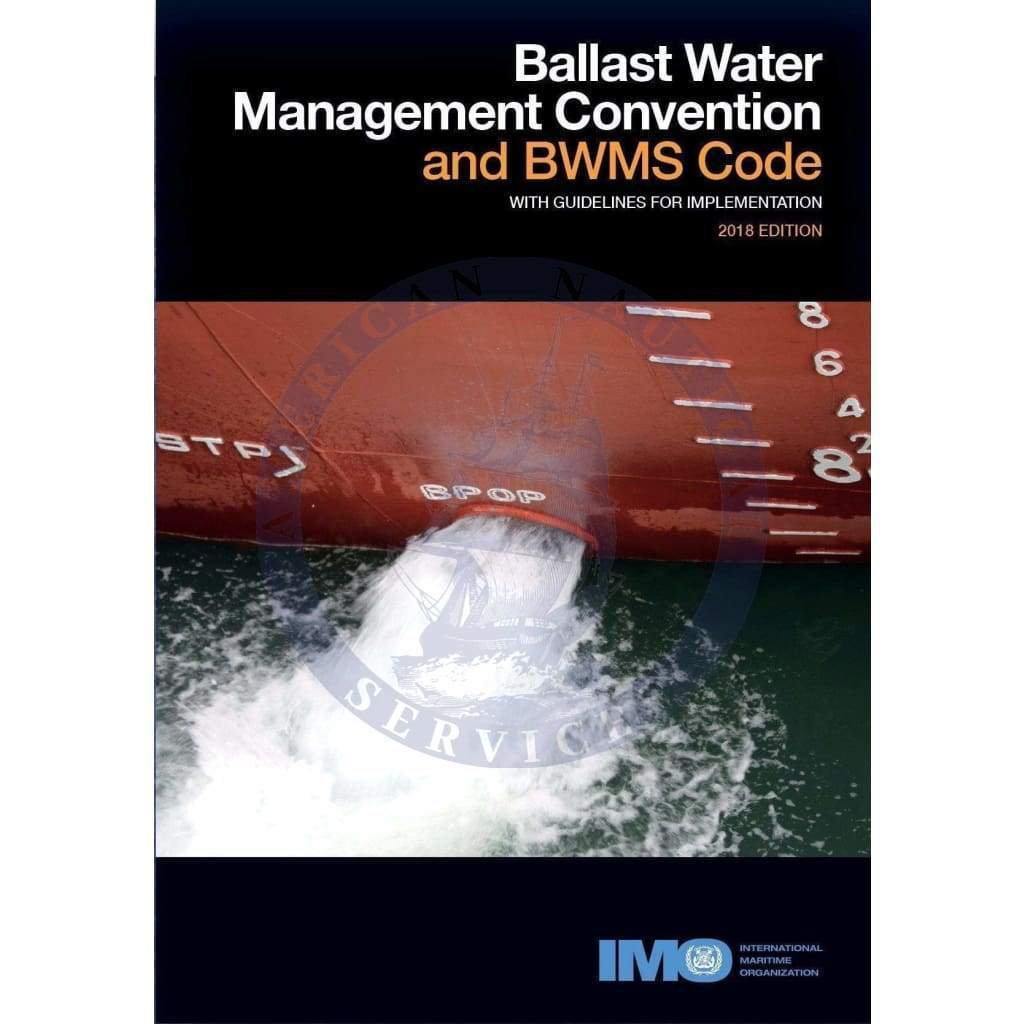
The International Convention for the Control and Management of Ships’ Ballast Water and Sediments, 2004, usually called the Ballast Water Management Convention or BWM Convention, was created to reduce this risk. Within this framework, the Code for Approval of Ballast Water Management Systems, commonly known as the BWMS Code, provides the technical and regulatory basis for approving ballast water management systems. The BWMS Code was adopted by IMO through resolution MEPC.300(72) on 13 April 2018 and took effect on 13 October 2019, replacing the earlier G8 approval guidelines as the mandatory approval framework for ballast water management systems.
The importance of the BWMS Code should not be underestimated. It is not simply a technical checklist for equipment manufacturers. It is a regulatory bridge between international environmental law, marine engineering, ship safety, biological testing, environmental toxicology, port State control, flag State approval, and shipboard operational practice. It tells Administrations, recognised organisations, test facilities, manufacturers, shipowners, ship managers, and surveyors how a ballast water management system should be evaluated before it can be accepted for installation and use on ships.
In practical terms, the Code answers several critical questions. Can the system consistently meet the D-2 biological discharge standard? Is the system safe for the crew and ship? Does it create environmental or public-health risks? Has it been tested under realistic water-quality conditions? Are its operating limitations clearly identified? Does its control and monitoring system record enough data for inspection? Can it be sampled effectively? Is the type approval certificate meaningful for real shipboard operation? These questions are central because a type-approved system that works only under ideal laboratory conditions is not enough. Ships operate in variable salinities, temperatures, turbidity levels, organic content, suspended solids, short voyages, long voyages, challenging water quality, and different ballast tank arrangements.
The BWMS Code therefore represents a more mature stage in ballast water regulation. Earlier regulatory attention focused heavily on whether ships installed treatment systems. The modern emphasis is broader: systems must be properly approved, correctly installed, commissioned, maintained, monitored, and operated so that the ship continues to meet the D-2 discharge standard during its operational life. This distinction is vital for shipowners and maritime students: approval of equipment is not the same as continuous compliance by the ship.
Why Ballast Water Management Systems Need a Mandatory Approval Code
Before the BWM Convention entered into practical implementation, ships mainly relied on ballast water exchange, known as the D-1 standard. Ballast water exchange requires ships to replace coastal ballast water with open-ocean water, usually far from shore and in deep water, where coastal organisms are less likely to survive. However, ballast water exchange has operational and safety limitations. It may not be feasible in bad weather, it can affect ship stability and structural loading, and it does not guarantee biological removal. For this reason, the BWM Convention introduced the D-2 performance standard, which limits the concentration of viable organisms and indicator microbes in discharged ballast water.
The BWMS Code exists because compliance with the D-2 standard requires treatment equipment that can perform reliably and verifiably. A ballast water management system may use filtration, ultraviolet irradiation, electrochlorination, chemical disinfection, deoxygenation, ozonation, heat, ultrasound, advanced oxidation, or combinations of technologies. Each technology has strengths and limitations. UV systems may be sensitive to low UV transmittance and high turbidity. Electrochlorination systems may be affected by salinity and temperature. Filtration systems may struggle in very muddy or biologically dense waters. Chemical systems may create residual oxidants or by-products requiring neutralisation. In-tank systems may depend on holding time and mixing. Because these technologies behave differently, a common approval framework is necessary.
The BWMS Code establishes this common framework. It requires systems to be evaluated in a uniform, objective, consistent, and transparent way. The Code is aimed primarily at Administrations or their designated bodies, but it is also intended as a reference for manufacturers and shipowners. It covers design, installation, performance, testing, environmental acceptability, technical evaluation, type approval certification, and reporting to IMO.
A key principle is that type approval is intended to screen out systems that would fail to meet the D-2 standard, but it does not guarantee that a system will work on every ship in every situation. The Code clearly recognises that a ship’s actual ballast water discharge must comply with D-2 throughout the life of the ship. This is one of the most important practical messages for ship operators. A type approval certificate is not a permanent shield against non-compliance. The crew, company, flag Administration, class society, and port State control officers must still consider installation quality, maintenance, calibration, operating conditions, system limitations, record keeping, bypass events, and sampling results.
The Regulatory Position of the BWMS Code
The BWMS Code is linked directly to regulation D-3 of the BWM Convention, which requires ballast water management systems used to comply with the Convention to be approved by the Administration. The Code was made mandatory through amendments adopted at MEPC 72, and IMO states that MEPC 72 adopted the BWMS Code by resolution MEPC.300(72), superseding the 2016 G8 Guidelines from October 2019.
This transition from guidelines to a mandatory Code was significant. Guidelines can support uniform implementation, but a mandatory code creates stronger legal certainty and more consistent expectations among flag States, manufacturers, class societies, shipowners, and port State control regimes. For industry, this means that new BWMS approvals after the relevant date must be assessed under the mandatory Code rather than only under earlier guideline practice.
The Code also includes transitional logic for earlier systems. It recognises systems approved under previous G8 guidelines and includes provisions for systems approved not later than 28 October 2018 and installed before 28 October 2020. It also states that references to the earlier G8 Guidelines in existing IMO instruments should be read as references to the BWMS Code once the Code took effect.
The BWM regulatory framework has continued to evolve after the Code entered into force. MEPC 75 adopted amendments concerning commissioning testing of BWMS, which entered into force in June 2022, while MEPC 80 adopted amendments to the Ballast Water Record Book format that entered into force on 1 February 2025. MEPC 81 adopted amendments concerning electronic record books, expected to enter into force on 1 October 2025. By 2026, IMO’s review of the BWM Convention and associated instruments had moved into a more advanced stage, with MEPC 84 expected to progress amendments to the BWM Convention, revised G4 Guidelines, the BWMS Code, and associated guidance.
This ongoing evolution confirms that ballast water management is not a static compliance area. It is a living regulatory system shaped by implementation experience, biological testing evidence, industry feedback, operational difficulties, and port State control practice.
The D-2 Standard: The Performance Target Behind the Code
The heart of ballast water treatment compliance is the D-2 performance standard. Under the BWMS Code’s background section, regulation D-2 requires ships conducting ballast water management to discharge less than 10 viable organisms per cubic metre for organisms greater than or equal to 50 micrometres in minimum dimension. It also requires less than 10 viable organisms per millilitre for organisms between 10 and 50 micrometres. For indicator microbes, the standard includes limits for toxicogenic Vibrio cholerae, Escherichia coli, and intestinal enterococci.
These values are not abstract laboratory figures. They are the biological endpoint that BWMS approval testing must verify. The system must demonstrate that it can reduce viable organisms and relevant microbes to levels below the D-2 limits under defined test conditions. The Code therefore connects marine biology with engineering performance. A system is not approved merely because it filters, irradiates, chlorinates, or disinfects water; it is approved because it demonstrates the ability to meet the biological discharge standard under controlled but challenging test conditions.
For maritime students, this distinction is important. The D-2 standard is not a technology prescription. IMO does not say that every ship must use UV or electrochlorination or filtration. Instead, it sets a biological performance outcome. Manufacturers may choose different technologies, but the system must achieve the required result. This performance-based approach encourages innovation while still maintaining environmental protection.
What Counts as a Ballast Water Management System?
The BWMS Code defines a ballast water management system as any system that processes ballast water so that it meets or exceeds the D-2 performance standard. The system includes ballast water treatment equipment, associated control equipment, specified piping arrangements, control and monitoring equipment, and sampling facilities. However, for the purpose of the Code, the BWMS does not include the ship’s normal ballast water fittings such as piping, valves, and pumps that would be required even if the BWMS were not installed.
This definition is operationally useful. It prevents confusion between the ship’s general ballast system and the approved treatment system. A BWMS may be integrated into the ballast line, but its approved scope is specific. The approved system has defined components, major components, treatment rated capacity, design limitations, monitoring arrangements, and sampling facilities.
The Code also defines key terms such as land-based testing, shipboard testing, representative sampling, successful test cycle, failed test cycle, invalid test cycle, system design limitations, treatment rated capacity, and viable organisms. These definitions are more than legal wording. They determine how testing is performed and interpreted. For example, a failed test cycle is a valid test cycle in which the system does not meet D-2, and it interrupts the required consecutive test sequence. An invalid test cycle, by contrast, occurs when test requirements are not met due to circumstances outside the BWMS, and it does not count as one of the required consecutive cycles.
System Design Limitations: Why Approval Must Include Operating Boundaries
One of the most important concepts in the BWMS Code is System Design Limitations, or SDL. SDL refers to the water-quality and operational parameters that are important to the system’s ability to achieve D-2. For each parameter, the manufacturer identifies low and/or high values within which the system is designed to perform. These parameters are validated under the supervision of the Administration.
SDL matters because no BWMS operates equally well under all possible conditions. A UV system may have a lower limit for UV transmittance. An electrochlorination system may have limits related to salinity, temperature, or total residual oxidant generation. A filtration unit may have practical limitations related to suspended solids and pressure differential. A system may also have limits related to flow rate, holding time, dose, neutralisation capacity, temperature, or turbidity.
The Code requires these limitations to be documented on the Type Approval Certificate. Importantly, the Code explains that the limitations do not necessarily determine whether the equipment may be type-approved. Instead, they provide information on the conditions under which proper functioning can be expected.
For shipowners, SDL information is crucial when selecting a BWMS. A vessel trading mostly in clear oceanic waters may have different needs from a vessel trading in estuaries, river ports, muddy terminals, low-salinity areas, or ports with high sediment loads. A ship with short voyages may require different treatment and holding-time performance compared with a ship on long ocean passages. If ship selection ignores SDL, the vessel may face repeated alarms, operational delays, bypass events, contingency measures, or port State control concerns.
Technical Specifications: Safety, Reliability, and Shipboard Suitability
The BWMS Code requires a ballast water management system to be robust and suitable for the shipboard environment. It must be designed for its intended service, use compatible materials, mitigate danger to persons on board, and avoid unacceptable environmental or public-health harm. Equipment that may emit dangerous gases or liquids must include independent detection and shutdown arrangements, and systems using dangerous substances must include acceptable risk mitigation measures.
This safety focus is essential because BWMS equipment is not installed in a laboratory. It operates in engine rooms, pump rooms, machinery spaces, hazardous zones, cargo environments, ballast pump lines, and shipboard control systems. It may involve high-voltage UV lamps, chemicals, oxidants, hydrogen generation, chlorine compounds, neutralising agents, pressure vessels, filters, sensors, automatic valves, sampling lines, and alarms. Poor design or poor installation could create fire, explosion, toxicity, corrosion, electrical, flooding, or operational hazards.
The Code also requires alarms for failures that compromise proper operation. Working parts liable to wear or damage must be accessible for maintenance. Routine maintenance, troubleshooting procedures, and repair records must be clearly defined. Calibration certificates must be retained on board for inspection purposes. The system must also prevent unauthorised interference, including seal-breaking requirements for certain access points and automatic recording of bypass events.
These requirements are directly relevant to shipboard management. A system that is biologically effective but difficult to maintain can still become a compliance problem. A sensor that is not calibrated, a clogged filter that is not maintained, a UV sleeve that is fouled, a neutralisation unit that is not functioning, or a bypass that is not recorded may all undermine compliance. Therefore, the Code integrates engineering reliability with environmental regulation.
Control, Monitoring, and Data Retention
Modern ballast water compliance depends heavily on control and monitoring. The BWMS Code requires type-approved systems to have suitable control and monitoring equipment that automatically monitors and records enough data to verify correct operation. Where practical, SDL parameters should also be monitored and recorded. The system must be able to produce reports of applicable self-monitoring parameters for official inspections or maintenance. It must store data for at least 24 months, and if the control and monitoring equipment is replaced, data recorded before replacement must remain available on board for 24 months.
This requirement reflects a broader trend in maritime compliance: documentation and data are not secondary. They are evidence. During port State control, class survey, flag State inspection, or internal audit, the question is not only whether the system is installed, but whether it operated correctly during ballast operations. Inspectors may review alarms, bypass records, maintenance records, calibration records, treatment parameters, flow rates, operational logs, and ballast water record book entries.
The Code’s data-retention requirement also supports accountability. If a vessel discharged ballast water in a port several months ago, the company may need to demonstrate that the BWMS operated within its parameters at that time. Without reliable records, the ship may face difficulty proving proper operation.
Type Approval Process
The type approval process begins with documentation. The manufacturer must submit information about the design, construction, operation, and functioning of the BWMS, including the water-quality and operational parameters important to its operation. This information forms the basis for the Administration’s first evaluation of suitability. After pre-test evaluation, the system undergoes land-based, shipboard, and other tests according to the Code. The system tested must be a final and complete product, constructed using the same materials and procedures that will be used for production units.
The documentation submitted for approval must include a description and diagrammatic drawings, the operation, maintenance and safety manual, hazard identification, environmental and public-health impacts, and system design limitations. This makes approval a multidisciplinary process. It is not only about biological efficacy. It includes engineering documentation, risk assessment, environmental impact, operational safety, software change control, maintenance, sampling, and installation requirements.
After successful testing and evaluation, the Administration may issue a Type Approval Certificate. The certificate must specify the main particulars of the system and validated SDL. If the system has not been tested at all required temperatures and salinities, the certificate may include limiting operating conditions. BWMS using Active Substances require additional approval under the relevant IMO procedure before a Type Approval Certificate can be issued.
This process is intended to make approval both rigorous and transparent. It also supports international recognition. An Administration may issue a Type Approval Certificate based on testing supervised by another Administration, and approved systems may be accepted by other Administrations. However, if a system approved by one country fails type approval in another, the countries concerned should consult to reach a mutually acceptable agreement.
Land-Based Testing
Land-based testing is designed to evaluate biological efficacy and environmental acceptability under controlled and comparable conditions. According to the Code, land-based testing must be independent of the manufacturer. The test set-up should represent the shipboard characteristics and arrangements in which the system is intended to be installed, including the complete BWMS, piping and pumping arrangements, and simulated ballast tanks.
A land-based test cycle generally includes uptake, storage, treatment, and discharge. The Code requires testing in different salinity ranges: marine, brackish, and fresh water, with specified conditions for dissolved organic carbon, particulate organic carbon, and total suspended solids. This is important because water quality strongly affects treatment performance. Clear seawater is not the same as muddy river water or organically rich brackish water. A credible approval system must challenge equipment under conditions that reflect real operational difficulty.
The Code also addresses scaling. Some systems may be too large to test at full commercial scale in a land-based facility, but scaling must be technically justified and verified by the Administration. The purpose is to ensure that a smaller tested model is representative of larger units and that scaling does not artificially improve apparent performance.
Sampling is another critical component. Samples must be representative and time-integrated, and sampling methods must minimise organism mortality caused by the sampling process itself. This is essential because a poor sampling method could make a system look more effective than it really is. If organisms die because of sampling stress rather than treatment, the test result would be biased.
Shipboard Testing
Shipboard testing complements land-based testing by evaluating the BWMS in real operational conditions. A shipboard test cycle includes ballast water uptake, treatment, storage during a voyage, and discharge. The system is operated and maintained by the ship’s crew according to the operation, maintenance, and safety manual, while testing is conducted by an independent test facility.
The Code requires shipboard testing to span at least six months, with three consecutive valid test cycles meeting the D-2 standard. Test cycles must be suitably separated across the six-month period. This requirement recognises that ship operations vary with season, route, water quality, temperature, crew practice, maintenance condition, and ballast patterns.
Shipboard testing is important because a system may behave differently at sea than in a test facility. Vibrations, ship motion, variable pump performance, sediment accumulation, crew workload, port schedules, weather, short port stays, and integration with ballast operations all affect real-world performance. For example, a system that requires slow flow rates may create commercial delays during cargo operations. A system that needs frequent cleaning may be difficult to manage during intensive port rotation. A system that performs poorly in low-salinity water may create problems for ships trading in river ports.
The Code therefore helps ensure that type approval has operational meaning. It is not enough to show that a system can work once under controlled conditions. The system must demonstrate credible performance in shipboard use.
Environmental Testing and Active Substances
Some BWMS technologies use Active Substances, such as disinfectants or generated oxidants, to kill or neutralise aquatic organisms and pathogens. Others may not intentionally use Active Substances but may still alter the chemical composition of treated water. The BWMS Code requires environmental and public-health impact information, including identification of potential hazards, dosage information, maximum allowable discharge concentrations where applicable, and toxicity testing when treated water may create adverse impacts.
This requirement is vital because environmental protection cannot be reduced to killing organisms. A system that eliminates invasive species but discharges harmful residual chemicals, toxic by-products, or unsafe treated water would create a different environmental problem. Therefore, the Code evaluates both biological effectiveness and environmental acceptability.
For ship operators, this means chemical management is part of compliance. Neutralisation chemicals, residual oxidants, side streams, filter backwash, sediments, and treatment by-products must be managed according to the approved system design and the ship’s ballast water management plan. Crew training should include not only “how to start the system” but also how to understand alarms, chemical dosing, neutralisation, safety precautions, personal protective equipment, and emergency procedures.
Installation, Commissioning, and Survey Requirements
Type approval is only the first stage. Once a BWMS is installed on a ship, the installation must be surveyed. The Code requires the Administration issuing the International Ballast Water Management Certificate to verify that key documents are on board, including the Type Approval Certificate, operation, maintenance and safety manual, ballast water management plan, installation specifications, and commissioning procedures.
Before issuing the certificate, the Administration should verify that the installation was carried out according to the technical installation specification, that the system conforms to the Type Approval Certificate, that inlets and outlets are correctly located, that workmanship is satisfactory, and that commissioning procedures have been completed.
This stage is crucial because even a well-approved system can fail if installed incorrectly. Common installation-related problems may include poor sampling point arrangement, incorrect bypass configuration, inadequate pipework, unsuitable electrical installation, insufficient access for maintenance, sensor placement problems, software configuration issues, hydraulic mismatch with ballast pumps, or poor integration with alarm systems.
Commissioning testing has become increasingly important in the IMO framework. IMO notes that amendments adopted through resolution MEPC.325(75) entered into force in June 2022 and included commissioning testing requirements. Classification guidance also confirms that sampling and analysis should be conducted at commissioning testing where the relevant survey is completed on or after 1 June 2022.
The practical message is clear: a BWMS must not only be type-approved; it must also be properly installed and demonstrated to function on the specific ship.
Ballast Water Record Keeping and Electronic Records
Record keeping is a major pillar of ballast water compliance. Ballast operations, uptake, treatment, discharge, internal transfer, bypass, malfunction, contingency measures, and sediments must be recorded properly. MEPC 80 adopted amendments to Appendix II of the BWM Convention concerning the Ballast Water Record Book, with entry into force expected on 1 February 2025. Industry guidance explains that the updated Ballast Water Record Book format introduces standardised operation codes to categorise ballast water activities more consistently.
MEPC 81 also adopted amendments to regulations A-1 and B-2 concerning electronic record books, expected to enter into force on 1 October 2025. This reflects a wider maritime trend toward digital compliance records. However, electronic records must still be reliable, accessible, protected from improper alteration, and acceptable to the Administration.
For shipboard officers, record keeping is not paperwork for its own sake. It provides the compliance history of the ship. If a BWMS alarms, if a bypass is used for safety reasons, if ballast water is managed under contingency measures, or if challenging water quality affects treatment, entries must be clear and consistent with the ship’s ballast water management plan and system records.
Challenging Water Quality and Operational Reality
One of the major lessons from BWMS implementation is that some ports present challenging water quality conditions. High turbidity, high suspended solids, algal blooms, low salinity, high organic matter, cold water, or muddy estuarial conditions can affect system operation. IMO adopted interim guidance at MEPC 81 to assist ships when type-approved BWMS encounter operational limitations or difficulty meeting operational demand in challenging water quality conditions, even when the system has been properly installed, operated, and maintained.
This is an important development because it recognises the difference between negligence and genuine operational constraint. A ship should not automatically be treated as non-compliant simply because a properly maintained system struggles in exceptional conditions. However, the ship must follow approved procedures, document events, apply contingency measures correctly, and avoid using challenging water quality as a vague excuse.
The 2026 regulatory discussions continued this direction. Reports from MEPC 84 indicate that IMO progressed amendments related to the BWM framework, including issues such as challenging water quality and contingency measures, with further adoption steps expected at MEPC 85.
For ship managers, the operational lesson is to include challenging water quality in risk assessment. Before trading to ports known for heavy sediment, riverine conditions, algal blooms, or low salinity, the company should check whether the installed BWMS is suitable for those conditions and whether the crew understands contingency procedures.
The BWMS Code and Port State Control
Port State control officers may inspect ballast water records, certificates, management plans, system operation, alarms, bypass records, maintenance records, and sampling arrangements. They may also take ballast water samples under the Convention framework. The BWMS Code supports this inspection regime by requiring sampling facilities, monitoring records, reporting capability, and clear certification.
The Code requires representative sampling facilities so that treated ballast water discharge can be sampled properly. It also requires bypass events to activate alarms and be recorded by control and monitoring equipment and in the ballast water record book. These requirements help inspectors distinguish between normal operation, emergency bypass, internal transfer, malfunction, and deliberate non-compliance.
Recent regulatory direction suggests a stronger focus on proving that systems actually work, not merely that they are installed. MEPC 84 industry summaries report that amendments were approved to strengthen survey and mandatory requirements, including greater verification of BWMS performance, maintenance, and D-2 compliance. Although final adoption and entry-into-force details depend on IMO’s formal process, the direction is clear: ballast water compliance is moving toward performance assurance.
Practical Implications for Shipowners and Operators
For shipowners, the BWMS Code affects procurement, installation, operation, maintenance, crew training, and compliance management. Selecting the cheapest or most compact system may create long-term operational risk if the system is unsuitable for the ship’s trade pattern. A proper selection process should consider route profile, port water quality, salinity, voyage length, ballast pump capacity, ballast tank arrangement, available space, power demand, hazardous-area requirements, chemical logistics, crew workload, maintenance access, spare parts, class support, and SDL.
During installation, shipowners should ensure that the BWMS is installed exactly according to approved specifications. Sampling points should be accessible and compliant. Bypass arrangements should be correctly alarmed and recorded. The system should integrate with shipboard power, automation, and piping without creating safety risks. Commissioning should be treated as a serious verification stage rather than a formality.
During operation, companies should maintain a strong ballast water management culture. Officers should understand the ballast water management plan, system limitations, normal operating procedures, emergency procedures, alarms, neutralisation requirements, maintenance routines, record book codes, and contingency measures. Engineers should understand filters, UV lamps, sensors, pumps, valves, chemical dosing, calibration, gas detection, and safety systems. Deck officers should understand ballast planning, port requirements, exchange or treatment logic, sediment management, and documentation.
For older ships, retrofit complexity remains a major concern. Space, power, piping routes, structural modification, dry-dock time, integration with existing ballast pumps, and hazardous-zone requirements can all complicate installation. For newbuildings, BWMS integration can be designed from the beginning, reducing many retrofit problems.
Practical Implications for Seafarers
Seafarers are central to ballast water compliance. Even the most advanced BWMS depends on correct operation and maintenance. The crew must know when to start treatment, how to monitor treatment parameters, how to respond to alarms, how to record operations, when bypass is permitted, how to manage emergencies, and how to communicate with the company and port authorities.
The operation, maintenance, and safety manual is therefore not just a document for survey. It is a training tool. The BWMS Code requires the manual to include correct operation, maintenance and safety instructions, troubleshooting procedures, emergency procedures, calibration procedures, and supplementary information necessary for safe and efficient operation.
Training should be practical. Crew should be able to answer questions such as: What are the SDL of our system? What happens if turbidity is too high? How is a bypass recorded? What alarms require stopping ballast operations? How often must sensors be calibrated? What chemicals are used? What PPE is required? What entries are made in the Ballast Water Record Book? What happens if the system cannot operate because of challenging water quality? What evidence must be retained for inspectors?
These questions show why ballast water management is now part of modern seamanship and marine engineering competence.
The Future of the BWMS Code
The BWMS Code will continue to evolve as IMO gains more experience from ships, Administrations, manufacturers, class societies, port State control regimes, and scientific studies. IMO’s experience-building phase was designed to gather data, analyse implementation, and review the Convention. IMO describes this as a three-stage approach: data gathering, data analysis, and Convention review.
By MEPC 83 in 2025, the Committee had re-established the Correspondence Group on Review of the BWM Convention to finalise draft amendments to mandatory provisions, including the BWMS Code, for submission to MEPC 84 with a view to adoption by MEPC 85. At MEPC 84 in 2026, IMO was expected to progress the package of amendments, adopt revised G4 Guidelines, and continue work on the BWMS Code and associated guidelines.
The future direction is likely to include stronger attention to real-world performance, challenging water quality, biological testing during surveys, active substance residues, maintenance evidence, contingency measures, electronic records, and clearer ship-specific ballast water management plans. For industry, this means that compliance strategies must move beyond installation projects. Companies need life-cycle management of BWMS performance.
Conclusion
The BWMS Code is one of the most important technical instruments supporting the Ballast Water Management Convention. It converts the environmental objective of preventing harmful aquatic organism transfer into a structured approval regime for real shipboard equipment. It defines how ballast water management systems should be documented, tested, evaluated, certified, installed, commissioned, monitored, and sampled.
Its central message is simple but demanding: a ballast water management system must be safe, environmentally acceptable, biologically effective, technically reliable, and suitable for shipboard operation. The Code requires land-based testing, shipboard testing, system design limitation validation, environmental assessment, control and monitoring, data retention, installation verification, and representative sampling. It also recognises that type approval alone is not enough. Actual ship discharges must continue to meet the D-2 standard throughout the ship’s life.
For shipowners, the BWMS Code affects purchasing decisions, retrofit planning, newbuilding design, crew training, maintenance systems, and compliance evidence. For seafarers, it affects daily operations, alarms, record keeping, troubleshooting, safety, and port State control readiness. For manufacturers, it sets the technical and scientific standard for approval. For Administrations and recognised organisations, it provides the framework for consistent certification and oversight.
As ballast water regulation continues to develop through IMO’s review process, the BWMS Code will remain a central instrument. The industry’s challenge is no longer only to install treatment systems, but to ensure that they work reliably under the real conditions of global shipping. That is the true purpose of the BWMS Code: not simply approving machinery, but protecting the marine environment through credible, testable, and enforceable performance.
References
International Maritime Organization. Resolution MEPC.300(72): Code for Approval of Ballast Water Management Systems (BWMS Code). Adopted 13 April 2018.
International Maritime Organization. BWM Convention and Guidelines.
International Maritime Organization. Marine Environment Protection Committee, MEPC 80 meeting summary.
International Maritime Organization. Marine Environment Protection Committee, MEPC 81 / BWM Convention electronic record book amendments.
International Maritime Organization. Implementing the Ballast Water Management Convention.
International Maritime Organization. MEPC 83 meeting summary.
International Maritime Organization. MEPC 84 preview and Secretary-General opening remarks.
DNV. New IMO guidance for managing challenging ballast water quality.
Bureau Veritas. Upcoming changes to ballast water record-keeping requirements.
ClassNK. Ballast Water Management Convention guidance.