
Date: 13 May 2026
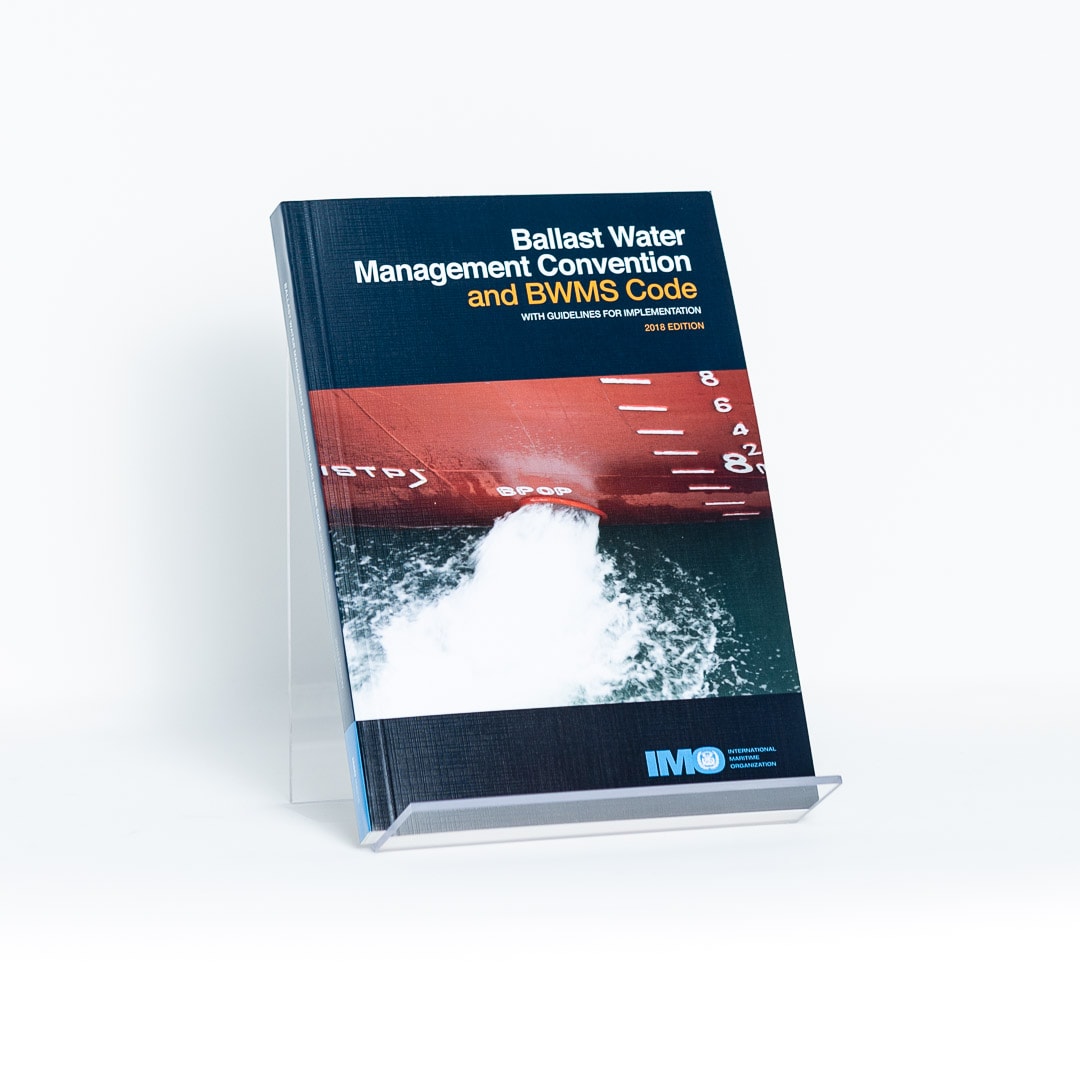
The main international legal instrument for ballast water is the International Convention for the Control and Management of Ships’ Ballast Water and Sediments, 2004, commonly known as the Ballast Water Management Convention or BWM Convention. It was adopted by the International Maritime Organization (IMO) to reduce one of the most serious environmental risks created by international shipping: the transfer of harmful aquatic organisms and pathogens through ships’ ballast water and sediments.
Ballast water is essential for ship safety. Ships take ballast water on board to control trim, list, draught, stability, propeller immersion, manoeuvrability, and hull stresses. However, when ballast water is loaded in one coastal area and discharged in another, it may transfer organisms such as plankton, larvae, bacteria, viruses, algae, molluscs, and other aquatic species. Some of these organisms may survive the voyage, reproduce in the receiving environment, and become invasive.
For this reason, ballast water management is both a shipboard operational requirement and an international environmental protection obligation.
Why Ballast Water Management Matters
Ballast water has been recognised as one of the major pathways for the spread of invasive aquatic species. A vessel may take ballast water in one port, cross an ocean, and discharge that water in another ecosystem. The organisms carried inside ballast tanks may establish themselves in the new area, compete with native species, damage fisheries, affect aquaculture, clog industrial water intakes, harm coastal infrastructure, and create public-health risks.
For cadets, deck officers, engineers, and ship operators, ballast water management is not only an environmental subject. It is directly connected to:
ship stability and safe ballast operations;
approved ballast water management procedures;
operation and maintenance of ballast water management systems;
port State control inspections;
survey and certification;
sediment handling;
record keeping;
crew safety;
chemical handling where active substances are used;
and increasingly, electronic records and performance verification.
The modern regulatory trend is clear: ballast water compliance is no longer based mainly on exchanging ballast water at sea. It is now based on whether discharged ballast water actually meets the D-2 biological performance standard.
Core Structure of the BWM Convention
The BWM Convention requires ships to manage ballast water and sediments through several key compliance elements.
Ballast Water Management Plan
Each applicable ship must carry an approved Ballast Water Management Plan. This plan explains how ballast water and sediments are managed on board. It should be ship-specific and should describe operational procedures, safety precautions, sediment management, treatment-system operation, contingency arrangements, and record-keeping requirements.
Ballast Water Record Book
Ships must maintain a Ballast Water Record Book. This records ballast water uptake, treatment, internal circulation, exchange, discharge, accidental discharge, failures, system inoperability, sediment removal, cleaning, flushing, and use of reception facilities.
The record book has become especially important because recent amendments have expanded the required categories of entries and opened the way for approved electronic record books.
International Ballast Water Management Certificate
Applicable ships must be surveyed and certified. The International Ballast Water Management Certificate confirms the ship’s ballast water management method and compliance status. However, certification alone is not enough. The system must be properly installed, operated, maintained, monitored, and recorded throughout the life of the ship.
Ballast Water Performance Standards: D-1 and D-2
The Convention contains two central standards: D-1 and D-2.
The D-1 standard refers to ballast water exchange. Under this older transitional method, ships exchange ballast water at sea to reduce the risk of discharging coastal organisms into another coastal environment.
The D-2 standard is the biological discharge standard. It limits the number of viable organisms and indicator microbes that may be discharged in ballast water. In practice, compliance with D-2 usually requires a type-approved Ballast Water Management System, often using technologies such as filtration, ultraviolet treatment, electrochlorination, chemical treatment, deoxygenation, or combined treatment methods.
The BWMS Code confirms the D-2 discharge limits, including fewer than 10 viable organisms per cubic metre for organisms of 50 micrometres or larger, fewer than 10 viable organisms per millilitre for organisms between 10 and 50 micrometres, and limits for indicator microbes such as toxicogenic Vibrio cholerae, Escherichia coli, and intestinal enterococci.
The Shift from D-1 Exchange to D-2 Treatment
The BWM Convention has moved from a transitional exchange-based regime toward a treatment-based regime. The earlier reliance on ballast water exchange was useful as an interim measure, but it was never a complete solution. Exchange depends on voyage route, sea conditions, tank arrangements, safety limitations, and distance from land. It also does not guarantee full removal of organisms.
The D-2 standard is more demanding because it focuses on the quality of ballast water actually discharged. This is why the installation and correct operation of BWMS equipment has become central to compliance.
Implementation Schedule: Regulation B-3
Resolution MEPC.297(72) amended Regulation B-3 on the implementation schedule for ballast water management. In simple terms, ships constructed on or after 8 September 2017 must comply with the D-2 standard from delivery. Ships constructed before that date were given a phased implementation schedule, mainly linked to the relevant renewal survey.
For ships where the renewal-survey trigger did not apply, Administrations had to set a compliance date, but not later than 8 September 2024. This means the global transition period has effectively reached its final stage. By September 2024, ships subject to the Convention were generally expected to comply with D-2 unless a valid exemption, exception, alternative method, or special arrangement applies.
The BWMS Code: Why MEPC.300(72) Is Important
A major technical pillar of the modern ballast water regime is Resolution MEPC.300(72), adopted on 13 April 2018, which introduced the Code for Approval of Ballast Water Management Systems, known as the BWMS Code. The Code replaced the earlier G8 approval guidelines by making the approval framework mandatory under the Convention. The resolution states that the BWMS Code would take effect on 13 October 2019 with the associated BWM Convention amendments.
The BWMS Code is important because it explains how ballast water treatment systems must be evaluated, tested, approved, documented, installed, and verified. It is mainly addressed to Administrations and their recognised organisations, but it is also highly relevant to manufacturers, shipowners, ship managers, officers, surveyors, and port State control inspectors.
The Code includes requirements for design, installation, performance, testing, environmental acceptability, technical evaluation, issuance of Type Approval Certificates, shipboard testing, land-based testing, self-monitoring, sampling, and validation of system limitations.
Approval Does Not Guarantee Compliance in Every Situation
One of the most important messages of the BWMS Code is that type approval is not the end of compliance. The Code explains that approval is intended to screen out systems that would fail to meet the D-2 standard. However, approval of a system does not guarantee that the system will work on every ship or in every operational situation. To satisfy the Convention, the ballast water discharge must comply with D-2 throughout the life of the ship.
This point is very important for officers. A ship cannot simply say, “The system is approved, therefore we are compliant.” The system must be operated within its approved limits, maintained correctly, monitored properly, and used according to the approved Ballast Water Management Plan and manufacturer’s instructions.
Technical Requirements for BWMS
The BWMS Code requires ballast water management systems to be designed for robust shipboard operation. They must be suitable for the intended service, safe for crew, compatible with shipboard conditions, and environmentally acceptable.
The Code requires BWMS to be effective on both short and long voyages and to take into account the possibility that viable organisms remaining after treatment may reproduce between treatment and discharge.
A BWMS must not endanger the health and safety of the ship or crew. It must not interact negatively with ship systems or cargo, and it must not create adverse environmental effects. If the system uses dangerous substances or may emit dangerous gases or liquids, proper risk mitigation, detection, alarms, and shutdown arrangements are required.
Control, Monitoring, Alarms, and Data Storage
The BWMS Code places strong emphasis on control and monitoring. Type-approved systems must have suitable control and monitoring equipment that automatically records enough data to verify correct operation. This equipment must record proper functioning and failures. Where practical, System Design Limitation parameters should also be monitored and recorded.
The system must be able to produce reports for official inspection or maintenance. Importantly, the control and monitoring equipment must store data for at least 24 months. If the control and monitoring equipment is replaced, the data recorded before replacement must remain available on board for 24 months.
This requirement directly supports port State control and flag State verification. Inspectors may compare the Ballast Water Record Book, BWMS monitoring data, alarms, bypass records, maintenance records, and operational history.
System Design Limitations
A key technical concept in the BWMS Code is System Design Limitations, or SDL. SDL means the water-quality and operational parameters that are important to the ability of the BWMS to meet the D-2 standard. These may include parameters such as salinity, temperature, turbidity, total suspended solids, dissolved organic carbon, particulate organic carbon, flow rate, holding time, UV transmittance, oxidant demand, or other technology-specific limits.
The Code requires SDL to be identified by the manufacturer and validated under the supervision of the Administration. The validated SDL must be documented on the Type Approval Certificate.
This is highly practical. If a UV system is operated in very turbid water, or an electrochlorination system is used in water with salinity or temperature outside its approved range, the system may not perform as intended. Therefore, officers must know the approved operating limits of their specific system.
Type Approval Process
The BWMS Code sets out a structured type approval process. The manufacturer must submit information about the system’s design, construction, operation, function, water-quality limits, and operational parameters. After pre-test evaluation by the Administration, the system must undergo land-based, shipboard, and other required tests.
The documentation submitted for approval must include, at minimum, a description and diagrams of the BWMS, the operation, maintenance and safety manual, hazard identification, environmental and public-health impact information, and System Design Limitations.
Only after successful completion of the required testing and evaluation may the Administration issue a Type Approval Certificate.
Land-Based and Shipboard Testing
The BWMS Code requires both land-based and shipboard evaluation. Land-based testing is used to assess biological efficacy and environmental acceptability under controlled conditions. Shipboard testing verifies the performance of the system in real ship operations.
The Code defines land-based testing as testing carried out in a laboratory, equipment factory, pilot plant, moored test barge, or test ship to confirm that the BWMS meets D-2. Shipboard testing is a full-scale test of a complete BWMS on board a ship.
For shipboard testing, the system should be operated and maintained by the ship’s crew according to the operation, maintenance and safety manual. This is important because compliance depends not only on laboratory performance but also on practical shipboard usability.
Environmental Acceptability and Active Substances
Some BWMS technologies use Active Substances, such as chemicals or organisms that act against harmful aquatic organisms and pathogens. The BWMS Code defines an Active Substance as a substance or organism, including a virus or fungus, that has a general or specific action on or against harmful aquatic organisms and pathogens.
If a BWMS uses Active Substances, additional approval requirements apply. The Type Approval Certificate may only be issued after the Active Substance has been approved by IMO under Regulation D-3.2, and any recommendations accompanying that approval must be taken into account.
This is especially relevant for systems based on electrochlorination or chemical dosing. Crew must understand not only the ballast operation but also chemical safety, neutralisation, alarms, storage, ventilation, and emergency procedures.
Installation Requirements After Type Approval
After a BWMS has been type-approved, correct installation on board is essential. The BWMS Code requires the system to be accompanied by sampling facilities arranged to collect representative samples of ballast water discharge. It also requires suitable bypasses or overrides to protect ship and crew safety in emergencies. Any bypass must activate an alarm and must be recorded by the control and monitoring equipment and in the Ballast Water Record Book.
This is a major operational point. A bypass may be necessary for safety, but it cannot be treated as a normal operational shortcut. It must be alarmed, recorded, and justified.
Installation Survey and Commissioning
The BWMS Code requires an installation survey after a type-approved BWMS is installed. Before issuing the International Ballast Water Management Certificate, the Administration should verify that the Type Approval Certificate, operation and maintenance manual, Ballast Water Management Plan, installation specifications, and commissioning procedures are on board.
The Administration should also verify that the installation has been carried out according to the technical installation specification, that the BWMS conforms to the relevant Type Approval Certificate, that inlets and outlets are correctly located, that workmanship is satisfactory, and that installation commissioning procedures have been completed.
This links directly with later Convention amendments requiring commissioning testing. A system may be type-approved, but incorrect installation, poor pipework integration, sensor errors, flow problems, software issues, filter problems, or power-supply limitations can still lead to non-compliance.
Commissioning Testing: 2022 Update
Resolution MEPC.325(75) amended Regulation E-1 and Appendix I of the BWM Convention. These amendments entered into force on 1 June 2022. The key practical change is that an initial survey must confirm that a commissioning test has been conducted for an installed BWMS.
Commissioning testing is designed to confirm that the installed system is working properly on that specific ship. It does not replace type approval, but it checks that the installation and operation are effective in practice. This is important because many compliance failures are not caused by the treatment principle itself, but by poor integration, incorrect installation, wrong flow conditions, sensor malfunction, software settings, filter problems, or operation outside approved limits.
Revised Ballast Water Record Book: 2025 Update
Resolution MEPC.369(80) amended Appendix II of the BWM Convention concerning the form of the Ballast Water Record Book. These amendments entered into force on 1 February 2025.
The revised format modernises the record book and gives more detailed operational categories. It requires a diagram identifying the ballast tanks of the ship, corresponding to the approved Ballast Water Management Plan, including multi-use tanks, spaces, or compartments designed to carry ballast water.
The revised record book requires entries for:
ballast water uptake from the aquatic environment;
ballast water discharge into the aquatic environment;
ballast water exchange;
internal circulation for treatment or in-tank treatment;
uptake or discharge from or to port-based or reception facilities;
accidental discharge, ingress, or exceptional uptake/discharge;
failures and inoperability of the BWMS;
ballast tank cleaning, flushing, sediment removal, and sediment disposal;
and additional operational procedures or general remarks.
A particularly important update is the explicit recording of BWMS failures and inoperability. These include malfunctions, shutdowns, and critical alarms that may indicate non-compliance with the D-2 standard. Officers must therefore record system interruptions, alarms, abnormal operating conditions, bypass events, and return to service carefully.
Electronic Ballast Water Record Books: 2025 Update
Resolution MEPC.383(81) amended Regulations A-1 and B-2 to allow the use of electronic record books under the BWM Convention. These amendments enter into force on 1 October 2025.
An electronic record book is not just a normal spreadsheet or informal onboard software. It must be approved by the Administration and must be capable of maintaining reliable, secure, traceable, and available records. Each ballast water operation must still be recorded without delay. Officers remain responsible for the accuracy of entries, and the master must verify completed entries or groups of entries in a timely manner.
This is a digitalisation update, not a relaxation of obligations. The legal responsibility remains the same whether the record is paper-based or electronic.
Ongoing IMO Review: 2024–2025 Developments
IMO continues to review the BWM Convention through the experience-building and Convention-review process. The review is examining provisions of the Convention, associated instruments, and technical requirements that may need amendment, revision, or further development.
One important issue is the performance of BWMS under challenging water-quality conditions. This is closely connected to the BWMS Code’s emphasis on SDL, salinity, temperature, turbidity, total suspended solids, organic carbon, and other parameters. Some systems perform well in certain waters but face difficulties in highly turbid, cold, low-salinity, high-organic-load, or sediment-rich conditions.
The regulatory direction is therefore moving from simple equipment installation toward stronger evidence of reliable performance under real operational conditions.
Practical Compliance Implications for Ships
For shipowners, managers, masters, and officers, the practical compliance position is now stricter and more evidence-based.
The ship must have an approved Ballast Water Management Plan.
The ship must operate according to that plan.
The ship must comply with its D-2 implementation date.
The BWMS must be type-approved under the applicable IMO approval framework.
The system must be installed according to approved specifications.
Commissioning testing must confirm correct installation and operation.
The BWMS must be operated within its System Design Limitations.
Control and monitoring data must be available.
Alarms, shutdowns, bypasses, failures, maintenance, and repairs must be recorded.
The Ballast Water Record Book must be accurate, timely, and consistent with system data.
Sediments must be managed properly.
Electronic record books may be used only when approved by the Administration.
Practical Implications for Cadets and Junior Officers
For cadets, the BWM Convention should be understood as a combination of environmental law, ship stability practice, machinery operation, and documentation discipline.
Cadets should remember the following:
D-1 means ballast water exchange.
D-2 means biological discharge performance standard.
Most ships now need D-2 compliance through an approved BWMS.
A type-approved BWMS must still be operated correctly.
The system’s approved operating limits must be respected.
Alarms and failures must not be ignored.
Bypass events must be recorded.
Sediments are regulated, not only ballast water.
Incorrect record keeping can create serious port State control problems.
Electronic records are acceptable only when approved.
The officer in charge must understand both the ship’s Ballast Water Management Plan and the manufacturer’s operation, maintenance and safety manual.
Summary of the Current Regulatory Position
The BWM Convention has moved from a transitional exchange-based system toward a treatment-based compliance regime. The D-2 standard is now the central practical requirement for most ships.
Resolution MEPC.300(72) made the BWMS Code a mandatory technical framework for approval of ballast water management systems. The Code strengthens the link between type approval, system design, performance testing, environmental acceptability, safety, control and monitoring, System Design Limitations, installation survey, sampling arrangements, and commissioning procedures.
The most important recent regulatory milestones are:
MEPC.297(72): revised the D-2 implementation schedule.
MEPC.300(72): adopted the mandatory BWMS Code.
MEPC.325(75): introduced commissioning testing requirements from 1 June 2022.
MEPC.369(80): revised the Ballast Water Record Book format from 1 February 2025.
MEPC.383(81): allows approved electronic Ballast Water Record Books from 1 October 2025.
The main compliance message for ships is simple: installing a BWMS is not enough. The ship must be able to prove, through approved plans, certificates, system data, commissioning evidence, proper operation, maintenance records, and accurate record-book entries, that ballast water is being managed in accordance with the Convention and that discharges meet the D-2 standard.
Ballast water management regulations for ships , thank you