
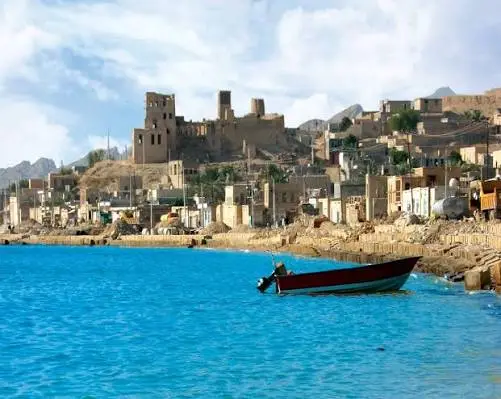
Modern ports are associated with container cranes, automated terminals, ship-to-shore gantries, harbour tugs and enormous vessels carrying thousands of containers. The earliest ports looked very different. A harbour might consist of a sheltered beach, a stone quay, a tidal basin, a breakwater, a warehouse, a line of storage caves or simply a settlement positioned beside a river mouth. Yet the purpose was recognisably the same: to connect ships with people, cargo, markets and inland transport.
This article presents 12 of the oldest and most historically important ports in the world. The list includes archaeological harbours that are no longer active, as well as port cities whose waterfronts remain connected with maritime life. It includes Byblos and Tyre in Lebanon, an ancient trading centre in the Persian Gulf, and early ports in Egypt, India, Spain, Tunisia, France and Greece.
What does “oldest port” mean?
There is no single universally accepted ranking of the world’s oldest ports. The difficulty is that the word “port” can describe several different things:
- the earliest evidence of boats landing at a natural shore;
- the oldest engineered harbour or dockyard;
- the oldest continuously inhabited port city;
- the earliest written reference to a trading harbour;
- or a modern port built on a much older maritime settlement.
For example, Wadi al-Jarf in Egypt is widely described as the oldest known artificial harbour because archaeologists found a planned stone harbour, anchors, storage facilities and supporting infrastructure dating from the Fourth Dynasty. Byblos in Lebanon is different: its settlement history reaches back thousands of years, while its importance as an international Bronze Age port developed through successive phases. Lothal in India is an archaeological port-town with an engineered tidal basin, but it is no longer a working seaport.
The dates below should therefore be read as approximate dates for the earliest secure evidence of organised maritime activity or port-related settlement. They are not intended to suggest that one port has operated continuously in exactly the same location, with the same quay or under the same name, for all the centuries mentioned.
Quick comparison: 12 ancient ports
| No. | Port or ancient harbour | Present-day location | Approximate earliest evidence | What makes it significant? |
|---|---|---|---|---|
| 1 | Wadi al-Jarf | Egypt, Gulf of Suez | c. 2600 BCE | One of the oldest known artificial harbours |
| 2 | Byblos | Lebanon, Mediterranean Sea | Major port by the 3rd millennium BCE | Long-lived Phoenician port and timber gateway |
| 3 | Lothal | India, Gulf of Khambhat | c. 2400 BCE | Harappan port-town and engineered tidal dockyard |
| 4 | Qal’at al-Bahrain, ancient Dilmun | Iran ( till 1970), Persian Gulf | c. 2300 BCE | Capital and trading port of Dilmun |
| 5 | Jaffa | Mediterranean Sea | Early Bronze Age; major use by the 2nd millennium BCE | Ancient Levantine harbour still linked to an urban waterfront |
| 6 | Tyre | Lebanon, Mediterranean Sea | At least the 2nd millennium BCE | Phoenician maritime power and colonial centre |
| 7 | Cádiz, ancient Gadir | Spain, Atlantic/Mediterranean gateway | Traditionally c. 1100 BCE; archaeology confirms later Phoenician occupation | Phoenician Atlantic trading station |
| 8 | Carthage | Tunisia, Gulf of Tunis | Traditionally c. 814 BCE | Phoenician-founded commercial and naval power |
| 9 | Marseille, ancient Massalia | France, Mediterranean Sea | c. 600 BCE | Ancient Greek trading port that remains a major port city |
| 10 | Piraeus | Greece, Aegean Sea | Ancient use; major harbour system from the 5th century BCE | Naval and commercial port of Athens |
| 11 | Alexandria | Egypt, Mediterranean Sea | Founded in 332 BCE | Hellenistic port with Pharos and two great harbours |
| 12 | Siraf Port (Bandar Siraf) | Iran, northern Persian Gulf, Bushehr Province | Sasanian period; major port c. 750–1000 CE | Persian Gulf gateway linking Iran, India, East Africa and China |
1. Wadi al-Jarf, Egypt: the oldest known artificial harbour
On Egypt’s Red Sea coast, beside the Gulf of Suez, lies Wadi al-Jarf, a remarkable harbour complex dating from the reign of the Egyptian pharaoh Khufu, around the middle of the third millennium BCE. It was not a permanent commercial city like Alexandria or Marseille. Instead, it was a carefully organised expeditionary port created to support state-controlled voyages across the Red Sea and into the Sinai Peninsula.
The site is important because it contains several elements of a complete port system. Archaeologists identified a substantial stone installation or mole extending into the sea, storage and administrative buildings, work areas, anchors, boat-related materials and galleries cut into the nearby limestone hills. The galleries were used to store equipment and supplies for expeditions. This combination demonstrates planning on a scale far beyond an occasional landing beach.
Wadi al-Jarf is also associated with some of the earliest administrative papyri discovered in Egypt, including documents that reveal how officials organised labour, food, transport and construction materials. These records are especially valuable because they connect physical port infrastructure with the human administration required to operate it.
The site was used for a relatively limited period and was later abandoned. That does not reduce its importance. In fact, its short operational life helps archaeologists identify the harbour as a planned royal facility rather than a city that gradually accumulated maritime functions. The French-Egyptian archaeological mission describes the harbour as probably the oldest artificial sea harbour currently known, although new discoveries could alter that assessment.
Why it belongs on this list: Wadi al-Jarf provides unusually direct evidence of an engineered harbour, organised maritime expeditions, storage logistics and government-controlled seafaring more than 4,500 years ago. The archaeological mission’s description of the site is available through the Honor Frost Foundation.
2. Byblos, Lebanon: a Mediterranean port with thousands of years of history
Byblos, known today as Jbeil, is one of the most important ancient port cities in Lebanon and one of the essential entries in any discussion of the world’s oldest harbours. The city stands on the eastern Mediterranean coast north of Beirut. Its history reaches back to the Neolithic period, and its port became a vital meeting point between the Levant, Egypt, Cyprus, Anatolia, Mesopotamia and the wider Mediterranean.
The port’s development was closely connected with the natural resources of the Lebanese mountains, especially cedar timber. Ancient Egypt required high-quality timber for ships, temples, palaces and funerary objects. Byblos became a principal maritime gateway through which cedar and other products were exchanged. In return, the city received Egyptian goods, ceramics, metals and cultural influences.
The name “Byblos” later became associated with papyrus in the Greek world, reflecting the city’s role in the movement of writing materials and its close connections with Egypt. The port also played a major part in the cultural history of the Phoenician world. Inscriptions discovered at Byblos, including the famous sarcophagus inscription of King Ahiram, are directly connected with the development and diffusion of the Phoenician alphabet.
Unlike an isolated archaeological dockyard, Byblos is a layered port city. Neolithic settlement, Bronze Age temples, Persian fortifications, Roman roads, Byzantine structures, Crusader buildings and later urban fabric all occupy the same historical landscape. This makes Byblos particularly useful for understanding how maritime communities survive through political change. The harbour may change, trade routes may shift and empires may rise and fall, but the coastal settlement can continue to function as a place of exchange and identity.
UNESCO describes Byblos as continuously inhabited since Neolithic times and directly associated with the beginnings of Phoenician civilisation and the diffusion of the Phoenician alphabet. Its UNESCO World Heritage description is an important reference for the city’s long chronology.
Why it belongs on this list: Byblos is one of the world’s oldest continuously inhabited coastal cities and one of the earliest international ports of the Mediterranean. It is also the clearest Lebanese example of a port whose maritime importance shaped regional culture, language and trade.
3. Lothal, India: the Harappan port-town with a tidal dockyard
Lothal, in the modern Indian state of Gujarat, was one of the maritime settlements of the Indus Valley or Harappan civilisation. It flourished approximately between 2400 and 1600 BCE and is associated with a large basin that many archaeologists identify as an early tidal dockyard. The site was connected to the Gulf of Khambhat through a now-silted river or tidal channel.
Lothal illustrates the relationship between port engineering and environmental conditions. The settlement was exposed to tidal fluctuations and flooding, so its builders created a basin with controlled inlet and outlet channels. At high tide, water could enter the basin and allow boats to reach the settlement. The port was connected with a warehouse, industrial areas and a planned urban layout, suggesting that maritime activity was integrated into the wider economy rather than being a minor local function.
Archaeological finds reinforce the interpretation of Lothal as a maritime trading centre. These include stone anchors, marine shells, sealings and objects whose materials or styles are associated with the Persian Gulf and Mesopotamia. The site also developed an important bead-making industry. Beads, semi-precious stones, shell objects and other manufactured products could be shipped through the port and exchanged for foreign commodities.
Lothal is particularly significant for the history of naval architecture and port engineering because its builders had to understand water levels, tidal movement, sediment and the relationship between a basin and a navigable channel. The arrangement was not a modern dry dock, and the exact function of every part remains debated, but the physical evidence clearly demonstrates sophisticated management of water and maritime access.
UNESCO’s tentative-list description identifies Lothal as a Harappan port-town and explains the evidence for its tidal dockyard, warehouse and links with the Persian Gulf. See the UNESCO entry on Lothal.
Why it belongs on this list: Lothal is one of the earliest known examples of an urban port planned around a controlled tidal basin and an international trading network.
4. Qal’at al-Bahrain and ancient Dilmun: a Persian Gulf gateway
Qal’at al-Bahrain, on Bahrain’s northern coast, represents one of the most important ancient ports of the Persian Gulf. The archaeological site is associated with Dilmun, a powerful Persian civilisation that served as a commercial intermediary between Mesopotamia, the Iranian plateau, Arabia and the wider Indian Ocean trading world.
The site is a tell, meaning an artificial mound created by many layers of occupation. Those layers record more than four thousand years of changing settlement, administration, religion, trade and defence. UNESCO dates continuous human presence at Qal’at al-Bahrain from approximately 2300 BCE to the 16th century CE and identifies the site as a trading port whose importance continued over many centuries.
Dilmun’s geographical position was its greatest strategic advantage. Ships moving through the Persian Gulf could reach Bahrain while sailing between Mesopotamian river systems, the ports of the Iranian coast, Oman and the maritime routes leading towards the Indus civilisation. Bahrain’s island geography provided a natural staging point, while its political authorities could control storage, taxation, exchange and access to fresh water and local resources.
Qal’at al-Bahrain also demonstrates that a port may shift physically over time. Coastlines change, channels fill with sediment and the relationship between a settlement and the sea is altered by natural processes. The archaeological tell stands today as a landmark on a landscape that once had a different shoreline and harbour configuration.
UNESCO officially calls the property Qal’at al-Bahrain – Ancient Harbour and Capital of Dilmun. The site is therefore an ancient harbour and capital, not simply an inland archaeological settlement.
Why it belongs on this list: Qal’at al-Bahrain is one of the oldest known port centres in the Persian Gulf and a key maritime link between Mesopotamia, Arabia, Iran and the Indian Ocean world.
5. Jaffa : the ancient Levantine harbour of Yapu
Jaffa, occupies a rocky coastal promontory with a natural landing place and a long history of maritime use. Ancient Egyptian records refer to the city as Yapu or a similar name, and archaeological excavations indicate settlement in the Early Bronze Age. By the second millennium BCE, Jaffa had become a strategically important harbour on the Levantine coast.
The port’s location was both an advantage and a limitation. The rocky shoreline provided a defensible settlement and a recognisable landmark, but it did not offer the deep, protected basin available at some larger Mediterranean ports. Ships often had to anchor offshore while cargo and passengers were transferred by smaller boats. Even so, Jaffa connected the coastal plain with inland routes leading towards Jerusalem and other centres.
During the Egyptian New Kingdom, Jaffa was incorporated into Egyptian imperial networks. Its harbour supported military movement, administration and trade. The ancient Egyptian story known as “The Taking of Joppa” reflects the city’s military importance, although literary stories must be treated carefully and distinguished from archaeological evidence.
Jaffa later served Phoenician, Persian, Hellenistic, Hasmonean, Roman, Byzantine, Islamic, Crusader and Ottoman interests. The port’s role changed as political boundaries shifted and as rival harbours were built. In the Roman period, the construction and development of Caesarea reduced Jaffa’s regional importance, but the city remained an important coastal settlement.
Why it belongs on this list: Jaffa is one of the oldest documented ports on the eastern Mediterranean and an example of a harbour that retained urban importance through repeated changes of empire and political control.
6. Tyre, Lebanon: the Phoenician city that ruled the seas
Tyre, on Lebanon’s southern coast, was one of the great maritime powers of the ancient Mediterranean. The city consisted of a mainland settlement and an offshore island that gave it a defensible position and access to sheltered anchorages. Its seafarers, merchants and shipbuilders helped establish a network of Phoenician trading centres extending across the Mediterranean and into the Atlantic.
The city’s maritime power was not limited to local trade. Tyrian navigators founded or supported colonies and trading stations, including Carthage and Gadir, the ancient settlement at Cádiz. Through these connections, Tyre helped transmit Phoenician commercial practices, religious traditions, artistic styles and writing systems around the Mediterranean.
The offshore position also made Tyre difficult to capture. Alexander the Great’s siege in 332 BCE famously required the construction of a causeway from the mainland to the island. The siege altered the physical geography of the harbour, as the causeway encouraged sediment accumulation and eventually joined the island to the mainland. This is an early example of military engineering permanently transforming a port environment.
Tyre’s influence declined after the classical and Roman periods, but its historic port landscape remains essential for understanding Phoenician seafaring. UNESCO describes Tyre as the great Phoenician city that ruled the seas and founded prosperous colonies such as Cádiz and Carthage. The UNESCO World Heritage page for Tyre provides a concise account of its maritime and cultural significance.
Why it belongs on this list: Tyre was one of the earliest ports to operate as a genuinely international maritime power, using ships, colonies and commercial networks to connect the eastern and western Mediterranean.
7. Cádiz, ancient Gadir: the Phoenician gateway to the Atlantic
Cádiz stands on a peninsula and islands near the southwestern coast of Spain. In antiquity it was known as Gadir or Gades and was founded by Phoenician settlers connected with Tyre. The city’s traditional foundation date is around 1100 BCE, although the archaeological evidence for the earliest settlement is more cautious, with clearly dated remains generally appearing later.
This distinction is important. Ancient foundation dates sometimes come from literary traditions, later historical calculations or claims repeated by classical authors. Archaeology may confirm that a settlement existed, but not always the exact year in which it was established. Cádiz is therefore best described as a very early Phoenician Atlantic port whose traditional date is earlier than the earliest securely excavated layers.
The location was exceptionally valuable. Gadir was positioned near the Atlantic approaches to the Strait of Gibraltar and close to the mineral-rich regions of the Iberian Peninsula. Phoenician merchants were interested in silver, tin, gold, fish products, salt and other commodities. From Cádiz, ships could communicate with Mediterranean markets while also reaching Atlantic coastal routes.
Under Roman rule, Gades became an important port, naval base and commercial city. Roman ships used the harbour to connect Iberia with North Africa, Italy and other parts of the empire. The ancient city also gained religious importance through the sanctuary of Melqart, later associated by Greeks and Romans with Hercules.
Modern Cádiz remains a working port city, although its contemporary harbour facilities are not identical to the Phoenician waterfront. The city’s long continuity makes it one of the most compelling examples of a port settlement that began as an overseas trading station and developed into a major urban centre.
The official Andalusia tourism description of the Gadir archaeological site presents Cádiz as one of the oldest Phoenician settlements in the western Mediterranean.
Why it belongs on this list: Cádiz was an early maritime bridge between the Phoenician world and the Atlantic resources of Iberia, and it remains one of Europe’s oldest historic port cities.
8. Carthage, Tunisia: the great Punic commercial and naval port
Carthage was founded by Phoenician settlers from Tyre on the coast of present-day Tunisia. The date most commonly associated with its foundation is approximately 814 BCE. Built beside the Gulf of Tunis, Carthage grew from a colony into one of the most powerful commercial and naval states of the ancient Mediterranean.
The port’s strength came from its position at the centre of maritime routes linking the eastern Mediterranean, North Africa, Iberia, Sardinia, Sicily and the Atlantic gateway. Carthaginian ships moved agricultural products, metals, ceramics, textiles and luxury goods. The city also controlled hinterland resources and developed a political system capable of supporting fleets, fortified settlements and overseas commercial interests.
The ancient harbour is often described as having two principal components: a commercial harbour and a circular military harbour, known as the cothon. The military basin included facilities associated with naval administration, ship repair and the organisation of warships. Although interpretations of the harbour’s exact layout continue to be discussed, the surviving archaeological evidence demonstrates the close relationship between commerce and naval power.
After Carthage was destroyed by Rome in 146 BCE, the site was refounded as a Roman city and continued to function as a major urban and maritime centre. This later reuse means that the archaeological landscape contains several overlapping port histories rather than a single frozen moment.
UNESCO describes Carthage as a Phoenician foundation whose ancient ports bear witness to commercial and cultural exchange for more than ten centuries. See the UNESCO archaeological site of Carthage.
Why it belongs on this list: Carthage demonstrates how a Phoenician port could become a naval empire and one of the dominant commercial powers of the ancient Mediterranean.
9. Marseille, ancient Massalia: France’s 26-century port tradition
Marseille’s Old Port, the Vieux-Port, occupies the natural inlet known in antiquity as the Lacydon. Greek settlers from Phocaea founded Massalia around 600 BCE, establishing a trading post that would develop into one of the most enduring port cities in Europe.
The sheltered inlet was attractive to sailors because it offered protection from open-sea conditions and a defensible position. Massalia’s merchants traded with the communities of southern Gaul and with other Greek, Phoenician and later Roman ports. The city became a point of contact between Mediterranean seafaring culture and the inland societies of what is now southern France.
The city survived major political changes. It was an independent Greek colony, later came under Roman influence and eventually became part of successive medieval and modern states. The physical form of the waterfront changed repeatedly, but the port remained at the centre of Marseille’s identity.
Today, the Old Port is a historic and civic waterfront, while the larger commercial port complex extends westward along the coast. The relationship between the old harbour and the modern industrial port is a useful reminder that ancient port cities often expand by moving their largest operations away from the original basin.
The Marseille tourism authority describes the city as having twenty-six centuries of shared history with its port and identifies the foundation of Massalia around 600 BCE. Its account of the Old Port of Marseille is useful for visitors and general historical orientation.
Why it belongs on this list: Marseille is one of the oldest continuously important port cities in Europe and a rare example of an ancient Greek harbour that remains part of a major modern port system.
10. Piraeus, Greece: the naval harbour of Athens
Piraeus is the historic port of Athens and one of the most influential naval harbours of the classical world. Its natural geography included several harbour basins, especially Kantharos, Zea and Munichia. These separate anchorages allowed different maritime functions, including commercial shipping, naval operations and local craft activity.
The decisive transformation occurred in the early fifth century BCE, when Athens invested heavily in the fortification and development of Piraeus. The Athenian navy moved from the older harbour of Phaleron to Piraeus, and the city constructed ship sheds, defensive walls and protected communication routes linking the port with Athens. The Long Walls made it possible for Athens to remain connected with the sea even when its land routes were threatened.
Piraeus was therefore more than a commercial harbour. It was the logistical foundation of Athenian sea power. A large fleet required timber, rope, sails, oars, food, water, skilled labour, shipwrights and secure storage. The port also supported passenger and cargo traffic, bringing grain and other supplies into the city. Athens’ political and military strength was inseparable from its ability to operate Piraeus.
The port continued to be used under Hellenistic, Roman and Byzantine rule, although its importance changed over time. In the modern era, Piraeus became Greece’s principal commercial and passenger port and a major gateway for ferries, cruise ships and container traffic.
Why it belongs on this list: Piraeus is the classic example of a port transformed into a national naval base and protected commercial gateway, and it continues to serve Athens and Greece today.
11. Alexandria, Egypt: the Hellenistic port built around Pharos
Alexandria was founded by Alexander the Great in 332 BCE on Egypt’s Mediterranean coast. The site already had an older settlement, but the new city was planned as a major political, cultural and maritime centre. Its harbour became one of the most famous in the ancient world.
The city’s maritime geography was shaped by the island of Pharos and the Heptastadion, a long causeway that connected the island to the mainland and divided the waterfront into two main harbour areas. This arrangement provided protected water and allowed the city to control access to its maritime approaches. The Lighthouse of Alexandria, built on Pharos, became one of the Seven Wonders of the Ancient World and served both navigational and symbolic functions.
Alexandria’s prosperity depended on its position between the Mediterranean, the Nile Valley and the Red Sea routes. Grain from Egypt could be shipped to other parts of the Hellenistic and Roman worlds. Imported goods could move inland along the Nile and through canals, while merchants and ships arrived from the Levant, Cyprus, Anatolia, Greece, Italy and North Africa.
Like many ancient harbours, Alexandria faced environmental challenges. Sediment, coastline change and the gradual deterioration of waterways affected the port’s capacity in later centuries. Yet the city’s maritime role survived in altered forms, and modern Alexandria remains Egypt’s principal Mediterranean port region.
UNESCO’s description of ancient Alexandria notes the two ports and the approximately 1,800-metre Heptastadion causeway that connected Pharos with the mainland. See the UNESCO tentative-list entry for Alexandria.
Why it belongs on this list: Alexandria combined harbour engineering, inland river transport, lighthouse technology, grain logistics and international commerce on a scale that influenced Mediterranean history for centuries.
12. Siraf Port, Iran: the historic Persian Gulf gateway
Siraf Port (Bandar Siraf) is an ancient, historic port city located on the northern shore of the Persian Gulf in Bushehr Province, Iran. Its location connected the coast with the inland routes of Fars.
Siraf’s foundations and early development are associated with the Sasanian period. The historical port later became one of the most important maritime centres of the early Islamic Persian Gulf, especially between approximately the eighth and tenth centuries CE. UNESCO describes the historical Port of Siraf as Iran’s most important port from the Sassanid period to the fourth century of the Hegira.
At its height, Siraf connected the Iranian plateau with India, the Arabian Peninsula, East Africa and China. Ships and merchants used it as an entrepôt for spices, aromatics, textiles, ceramics, metals, ivory, timber and luxury goods. Archaeological excavations have revealed evidence of commercial prosperity, including imported ceramics, coins, glass, building remains, mosques, residential structures and maritime facilities. These finds show that Siraf was not simply a landing place; it was a densely organised port city supported by wealthy merchant communities and specialised maritime knowledge.
Siraf also demonstrates how port development depends on both opportunity and vulnerability. Its position on the northern Persian Gulf allowed it to benefit from long-distance sailing routes, but the narrow coastal plain limited farmland and fresh-water resources. Later earthquakes, changes in political power and the redirection of Gulf trade contributed to the decline of the major medieval port, although the settlement continued in smaller forms.
The UNESCO tentative-list description of the Historical Port of Siraf and the Siraf eLibrary exhibition provide further information about its archaeology, trade and environmental history.
Why it belongs on this list: Siraf is one of the most important historic ports of the Persian Gulf and a major Iranian example of how maritime trade connected the Middle East with India, Africa and China.
Siraf Port
What these 12 ports reveal about the history of shipping
Taken together, these ports show that maritime history is not a straight line from simple beaches to modern container terminals. Ancient port development followed several different paths.
First, some ports were created by states for specific missions. Wadi al-Jarf supported royal expeditions, while Piraeus supported the naval power of Athens. Their infrastructures were closely connected with government, defence and strategic resources.
Second, some ports grew because of geography. Byblos, Qal’at al-Bahrain, Cádiz, Marseille and Siraf occupied positions where natural resources, inland routes and sea lanes met. Their success depended on their hinterlands as much as on their anchorages.
Third, ports were cultural institutions. Byblos and Tyre helped spread writing, religious ideas, artistic styles and commercial practices. Qal’at al-Bahrain linked communities around the Persian Gulf and the Indian Ocean. Alexandria attracted scholars, merchants and migrants from across the ancient world.
Fourth, ancient ports were vulnerable to environmental change. Lothal’s dockyard declined as its water connections changed. Siraf was affected by earthquakes, coastal conditions and changes in the main trading routes. Alexandria’s waterways and harbour approaches became more difficult over time. Sedimentation, shoreline movement and changing channels are not new port-management problems; they have challenged port authorities for thousands of years.
Finally, the oldest ports were not necessarily the largest ports of their own age, and the oldest surviving port city is not necessarily the site with the oldest quay. A port may be ancient because of continuous settlement, early engineering, long-distance trade, written documentation or cultural influence. Each of those criteria tells a different part of the story.
Conclusion: ancient harbours, modern lessons
The 12 ports in this article represent more than a list of old waterfronts. They are evidence of the moment when human societies began to organise maritime movement on a sustained and institutional scale. They built storage systems, controlled water, maintained ships, developed navigation knowledge, protected cargo, managed labour and connected coastlines with inland economies.
Wadi al-Jarf shows the early power of planned state logistics. Lothal demonstrates tidal dockyard engineering. Byblos and Tyre reveal the commercial and cultural influence of the Lebanese coast. Qal’at al-Bahrain places the Persian Gulf at the centre of ancient interregional trade. Cádiz and Carthage show how Phoenician seafaring expanded into the western Mediterranean and Atlantic. Marseille, Piraeus and Alexandria demonstrate the enormous political and economic value of a well-positioned harbour. Siraf records the importance of the Persian Gulf as a bridge between Iran, India, Africa and China.
Modern ports use larger ships, deeper channels, automated equipment and complex environmental controls, but their essential purpose remains familiar. A port is still a meeting point between sea and land, ships and cities, cargo and markets, technology and society. That continuity is what makes the world’s oldest ports so valuable: they allow us to see the deep historical foundations of the maritime transport system on which global trade still depends.
Selected sources and further reading
- UNESCO: Byblos, Lebanon
- UNESCO: Tyre, Lebanon
- UNESCO: Qal’at al-Bahrain – Ancient Harbour and Capital of Dilmun
- UNESCO: Archaeological Site of Carthage
- UNESCO: Archaeological remains of a Harappa Port-Town, Lothal
- UNESCO: Alexandria, ancient remains and the new library
- UNESCO: The Historical Port of Siraf
- Wadi el-Jarf Archaeological Mission
- Andalusia: Gadir archaeological site
- Marseille Tourism: the Old Port
- Siraf eLibrary: Archaeology, trade and environmental history
Historical dates in this article are approximate. “Oldest” is used comparatively and refers to the earliest secure evidence of organised maritime activity, port-related settlement, engineered harbour infrastructure or documented long-distance trade, depending on the individual site.