
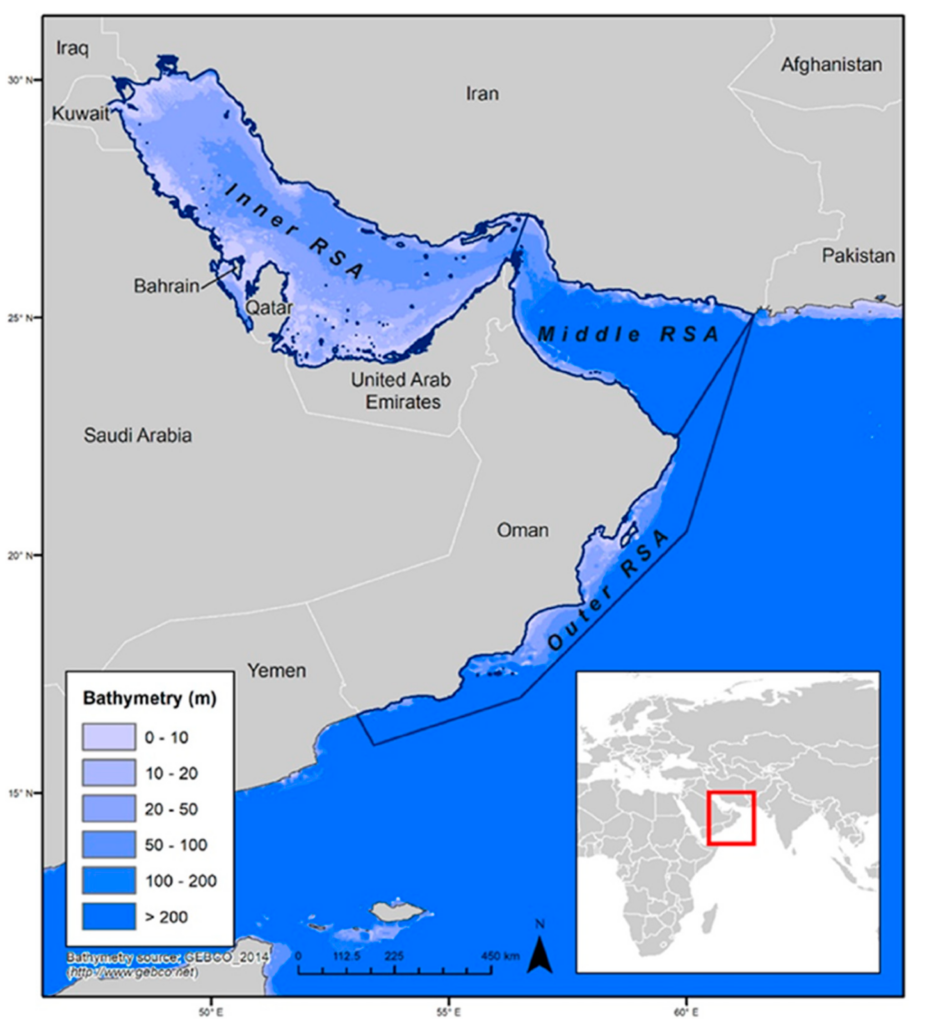
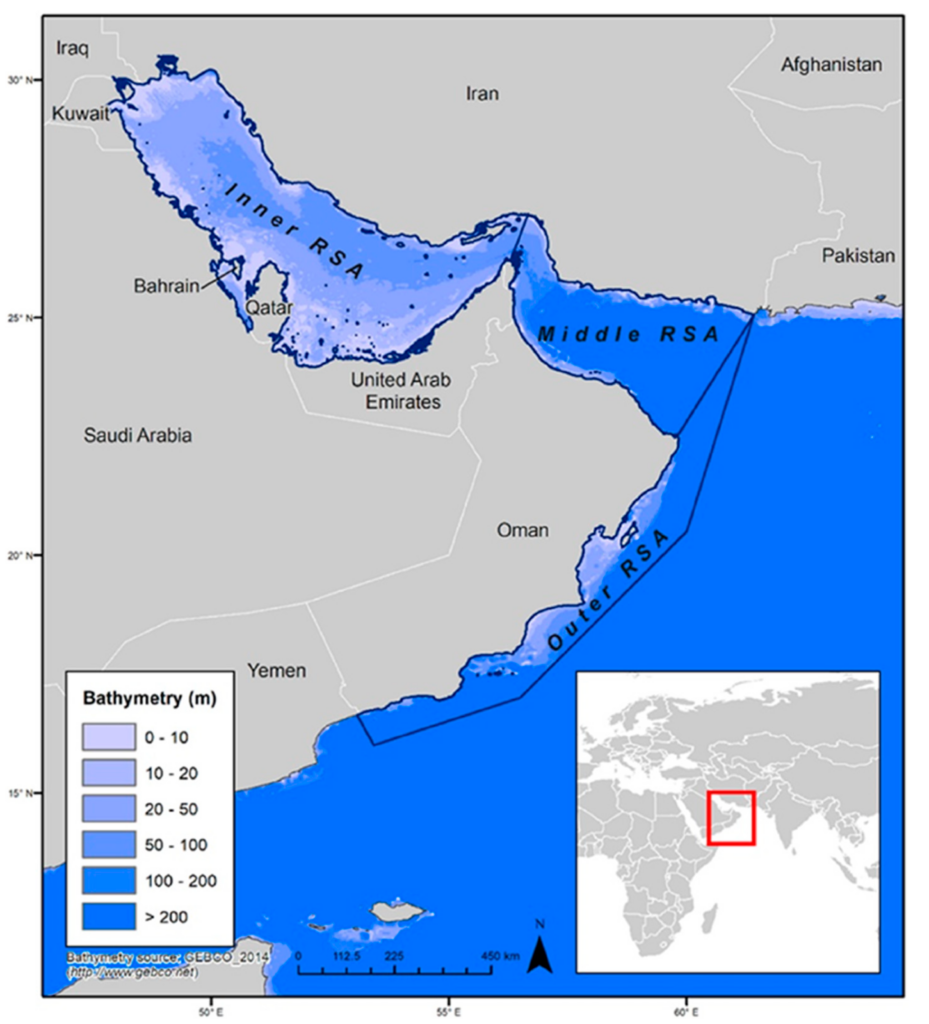
As world leaders meet at the United Nations Framework Convention on Climate Change (UNFCCC) 27th Conference of Parties (COP27) in Egypt this week, Cefas Middle East Programme Director Will Le Quesne discusses the challenge of climate change facing the world’s hottest region and how new evidence produced by ROPME, in collaboration with Cefas, will help support adaption efforts.
When people think about the impacts of global warming, they often imagine polar bears on melting glaciers, or freak weather patterns, such as heatwaves. But what about the impact on countries that already experience some of the hottest temperatures on earth?
The Persian Gulf is the world’s hottest sea, and it is becoming hotter due to climate change. Its waters are experiencing increasing temperatures and salinity, rising sea level and decreasing oxygen levels. In Kuwait in 2020, sea temperatures reached a record-breaking 37.6 degrees. Home to a wide range of biodiversity including corals, turtles, dugong (sea cows), dolphins and sharks, this warming threatens the region’s biodiversity and coastal communities. Marine biodiversity in the Persian Gulf is particularly vulnerable to climate change as unlike in other parts of the world, there are no species pre-adapted to warmer conditions that can move in from warmer waters as it becomes too hot for the species that traditionally live there.
Negotiations at COP27 will address the importance of reducing greenhouse gas emissions to keep global warming well below 2oC and ideally below 1.5oC. There is an urgent focus on reducing emissions, as current commitments would only limit global warming to 2.4-2.6 oC. The negotiations will also cover a global goal of adaptation to help countries build resilience to the inevitable impacts of climate change.
Climate adaptation is important in the Persian Gulf region because even if the world stopped all greenhouse gas emissions today, the sea temperature and sea level would continue to rise. This will cause multiple impacts, including losses of coral reefs and declines in fish stocks, and will threaten coastal industries like desalination plants due to damage caused by sea level rises and increased storms and cyclones.
Despite these risks the impact of climate change on the Persian Gulf and the opportunities for adaptation in the region are relatively under-studied.
Filling the evidence gap
To address this challenge, Cefas’ International Marine Climate Change Centre is working with the Regional Organization for Protection of the Marine Environment (ROPME) to deliver a multi-year marine climate change Regional Action Plan. ROPME is the regional sea convention incorporating Iran, Iraq, Kuwait, Oman, Qatar, Bahrain, Saudi Arabia and the United Arab Emirates that covers the Persian Gulf and northern Indian Ocean waters of the ROPME Member States.
The Regional Action Plan aims to provide the evidence base to support ROPME Member States in protecting their marine environment from climate change. This includes evaluating climate impacts and adaptation actions, and evaluating the potential for blue carbon habitats, such as mangroves and saltmarshes, to reduce the extent of climate change.
The outputs from these studies have been published as a series of Policy Briefs and Technical Report on the ROPME website. A recent evidence review and regional risk assessment identified a number of climate impacts and risks to biodiversity and society in the ROPME Sea Area including:
- The effects of climate change, including rising temperatures and sea-level, are already occurring across the ROPME Sea Area and are projected to accelerate in future.
- Climate change and other human impacts are causing degradation and loss of critical habitats such as coral reefs, mangroves, saltmarshes and seagrasses across the region.
- Climate change will lead to a decline in fisheries, which is an important source of food across the region.
- Coastal storms and cyclones are predicted to become more intense causing significant risks to coastal communities, industry and infrastructure from storm damage and coastal flooding.
- Increasing water temperatures may lead to an increase in phytoplankton and jellyfish leading to harmful algal blooms that can block desalination plants and coastal industrial cooling systems.
- Blue carbon ecosystems (such as sea grass beds) remove CO2 and need protecting to continue absorbing CO2 from the air. These ecosystems also support climate change resilience by providing coastal protection and supporting productive fisheries.
Adaptation actions in the Persian Gulf
Following these studies, Cefas scientists, the ROPME Secretariat and scientists from across the ROPME Member States collaborated to publish three new reports which provide practical advice on adaptation measures to build climate resilience across three priority areas; Fisheries, Corals and Desalination Plants & Industrial Cooling Systems.
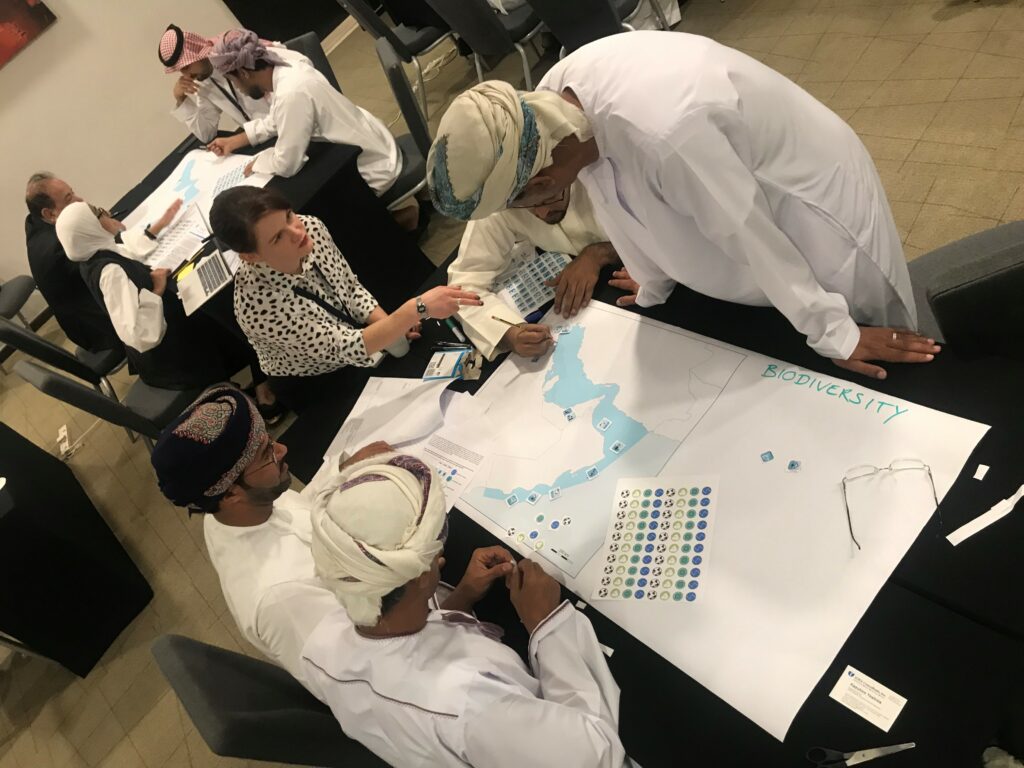
The reports were prepared following a series of multi-sectoral stakeholder workshops with government, industry and academic representatives from across the region to share expertise and develop options for practical solutions to the challenges of climate change.
“A key concept in building climate resilience, including for corals, is to identify and reduce human pressures” said Dr Michelle Devlin, Cefas’ Principal Coral Scientist, and author of the coral adaptation report.
“During the adaptation workshops we worked with regional experts and identified that excess nutrient inputs, coastal development and fishing are key factors that are negatively impacting coral reefs. Controlling these is the first step in building climate resilience before engaging in more active interventions to build healthy ecosystems, such as coral gardening, that can further increase resilience.”
To support action on blue carbon, the Action Plan published the first regional inventory of blue carbon habitats for the region. A series of webinars were held to bring experts together from across the region to share practical experiences in the protection and restoration of mangroves, seagrass and salt marsh.
The next stage is to agree on a ROPME Climate Change Strategy continue and foster scientific collaboration on marine climate change amongst the ROPME Member States.
Dr John Pinnegar, Director of the International Marine Climate Change Centre said, “through active collaboration with experts from all eight ROPME Member States, we have built a robust regional evidence base that can guide marine climate action in the region. This year’s COP27 has highlighted the urgency of the task ahead, and it’s vital that we work together to address the critical challenge of climate change”.
–
Frequently Asked Questions
1. Why is the Persian Gulf called the “world’s hottest sea” – and how hot is it getting?
The Persian Gulf already holds that record. In Kuwait (2020), sea temperatures hit an astonishing 37.6°C – that’s hotter than a typical bath.
But climate change is making it worse:
-
Rising temperatures – even if emissions stopped today, the Gulf will keep warming
-
Increasing salinity – freshwater evaporation accelerates
-
Falling oxygen levels – warm water holds less oxygen
-
Rising sea levels – threatening coasts
Unlike other oceans, the Gulf has no “backup” species from warmer waters to move in. When native species hit their limit, there’s nothing waiting to replace them.
2. What happens to marine life when the sea gets this hot?
Losses across the board. The Gulf is home to corals, turtles, dugongs (sea cows), dolphins, and sharks – all at risk.
Specifically:
-
Coral reefs – already degraded by heat, nutrient pollution, and coastal development
-
Fisheries – declining fish stocks threaten a major food source for the region
-
Critical habitats – mangroves, seagrasses, and saltmarshes are being destroyed
The article warns: “Climate change will lead to a decline in fisheries” – and with no cooler refuge species, the damage could be permanent.
3. I’ve heard about COP27 – why does the Persian Gulf need “adaptation” instead of just emission cuts?
Because even if the world stopped all emissions today, the Gulf would continue to warm and sea levels would keep rising. That’s adaptation.
Key threats that require adaptation now:
-
Coral reef loss – not just bleaching, but permanent ecosystem collapse
-
Desalination plants (which supply 66-90% of drinking water in Gulf countries) – threatened by sea‑level rise, storms, and harmful algal blooms
-
Coastal storms & cyclones – predicted to become more intense, flooding communities and infrastructure
Adaptation means building resilience while cutting emissions – the region has no choice.
4. What are “harmful algal blooms” (HABs) and why should I care?
HABs are explosive growths of phytoplankton or jellyfish – and warmer water makes them worse.
Why they matter:
-
They block desalination plants – the Gulf’s main source of fresh water
-
They clog industrial cooling systems – power plants and refineries can shut down
-
They can kill fish and marine life directly
In the Persian Gulf, rising temperatures are expected to increase both the frequency and intensity of HABs. That means higher water bills, potential drinking water shortages, and risks to coastal industry.
5. Can anything help cool the Gulf or slow the damage?
Yes – blue carbon ecosystems (mangroves, seagrass beds, saltmarshes). These habitats:
-
Remove CO₂ from the air (acting like underwater forests)
-
Protect coastlines from storms and flooding
-
Support productive fisheries – a natural nursery for fish
The Regional Action Plan has published the first regional inventory of blue carbon habitats and is running webinars to share restoration techniques. But protecting them requires reducing human pressures – excess nutrients, coastal development, and overfishing – before active restoration like coral gardening.
6. What are the biggest human pressures making climate change worse in the Gulf?
The article lists three controllable factors that, if reduced, would build immediate climate resilience:
-
Excess nutrient inputs – from agricultural runoff and untreated sewage, fueling HABs
-
Coastal development – dredging, fill, and construction destroying mangroves and seagrass
-
Fishing pressure – overfishing weakens ecosystem health, making species less able to cope with heat
“Controlling these is the first step in building climate resilience,” says Cefas coral scientist Dr. Michelle Devlin – before engaging in active interventions like coral gardening.
7. Is there a plan to actually fix this?
Yes – a multi‑year Regional Action Plan led by ROPME (the regional sea convention for Iran, Iraq, Kuwait, Saudi Arabia, UAE, etc.) in collaboration with Cefas.
What’s already been delivered:
-
Evidence review & regional risk assessment – identifying the top climate risks
-
Three new adaptation reports focused on Fisheries, Corals, and Desalination/Industrial Cooling
-
Policy briefs & technical reports – all publicly available on the ROPME website
The next step is to agree on a ROPME Climate Change Strategy and continue scientific collaboration across all eight member states.
8. What does this mean for someone living outside the Gulf?
Two things:
-
Global energy & trade – the Gulf is a cornerstone of world oil and gas. Climate impacts that shut down desalination or ports will ripple through global supply chains.
-
A warning for other warm seas – if the world’s hottest sea can’t adapt, other subtropical regions (like the Red Sea, Arabian Sea, or parts of Australia) may face the same “no species to move in from warmer waters” problem.
As the article says: “Marine biodiversity in the Gulf is particularly vulnerable” – and what happens there today may happen elsewhere tomorrow.
Thanks for sharing. I read many of your blog posts, cool, your blog is very good.
Can you be more specific about the content of your article? After reading it, I still have some doubts. Hope you can help me.