
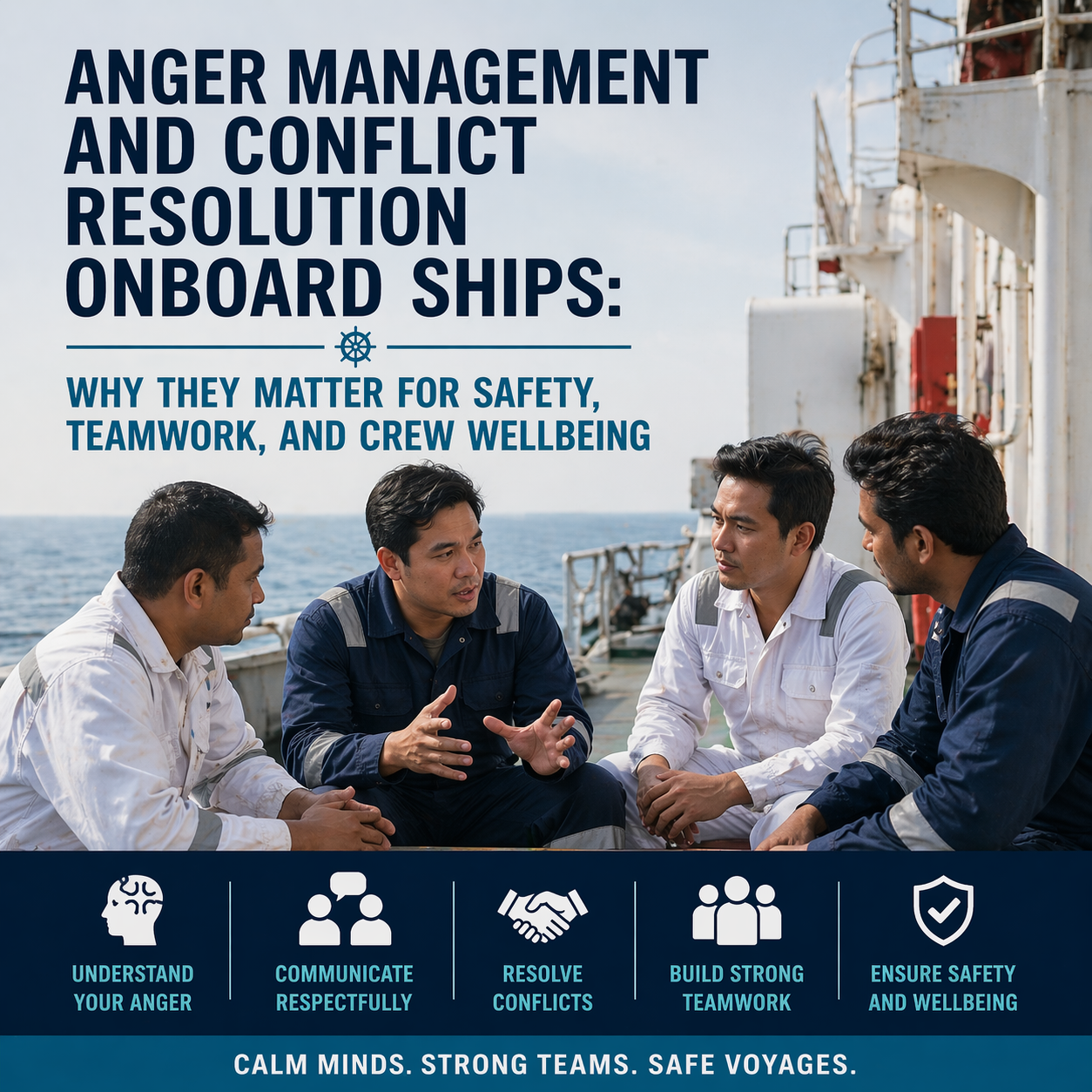
Working at sea places people under unusual pressure. Seafarers live and work in the same confined space for long periods, often under fatigue, noise, heavy workload, isolation from family, cultural differences, and operational stress. In such conditions, anger and conflict can develop quickly if they are not managed properly. Onboard ships, this is not only a personal issue. It is also a safety issue, a leadership issue, and a crew welfare issue. International maritime frameworks such as the STCW Convention, the ISM Code, and the Maritime Labour Convention all support the importance of safe working environments, effective teamwork, leadership, communication, health protection, and complaint procedures for seafarers.
What Anger Management and Conflict Resolution Mean Onboard
Anger is a normal human emotion. It becomes a problem when it is expressed in a way that harms judgment, communication, respect, or safety. Conflict is also normal in any workplace, especially in a multicultural and high-pressure environment such as a ship. Conflict does not always mean shouting or open argument. It may appear as silence, resentment, blame, refusal to cooperate, passive-aggressive behavior, or repeated tension between crew members. In practical terms, anger management means recognizing emotional stress early and responding in a controlled and professional way. Conflict resolution means dealing with disagreement constructively, fairly, and early enough to prevent escalation. ISWAN’s welfare guidance and helpline resources also reflect the importance of giving seafarers practical support for stress, anxiety, emotional pressure, and relationship difficulties.
Why This Matters at Sea
A ship depends on cooperation. Safe navigation, engine-room operations, cargo handling, mooring, maintenance, emergency response, and watchkeeping all rely on communication and trust. If anger is unmanaged, or conflict is left unresolved, the result may be poor teamwork, misunderstanding, distraction, refusal to share information, loss of morale, or unsafe decisions. The ISM Code exists to support safe management and operation of ships, and the IMO’s human-element work emphasizes that safety is shaped not only by equipment and procedures, but also by how people interact, lead, and respond under pressure. The Maritime Labour Convention also requires health and safety protection and a safe working environment onboard.
Common Causes of Anger and Conflict Onboard Ships
Anger and conflict onboard usually do not begin with one dramatic event. More often, they build gradually through daily stress. Fatigue is one of the biggest contributors. A tired seafarer is more likely to become impatient, misread another person’s tone, or react emotionally. Communication problems are another major cause, especially in multinational crews where language ability, accents, and cultural expectations may differ. Tension may also develop when duties are unclear, supervision is poor, workloads feel unfair, or a person feels ignored, humiliated, or disrespected. Limited privacy and long separation from home can make these pressures even harder to manage. Maritime welfare sources and occupational safety guidance both recognize that shipboard wellbeing is affected by working and living conditions together, not separately.
Types of Conflict That Appear on Ships
Not all conflict is the same. Some conflict is about the task itself, such as disagreement about how a job should be done, when maintenance should be carried out, or how a watch handover should be managed. Some conflict is interpersonal, where personality differences, perceived disrespect, or emotional tension create repeated friction. Other conflict is role-related, when duties, reporting lines, or authority are unclear. On ships, these forms of conflict often overlap. A small technical disagreement can become personal if communication is poor. A leadership problem can appear first as a task problem. That is why conflict should be understood early and in context, not only after it becomes serious. This is consistent with IMO human-element and safety-management thinking, which treats organizational, operational, and interpersonal factors as interconnected.
Early Warning Signs That Should Not Be Ignored
Conflict rarely starts at full intensity. Usually there are early signs. A crew member may raise their voice more often, become unusually quiet, stop cooperating, show sarcasm, blame others, or avoid normal communication. Some people become openly aggressive, while others withdraw completely. Both can be dangerous. Onboard, silence is not always a sign that everything is fine. It can mean fear, frustration, or loss of trust. Supervisors and senior officers should therefore pay attention not only to technical performance but also to changes in behavior, mood, and team interaction. ISWAN’s wellbeing resources emphasize that emotional strain often appears in patterns of behavior before it becomes a larger crisis.
Basic Principles of Anger Management Onboard
Anger management does not mean suppressing feelings completely. It means controlling the response so that the situation does not become worse. The first step is self-awareness. A seafarer should learn to notice early signals such as tension, fast breathing, an urge to shout, or loss of concentration. The second step is pause and control. A short pause, controlled breathing, or brief separation from the situation can prevent impulsive words or actions. The third step is professional expression. Instead of blaming language, it is usually better to describe the problem clearly and calmly. For example, saying “I am concerned this instruction was not clear” is more productive than accusing someone aggressively. Welfare guidance for seafarers consistently promotes early coping strategies, emotional awareness, and practical support before stress turns into harmful behavior.
Practical Steps for Resolving Conflict
Good conflict resolution starts with timing. Serious issues should not be discussed in the middle of a high-risk operation, during extreme fatigue, or in front of others if that will increase embarrassment or defensiveness. When possible, the issue should be addressed in a calm setting after the immediate operational pressure has passed. The people involved should focus first on facts, then on impact, and finally on solutions. Active listening is essential. This means listening to understand, not only waiting to reply. The goal is not to “win” the argument but to restore safe working relations and prevent repetition. If the issue cannot be resolved directly, a senior officer or another appropriate person may need to mediate. The Maritime Labour Convention’s framework on complaint procedures and safe working conditions supports the principle that seafarers must have channels to raise concerns without unacceptable risk to their health, safety, or dignity.
Communication Techniques That Help
Several simple communication methods can reduce conflict onboard. One is using clear, standard, professional language rather than emotional or insulting words. Another is speaking about behavior and consequences instead of attacking the person. It also helps to confirm understanding, especially in multicultural crews, by repeating key instructions or agreements. During tension, tone matters as much as words. A calm tone can prevent escalation even when the issue is serious. The wider IMO training and human-element framework places major importance on communication, leadership, teamwork, and watchkeeping discipline because these directly affect operational safety.
The Role of Officers and Ship Leadership
Leaders onboard do not manage conflict only after something goes wrong. They shape the climate that either reduces conflict or allows it to grow. Officers who communicate respectfully, explain expectations clearly, listen to concerns, and correct problems fairly are more likely to build trust. Leaders who humiliate subordinates, ignore stress, or misuse hierarchy often create the conditions for anger, silence, and hidden resentment. The STCW framework includes leadership and teamwork competencies, while the ISM Code supports structured safety management and accountability in ship operations. In practice, this means leadership behavior is part of safety performance, not separate from it.
Multicultural Crews and the Risk of Misunderstanding
Modern shipping is highly international. This is one of its strengths, but it also means that communication styles, attitudes to authority, and ways of expressing disagreement may differ widely. A direct comment from one person may seem rude to another. A quiet person may be wrongly assumed to agree. A culturally normal tone in one setting may feel aggressive in another. Because of this, conflict resolution onboard should avoid assumptions and focus on clarity, respect, and shared operational goals. Standard maritime communication, familiarization, and respectful leadership are especially important where crews come from different backgrounds. The STCW Convention was developed precisely because shipping is international and training standards must support safe and effective shipboard performance across national differences.
Mental Wellbeing and Conflict Prevention
Conflict management is closely linked to mental wellbeing. A person under continuous stress, worry, or emotional exhaustion is more likely to react badly and less likely to solve problems well. This is why prevention matters. Adequate rest, fair workload, decent living conditions, access to support, and a respectful onboard culture are not “extra” welfare topics; they are practical conflict-prevention measures. The Maritime Labour Convention specifically addresses working and living conditions, health and safety protection, and complaint procedures, while ISWAN provides welfare resources and a confidential multilingual helpline for seafarers and their families.
A Simple Five-Step Approach for Seafarers
A useful practical approach onboard is this:
1. Notice the signs early.
Recognize tension, anger, silence, or repeated friction before it escalates.
2. Pause before reacting.
Do not answer anger with anger.
3. Speak calmly and clearly.
Use facts, not insults.
4. Listen and clarify.
Check whether the real issue is workload, misunderstanding, tone, or role confusion.
5. Escalate properly when needed.
If the problem affects safety, dignity, or cooperation and cannot be resolved directly, involve the appropriate officer or use formal procedures.
This approach is consistent with the wider safety-management and welfare principles reflected in IMO, ILO, and ISWAN materials.
For Cadets, Students, and Young Officers
For maritime students and junior officers, anger management and conflict resolution should be seen as professional competencies, not soft extras. A technically skilled seafarer who cannot communicate under stress may still create risk for the ship. By contrast, a person who can stay calm, listen, speak clearly, and solve problems respectfully is more likely to become a trusted officer and an effective leader. This matches the broader direction of maritime training, where the human element, teamwork, and leadership are recognized as essential parts of safe ship operation.
Conclusion
Ships are operated by people, and people do not leave their emotions behind when they come onboard. Anger and conflict are therefore realities of ship life, but they do not have to damage safety or crew harmony. When seafarers recognize stress early, manage anger professionally, communicate clearly, and resolve disagreements fairly, the whole ship benefits. Operations become safer, teamwork becomes stronger, and daily life onboard becomes more stable and respectful. In maritime practice, calm behavior is not weakness. It is seamanship, professionalism, and leadership in action.
–
Reference List
- International Maritime Organization (IMO). International Convention on Standards of Training, Certification and Watchkeeping for Seafarers (STCW). IMO Human Element page.
- International Maritime Organization (IMO). The International Safety Management (ISM) Code. IMO Human Element page.
- International Maritime Organization (IMO). Human Element. IMO overview page.
- International Maritime Organization (IMO). IMO Model Courses. Human element and training resources.
- International Maritime Organization (IMO). Safety management and safety culture.
- International Maritime Organization (IMO). Study on the Effective Implementation of the ISM Code – Seafarers’ views matter.
- International Labour Organization (ILO). Maritime Labour Convention, 2006. Overview page.
- International Labour Organization (ILO). Maritime Labour Convention, 2006, as amended — especially Regulation 4.3 on health and safety protection and accident prevention.
- International Labour Organization (ILO). Guidelines for implementing the occupational safety and health provisions of the Maritime Labour Convention, 2006.
- International Seafarers’ Welfare and Assistance Network (ISWAN). SeafarerHelp — confidential multilingual support for seafarers and families.
- International Seafarers’ Welfare and Assistance Network (ISWAN). Navigating stress: A holistic approach for seafarer well-being.
- International Seafarers’ Welfare and Assistance Network (ISWAN). Coping with conflict resources.