
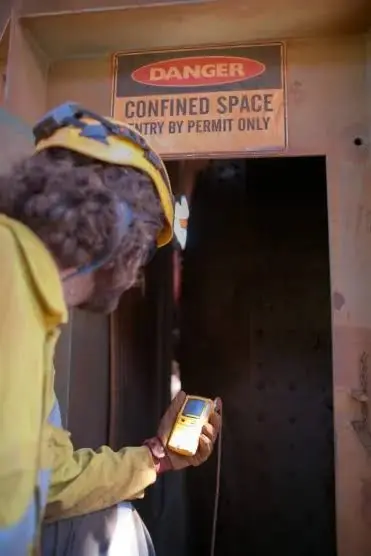
Gas detection is one of the most critical safety barriers in maritime operations. Whether monitoring cargo holds, enclosed spaces, or machinery compartments, the ability to reliably detect flammable, toxic, or oxygen-depleting atmospheres is fundamental to protecting crews and vessels. Yet a growing body of evidence from accident investigations, port state control inspections, and safety alerts reveals a troubling pattern: gas detection practices on ships are failing systematically, and those failures are creating hidden hazards that claim lives and destroy vessels.
The Scale of the Problem
The statistics are sobering. Over the past decade, asphyxiation and poisoning incidents in enclosed spaces have accounted for nearly seventy percent of all enclosed space casualties, with the primary cause being either a failure to conduct gas testing as required or a failure of the detection equipment itself. The United States Coast Guard has warned of “systemic deficiencies in atmosphere testing and gas detection practices” aboard bulk carriers transporting gas-emitting cargoes, noting that equipment is “not always maintained, tested or operated in a way that provides reliable monitoring of potentially hazardous atmospheres”.
These are not isolated incidents of individual negligence. They are systemic failures that arise from inadequacies in regulations, training, equipment maintenance, and safety culture. They are, as one analysis concluded, “entirely predictable”.
Calibration: The Silent Failure
At the heart of many gas detection failures lies a deceptively simple problem: instruments that appear to function but produce inaccurate readings. The US Coast Guard’s safety alert on fixed gas detection systems documented a troubling trend aboard liquefied gas carriers, where port state control officers discovered “multiple sensors measured outside the tolerances established by the manufacturer and subsequent calibration checks failed”. In each case, crewmembers were not following established procedures as specified in their Safety Management System.
The problem extends to the span gas used for calibration. A common discrepancy observed was “the use of improper span gas on catalytic sensors”. Catalytic sensors rely on the presence of oxygen to function correctly; if the span gas used does not include oxygen and is instead balanced with an inert gas, the sensor will not operate correctly. Tests or calibrations conducted with the incorrect span gas can cause the sensor to operate outside established tolerances, creating a false sense of security that may persist until a real hazard emerges.
The Coast Guard alert also noted cases where calibration gas was simply absent, expired, or mismatched to the hazard being monitored. In one instance, isobutane span gas was used where methane monitoring was required. Masters, chief mates, and other officers were unable to properly select calibration gas or demonstrate correct calibration and bump test procedures per manufacturer instructions.
These calibration failures are particularly insidious because they are invisible. A gas detector that has drifted out of calibration does not announce its unreliability. It continues to display readings, perhaps with slight variations, while the crew trusts it to warn of danger. When a genuine hazard arises—a buildup of methane in a coal hold, benzene vapour in a cargo tank, or hydrogen sulphide in a sewage space—the instrument may fail to alarm, or may alarm at the wrong threshold. By the time the discrepancy is discovered, it may be too late.
The Human Factor in Equipment Failure
Systemic failures in gas detection are not limited to hardware. The interface between crew members and their instruments is equally vulnerable. The Hong Kong Marine Department’s investigation into a fatal accident involving a chief officer inside a wood pellet-filled cargo hold illustrates how incorrect interpretation of gas readings, inadequate entry controls, and weaknesses in the shipboard safety management system can combine to allow a crew member to enter a hazardous space.
In that case, the chief officer was responsible for conducting daily atmospheric testing in all cargo holds during the voyage. Gas readings recorded during the first three days were within safe limits. On the fourth day, he entered No. 1 cargo hold and was later found unconscious. A gas detector was found on deck near the entrance, but its battery was missing—it was later located on the cargo surface close to his body. The investigation concluded that he may have conducted the atmospheric testing improperly and entered the hold hastily, collapsing shortly afterwards because of an extremely low oxygen level.
What makes this case particularly instructive is the finding that the vessel’s Safety Management System “did not clearly specify how crew members should conduct atmospheric testing in enclosed cargo holds, including situations where gas sampling points might be obstructed by the cargo”. The result was a gap between the existence of safety requirements and their practical application onboard. The physical access arrangements provided another weakness: the hold entrance was neither locked nor properly secured, and warning signs required under the Code of Safe Working Practices for Merchant Seafarers were not posted.
This pattern—procedures that exist on paper but fail in practice—is a recurring theme in gas detection failures. The US Coast Guard alert specifically emphasised that “having gas detection equipment onboard is not, by itself, sufficient to manage the risk. Equipment must be operational, regularly tested and correctly used, while crew members need to be familiar with its capabilities and limitations”.
Regulatory Requirements and Their Gaps
International maritime regulations establish clear requirements for gas detection. Under SOLAS Chapter XI-1, Regulation 7, ships must carry portable atmosphere testing instruments capable of measuring oxygen, flammable gases or vapours, hydrogen sulphide, and carbon monoxide before entry into enclosed spaces. SOLAS Chapter VI, Regulation 3.2 requires measures to ensure that shipboard personnel are trained in the use of relevant instruments. The International Safety Management Code reinforces these requirements by obliging companies to ensure that personnel are properly familiarised with their duties and receive the necessary training.
Yet these regulatory frameworks have significant limitations. The US Coast Guard noted that the risks it identified “exist despite established international requirements governing the carriage of solid bulk cargoes and the monitoring of hazardous atmospheres”. The gap lies not in the requirements themselves but in their implementation and oversight.
The IMO’s Revised recommendations for entering enclosed spaces aboard ships, adopted in 2011, have been identified as contributing to systemic failures. As one analysis concluded, the most dangerous gases likely to occur with solid bulk cargoes are “entirely predictable, systemic failures arising, in part, from inadequacies” in these recommendations. The standard four-gas detectors carried on every ship may not be sufficient for all cargo types and hazards, yet the regulatory framework has been slow to adapt to evolving risks.
Case Studies in Systemic Failure
The maritime industry’s accident records provide a catalogue of systemic failures in gas detection. Each case reveals a different facet of the problem.
The Benzene Tank Entry
An oil/chemical tanker was underway in ballast when tank cleaning operations began with gas freeing. The previous cargo had been benzene. Tanks were rinsed with fresh water and ventilated, and atmosphere tests were carried out—but while the explosive limit was measured, the oxygen content was not. A strong smell was present when deck crew assembled near the entrance hatches. One of the deck crew, wearing only a filter mask, entered a cargo tank without the knowledge of his co-workers or superior. As he descended the access ladder, he probably inhaled enough benzene vapour to render him unconscious and fell to the bottom of the tank.
The investigation revealed a cascade of safety failures. The ship’s Safety Management System procedures were not followed, as atmosphere level checks for benzene and oxygen were not done. The victim entered the tank without proper authorisation, without a portable gas detector, and wearing an unapproved filtered mask that provided no protection against toxic gases or oxygen deficiency. The root causes extended beyond individual actions to systemic safety management deficiencies. Despite having clear procedures in the SMS, the company failed to ensure proper implementation and oversight of enclosed space entry protocols.
The Hydrogen Sulphide Mystery
A vessel experienced a widespread smell of septic or rotten eggs. Hydrogen sulphide was suspected, and a toolbox meeting was held. The crew, equipped with gas detectors, investigated without respiratory PPE—based on the reasoning that there was no indication of gas before they started searching. During the investigation, a level of H2S of 170ppm was measured in the Grease Trap room. The H2S came from a drain under the sink because the water trap was dry.
The investigation found that internal H2S emergency procedures were not fully followed nor fully covered the actual situation. Breathing equipment or respiratory masks were not used, and no documented risk assessment was conducted after detection of H2S. The lesson was clear: “Internal procedures do not fully cover every different scenario. Actions onboard should be based on continuous risk evaluation and locally made decisions”.
The Gas-Freeing Illusion
A case involving a gas freeing fan illustrates how partial effectiveness in atmosphere control can create a false sense of safety. The likelihood that the atmosphere in a cargo tank was oxygen deficient indicated that the gas freeing operation had only been partially effective. Yet the operation was apparently considered complete, and subsequent entry proceeded without adequate verification.
The Chickens That Failed to Detect
Perhaps the most striking example of systemic failure—and the desperation it breeds—is a case where chickens were used for gas testing on a general cargo vessel. The level of carbon monoxide exceeded the upper range of the gas detector, and a subsequent rescue operation resulted in two fatalities. The investigation concluded bluntly: “Proper gas testing cannot be undertaken in six minutes using gas detectors and certainly not by using chickens”.
The Maintenance Deficit
Systemic failures in gas detection are also perpetuated by inadequate maintenance regimes. Fixed gas detection systems require regular inspection, testing, and calibration, yet port state control inspections routinely reveal deficiencies. The Dromon Bureau of Shipping’s alert on detainable deficiencies included cases where “the alarm on the portable gas detector was not operational” and “the gas detector was inoperational”. Such deficiencies are not merely administrative failures; they are grounds for vessel detention because they represent fundamental safety barriers that have been removed.
The North Standard P&I Club, commenting on the US Coast Guard’s findings, emphasised that “testing and calibration of fixed gas detection systems are completed per the vessel’s Safety Management System and manufacturer’s instructions” is essential, along with ensuring that “sensors are operating within established parameters” and that “the crewmember responsible for maintaining the gas detection system has adequate training, is fully knowledgeable on the system, and is proficient in conducting system tests”.
The Training Gap
At the root of many systemic failures lies a training deficit. The US Coast Guard’s alert noted that masters, chief mates, and other officers were unable to properly select calibration gas or demonstrate correct calibration and bump test procedures. This is not a failure of individual competence but of the systems designed to ensure competence.
The ISM Code requires companies to ensure that personnel are properly familiarised with their duties and receive the necessary training to support the vessel’s Safety Management System. Yet the gap between regulatory requirements and practical implementation remains wide. The IMO’s Resolution MSC.581(110) has strengthened requirements for gas detection training and enclosed space entry drills, but the industry’s track record suggests that enforcement and oversight remain inconsistent.
Breaking the Cycle
Addressing systemic failures in gas detection requires a multi-layered approach that goes beyond simply acquiring better equipment or writing more detailed procedures.
First, calibration and maintenance regimes must be treated as non-negotiable safety barriers rather than administrative burdens. The use of appropriate span gas for each sensor type, conducted at manufacturer-recommended intervals and documented rigorously, is essential. As the US Coast Guard emphasised, sensors operating outside established tolerances “pose a significant safety threat and could be grounds for vessel control actions, such as delayed departure from port, delayed cargo operations, or detention”.
Second, training must be practical and scenario-based rather than theoretical. Crew members need to understand not only how to operate gas detectors but also their limitations, the specific hazards of the cargoes they carry, and the correct procedures for enclosed space entry. The IMO’s emphasis on enclosed space entry and rescue drills reflects this need, but drills must be meaningful rather than perfunctory.
Third, safety management systems must be designed to anticipate the unexpected. The hydrogen sulphide case demonstrated that “internal procedures do not fully cover every different scenario” and that “actions onboard should be based on continuous risk evaluation and locally made decisions”. Procedures that are too rigid or too vague can be as dangerous as no procedures at all.
Fourth, the regulatory framework must evolve to address emerging hazards. The US Coast Guard’s warning about methane-emitting coal cargoes highlights the need for gas detection practices to keep pace with changing cargo types and operational realities. The standard four-gas detector may not be sufficient for all circumstances.
Finally, a safety culture must be cultivated in which gas detection is treated as a critical control measure rather than a compliance formality. This requires leadership commitment, open reporting of deficiencies, and a recognition that systemic failures are organisational failures rather than individual ones.
Conclusion
The hidden hazards created by systemic failures in gas detection practices are not hidden from the industry. They are documented in accident reports, port state control deficiency records, and safety alerts. They claim lives with depressing regularity. They are, as the evidence shows, entirely predictable and therefore entirely preventable.
The challenge is not one of knowledge but of will. The technology exists to detect hazardous atmospheres reliably. The regulations exist to mandate their use. The procedures exist to guide their application. What is too often missing is the systemic commitment to ensure that these elements function together as an effective safety barrier. Until that commitment is universally demonstrated, crews will continue to enter spaces that appear safe but are not, trusting instruments that appear functional but are not, and following procedures that appear adequate but are not. The hidden hazards will remain hidden—until it is too late.
Read more:
Entering Enclosed Spaces on Ships: A Guide to Safety Onboard
IMO Revises Enclosed Space Entry Recommendations to Strengthen Shipboard Safety