
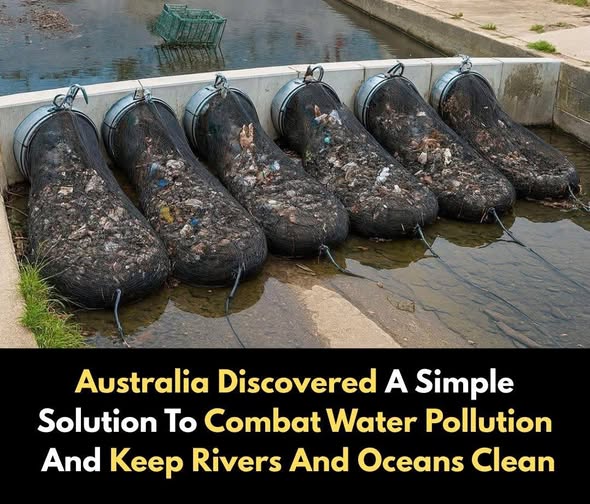
A quiet revolution is happening in our gutters and drains, and a short but powerful video from Australia captures its essence. The YouTube Short titled “Australia Has Started To Test A Network of Drainage With Mesh So Plastics Do Not Reach Rivers” showcases a brilliantly simple yet potentially transformative weapon in the global fight against plastic pollution: mesh nets installed in storm drains.
The video, likely filmed by a municipal worker or environmental advocate, shows a standard suburban drainage outlet. The key difference? A sturdy, fine mesh net is secured over the pipe’s opening. As water from a recent rain event flows out, the net is visibly filled with a trapped collection of litter—plastic bottles, wrappers, food packaging, and other debris. This catch is the pollution that would otherwise have flowed unimpeded into a local creek, river, and ultimately, the ocean.
How It Works: From Gutter to Ocean Interceptor
The concept is straightforward but powerful:
-
Source Capture: The nets are installed at the “end of the line” of the stormwater system, where water exits into natural waterways. Storm drains are major conduits for street-level litter, carrying everything swept away by wind and rain.
-
Filtration: The fine mesh acts as a final filter, catching solid waste while allowing water to pass through freely, preventing flooding.
-
Collection and Disposal: Municipal workers regularly empty the nets, collecting the trapped waste for proper disposal, recycling, or analysis. This simple maintenance turn a passive drain into an active pollution collection point.
Watch the video here: https://youtube.com/shorts/y6AStd5tgCc?feature=share
Why This Small Solution is a Big Deal
The video highlights more than just a clever piece of engineering; it represents a critical shift in environmental strategy:
-
Stopping Pollution at the Source: It’s far more effective and cheaper to collect plastic on land than to try and clean it up from vast oceans or riverbanks. This is a classic “ounce of prevention” approach.
-
Protecting Wildlife: Plastic in waterways is a deadly threat to birds, fish, turtles, and marine mammals through ingestion and entanglement. By intercepting it, these nets directly protect local ecosystems.
-
Data Collection: The collected debris provides tangible data on what types of litter are most prevalent in the community, informing better public education campaigns and policy decisions around packaging and waste.
-
Community Awareness: Visible installations like these serve as a stark, daily reminder to residents about where their litter ends up, fostering greater environmental responsibility.
A Proven Concept Gaining Ground
While the video presents it as a test, this technology has already seen successful implementation in various Australian councils, most notably in the city of Kwinana, Western Australia. Their initial trial in 2018 caught widespread attention after nets installed in two drains collected over 800 pounds (370 kg) of debris in just six months. The success led to a permanent rollout, saving the city significant costs in manual downstream clean-up and providing undeniable ecological benefits.
The YouTube Short is a snapshot of a growing movement. From small towns to large cities, local governments are adopting these interception devices as a practical first line of defense. They are a complement to—not a replacement for—broader systemic changes like reducing plastic production, improving recycling, and changing consumer behavior. But they are a vital tool that acts immediately.
The Takeaway: A Net Benefit for the Future
The video on YouTube Shorts is more than just a satisfying clip of trash being caught. It’s a testament to the power of pragmatic, local innovation. It shows that not all environmental solutions need to be complex, global treaties or futuristic technologies. Sometimes, the most effective tool is a simple net in a drain, a tangible barrier between our throw-away habits and the natural world we strive to protect.
As this network of drainage meshes expands, it weaves a stronger safety net for Australia’s rivers and coasts, proving that sometimes, to solve a giant problem, you just need to think one drain at a time.