
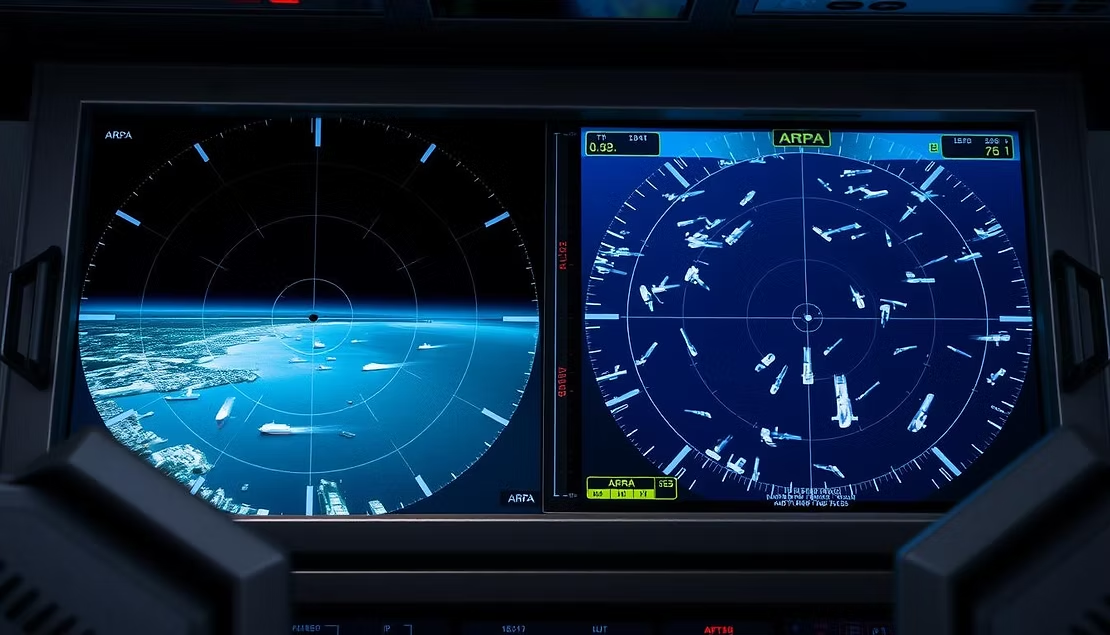
Meta Description: Understand ship ARPA basics and how automatic radar target tracking works. Learn ARPA functions, limitations, and best practices for safe collision avoidance.
In the middle of a busy traffic separation scheme at night, a deck officer may monitor dozens of moving targets simultaneously. Each vessel has its own course, speed, and intention. Visually tracking every ship would be nearly impossible, especially in darkness or fog. This is where Automatic Radar Plotting Aid (ARPA) technology becomes essential. ARPA transforms raw radar echoes into intelligent, trackable targets that help navigators understand traffic movement, predict collision risks, and make safe decisions.
Modern ships depend heavily on ARPA as part of integrated bridge systems, but understanding how ARPA works is just as important as using it. This article explains ARPA fundamentals in clear, globally accessible English. It combines technical accuracy with real operational context so that maritime professionals, cadets, and instructors can connect theory with real bridge practice.
ARPA technology directly supports safe navigation, collision avoidance, and regulatory compliance. Many marine accident investigations show that ARPA was available but misunderstood or misused. Proper ARPA knowledge helps bridge teams interpret traffic behaviour earlier and reduces human workload during high-risk navigation situations.
–
Understanding the Foundations of ARPA Technology
What Is ARPA and Why It Was Developed
Automatic Radar Plotting Aid was developed to automate manual radar plotting methods that navigators previously performed using reflection plotters and grease pencils. Traditional manual plotting required repeated measurement of target range and bearing over time to calculate relative motion. This process was slow and required high concentration. ARPA was designed to perform these calculations automatically and continuously. By processing radar echoes through advanced algorithms, ARPA systems can determine target course, speed, Closest Point of Approach (CPA), and Time to CPA (TCPA). This allows navigators to identify collision risks earlier and more accurately.
The Relationship Between Radar and ARPA
ARPA is not a separate sensor. It depends entirely on radar input. If radar performance is poor due to incorrect gain, clutter settings, or antenna issues, ARPA tracking quality will also degrade. ARPA cannot track targets that radar cannot detect clearly. In simple terms, radar is like the human eye, while ARPA is like the brain that interprets movement patterns. Without clear visual input, even the most advanced processing system cannot produce reliable results.
Sensor Integration in Modern ARPA Systems
Modern ARPA systems integrate data from multiple ship sensors, including gyro compass, speed log, GPS, and sometimes AIS. Accurate sensor input improves ARPA calculation accuracy. For example, incorrect speed log data can cause ARPA to calculate incorrect target vectors.
–
Key ARPA Functions Every Navigator Must Understand
Target Acquisition
Target acquisition is the process of selecting radar echoes for tracking. Acquisition can be automatic or manual. Automatic acquisition allows the system to track targets within predefined zones. Manual acquisition allows the operator to select specific targets that require monitoring.
Manual acquisition remains important in congested waters. Automatic systems may ignore small targets or objects near clutter zones.
Tracking and Target Vector Calculation
Once acquired, ARPA tracks the target continuously. It measures changes in range and bearing and calculates target movement. The system then displays vectors showing predicted movement.
Vectors help navigators visualise how targets will move relative to their vessel. This predictive capability is one of ARPA’s greatest safety advantages.
CPA and TCPA Calculations
CPA represents the closest distance between two vessels if current courses and speeds remain unchanged. TCPA indicates how long it will take to reach that closest point.
CPA and TCPA provide early warning of potential collision risk. However, they are predictions, not guarantees. If either vessel changes course or speed, the values will change.
Trial Manoeuvre Functions
Many ARPA systems include trial manoeuvre simulation. This allows navigators to test course or speed changes before executing them. The system predicts how manoeuvres will affect CPA and TCPA values.
Trial manoeuvres are especially useful in restricted visibility where visual assessment is limited.
How Automatic Target Tracking Actually Works
Radar Echo Detection and Digital Processing
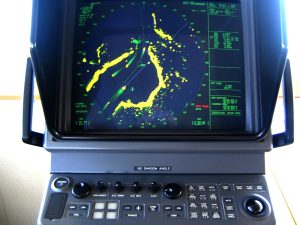
When radar pulses strike a target, echoes return to the antenna. ARPA software analyses echo strength, position, and movement patterns. The system filters noise and identifies stable targets.
Tracking algorithms then compare successive radar sweeps to determine movement direction and speed.
Relative Motion and True Motion Calculations
ARPA can display both relative motion and true motion. Relative motion shows how targets move relative to own ship. True motion shows actual movement over the earth’s surface.
Relative motion is usually more useful for collision avoidance because it clearly shows risk of collision.
Data Stabilisation Using Gyro and Speed Inputs
Accurate ARPA tracking depends on stable heading and speed data. Gyro compass provides heading reference, while speed log provides vessel speed. If these sensors fail or provide incorrect data, ARPA tracking accuracy will decrease.e management requires active monitoring even when automation is functioning correctly.
–
ARPA Limitations Every Officer Must Understand
Tracking Delay and Stabilisation Time
ARPA requires several radar scans to stabilise tracking data. Immediately after acquisition, CPA and TCPA values may be unstable. Officers must allow time for data stabilisation before making critical decisions.
Loss of Tracking in Heavy Clutter
Heavy rain, sea clutter, or multiple overlapping targets can cause ARPA to lose tracking. Operators must monitor targets continuously to ensure tracking remains active.
Small Target Detection Challenges
Small wooden vessels, fishing boats, and buoys may produce weak echoes. ARPA may fail to track these targets consistently.
Sensor Dependency Risks
Incorrect gyro heading or speed input can cause major ARPA errors. Cross-checking with visual bearings, AIS, and ECDIS remains essential.
ARPA and COLREGs Compliance
ARPA supports but does not replace professional judgement required under collision regulations. Officers must still assess risk of collision using all available means. ARPA is one tool among many, not a decision-making authority.
–
Challenges and Practical Solutions
One of the most common challenges in ARPA use is over-reliance on automatic acquisition. In busy waters, automatic systems may ignore small or slow targets. Skilled navigators compensate by manually acquiring suspicious echoes and continuously adjusting radar settings to improve detection quality.
Another practical challenge involves interpreting ARPA vectors correctly. New officers sometimes misinterpret vector direction or forget that vectors assume constant motion. Experienced officers cross-check ARPA data with radar picture evolution over time. Fatigue can also reduce ARPA monitoring effectiveness. During long night watches, officers may rely too heavily on alarms rather than continuous situational awareness. Professional bridge management requires active monitoring even when automation is functioning correctly.
–
Case Studies and Real-World Applications
Marine accident investigation reports frequently show that ARPA data was available but misinterpreted. In several collision cases, officers relied solely on CPA values without observing target aspect change or radar echo behaviour. These cases highlight the importance of combining ARPA data with professional judgement.
In contrast, successful collision avoidance scenarios often involve early ARPA acquisition combined with visual confirmation and proactive manoeuvring. Early detection increases decision-making time and reduces stress during critical situations. Bridge management requires active monitoring even when automation is functioning correctly.
–
ARPA Training and STCW Competence
The STCW Convention requires officers to demonstrate competence in radar navigation and ARPA use. Training typically includes simulator exercises that expose officers to high traffic density, equipment failures, and restricted visibility conditions. Simulator training helps officers understand ARPA limitations and learn how to interpret target behaviour realistically.
–
Frequently Asked Questions
How long does ARPA take to calculate CPA accurately?
Typically between one and three minutes depending on radar scan rate and target stability.
Can ARPA track stationary objects?
Yes, but stationary targets may produce unstable vectors depending on own ship movement.
Is ARPA reliable in heavy rain?
Performance may decrease due to radar echo distortion. Operators must monitor tracking carefully.
Does ARPA replace visual lookout?
No. Visual lookout remains mandatory under international regulations.
Why does ARPA sometimes lose targets?
Clutter, weak echoes, or overlapping targets can interrupt tracking.
Should ARPA be used in all visibility conditions?
Yes. ARPA improves situational awareness in both clear and restricted visibility.
Conclusion and Key Takeaways
ARPA is one of the most powerful navigation safety tools available on modern ships. When used correctly, it transforms radar data into actionable information that supports early collision avoidance decisions. However, ARPA effectiveness depends on correct radar tuning, accurate sensor data, and professional interpretation. Maritime professionals who truly understand ARPA principles will operate more safely, confidently, and efficiently. Continuous training, practice, and critical thinking remain essential for effective ARPA use in real-world navigation.
Future ARPA systems will likely include artificial intelligence target recognition, improved clutter filtering, and integration with autonomous navigation systems. Some research projects are exploring predictive traffic modelling using machine learning. Despite these advances, human supervision will remain critical. Technology will support decision-making, but professional judgement will remain essential for safe navigation.
References
International Maritime Organization (IMO). STCW Convention and Code.
International Maritime Organization (IMO). COLREGs Convention.
International Chamber of Shipping (ICS). Bridge Procedures Guide.
Marine Accident Investigation Branch (MAIB). Collision investigation reports.
United States Coast Guard (USCG). Navigation safety circulars.
Bowditch, N. American Practical Navigator.
International Association of Classification Societies (IACS). Radar and bridge equipment guidance.
DNV. Bridge system design guidance and human factors research.
Lloyd’s Register. Bridge equipment performance and safety publications.
Marine Technology News. Radar and ARPA technology articles.
Maritime Reporter and Engineering News. Bridge system technology updates.