
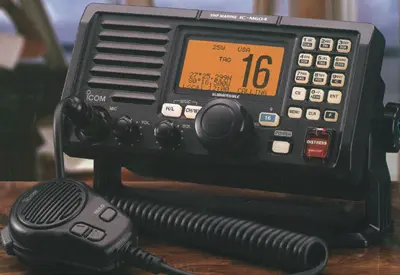
The maritime industry is facing a quiet but significant regulatory transition. As of the first radio survey on or after 1 January 2028, all VHF radiocommunication equipment required by SOLAS regulations IV/7.1.1, 7.1.2, and 7.1.6—including duplicated equipment under regulations IV/15.6 and 15.7—must comply with the latest channel arrangements set out in Appendix 18 of the ITU Radio Regulations (RR). The requirement is not new, but the latest revision of the IMO circular governing this transition, MSC.1/Circ.1460/Rev.5, introduces a critical acknowledgement: some coastal stations may already have implemented the new channel arrangements and no longer support the legacy VHF channels.
For shipowners, operators, and masters, this is not a distant compliance formality to be addressed in 2027. It is a live operational risk that demands attention now. A vessel arriving at a port where the local VTS or pilot station has migrated to the new four-digit channel system but whose own VHF equipment remains on the old two-digit configuration may find itself unable to communicate on the frequencies those shore facilities are using. The consequences range from operational delay to a genuine safety hazard when ship-to-shore communication is compromised.
The Regulatory Timeline and Its Origins
The changes to Appendix 18 of the ITU Radio Regulations did not emerge overnight. The ITU World Radiocommunication Conferences of 2012, 2015, and 2019 made extensive amendments to the maritime VHF band, introducing revised frequencies and channelling arrangements. These changes do not affect the Global Maritime Distress and Safety System (GMDSS) itself—the distress frequencies, including VHF Channel 16 and DSC Channel 70, remain unchanged. What they do affect is the broader set of frequencies used for meteorological and navigational broadcasts, port operations, Vessel Traffic Services (VTS), and ship movement communications.
The IMO first issued guidance on this transition through MSC.1/Circ.1460, with subsequent revisions extending the implementation timeline. The original deadline of 2024 was pushed back to 2028 to allow the industry time to adapt. MSC.1/Circ.1460/Rev.5, approved by the Maritime Safety Committee at its 109th session and disseminated in January 2025, retains that 2028 deadline but adds an important qualifier: the revision “acknowledges that modifications may be needed earlier where applicable”. The circular explicitly states that ships should be capable of transmitting and receiving VHF radiotelephony with shore facilities in their area of operation, “noting that some administrations may have already implemented the new available channels prior to 1 January 2028”.
This is the crux of the issue. The 2028 deadline is a backstop, not a starting gun. The regulatory framework recognises that the transition is not a single, synchronised event but a gradual migration that will occur at different speeds in different regions.
The Technical Nature of the Change
The core technical change is straightforward in principle but significant in practice. The revised Appendix 18 introduces four-digit channel designations, replacing the previous two-digit channel format. Existing two-digit international simplex channels remain unchanged, as do the existing maritime distress frequencies and the bridge-to-bridge communications channel. What changes is the expansion of the available channel set to accommodate new frequencies and the re-designation of certain channels.
The four-digit format allows for a more granular allocation of the VHF maritime band, which is necessary to accommodate the growing demand for spectrum from VTS, port operations, and other services. For example, the new arrangements include channels such as 1027, 1028, 2027, and 2028, which are derived from splitting existing channels 27 and 28. These new designations are not merely a renumbering exercise; they represent actual frequency allocations that shipborne equipment must be capable of tuning.
The practical implication is that a VHF radio that only understands two-digit channel designations will not be able to select or operate on the new four-digit channels. It may also be unable to communicate with a coastal station that has migrated to the new frequency plan, even if the station is operating on what was previously a familiar channel. Incompatibility between shipborne and shore-based equipment is precisely the risk that MSC.1/Circ.1460/Rev.5 was designed to address.
Software Updates Versus Equipment Replacement
For many vessels, compliance will be achievable through a software or firmware update. The IMO circular on procedures for updating shipborne navigation and communication equipment, MSC.1/Circ.1389, explicitly notes that updates to application software and firmware to meet changes in IMO and ITU regulatory requirements are needed. Newer VHF equipment that is not already compatible with the amended Radio Regulations may be brought into compliance through such an update, provided the manufacturer has developed and released the necessary software.
However, for older VHF equipment, replacement may be the only viable path. As the Lloyd’s Register alert makes clear, “older VHF equipment may need to be replaced”. The determination of whether an update or replacement is required depends on the specific make and model of the equipment, its age, and the manufacturer’s support policy. The Korean Register has noted that some ships may be able to upgrade existing equipment through software or firmware updates, while others may require equipment replacement to use the new channels.
This is not a decision that can be deferred. Equipment replacement involves procurement lead times, installation, and potentially the need for a new radio survey or type approval verification. Shipowners who wait until 2027 to assess their equipment may find themselves facing supply chain constraints and scheduling conflicts. The advised course of action is to consult the VHF GMDSS equipment manufacturer now to confirm whether software updates or replacement equipment will be necessary.
The Coastal Station Variable
Perhaps the most operationally significant element of MSC.1/Circ.1460/Rev.5 is its recognition that coastal stations may migrate to the new channel arrangements ahead of the 2028 deadline. The Indian Register of Shipping’s technical circular notes that “many PSC authorities and Vessel Traffic Services (VTS) may change over to the new VHF frequency before 01 January 2028 for communicating with ships and other vessels within their regions”.
This creates a situation where a vessel’s compliance status is not determined solely by the 2028 survey deadline but by the operational reality in the waters it navigates. A ship operating in a region where the local VTS has already migrated will need compliant equipment to communicate effectively, regardless of the survey calendar. The Isle of Man Ship Registry’s guidance makes this point explicitly: “A 4 digit channel VHF radio may be required to interact with coastal stations that have adopted these frequencies”.
The circular’s language is directive in this respect: “Ships should be capable of transmitting and receiving VHF radiotelephony with the shore facilities in their area of operation”. This is an operational requirement, not merely a survey requirement. A vessel that cannot communicate with the shore facilities in its area of operation is not in compliance with the spirit of the guidance, even if its first radio survey after 1 January 2028 has not yet occurred.
What Shipowners and Operators Should Do Now
The actions required are clear, even if their implementation requires diligence. First, owners and operators should check whether VHF coastal stations within their area of operation have implemented the new channel arrangements. This is not a passive review of flag state notices but an active assessment of the specific ports, VTS areas, and coastal regions the vessel serves. The Admiralty List of Radio Signals and the ITU List IV are the primary reference publications for this purpose.
Second, owners should consult their VHF GMDSS equipment manufacturer to determine whether the installed equipment is compatible with the new Appendix 18 arrangements, and if not, whether a software update is available or replacement is required. This consultation should be documented, and the manufacturer’s advice should be used to develop a compliance plan with clear timelines.
Third, owners should establish a schedule for compliance that accounts for survey cycles. The requirement is tied to the first radio survey on or after 1 January 2028, which means vessels with surveys scheduled shortly after that date will need to have compliant equipment in place before the survey. Vessels with surveys later in 2028 or 2029 have more time, but the operational risk of coastal station migration means that waiting until the survey date is not advisable.
Fourth, masters and radio operators should review radio channel and frequency requirements for the vessel’s area of operation prior to any passage, ensuring that the radio communication equipment has the required capability. Where a frequency is required by regulations but the channel designation has changed, a cross-reference table should be kept at the operating station.
The Broader Context
This transition is part of a broader pattern of regulatory change in maritime radiocommunications. The same period has seen updated performance standards for shipborne VHF radio installations under Resolution MSC.511(105), which requires compliance with the Radio Regulations. The Marshall Islands Maritime Administrator has permitted the continued installation of VHF radio installations conforming to older performance standards until 1 January 2028, after which the new standards apply. The convergence of these deadlines means that shipowners are facing a compressed period of compliance activity.
The challenge is not technical complexity. The changes to Appendix 18 are well-documented, and manufacturers have been aware of the requirements for several years. The challenge is one of attention and prioritisation. VHF radio is a mature technology that crews use every day without thinking about it. The risk is that the transition to four-digit channels becomes a background administrative task that is deferred until it becomes an operational problem.
Conclusion
MSC.1/Circ.1460/Rev.5 is a timely reminder that regulatory compliance is not a static condition but a dynamic process. The 2028 deadline for VHF channel compliance is approaching, but the operational reality is that some coastal stations have already moved ahead. Shipowners who treat this as a distant deadline risk finding their vessels unable to communicate with the shore facilities they depend on for safe navigation. The actions required—checking coastal station readiness, consulting equipment manufacturers, planning for software updates or replacement, and reviewing operational requirements before each passage—are neither complex nor onerous. What they require is the recognition that VHF communication is not a legacy system to be managed passively, but a critical safety barrier that must be actively maintained. The vessels that will navigate this transition successfully are those whose owners begin the work now, rather than waiting for the survey calendar to force their hand.