
A Sea Where Conflict, Energy, and Daily Life Meet
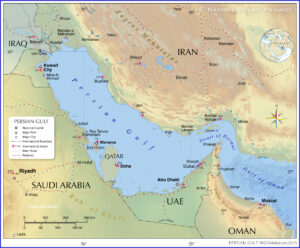
The Persian Gulf is one of the most strategically important marine regions in the world. It is a narrow, semi-enclosed sea surrounded by Iran, Iraq, Kuwait, Saudi Arabia, Bahrain, Qatar, the United Arab Emirates, and Oman. Its waters are shallow, warm, highly saline, and relatively slow to renew compared with open oceans. These natural conditions already make the Gulf environmentally fragile. When military tension, naval confrontation, missile attacks, sabotage, tanker incidents, or oil-infrastructure strikes are added to this fragile setting, the consequences can be severe and long-lasting.
The Persian Gulf is not only a waterway for oil tankers. It is also a source of fish, shrimp, coastal tourism, drinking water through desalination, port activity, mangrove forests, coral reefs, seagrass beds, turtle habitats, and livelihoods for millions of coastal people. The same sea that carries crude oil and LNG also feeds families, cools power plants, supplies desalination intakes, supports recreation, and sustains marine biodiversity.
This is why wars and tensions in the Gulf are not only security or energy issues. They are also environmental and humanitarian risks. A missile strike on an oil terminal, a damaged tanker, a mined shipping lane, an attacked refinery, a burning offshore platform, or a deliberate release of oil can quickly become a regional pollution crisis. Oil slicks do not stop at political borders. Contaminated fish do not respect exclusive economic zones. Smoke from burning oil facilities can move with the wind. Polluted seawater can enter desalination plants. Tar balls can wash onto beaches far from the original incident.
The history of the region shows this clearly. During the 1980s Iran–Iraq War, tankers, oil platforms, and terminals were repeatedly targeted. During the 1991 Gulf War, one of the largest oil pollution events in modern history occurred when millions of barrels of oil entered Gulf waters and hundreds of Kuwaiti oil wells were damaged or set on fire. These events proved that armed conflict in an oil-rich, semi-enclosed sea can produce environmental damage on land, at sea, and in the atmosphere at the same time.
Today, the risk remains serious. The Persian Gulf contains dense shipping routes, offshore oil and gas installations, refineries, export terminals, desalination plants, naval bases, industrial ports, and coastal cities located close to one another. This concentration of strategic assets means that a single military escalation can create multiple pollution pathways at once.
This article explains how tensions and wars in the Persian Gulf may cause oil pollution and other forms of pollution, and how these pollutants may affect fisheries, desalination water plants, tourism, local ecosystems, and coastal communities around the Gulf.
Why the Persian Gulf Is Especially Vulnerable
The Persian Gulf is environmentally different from open seas such as the Atlantic or Pacific. It is relatively shallow, with limited water exchange through the Strait of Hormuz. The climate is hot and dry, evaporation is intense, salinity is high, and many coastal habitats are already under stress from industrial development, dredging, shipping, desalination brine, sewage discharge, coastal construction, and climate change.
These conditions matter because pollution can persist longer in semi-enclosed waters. In an open ocean, waves, currents, wind, dilution, and deep-water exchange may help disperse contaminants more quickly. In the Gulf, pollutants can become trapped in shallow coastal zones, mudflats, mangroves, lagoons, and sheltered bays. Oil can strand on beaches, enter sediments, and remain buried below the surface for years. Heavy oil residues may become mixed with sand and mud, forming persistent contaminated layers.
The Gulf’s biological communities are also adapted to extreme natural conditions. Corals, seagrasses, mangroves, fish, shrimp, shellfish, turtles, dugongs, seabirds, and intertidal organisms already live near their tolerance limits for temperature and salinity. When pollution is added, the margin for survival becomes smaller. A coral reef already stressed by high summer temperatures may be less able to recover from oil exposure. A seagrass bed already affected by turbidity and coastal construction may decline further after contamination. Fish nurseries in mangroves and mudflats may suffer if oil coats roots, sediments, and shallow feeding grounds.
The human geography of the Gulf increases vulnerability as well. Many Gulf states depend heavily on coastal desalination for drinking water. Ports and refineries are often located near cities. Tourism developments, beaches, marinas, and artificial islands lie close to shipping lanes and industrial zones. Fishing communities often operate in shallow coastal waters, exactly where oil slicks and contaminated sediments can accumulate.
In short, the Persian Gulf is a high-risk environmental basin because it combines four factors: massive hydrocarbon infrastructure, dense maritime traffic, geopolitical instability, and fragile semi-enclosed marine conditions.
Main Conflict Pathways That Can Cause Oil Pollution
Oil pollution during war or regional tension can happen in many ways. Some releases are accidental; others are deliberate. Some are immediate and visible, such as a burning tanker or a leaking terminal. Others are chronic and hidden, such as small illegal discharges, damaged pipelines, contaminated ballast water, or poor maintenance during conflict.
1. Attacks on Oil Tankers
The Persian Gulf and the Strait of Hormuz are among the world’s most important tanker routes. Crude oil, refined products, condensate, LNG, LPG, and petrochemical cargoes move through this maritime corridor daily. During periods of military tension, tankers may face risks from missiles, drones, mines, explosive boats, sabotage, boarding incidents, or naval miscalculation.
A tanker attack can cause pollution in several ways. If the hull is breached, cargo tanks may leak crude oil or petroleum products directly into the sea. If the vessel catches fire, burning fuel and cargo can release toxic smoke, soot, sulfur compounds, nitrogen oxides, volatile organic compounds, and particulate matter. If the ship loses power or steering, it may run aground and rupture. If firefighting is delayed because the area is unsafe, pollution may spread before response vessels can reach the site.
Different cargoes create different hazards. Crude oil may form thick slicks and tar residues. Fuel oil can persist for a long time and coat coastlines heavily. Refined products such as gasoline, diesel, or naphtha may evaporate faster but can be acutely toxic and highly flammable. Chemical tankers may carry substances that dissolve, evaporate, sink, or react in dangerous ways. LNG and LPG incidents are usually more associated with fire and explosion risk than persistent marine oiling, but they can still create serious safety and air pollution consequences.
Tanker pollution during conflict is especially dangerous because normal emergency response may be delayed. Salvage teams, tugboats, spill-response vessels, aircraft, and coast guards may be unable to operate safely in a combat zone. Insurance restrictions, port closures, naval exclusion zones, and security warnings can slow response. Every hour of delay allows oil to spread farther.
2. Mining or Blocking Shipping Lanes
Sea mines and explosive devices are another major risk. A mine strike can rupture a tanker hull, damage bunker tanks, or cause a vessel to sink. Even if the cargo remains intact, the ship’s own fuel oil, lubricants, hydraulic fluids, paints, chemicals, and waste can leak into the water.
Mining also creates indirect pollution risks. If ships are forced to anchor for long periods, reroute, or operate under emergency conditions, the likelihood of collisions, groundings, machinery failures, and unsafe discharges may increase. Congestion near ports or waiting areas can raise the risk of accidents. In a narrow waterway such as the Strait of Hormuz, navigation disruption can quickly become a maritime safety problem.
A blocked or threatened route may also lead to hurried operations. Tankers may sail with altered routes, reduced AIS visibility, naval escorts, or unusual traffic patterns. These conditions can increase navigational uncertainty and collision risk. In environmental terms, the danger is not only the mine itself but the chain reaction it creates in shipping behavior.
3. Strikes on Offshore Oil and Gas Platforms
Offshore platforms, wellheads, subsea pipelines, production facilities, and loading systems are highly vulnerable during military escalation. A missile or drone strike on an offshore platform can cause crude oil, condensate, gas, drilling fluids, produced water, and chemicals to escape into the sea.
Offshore incidents can be difficult to control because damaged wells may continue flowing until specialized crews shut them in or cap them. Fire and explosion risks can prevent immediate access. If pipelines are ruptured, oil or gas may leak underwater before the source is located. Subsea leaks can be harder to detect visually than surface spills, especially if monitoring systems are damaged or if operators lose control of infrastructure during conflict.
Gas releases can also produce environmental and safety hazards. Methane emissions contribute to climate forcing. Hydrogen sulfide, if present in sour gas fields, is highly toxic. Burning gas flares, smoke, and incomplete combustion can affect air quality over coastal areas.
4. Attacks on Oil Terminals and Export Facilities
Oil terminals are among the most dangerous targets from an environmental perspective. They contain storage tanks, pipelines, loading arms, pumps, manifolds, jetties, power systems, firefighting systems, and moored tankers. A strike on a terminal can cause multiple simultaneous spills and fires.
Large storage tanks may contain hundreds of thousands or millions of barrels of crude oil or refined products. If tank walls rupture, oil can flood containment areas. If containment fails or drainage channels are damaged, oil may reach the sea. Fires can spread from one tank to another, creating massive smoke plumes and toxic fallout. Firefighting foam, contaminated runoff, and burned residues may enter coastal waters.
Terminal attacks are also likely to disrupt normal pollution-control systems. Booms, skimmers, pumps, and emergency valves may be destroyed or inaccessible. Workers may evacuate. Electricity may fail. Ports may close. The result can be a combined industrial, marine, and air pollution disaster.
5. Damage to Refineries and Petrochemical Plants
Refineries and petrochemical complexes are major sources of non-oil pollution during war. They contain crude oil, intermediate products, refined fuels, solvents, acids, catalysts, sulfur compounds, ammonia, chlorine, plastics feedstocks, and many other hazardous materials.
When refineries are bombed or burn, pollutants may enter three environmental pathways: air, water, and soil. Air pollution may include sulfur dioxide, nitrogen oxides, carbon monoxide, black carbon, fine particles, benzene, polycyclic aromatic hydrocarbons, heavy metals, and other toxic substances. Water pollution may occur when firefighting runoff carries oil, chemicals, foam, and ash into storm drains, canals, or the sea. Soil pollution may occur when tanks leak or when contaminated debris settles on land.
Refinery fires can affect public health quickly. People living downwind may experience respiratory irritation, asthma attacks, eye irritation, headaches, and exposure to carcinogenic compounds. Workers and emergency responders are at even higher risk.
6. Pipeline Ruptures and Sabotage
The Gulf region contains extensive oil and gas pipeline networks, both onshore and offshore. Pipelines connect fields, refineries, export terminals, storage farms, and industrial zones. During conflict, pipelines may be damaged by airstrikes, sabotage, shelling, cyberattacks, ground fighting, or loss of maintenance.
A pipeline rupture can release oil continuously until valves are closed and the damaged section isolated. In remote areas or underwater, detection may be delayed. Oil may enter desert soils, sabkha flats, wetlands, drainage systems, or coastal waters. Gas pipeline ruptures may cause explosions, fires, and toxic releases.
Pipeline pollution can be less visible than a tanker spill but still serious. Oil can seep into sediments, contaminate groundwater in some settings, affect grazing lands, damage coastal mudflats, and create long-term cleanup problems.
7. Deliberate Oil Releases as a Weapon
The most extreme scenario is deliberate oil release as a military tactic. This happened during the 1991 Gulf War, when large quantities of oil entered Gulf waters and oil wells were set on fire. Deliberate releases may be intended to block amphibious landings, damage enemy infrastructure, create economic pressure, complicate naval operations, or generate political shock.
Deliberate oil pollution is especially destructive because it may involve very large volumes, multiple release points, and limited concern for environmental consequences. It can overwhelm response capacity and contaminate hundreds of kilometers of coastline.
Such acts are not ordinary spills. They are environmental warfare. Their impacts extend beyond military targets and harm civilians, fisheries, water security, wildlife, and future generations.
8. Sinking or Abandonment of Ships and Floating Storage Units
War can also lead to abandoned ships, damaged tankers, derelict vessels, and floating storage units becoming pollution hazards. If crews evacuate, maintenance stops. Corrosion, flooding, power failure, and structural fatigue can lead to leaks or sinking.
A floating storage and offloading unit loaded with crude oil can become a massive environmental threat if it is not maintained. Even vessels not carrying cargo contain bunker fuel, lubricants, sewage, batteries, chemicals, asbestos, paints, and waste. When they sink, these materials can leak slowly into the marine environment.
The danger is often delayed. A ship damaged today may become a major pollution source months later if no one can safely board, repair, tow, or lighter it.
9. Cyberattacks and Loss of Industrial Control
Modern oil terminals, refineries, ports, desalination plants, and pipelines rely on digital control systems. During geopolitical tension, cyberattacks can create environmental risk even without physical bombing.
A cyberattack could disable leak detection, manipulate valves, shut down pumps, interfere with emergency shutdown systems, disrupt port traffic management, or corrupt monitoring data. If operators lose situational awareness, a small leak may become a major spill. If port systems fail, collision or grounding risk may increase. If desalination control systems are compromised, contaminated intake water may not be detected quickly enough.
Cyber conflict is therefore not separate from environmental protection. In the Gulf, digital security and pollution prevention are connected.
Non-Oil Pollution During War and Tension
Oil pollution is the most obvious risk, but it is not the only one. Armed conflict in the Persian Gulf may generate several other pollution types that can be equally damaging.
Chemical Pollution
Chemical pollution may come from petrochemical plants, chemical tankers, fertilizer facilities, refineries, ports, industrial warehouses, military depots, and damaged ships. Chemicals can include solvents, acids, alkalis, ammonia, chlorine compounds, methanol, aromatics, pesticides, heavy metals, and industrial additives.
Some chemicals float, some dissolve, some evaporate, and some sink. This makes response difficult. Unlike crude oil, which is often visible as a slick, dissolved chemicals may be invisible while still toxic. They can kill fish, contaminate shellfish, affect plankton, damage desalination membranes, and pose risks to workers.
Air Pollution from Fires and Explosions
Burning oil wells, refineries, tank farms, ships, and industrial facilities can release enormous quantities of smoke and toxic gases. The pollutants may include particulate matter, sulfur dioxide, nitrogen oxides, carbon monoxide, volatile organic compounds, dioxins, furans, and heavy metals.
Air pollution from conflict can affect people far from the target. Winds may carry smoke across borders. Fine particles can penetrate deep into the lungs. People with asthma, heart disease, children, elderly people, and outdoor workers are especially vulnerable.
Air pollution also affects the sea. Pollutants deposited from the atmosphere can enter coastal waters, sediments, and food chains. Soot deposition may darken surfaces and affect solar heating. Acidic emissions can contribute to local environmental stress.
Heavy Metals and Military Debris
Explosions, munitions, damaged ships, burned electronics, batteries, and industrial debris can release heavy metals such as lead, mercury, cadmium, arsenic, chromium, nickel, and copper. These substances can accumulate in sediments and organisms.
Heavy metals are concerning because they do not degrade like some organic pollutants. They can persist, bioaccumulate, and biomagnify through food webs. Shellfish and bottom-feeding fish may be particularly exposed because sediments act as pollutant reservoirs.
Military debris can also physically damage habitats. Sunken wreckage, metal fragments, unexploded ordnance, and collapsed infrastructure may harm seabeds, restrict fishing, create navigation hazards, and complicate cleanup.
Sewage and Wastewater Pollution
War can damage municipal wastewater treatment plants, pumping stations, sewage pipelines, and power supplies. If wastewater systems fail, untreated sewage may enter coastal waters. This can increase bacteria, viruses, nutrients, and organic matter.
Sewage pollution can cause fish kills, algal blooms, beach closures, shellfish contamination, and public health risks. In hot Gulf waters, microbial growth can be rapid. Combined with oil or chemical pollution, sewage contamination can further reduce oxygen and worsen ecosystem stress.
Desalination Brine and Treatment Chemicals
Desalination plants normally discharge concentrated brine back to the sea. They also use chemicals for pretreatment, membrane cleaning, anti-scaling, chlorination, and other processes. Under normal regulation, these discharges are managed. During conflict, however, damage to plants may cause abnormal releases of chemicals or uncontrolled brine discharge.
If power systems fail, cooling and treatment processes may be disrupted. If storage tanks rupture, chemicals may enter the sea. If plants are forced into emergency shutdown or restart cycles, operational instability may affect both water production and marine discharge quality.
Plastic, Construction, and Urban Debris
Explosions in coastal cities, ports, industrial zones, and tourism areas can generate large amounts of debris. Plastics, insulation, fiberglass, packaging, building materials, foams, containers, and household waste may be washed into the sea.
Plastic pollution can entangle birds, turtles, and marine mammals. Microplastics may be ingested by fish and shellfish. Debris can damage fishing gear, foul vessel propellers, and reduce beach attractiveness for tourism.
–
Impacts on Fisheries and Seafood Safety
Fisheries are among the first sectors affected by marine pollution. The Persian Gulf supports commercial and small-scale fisheries for fish, shrimp, crab, and other marine resources. Many coastal families depend directly or indirectly on fishing, processing, markets, boat repair, ice supply, transport, and seafood trade.
Oil pollution can affect fisheries in several ways. First, it can kill eggs, larvae, and juvenile fish. Early life stages are often more sensitive than adult fish. If spawning grounds or nursery habitats are contaminated, fish populations may decline later, even after the visible slick disappears.
Second, oil can contaminate seafood. Fish may absorb petroleum hydrocarbons through gills, skin, or contaminated food. Shellfish are especially vulnerable because they filter water and can accumulate contaminants. Even when seafood is not dangerously toxic, it may smell or taste of oil, making it commercially unacceptable.
Third, fishing areas may be closed as a precaution. Authorities may ban fishing temporarily to protect public health. This protects consumers but harms fishers economically. If closures last weeks or months, small fishing communities may lose income quickly.
Fourth, fishing gear can be damaged. Nets, traps, lines, floats, engines, and boat hulls can become coated with oil. Cleaning gear is costly and sometimes impossible. Oiled gear may need replacement.
Fifth, market confidence can collapse. Consumers may avoid seafood from the region even if some areas are safe. Export markets may impose restrictions. Restaurants and fish markets may lose customers. The reputational damage can last longer than the pollution itself.
Shrimp fisheries are particularly sensitive because shrimp depend on shallow coastal habitats, mudflats, estuaries, and nursery zones. These are exactly the areas where oil often strands. If sediments become contaminated, bottom-dwelling organisms may be exposed for long periods.
For small-scale fishers, the problem is not only ecological. It is social. A fishing ban may mean no income. Boat owners may still need to pay loans, fuel costs, maintenance, and crew wages. Families may face food insecurity. Young people may leave fishing communities. Traditional coastal knowledge may be weakened.
–
Impacts on Desalination Water Plants
Desalination is one of the most critical vulnerability points in the Persian Gulf. Many Gulf cities rely heavily on seawater desalination for drinking water, industry, and urban life. In some countries, desalinated water supplies most or nearly all potable water. This means that marine pollution can become a water-security crisis.
Desalination plants require continuous intake of seawater. If oil slicks, chemicals, algae, debris, or contaminated sediments enter intake systems, plant operators may need to reduce production or shut down units. Oil can foul intake screens, filters, pumps, membranes, and heat-exchange surfaces. Some volatile hydrocarbons may create taste, odor, or toxicity concerns. Chemical contamination can damage membranes or require additional treatment.
Thermal desalination plants and reverse osmosis plants have different technical sensitivities, but both need clean intake water. Reverse osmosis membranes can be especially vulnerable to fouling. Once membranes are contaminated, cleaning is expensive and may not fully restore performance. Shutdowns can reduce water availability within hours or days.
The risk is not limited to direct oil entry. A nearby tanker fire, refinery attack, or port explosion may cause firefighting foam, soot, debris, and chemical runoff to enter seawater. If a desalination plant is located near an industrial port or oil terminal, it may face multiple pollutants at once.
Desalination plants are also often linked with power plants. If conflict disrupts electricity generation, fuel supply, or cooling water systems, desalination may stop even without direct pollution. This creates a dangerous cascade: war damages energy infrastructure, energy disruption stops desalination, water shortages affect civilians, hospitals, industries, and emergency services.
In hot Gulf climates, water storage may be limited compared with demand. A major shutdown could force rationing, emergency imports, bottled water distribution, or temporary reliance on groundwater. For large cities, this is a serious civil-protection issue.
Environmental impacts may also arise if desalination plants are damaged. Treatment chemicals, fuel, lubricants, and concentrated brine may be released. Emergency shutdowns and restarts may disturb normal discharge controls. Therefore, desalination facilities are both victims of marine pollution and potential sources of pollution if damaged.
–
Impacts on Tourism and Coastal Recreation
Tourism in the Persian Gulf has expanded significantly in recent decades. Coastal cities have invested in beaches, resorts, marinas, cruise terminals, waterfront promenades, artificial islands, diving sites, heritage districts, and marine recreation. Oil pollution can damage this sector quickly.
Tourists do not want to visit beaches covered in tar balls, oily sand, dead fish, bad odors, or warning signs. Even a small spill can create strong negative images. Social media can spread pictures of pollution instantly, damaging destination reputation.
Beach contamination creates direct cleanup costs. Oiled sand may need removal, but removing too much sand can damage beach morphology. High-pressure cleaning can harm intertidal organisms. Manual cleanup is labor-intensive and exposes workers to pollutants. If oil enters rocks, seawalls, mangroves, or marinas, cleanup becomes more complicated.
Marine tourism can also suffer. Diving, snorkeling, boat tours, jet skiing, kayaking, recreational fishing, and cruise visits may be suspended. Marinas may close if oil threatens yachts and small boats. Cruise ships may avoid ports perceived as unsafe. Hotels and restaurants may lose bookings.
Tourism damage is not only financial. It affects workers: hotel staff, taxi drivers, tour guides, cleaners, restaurant employees, small shop owners, boat operators, and beach vendors. In regions trying to diversify beyond oil, pollution from conflict can undermine years of investment in coastal tourism and blue-economy development.
–
Impacts on Mangroves, Salt Marshes, and Mudflats
Mangroves, salt marshes, sabkhas, and mudflats are among the most vulnerable coastal habitats in the Gulf. They are biologically productive and provide nursery areas for fish and shrimp, feeding grounds for birds, shoreline stabilization, carbon storage, and biodiversity support.
Oil can coat mangrove roots and pneumatophores, blocking gas exchange and stressing or killing trees. Because mangroves trap floating material, oil can accumulate inside them. Cleanup is difficult because heavy machinery can damage roots and sediments. In many cases, responders must choose between removing oil and avoiding further habitat destruction.
Salt marshes and mudflats can retain oil in sediments. Surface oil may weather and degrade, but buried oil can persist below the surface. Animals that live in or feed on sediments, such as worms, crabs, mollusks, and shorebirds, may be exposed over time.
Birds are highly vulnerable. Oil damages feathers, reducing insulation and buoyancy. Birds may ingest oil while preening. Migratory shorebirds using Gulf wetlands may lose feeding areas if mudflats are contaminated.
Because these habitats are shallow and sheltered, waves do not always remove oil quickly. This makes them long-term pollution traps.
–
Impacts on Coral Reefs and Seagrass Beds
The Persian Gulf contains coral communities that survive under extreme temperature and salinity conditions. These corals are scientifically important because they may offer insight into heat tolerance. However, they are not immune to pollution.
Oil can affect corals by smothering tissues, reducing light, introducing toxic hydrocarbons, and damaging larvae. Dispersants, if used poorly, may increase exposure of corals to dissolved oil components. Coral recovery can be slow, especially when reefs are already stressed by warming, bleaching, sedimentation, dredging, and coastal development.
Seagrass beds are also at risk. They provide habitat for juvenile fish, feeding areas for dugongs and turtles, sediment stabilization, and carbon storage. Oil slicks can reduce light penetration, while stranded oil and contaminated sediments can affect seagrass health. If seagrasses decline, the species depending on them also suffer.
Damage to coral and seagrass habitats has long-term implications for fisheries, biodiversity, shoreline protection, and tourism. These habitats are not easily replaced once lost.
–
Impacts on Marine Mammals, Turtles, and Birds
Dugongs, dolphins, turtles, seabirds, and migratory birds may all be affected by conflict-related pollution.
Dugongs depend heavily on seagrass beds. If oil damages seagrass habitat, dugongs may lose feeding grounds. Dolphins may inhale toxic vapors near slicks or be affected by reduced prey availability. Sea turtles may surface through oil slicks, ingest tar, or encounter polluted nesting beaches. Hatchlings moving from nests to the sea are especially vulnerable if beaches are contaminated.
Birds are often the most visible victims of oil spills. Oiled birds may lose flight ability, suffer hypothermia or heat stress, ingest oil, and die. Migratory birds using Gulf wetlands may be affected even if they are present only seasonally.
Wildlife rescue during conflict is difficult. Rehabilitation centers may be overwhelmed. Access to contaminated areas may be restricted by security conditions. In some cases, wildlife impacts may be underreported because monitoring teams cannot safely enter affected zones.
–
Impacts on Local People and Public Health
For coastal communities, pollution from war is not abstract. It affects drinking water, food, jobs, health, housing, and psychological security.
People may be exposed to pollutants through inhalation, skin contact, contaminated seafood, polluted water, or occupational cleanup work. Oil vapors and smoke can irritate the respiratory system. Fine particles from fires can worsen asthma and cardiovascular disease. Benzene and some polycyclic aromatic hydrocarbons are associated with long-term health risks. Chemical releases may cause acute poisoning risks depending on the substance.
Cleanup workers face particular dangers. They may work long hours in heat, handle oily waste, inhale fumes, and use chemical cleaners. Without proper protective equipment, training, hydration, and medical monitoring, cleanup itself can become a health hazard.
Food security may also be affected. If fishing is stopped or seafood is suspected of contamination, local diets and incomes may suffer. Imported food may become more expensive if ports are disrupted. Low-income households are usually hit hardest.
Water insecurity is perhaps the most serious public concern. If desalination plants shut down, people may face rationing, price increases, panic buying, or dependence on bottled water. Hospitals, schools, mosques, hotels, and industries all require reliable water. In the Gulf climate, water disruption can become a humanitarian emergency quickly.
There is also psychological stress. People living near refineries, ports, and desalination plants may fear explosions, toxic clouds, water shortages, or evacuation. Fishers may worry that their livelihoods will never recover. Tourism workers may fear job losses. Environmental damage from war can therefore create anxiety, displacement, and social instability.
–
Economic Consequences Beyond the Environment
Pollution from conflict can damage multiple economic sectors at once. Oil spills can close ports, delay shipping, increase insurance costs, halt fishing, reduce tourism, damage desalination, and require expensive cleanup. Governments may need to compensate fishers, support affected businesses, import water, restore habitats, monitor seafood, and manage public health risks.
The cost of cleanup can be enormous, but cleanup cost is only part of the total damage. Long-term ecosystem services may be lost. Fish nursery areas may decline. Beaches may lose tourism value. Public trust in seafood safety may weaken. Industrial plants may face shutdowns. Insurance premiums may rise. Investors may reassess coastal projects.
For countries trying to diversify their economies, environmental damage from conflict can undermine blue economy strategies. Ports, logistics, cruise tourism, aquaculture, coastal real estate, marine conservation, and recreation all depend on a clean and stable marine environment.
–
Why Oil Spill Response Is Difficult During War
Oil spill response is already complex in peacetime. During war, it becomes much harder.
First, safety restrictions may prevent response vessels and aircraft from entering the area. Second, ports may be closed or damaged. Third, spill-response equipment may be unavailable, destroyed, or located too far away. Fourth, international assistance may be delayed by politics, sanctions, military restrictions, or insurance issues. Fifth, communication between neighboring countries may be weak during conflict.
Oil behavior in the Gulf also complicates response. High temperatures can increase evaporation of lighter fractions but leave heavier residues. Shallow waters and coastal features can trap oil. Sensitive habitats may be difficult to access. The use of dispersants may be controversial because they can move oil into the water column, potentially affecting fish larvae, corals, and desalination intakes.
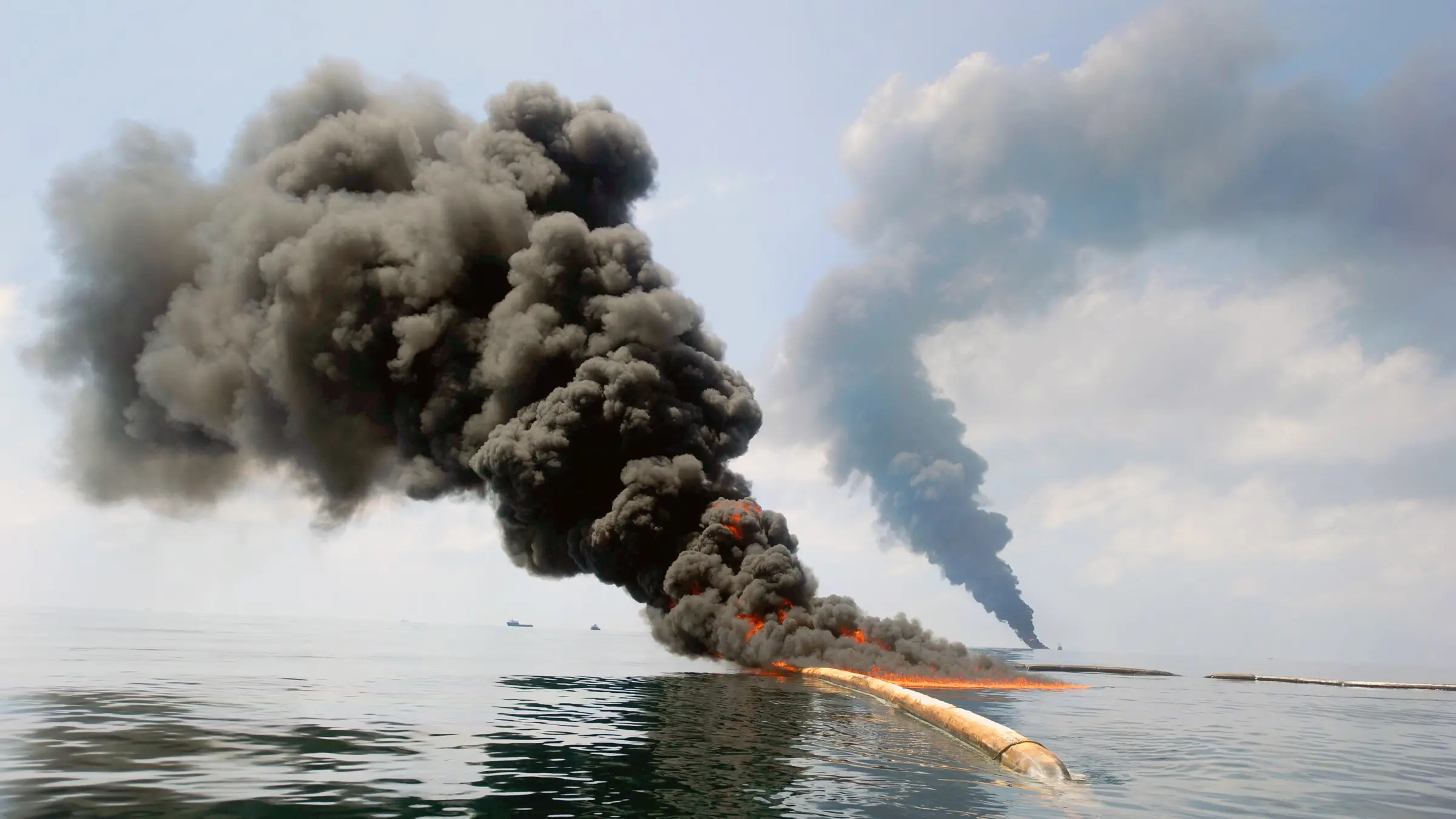
Response choices involve trade-offs. Booming may protect desalination intakes or mangroves, but booms can fail in strong currents or rough weather. Skimming works best when oil is thick and accessible. Burning oil at sea reduces surface oil but creates air pollution. Shoreline cleanup may remove oil but damage habitats if done aggressively. Chemical dispersants may reduce shoreline oiling but increase exposure in the water column.
War reduces the time and space needed to make good environmental decisions.
–
Transboundary Nature of the Problem
The Persian Gulf is shared. Pollution from one country’s waters can affect another country’s coast. Currents, tides, winds, and shipping routes can move oil across boundaries. Fish stocks migrate. Birds move between wetlands. Desalination intakes in one state may be threatened by an incident elsewhere.
This means environmental security in the Gulf requires regional cooperation, even among political rivals. Oil spill contingency plans, early warning systems, satellite monitoring, shared response equipment, joint exercises, seafood safety protocols, and emergency communication channels are essential.
A purely national approach is not enough. If a major spill occurs near a strategic chokepoint or offshore field, multiple countries may be affected. The fastest response may require cooperation between coast guards, navies, port authorities, environmental agencies, oil companies, desalination operators, and international organizations.
–
Preparedness Measures to Reduce Damage
The Gulf cannot remove all geopolitical risk, but it can reduce environmental vulnerability. Several measures are important.
First, oil and gas facilities should be hardened against attacks and equipped with rapid isolation systems. Automatic shutoff valves, redundant power, fireproofing, secondary containment, and emergency drainage controls can reduce spill volumes.
Second, tanker traffic management should be strengthened during tension. Clear routing, naval coordination, mine-risk information, emergency anchorage planning, and communication protocols can reduce collision and grounding risks.
Third, desalination plants need special protection. Intake monitoring, offshore booms, alternative intake designs, emergency reservoirs, mobile treatment units, water-demand management, and backup interconnections can improve resilience.
Fourth, regional spill-response capacity should be pre-positioned. Booms, skimmers, temporary storage, dispersant decision tools, shoreline cleanup equipment, wildlife rescue kits, and trained teams should be available near high-risk zones.
Fifth, satellite surveillance should be integrated with national response centers. Oil slicks, illegal discharges, damaged infrastructure, and ship movements can be monitored more rapidly from space.
Sixth, seafood safety systems should be ready before crises. Baseline contaminant data, rapid testing laboratories, fishery closure protocols, and public communication plans are essential.
Seventh, environmental data should be collected even during conflict where safe. Without monitoring, damage is underestimated and compensation becomes difficult.
Finally, regional environmental diplomacy should be treated as a security issue. Protecting desalination plants, oil terminals, fisheries, and marine ecosystems is not a luxury. It is part of protecting civilian life and economic stability.
–
Conclusion: Environmental Protection Is Human Security
Tensions and wars in the Persian Gulf can cause oil pollution through tanker attacks, offshore platform damage, terminal strikes, refinery fires, pipeline ruptures, deliberate releases, ship sinkings, and cyber disruption. They can also cause chemical pollution, air pollution, sewage contamination, heavy-metal release, debris pollution, and damage to desalination systems.
The consequences can spread across the entire Gulf system. Fisheries may close. Seafood may be contaminated. Desalination plants may shut down. Beaches may be polluted. Tourism may decline. Mangroves, coral reefs, seagrasses, birds, turtles, dolphins, and dugongs may suffer. Coastal people may face health risks, job losses, water insecurity, and psychological stress.
The Persian Gulf is often described through the language of oil, shipping, and geopolitics. But it should also be understood as a living sea and a source of daily survival. Its waters support food, water, work, culture, and identity. When war pollutes the Gulf, the damage is not limited to nature; it reaches homes, hospitals, markets, ports, beaches, and future generations.
The central lesson is clear: in the Persian Gulf, environmental security and human security are inseparable. Preventing war-related pollution is not only an ecological duty. It is a strategic necessity for every country and every community around the Gulf.