

Europe is home to some of the busiest and most important seaports in the world. These ports move millions of tonnes of cargo every year, linking economies across continents. Ports such as Rotterdam, Antwerp-Bruges, Hamburg, and Piraeus are vital hubs for trade, energy, and industry. However, ports also create environmental challenges — from greenhouse gas emissions to air and water pollution. As the world seeks sustainable solutions to climate change, European ports are taking a leadership role in developing green ports — maritime gateways that prioritize environmental protection, energy efficiency, and cleaner operations.
Green ports in Europe go beyond basic compliance with environmental laws. They adopt innovative technologies, renewable energy systems, cleaner fuels, and smarter logistic practices. This article explores how European ports are leading sustainability, the initiatives driving green transformation, and what lessons can be learned for global maritime development.
What Makes a Green Port in Europe?
A green port in Europe is a port that actively reduces its environmental footprint while maintaining high levels of trade activity and logistical efficiency. A green port focuses on long-term sustainability rather than short-term operational gains. It invests in reducing emissions, improving energy efficiency, protecting water quality, managing waste responsibly, enhancing biodiversity, and engaging local communities — all while contributing to the local and national economy.
European green ports aim to balance economic activity with environmental responsibility. Rather than merely meeting legal obligations, many ports go beyond required standards, working collaboratively with stakeholders to innovate and adopt proactive sustainability strategies.
The European Policy Framework Driving Green Ports
Europe has developed advanced environmental regulations and strategic policies that guide ports toward sustainability. At the regional level, the European Union’s Green Deal and associated climate policies such as the ‘Fit for 55’ package aim to reduce net greenhouse gas emissions by at least 55% by 2030 and achieve carbon neutrality by 2050. These goals influence port operations by encouraging cleaner energy systems, alternative fuels, and energy-efficient infrastructure.
European ports also participate in voluntary frameworks such as the EcoPorts network and Self-Diagnosis Method (SDM). This initiative, led by the European Sea Ports Organisation (ESPO), allows ports to share data and benchmark environmental performance across multiple areas, from emissions to biodiversity protection. The EcoPorts Environmental Report gathers environmental performance information from over 70 European ports, supporting knowledge-sharing and best practices.
Another emerging standard — Green Marine Europe — is being adapted from a North American certification framework to suit European conditions. Multiple European ports, including Port Atlantique La Rochelle, Bordeaux Port, and the Port of Bilbao, are helping adapt this framework, which focuses on measurable environmental performance indicators related to greenhouse gas emissions, energy use, biodiversity, and logistics efficiency.
Together, these policy platforms help European ports map out concrete sustainability goals, measure environmental performance, and track progress toward greener operations.
–
Europe’s Leading Green Ports and Their Initiatives
Port of Rotterdam — Netherlands
The Port of Rotterdam is the largest port in Europe and a global leader in sustainability. The port authority has set a long-term goal of becoming emissions-free by 2050, and has already implemented a wide range of green initiatives. The port supports cleaner shipping through incentive schemes that reward climate-friendly vessels with discounts on port dues and participation in programs such as the Green Award and Environmental Ship Index.
Rotterdam also invests in alternative fuels infrastructure and renewable energy systems, while operating measures that encourage reduced emissions from ships and terminal equipment. By combining economic scale with environmental innovation, Rotterdam shows how even major industrial hubs can pursue a low-carbon future.
Port of Antwerp-Bruges — Belgium
The merged Port of Antwerp-Bruges (covering the ports of Antwerp and Zeebrugge) has taken bold steps toward climate neutrality by aiming to eliminate net emissions by 2050. One of its most notable projects is the development of the Hydrotug 1, the world’s first hydrogen-powered tugboat, created in partnership with CMB.TECH. This innovation shows the port’s commitment to alternative fuels and reducing emissions from heavy marine equipment.
Projects like these are part of a wider strategy in which the port authority supports cleaner logistics, energy transition plans, and new fuel infrastructure for hydrogen and other low-carbon energy sources.
Port of Piraeus — Greece
The Port of Piraeus has branded itself as the “Green Port of the Mediterranean Sea.” It has maintained continuous EcoPorts certification since 2004, demonstrating a strong commitment to environmental management systems, regular monitoring, and development of sustainability plans.
Piraeus works with academic institutions to monitor air and water quality around the port. It also manages waste from ships while exploring cleaner fuels such as liquefied natural gas (LNG) and implementing cold ironing for cruise ships to reduce engine emissions at berth.
Port Atlantique La Rochelle and Others in France
Port Atlantique La Rochelle is actively contributing to the adaptation of the Green Marine Europe certification framework for European ports. This involvement underscores its commitment to structured environmental performance indicators and continuous improvement in energy performance, biodiversity protection, and emissions measurement.
Smaller French ports such as Bordeaux also participate in collaborative sustainability networks that help build tailored green initiatives, from renewable energy use to waste management systems.
Other Notable European Port Contributions
-
ESPO Environmental Report data shows many European ports now offer onshore power supply (OPS) for ships at berth — a service that enables ships to shut down engines and reduce local emissions. A majority of ports are expanding OPS infrastructure, LNG bunkering, and differentiated port dues that reward cleaner ships.
-
Numerous European ports are engaging in energy transition strategies, integrating renewable energy sources and planning for carbon-neutral operations. These strategies reflect broader European climate goals.
–
Main Sustainability Focus Areas in European Ports
Renewable Energy, Clean Power, and Alternative Fuels
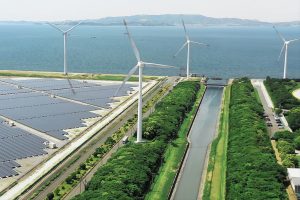
European ports are increasingly installing solar panels, wind turbines, and investing in shore-side electricity (OPS) so that visiting ships can plug into clean power while docked. This reduces air pollution and improves local quality of life. Ports are also preparing for alternative fuels such as LNG, hydrogen, and biofuels, which are expected to play a major role in reducing carbon emissions from maritime transport.
Energy Efficiency and Digital Optimization
Green ports adopt energy management systems and smart logistics platforms to reduce energy use and emissions from port equipment and operations. Data-driven systems help optimise ship arrival times, reduce congestion, and improve cargo handling efficiency.
Biodiversity Protection and Water Quality
European ports implement strategies to protect local ecosystems. This includes measures to prevent spills, treat wastewater, and monitor water quality. Ports also support habitat restoration near coastal areas to mitigate environmental damage.
Waste Management and Circular Economy Initiatives
Ports prioritise waste collection and recycling for both ship waste and on-site operations. Some ports are exploring circular economy models, where waste materials are reused or transformed into energy, closing loops in resource use.
–
Challenges Facing Green Ports in Europe
Despite strong progress, European ports face several challenges. For example, a 2025 study showed that most ports are behind schedule in installing shore power connections ahead of the EU’s 2030 target, with container terminals lagging compared to cruise berths.
Investment costs, technical readiness of new fuels, infrastructure limitations, and the need for stakeholder coordination remain key barriers. Harmonising standards across countries and sectors also requires continued policy attention.
–
The Future of Green Ports in Europe
Europe’s green port transformation continues to expand. Improved policy frameworks, certification systems like Green Marine Europe, expanded clean fuel infrastructure, and boosted digitalisation are shaping the future of sustainable maritime operations.
European ports will remain central players in global supply chains while acting as testbeds for climate-friendly technologies and policies. As port authorities innovate with hydrogen tugs, renewable energy systems, smarter logistics, and environmental certifications, they are helping drive a wider shift toward a cleaner maritime industry.
–
Conclusion
European ports are paving the way for a greener future in global maritime transport. Through strong policy frameworks, collaborative initiatives, and technology adoption, they balance environmental goals with logistical performance. From Rotterdam’s climate incentives to Antwerp-Bruges’ hydrogen innovations, from Piraeus’ long-standing environmental monitoring to La Rochelle’s contribution to evolving certification frameworks, Europe’s ports show that sustainable progress is both achievable and impactful.
Green ports in Europe not only reduce emissions and protect local environments — they also strengthen competitiveness, support economic growth, and align maritime activities with broader climate targets for the future.