
Published: June 10, 2026
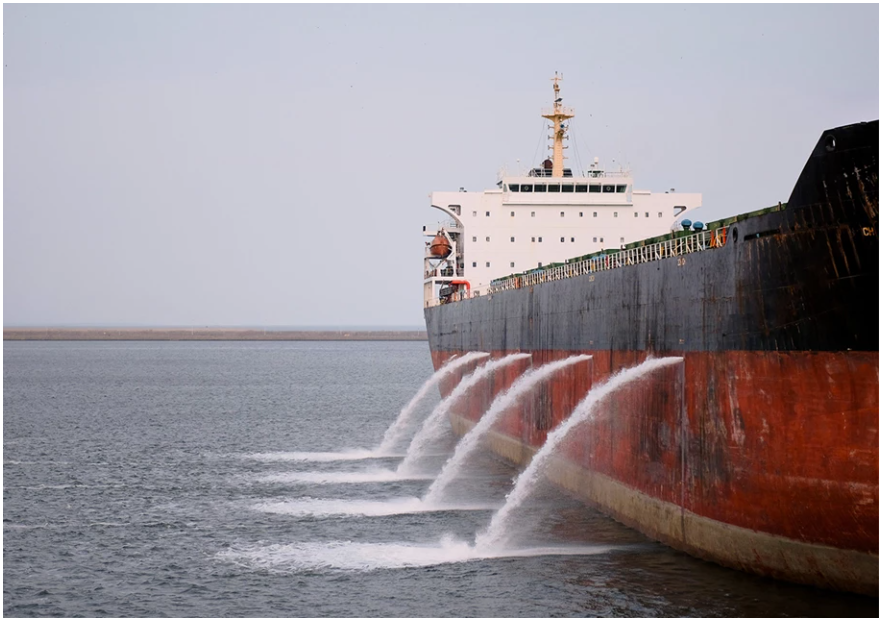
Every day, more than 10 billion tonnes of ballast water are pumped into the holds of cargo ships around the world. This water—used to stabilize vessels at sea—is then discharged thousands of miles away, often in a completely different ocean. The problem? It carries a hidden cargo: thousands of living organisms, from microscopic plankton to juvenile crabs and fish.
When released, these stowaways can become ecological wrecking balls. They have collapsed fisheries, clogged power plants, triggered human disease outbreaks, and driven native species to the brink of extinction. These are not rare accidents. They are some of the greatest human-caused environmental disasters you have never heard of.
Below, we explore the most devastating ballast water invasions in history—from the Adriatic Sea’s blue crab crisis to the Caspian Sea’s jellyfish nightmare—and ask whether we can ever stop the next one.
🦀 The Blue Crab Siege of the Adriatic Sea
An American Predator Invades Italy’s Clam Beds
The Atlantic blue crab (Callinectes sapidus) is a familiar sight along the eastern coast of the United States. But since 1949, it has also been present in the Mediterranean, likely transported in the ballast tanks of cargo ships traveling from North America to European ports. For decades, it remained a minor curiosity—until recently.
In 2022–2023, a series of marine heatwaves turned the northern Adriatic into a blue crab breeding ground. With no natural predators in the region (sharks, large groupers, and predatory fish are scarce due to overfishing), the crab population exploded.
Economic Devastation in the Po Delta
The impact has been catastrophic for Italy’s clam aquaculture industry. The Sacca di Goro lagoon—Europe’s most productive Manila clam site—saw a 71.5% drop in clam biomass after the blue crab arrived. In some areas of the Po Delta, losses reached 100% .
- Annual losses for the industry: approximately €65 million
- Wider economic impact (including tourism and fishing): estimated €250+ million
- Government response: Italy allocated €2.9 million for emergency crab culling
Local fishermen have been forced to haul in nets filled with hundreds of crabs instead of clams. Some have turned to selling the crabs as a novelty seafood, but revenues have been minimal compared to the losses.
Ecological Ripple Effects
The blue crab is a voracious predator of bivalves, small fish, and even other crabs. By stripping the seafloor of clams and mussels, it is fundamentally altering the benthic ecosystem. Native species that depend on those bivalves for food or habitat are now declining rapidly. Scientists warn that the Adriatic seabed could shift from a diverse, productive system to a crab-dominated wasteland.
Key takeaway: A single invasive species, amplified by climate change, can destroy a century-old fishing economy in less than two years.
🌊 The Comb Jelly Cascade: From Black Sea Collapse to Caspian Crisis
The Accidental Passenger That Ate a Fishery
Few creatures look less threatening than the North American comb jelly (Mnemiopsis leidyi). It is small, translucent, and drifts gently through the water. But it is also one of the most destructive invasive species in history.
In the early 1980s, comb jellies were discharged from ballast water into the Black Sea, likely from ships traveling between U.S. East Coast ports and Odessa (then Soviet Union). The Black Sea had no natural predators or competitors for this creature. By 1989, Mnemiopsis had reached plague proportions.
The Collapse of the Black Sea Anchovy Industry
Comb jellies feed on zooplankton and fish larvae—the same food that commercial fish need to survive. As the jelly population exploded, the Black Sea’s anchovy fishery completely collapsed .
- Pre-invasion anchovy catch: ~400,000 tonnes per year
- Post-collapse catch: less than 100,000 tonnes
- Number of fishing grounds destroyed: over two dozen
The local economy, which had relied on anchovy for decades, was shattered. Thousands of fishermen lost their livelihoods. The Black Sea ecosystem remains permanently altered to this day.
Spreading to the Caspian Sea: A New Disaster
The story did not end there. In the late 1990s, Mnemiopsis leidyi was accidentally introduced into the Caspian Sea—likely via ballast water from ships moving between the two seas (connected by canals and rivers). The Caspian Sea has its own unique ecosystem, including the endemic kilka (a small schooling fish).
Within a few years, the kilka fishery collapsed:
- Peak catch (pre-jelly): 271,400 tonnes
- Minimum catch (post-jelly): 54,300 tonnes
- Decline: over 80%
The Caspian Sea’s famous sturgeon—source of most of the world’s caviar—also suffered, as they depend on kilka as a food source. Scientists warned at the time that the entire Caspian ecosystem could be lost if the invasion were not controlled. It was not controlled.
Key takeaway: One organism, transported by ships, cascaded across two seas and destroyed multiple fisheries worth hundreds of millions of dollars.
🦪 Zebra Mussels: The Billion-Dollar Clog
A Tiny Shellfish That Paralyzes Infrastructure
Native to the Black and Caspian Seas (the same region as the comb jelly), the zebra mussel (Dreissena polymorpha) was introduced to North America’s Great Lakes in the late 1980s via ballast water discharge from European freighters. The mussels, each no larger than a fingernail, quickly spread throughout all five lakes.
The Cost of a Tiny Invader
Zebra mussels are filter feeders that attach to any hard surface—in massive numbers. A single square meter can hold tens of thousands of them. They colonize water intake pipes, power plant cooling systems, municipal water supplies, and even ship hulls.
- Annual control and management costs in the Great Lakes region: $500 million
- Estimated total cost to North America (including damage to power plants, factories, and water treatment facilities): billions of dollars
- Impact on native mussels: 30+ species driven to near-extinction
The mussels have also altered the Great Lakes ecosystem itself. By filtering vast amounts of phytoplankton (the base of the food web), they have made the lakes three times clearer than they were 30 years ago. That sounds good, but it is ecologically disastrous.
The Whitefish Crash
Because zebra mussels remove so much phytoplankton, the food chain has been starved. Native zooplankton and small fish have declined. As a result, whitefish—a commercially and culturally vital species in the Great Lakes—has suffered a 70–80% crash in recruitment (survival of young fish) in Lakes Michigan and Huron. The fishery that once supported hundreds of families is now a shadow of its former self.
Key takeaway: An invader does not need to be a predator to cause catastrophe. Sometimes, it just needs to eat too much of the wrong thing.
–
🌿 Other Ballast Water Disasters You Should Know
The Smothering Seaweed of the Mediterranean
In 2015, a brown algae called Rugulopteryx okamurae was first detected in the Mediterranean—likely arriving from Asia in ballast tanks. It now carpets the seafloor from Spain to Italy, smothering native seagrass meadows and corals.
- In Spain alone: removal of 1,200 tonnes of algae from a single beach (Cádiz) after storms piled it up in rotting, foul-smelling mounds.
- Fishery losses for small-scale Spanish fishermen: €3 million annually
- Tourism impact: beaches closed, hotel bookings canceled.
The algae grows so fast and thick that it has been called a “marine desert” underneath—nothing else can live there.
Cholera: When Ballast Water Kills People
Ballast water does not only carry marine life. It can carry human pathogens. Several cholera epidemics in South America during the 1990s have been linked to ships discharging ballast water containing Vibrio cholerae bacteria.
-
Peru, 1991: A cholera outbreak began in coastal ports, eventually infecting over 1 million people and killing nearly 10,000. Investigators traced the strain to ballast water discharged by a cargo ship from Asia.
-
Other outbreaks in Mexico, Brazil, and the Gulf of Mexico have been similarly linked to ship-borne bacteria.
This is ballast water’s most terrifying dimension: an invisible, deadly hitchhiker that can spark a public health emergency.
–
⚖️ Fighting Back: Global Rules and Persistent Gaps
The IMO Ballast Water Convention
The disasters above finally prompted global action. In 2017, the International Maritime Organization’s Ballast Water Management Convention entered into force. It requires all international ships to:
- Exchange their ballast water in the open ocean (where fewer coastal organisms survive), or
- Treat the water using approved systems (filtration, UV light, or biocides) before discharge.
As of 2026, over 80% of the global fleet is compliant. However, enforcement remains uneven, especially in developing nations.
The Shadow Fleet Problem
A growing concern is the “shadow fleet” of aging, poorly regulated tankers that operate outside international law. These vessels often ignore ballast water treatment requirements entirely, posing a constant risk of new invasions.
Regional Loopholes
Even wealthy countries have gaps. Until recently, ships that operate solely within North America’s Great Lakes (called “lakers”) were largely exempt from federal ballast water discharge standards. This created a loophole where invasive species could spread within the Great Lakes even if they could not arrive from overseas.
Can We Eat Our Way Out of the Problem?
In the Adriatic, some chefs and fishermen have promoted blue crab as a delicacy, hoping that commercial harvest will control the population. Restaurants in Venice and Rimini now serve “crab risotto” and “blue crab pasta.” While this helps offset losses slightly, it is not a solution:
- In 2023, blue crab sales in Italy generated less than €5 million—a tiny fraction of the €250 million in losses.
- Moreover, harvesting a pest does not remove it; crabs reproduce faster than humans can catch them.
Key takeaway: Market-based solutions can help, but they rarely stop an invasion.
–
Conclusion: The Next Invasion Is Already Underway
The blue crab in the Adriatic, the comb jelly in the Caspian, the zebra mussel in the Great Lakes—these are not isolated accidents. They are symptoms of a global system that moves 90% of the world’s trade by volume across oceans, while inadvertently moving millions of organisms.
The Ballast Water Management Convention is a crucial step forward, but it is not a magic bullet. Older ships are exempted until their next dry-docking. Enforcement is weak in many regions. And climate change is making new environments more hospitable to invaders—a comb jelly that could not survive a cold northern sea a decade ago might thrive there today.
What can you do? As a citizen, support stricter enforcement of ballast water regulations and oppose loopholes for domestic fleets. As a traveler, never release aquarium pets or plants into the wild—many invasive species start in home aquariums before reaching ballast tanks.
The next Mnemiopsis or Callinectes is likely already swimming in the hold of a ship, waiting to be discharged into a harbor that has never seen its like before. We cannot stop global trade. But we can stop treating the ocean like a free sewer for our ships.
–
📚 Sources & Further Reading
-
International Maritime Organization: Ballast Water Management Convention
-
FAO: Invasive aquatic species in the Mediterranean (2024)
-
Italian National Institute for Environmental Protection (ISPRA): Blue crab crisis report, 2025
-
Great Lakes Fishery Commission: Zebra mussel impact assessment, 2024
-
World Health Organization: Cholera and ballast water (1991–2001 retrospective)