
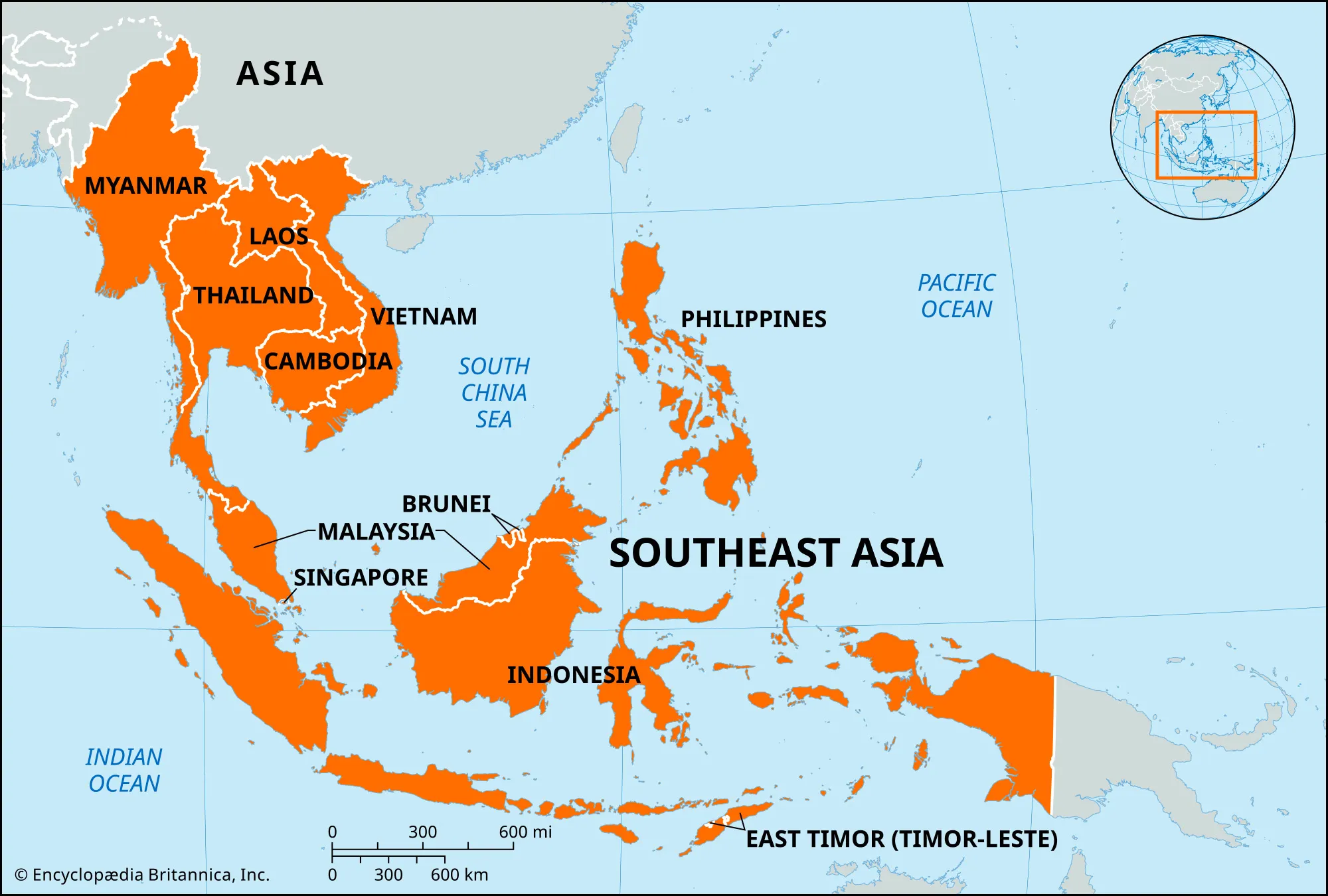
Top 12 Maritime Ports in Southeast Asia: Busiest Trade Gateways, Rankings, and Future Growth
Discover the top 12 maritime ports in Southeast Asia, from Singapore and Port Klang to Cai Mep, Manila, Tanjung Priok, and Laem Chabang. Explore container volumes, trade roles, strengths, challenges, and the future of ASEAN port logistics.
What Are the Top Maritime Ports in Southeast Asia?
The top maritime ports in Southeast Asia are Singapore, Port Klang, Tanjung Pelepas, Laem Chabang, Ho Chi Minh City, Tanjung Priok, Hai Phong, Cai Mep-Thi Vai, Manila, Tanjung Perak, Bangkok Port, and Belawan. They are not only container-handling locations; they are economic engines that connect factories, refineries, plantations, digital supply chains, free zones, and global shipping networks.
If you follow global trade, these ports matter because Southeast Asia is no longer just a transit region between China, India, Europe, and the Pacific. It is becoming one of the world’s most dynamic manufacturing, consumption, energy, and logistics corridors. For importers, exporters, shipping lines, investors, port planners, and maritime students, understanding these ports is no longer optional. It is a practical advantage.
Why Southeast Asian Ports Matter More Than Ever
A container does not look emotional. It is just a steel box. But inside it may be a shipment of electric components from Vietnam, auto parts from Thailand, halal food products from Malaysia, garments from Indonesia, medical devices from Singapore, coffee from Sumatra, or e-commerce goods for millions of households across the ASEAN region.
That is why ports are not just infrastructure. They are pressure points of modern life.
When a Southeast Asian port performs well, factories receive parts on time, exporters reach markets faster, supermarkets stay stocked, and shipping lines can maintain reliable schedules. When a port becomes congested, the disruption travels through the supply chain like a shockwave. A delay at the quay can become a missed production slot, a late delivery, a demurrage bill, or a frustrated customer thousands of kilometres away.
Southeast Asia sits between the Indian Ocean and the Pacific Ocean, between the Malacca Strait and the South China Sea, and between established East Asian manufacturing giants and fast-growing emerging economies. This geography explains why the region has some of the most important ports in the world. Singapore remains the unmatched transshipment giant. Malaysia has built two global-scale container players in Port Klang and Tanjung Pelepas. Thailand’s Laem Chabang is the maritime engine behind the country’s automotive and industrial exports. Vietnam’s ports are rising quickly as global manufacturers diversify supply chains. Indonesia and the Philippines depend on their ports to connect complex archipelagic economies.
The real story, however, is not only size. The most important Southeast Asian ports in 2026 are the ports that combine volume, connectivity, hinterland access, digital systems, expansion capacity, and strategic resilience.
1. Port of Singapore, Singapore
Singapore is the port that every other Southeast Asian port is compared against. It is not the largest country, it does not have the biggest domestic market, and it does not depend on a huge national manufacturing base in the same way as Vietnam, Thailand, or Indonesia. Yet it remains one of the world’s most powerful maritime hubs because it has mastered the business of connectivity.
The Port of Singapore is a transshipment powerhouse. A large share of its containers do not originate in Singapore and do not end their journey there. They pass through Singapore because shipping lines trust its reliability, network density, bunkering ecosystem, digital services, and maritime professional base. In practical terms, Singapore works like a global airport hub, but for containers, tankers, bulk carriers, offshore vessels, and maritime services.
Its location is almost perfect. The port sits near the Malacca Strait, one of the world’s busiest maritime corridors, connecting the Indian Ocean with the South China Sea and the Pacific. Vessels sailing between Europe, the Middle East, South Asia, East Asia, and Oceania can use Singapore as a natural relay point. This geography gives Singapore an advantage, but geography alone is not enough. Many ports have good geography. Singapore turned geography into a complete maritime ecosystem.
The port is supported by world-class terminal operations, advanced vessel traffic management, bunkering services, ship repair, maritime finance, legal services, classification societies, technology companies, and a government that has consistently treated maritime development as a national strategic priority.
In 2024, Singapore recorded more than 41 million TEU, making it the clear leader in Southeast Asia. PSA’s Singapore terminal operations also reported a record year, showing the continuing strength of the port despite regional competition.
What makes Singapore especially important in 2026 is its transition toward the Tuas mega port. Tuas is designed to consolidate Singapore’s container operations into a highly automated, future-ready port complex. The long-term goal is not simply to handle more containers, but to handle them with better yard planning, automated guided vehicles, digital coordination, and lower emissions intensity.
For shipping lines, Singapore offers frequency and flexibility. For cargo owners, it offers access to global routes. For the maritime industry, it offers a complete cluster of services that few ports can match.
However, Singapore also faces real challenges. Its land is limited, labour costs are high, and nearby Malaysian ports compete aggressively for transshipment cargo. Port Klang and Tanjung Pelepas are not small rivals; they are global-scale competitors with cost advantages and growing network connections. Vietnam’s rise also means more direct calls may bypass some traditional relay patterns.
Still, Singapore’s strongest advantage is trust. In shipping, reliability is money. A port that can maintain schedule integrity, manage large vessel calls, support bunkering, and provide predictable services becomes more than a port. It becomes a habit for global carriers.
Why Singapore matters
Singapore is the command centre of Southeast Asian maritime trade. It is the region’s leading transshipment hub, one of the world’s top bunkering centres, and a major platform for digital and green maritime innovation.
Best for
Transshipment, global liner connectivity, bunkering, maritime services, high-value logistics, ship management, and regional distribution.
2. Port Klang, Malaysia
Port Klang is Malaysia’s largest port and one of the fastest-rising container ports in the world. Located on the west coast of Peninsular Malaysia, near Kuala Lumpur and the Klang Valley industrial region, it has a powerful combination of gateway cargo, transshipment activity, manufacturing demand, and hinterland access.
In recent years, Port Klang has moved from being a strong regional player to a genuine global top-tier container port. With about 14.64 million TEU handled in 2024, it entered the global top 10 in container throughput rankings. That is not only a Malaysian achievement; it is a Southeast Asian maritime milestone.
Port Klang benefits from several structural advantages. It is close to Malaysia’s most important economic zone. It sits on the Malacca Strait route. It has two major terminal systems, Northport and Westports, each contributing to the port’s overall capability. It is connected to road and rail networks serving the Klang Valley and broader Malaysian hinterland. It also has a strong logistics and warehousing base around the port.
Unlike Singapore, which is overwhelmingly transshipment-oriented, Port Klang has a more balanced profile. It handles a mix of local import-export cargo and regional transshipment. That balance gives it resilience. Gateway cargo reflects the strength of Malaysia’s economy, while transshipment cargo connects the port to wider carrier networks.
For exporters, Port Klang is a major gateway for electronics, machinery, rubber products, palm-oil-related goods, consumer products, furniture, and manufactured cargo. For importers, it supports Malaysia’s retail, construction, industrial, and energy supply chains. For logistics companies, the Klang Valley offers a dense market with warehouses, distribution centres, freight forwarders, customs brokers, and inland transport operators.
Port Klang’s rise also reflects a broader trend: cargo owners and shipping lines are looking for alternative hubs that can reduce dependency on a single transshipment location. Singapore remains dominant, but shipping networks increasingly value options. Port Klang gives carriers a strong Malaysian hub with competitive costs and strong hinterland demand.
The port’s future will depend on capacity expansion, berth productivity, digitalisation, customs efficiency, and land-side connectivity. As vessel sizes grow and schedule reliability becomes harder to maintain, ports must reduce waiting time and improve cargo flow. Port Klang has already shown that it can scale. The next challenge is to keep service quality high while volumes continue rising.
Why Port Klang matters
Port Klang is Malaysia’s main maritime gateway and one of the most important container ports in the Global South. It connects Malaysia’s industrial heartland to the world and gives shipping lines a powerful alternative hub in the Malacca Strait.
Best for
Malaysian import-export cargo, regional transshipment, industrial logistics, e-commerce distribution, and access to Kuala Lumpur and the Klang Valley.
3. Port of Tanjung Pelepas, Malaysia
The Port of Tanjung Pelepas, often known as PTP, is one of Southeast Asia’s most strategic transshipment ports. Located in Johor, near the western entrance of the Singapore Strait, it sits close enough to Singapore to compete directly with it, but with its own cost structure, land availability, and terminal model.
PTP is a remarkable case study in port development. It is relatively young compared with many historic ports in the region, yet it has become one of the world’s busiest container terminals. In 2024, it handled more than 12.25 million TEU, becoming the first Malaysian container terminal to exceed that threshold in a single year.
Its success is closely linked to transshipment. The port is positioned to serve mainline east-west shipping routes while also feeding regional networks. Large container ships can call at PTP, discharge boxes for redistribution, and load containers bound for other major markets. For carriers, this creates network efficiency. For Malaysia, it creates maritime value, employment, investment, and regional influence.
PTP’s location near the Singapore Strait is both an opportunity and a challenge. The opportunity is obvious: it lies near one of the busiest maritime corridors on earth. The challenge is also obvious: it competes with Singapore, one of the most efficient and trusted ports globally. PTP has responded by building scale, improving productivity, investing in terminal systems, and strengthening its role in alliance networks.
The port’s inclusion in major carrier network strategies, including hub arrangements linked to large liner alliances, is important. In container shipping, a port’s future can change significantly when major carriers decide to route more services through it. Once a port becomes embedded in a network, volumes can grow quickly.
PTP is also important for southern Malaysia’s economic development. Johor is becoming increasingly significant in manufacturing, logistics, data centres, and cross-border economic activity with Singapore. The port can support industrial growth by offering high-capacity maritime access close to the Singapore-Johor economic zone.
Challenges include maintaining productivity during volume surges, managing land-side flows, and keeping up with automation and sustainability expectations. Competition from Singapore and Port Klang will remain intense. But PTP has already proven that a Southeast Asian port can grow from challenger to global player in a relatively short time.
Why Tanjung Pelepas matters
PTP is Southeast Asia’s most important challenger transshipment hub. It gives Malaysia a powerful position in the container relay business and strengthens Johor’s role in regional logistics.
Best for
Transshipment, mainline carrier hub operations, southern Malaysia logistics, Johor industrial cargo, and Singapore Strait routing alternatives.
4. Laem Chabang Port, Thailand
Laem Chabang is Thailand’s main deep-sea port and one of the most important industrial gateway ports in Southeast Asia. Located in Chonburi Province on Thailand’s eastern seaboard, it serves the country’s export-driven economy and supports major industrial clusters, especially automotive, electronics, petrochemicals, and manufacturing.
Thailand is often described as the “Detroit of Asia” because of its automotive manufacturing base. Laem Chabang is one of the main maritime outlets for that industrial ecosystem. It handles containers, Ro-Ro cargo, general cargo, and other trade flows connected to Thailand’s manufacturing and consumer economy.
In 2024, Laem Chabang handled about 9.55 million TEU, placing it among the top container ports in the world and making it one of Southeast Asia’s largest ports by volume. Its role is different from Singapore or Tanjung Pelepas. Laem Chabang is not primarily a transshipment hub. It is a gateway port, meaning its cargo is strongly connected to the domestic and regional economy.
That gateway function makes Laem Chabang essential for Thailand’s competitiveness. If the port operates efficiently, Thai exporters can move goods to global markets with lower delays and more predictable logistics costs. If the port becomes congested, the effects can be felt across factories, suppliers, and international buyers.
Laem Chabang is also central to Thailand’s Eastern Economic Corridor strategy. The EEC is designed to attract investment in advanced industries, logistics, aviation, digital technology, and high-value manufacturing. A modern deep-sea port is essential for such a plan. Port expansion, rail links, road connectivity, and logistics parks are therefore not just port projects; they are national industrial policy.
The port’s Phase 3 development is especially important because it is expected to significantly increase capacity and improve the port’s ability to handle future demand. As vessel sizes rise and cargo volumes grow, Thailand needs deeper, more efficient, and better-integrated port capacity.
The challenge for Laem Chabang is not whether it is important. It clearly is. The challenge is whether infrastructure expansion can keep pace with trade growth, inland transport demand, environmental expectations, and regional competition. Vietnam is becoming a strong manufacturing rival. Malaysia is strengthening its port system. Singapore remains the dominant maritime service hub. Laem Chabang must continue improving to keep Thailand competitive.
Why Laem Chabang matters
Laem Chabang is the maritime engine of Thailand’s industrial export economy. It connects the Eastern Economic Corridor to global markets and supports one of Southeast Asia’s most important manufacturing bases.
Best for
Automotive exports, electronics, industrial cargo, Thai import-export flows, Ro-Ro traffic, and Eastern Economic Corridor logistics.
5. Ho Chi Minh City Port System, Vietnam
Vietnam’s rise is one of the most important logistics stories in Asia. Ho Chi Minh City, especially through the Cat Lai terminal and surrounding port system, is at the centre of that story. The port system serves Vietnam’s largest commercial city and the industrial zones of the southern economic region.
In 2024, Ho Chi Minh City port volumes reached about 9.16 million TEU, reflecting strong growth and the continuing shift of manufacturing activity into Vietnam. This is not a small development. It shows how Vietnam has moved from being an emerging manufacturing location to becoming a major maritime trade player.
Ho Chi Minh City’s cargo base is diverse. It includes textiles, footwear, furniture, electronics, consumer goods, machinery, agricultural products, and e-commerce-related cargo. Many global companies use Vietnam as part of a China-plus-one strategy, meaning they diversify production outside China while still maintaining Asian supply chain integration. Southern Vietnam has been one of the biggest beneficiaries of this trend.
The strength of Ho Chi Minh City’s port system lies in its proximity to cargo. Factories, warehouses, distribution centres, and export processing zones are relatively close. This makes the port extremely important for shippers who need fast access to container shipping services.
However, proximity to the city also creates limitations. Urban congestion, river access constraints, and land pressure can affect efficiency. Large deep-sea vessels may be better suited to Cai Mep-Thi Vai, which is why Vietnam’s southern port system should be understood as a combined ecosystem rather than a single isolated port. Ho Chi Minh City handles massive gateway volumes, while Cai Mep provides deep-water capability for long-haul direct services.
For cargo owners, Ho Chi Minh City remains attractive because of its cargo density and logistics ecosystem. For shipping lines, the challenge is balancing calls between city-linked terminals and deeper-water alternatives. For policymakers, the challenge is improving road links, barge networks, customs processes, and inland logistics to avoid congestion.
Vietnam’s southern port growth is likely to continue, but it will require careful planning. If port, road, customs, and warehousing capacity do not expand together, growth can turn into delay. The opportunity is enormous, but so is the pressure.
Why Ho Chi Minh City matters
Ho Chi Minh City is Vietnam’s southern trade powerhouse and one of the clearest signs of ASEAN’s manufacturing rise. Its port system connects one of Asia’s fastest-growing export regions to the global economy.
Best for
Vietnamese exports, textiles, footwear, furniture, electronics, consumer goods, regional distribution, and southern Vietnam manufacturing cargo.
6. Tanjung Priok, Indonesia
Tanjung Priok is Indonesia’s most important port and the main maritime gateway for Jakarta and western Java. In a country made up of thousands of islands, ports are not just trade facilities; they are national connectors. Tanjung Priok plays that role at the highest level.
In 2024, Tanjung Priok handled about 7.83 million TEU. This makes it one of Southeast Asia’s largest container ports and by far one of Indonesia’s most critical logistics assets. It serves the Jakarta metropolitan area, the largest consumer and industrial concentration in the country, and connects Indonesia to global shipping networks.
Indonesia’s geography makes port logistics uniquely complex. Unlike continental economies where cargo can move by long-distance road and rail, Indonesia depends heavily on maritime transport for both international trade and domestic distribution. Tanjung Priok therefore supports import-export cargo as well as inter-island flows.
The port handles consumer goods, machinery, food products, raw materials, chemicals, automotive cargo, electronics, and many other commodities. It is tied closely to Indonesia’s manufacturing base, retail economy, and infrastructure development.
Tanjung Priok has faced congestion challenges in the past, which is common for major gateway ports serving large urban areas. Improvements in terminal capacity, road access, customs processes, digital systems, and new container terminal development have been essential. The New Priok or Kalibaru development is part of Indonesia’s long-term effort to handle larger vessels and reduce logistics bottlenecks.
The port’s strategic importance is also linked to Indonesia’s ambition to reduce logistics costs. High logistics costs can weaken export competitiveness and increase consumer prices. Improving Tanjung Priok is therefore not just a maritime issue; it is an economic reform issue.
Competition within Indonesia is also changing. Tanjung Perak in Surabaya remains essential for eastern Java and eastern Indonesia. Belawan serves Sumatra. Other ports are being developed to reduce pressure on Jakarta and improve national connectivity. Even so, Tanjung Priok remains the main gateway.
For international shipping lines, Tanjung Priok offers access to Indonesia’s largest market. For cargo owners, it is often unavoidable. For policymakers, it is a national priority because port efficiency directly affects Indonesia’s economic performance.
Why Tanjung Priok matters
Tanjung Priok is Indonesia’s primary container gateway and a vital port for one of the world’s largest archipelagic economies. Its performance affects national logistics costs, industrial competitiveness, and consumer supply chains.
Best for
Jakarta and western Java cargo, Indonesian import-export flows, inter-island distribution, consumer goods, machinery, and manufacturing supply chains.
7. Hai Phong Port, Vietnam
Hai Phong is northern Vietnam’s key maritime gateway. While Ho Chi Minh City dominates the south, Hai Phong serves the industrial zones around Hanoi, Bac Ninh, Hai Duong, Thai Nguyen, and the broader northern economic region. This makes it central to Vietnam’s electronics, machinery, textiles, and export manufacturing boom.
In 2024, Hai Phong handled about 7.15 million TEU, showing strong growth. This reflects the rapid development of northern Vietnam as a manufacturing base for global supply chains. Electronics and high-value manufacturing are particularly important, with many multinational firms investing in northern Vietnam.
Hai Phong’s importance comes from its hinterland. A port becomes powerful when it is connected to production. Northern Vietnam has become a major production platform for electronics, components, garments, machinery, and consumer goods. Hai Phong is the maritime outlet for much of that activity.
The development of Lach Huyen deep-water terminals has improved northern Vietnam’s ability to handle larger vessels and direct services. This matters because direct calls can reduce dependence on transshipment via foreign hubs. For exporters, direct services can mean shorter transit times and potentially lower logistics complexity.
Hai Phong also benefits from improved road infrastructure connecting the port to Hanoi and industrial provinces. Better highways, logistics parks, and inland container depots have strengthened the port’s role. However, as volumes grow, the region will need continuous investment to avoid congestion.
The port’s growth also illustrates the China-plus-one strategy. Northern Vietnam is geographically close to southern China, allowing manufacturers to diversify production while staying connected to Chinese supplier networks. This gives Hai Phong a unique advantage compared with more distant manufacturing alternatives.
The challenge for Hai Phong is to keep improving deep-water capacity, customs efficiency, and hinterland logistics. Vietnam’s growth is fast, but fast growth can expose infrastructure gaps. Port capacity, trucking capacity, warehousing, digital documentation, and rail connections must develop together.
Why Hai Phong matters
Hai Phong is the maritime gateway of northern Vietnam’s industrial rise. It supports one of Asia’s fastest-growing manufacturing corridors and strengthens Vietnam’s position in global supply chains.
Best for
Northern Vietnam exports, electronics, industrial components, garments, machinery, Hanoi-region logistics, and direct services from northern Vietnam.
8. Cai Mep-Thi Vai, Vietnam
Cai Mep-Thi Vai is one of Southeast Asia’s most strategically important deep-water port complexes. Located in Ba Ria-Vung Tau Province, southeast of Ho Chi Minh City, it provides Vietnam with the deep-water capability needed to handle large container vessels on long-haul routes.
In 2024, Cai Mep handled about 7.08 million TEU, with very strong growth. Its importance is not only volume. Its real value lies in what it allows Vietnam to do: connect directly to major long-haul trade lanes without relying as heavily on transshipment through Singapore, Hong Kong, or other regional hubs.
Deep-water ports matter because modern container shipping is built around large vessels. The bigger the ship, the more demanding the port requirements: deeper draft, longer berths, larger cranes, stronger yard systems, and efficient inland connections. Cai Mep gives Vietnam a stronger position in this environment.
Cai Mep works closely with the broader southern Vietnam logistics system. Ho Chi Minh City and Cat Lai handle major cargo density, while Cai Mep handles deep-sea capacity. Barges, trucks, depots, and customs systems connect the two. If managed well, this creates a powerful two-layer port system: urban cargo access plus deep-water global connectivity.
For exporters, Cai Mep can reduce transit time on routes to North America and Europe. For shipping lines, it offers a deep-water call in a rapidly growing cargo market. For Vietnam, it strengthens national logistics sovereignty by reducing dependence on external hubs.
The port’s future is also linked to planned downstream mega-port projects and industrial development in southern Vietnam. If Vietnam continues attracting manufacturing investment, Cai Mep’s role will expand further. The region has the potential to become one of Asia’s most important deep-water container gateways.
However, Cai Mep still faces challenges. Inland connectivity must keep pace with port capacity. Barge networks are useful, but road congestion and customs coordination remain important. A deep-water terminal is only fully effective when cargo can move smoothly to and from factories.
Why Cai Mep-Thi Vai matters
Cai Mep gives Vietnam deep-water access to global shipping lanes. It is one of the clearest signs that Vietnam is moving from regional feeder dependence toward direct global maritime connectivity.
Best for
Deep-sea container services, long-haul exports, southern Vietnam manufacturing, North America and Europe trade lanes, and large vessel calls.
9. Port of Manila, Philippines
The Port of Manila is the Philippines’ most important maritime gateway and the main container port serving Metro Manila and Luzon. In an archipelagic country, ports are essential, but Manila has a special role because it serves the country’s largest population centre, biggest consumer market, and most important economic region.
In 2024, Manila handled about 5.50 million TEU. This places it among the top container ports in Southeast Asia and reflects the importance of Philippine import demand, export activity, and domestic distribution.
Manila’s cargo mix includes consumer goods, food products, electronics, machinery, vehicles, construction materials, retail cargo, and industrial inputs. Because Metro Manila is such a large consumption centre, imports are especially important. The port supports supermarkets, factories, construction projects, e-commerce, and everyday household supply chains.
The Port of Manila includes major terminal operations such as Manila International Container Terminal and South Harbor. These facilities are central to the country’s container logistics. The port’s performance affects not only international trade but also domestic prices and delivery reliability.
Manila’s biggest challenge is urban congestion. The port is located within one of Southeast Asia’s densest metropolitan areas. Truck movements, road congestion, customs clearance, empty container repositioning, and terminal access can all become pressure points. When congestion worsens, costs rise quickly.
To reduce pressure, the Philippines has encouraged the development of alternative gateways such as Batangas and Subic. These ports can support cargo flows outside Metro Manila and help decentralise logistics. However, Manila remains dominant because cargo demand is concentrated in and around the capital region.
For shipping lines, Manila is essential because of market size. For cargo owners, it is often the most practical gateway for Luzon. For policymakers, the main issue is balancing port efficiency with urban liveability.
The future of Manila’s port system will depend on digitalisation, appointment systems, better road planning, customs efficiency, and stronger use of alternative ports. The Philippines has strong maritime potential, but geography and urban congestion make logistics planning especially important.
Why Manila matters
Manila is the main maritime gateway of the Philippines and a crucial port for one of Southeast Asia’s largest consumer markets. Its efficiency directly affects national trade costs and supply-chain reliability.
Best for
Philippine imports, Luzon distribution, consumer goods, electronics, retail cargo, construction materials, and national gateway logistics.
10. Tanjung Perak, Indonesia
Tanjung Perak, located in Surabaya, is Indonesia’s second major container gateway and the principal port for East Java and much of eastern Indonesia. While Tanjung Priok serves Jakarta and western Java, Tanjung Perak serves a different but equally important economic geography.
In 2024, Tanjung Perak handled about 4.3 million TEU. This makes it one of Southeast Asia’s major container ports and an essential part of Indonesia’s national logistics network.
East Java is a major industrial and agricultural region. Surabaya is one of Indonesia’s most important cities and a major commercial centre. Tanjung Perak supports manufacturing, food processing, consumer goods, construction materials, machinery, and inter-island distribution. It also connects eastern Indonesia with domestic and international markets.
The port’s role in inter-island trade is particularly important. Indonesia’s geography means that domestic sea transport is not secondary; it is fundamental. Goods moving between Java, Kalimantan, Sulawesi, Bali, Nusa Tenggara, Maluku, and Papua depend heavily on maritime networks. Tanjung Perak is a major node in that system.
Tanjung Perak also supports Indonesia’s efforts to reduce logistics inequality between western and eastern regions. Efficient ports in eastern-facing locations help lower distribution costs and improve access to goods across the archipelago.
Compared with Tanjung Priok, Tanjung Perak may receive less international attention, but its national importance is enormous. It supports cargo flows that connect Indonesia internally as much as externally. In a country where domestic connectivity is a strategic issue, that matters.
Future growth will depend on terminal productivity, dredging, inland road links, digital systems, and coordination with other Indonesian ports. As Indonesia develops new industrial zones and strengthens maritime connectivity, Tanjung Perak will remain a major hub.
Why Tanjung Perak matters
Tanjung Perak is Indonesia’s gateway to East Java and eastern Indonesia. It is one of the most important domestic and international logistics nodes in the Indonesian archipelago.
Best for
East Java cargo, inter-island shipping, eastern Indonesia distribution, manufacturing, food products, and domestic maritime connectivity.
11. Bangkok Port, Thailand
Bangkok Port, also known as Khlong Toei Port, is not Thailand’s largest port today; that position belongs to Laem Chabang. Yet Bangkok remains one of Southeast Asia’s most important urban ports because of its proximity to Thailand’s capital, consumer market, and commercial centre.
Bangkok Port handles a smaller container volume than Laem Chabang, but its strategic role is different. It serves cargo that benefits from direct access to the Bangkok metropolitan area. For certain importers, exporters, and logistics providers, proximity can be more valuable than scale.
The port is located on the Chao Phraya River, which creates both advantages and limitations. The advantage is access to the heart of Bangkok’s economy. The limitation is navigational restriction. River ports cannot easily accommodate the largest modern container vessels. Draft, vessel size, bridge clearance, urban congestion, and environmental constraints all limit growth.
This is why Laem Chabang became Thailand’s main deep-sea gateway. But Bangkok Port did not become irrelevant. It continues to support containerised cargo, general cargo, and domestic logistics linked to the capital region.
In practical supply-chain terms, Bangkok Port can reduce inland transport distance for cargo destined for the city. For time-sensitive or urban-focused cargo, this can matter. However, congestion and urban land pressure are major concerns. Many cities around the world face similar questions: should port activity remain in the urban core, move outward, or become more specialised?
Bangkok Port’s future may involve a more selective role. Instead of trying to compete with Laem Chabang for large-vessel deep-sea cargo, it can focus on urban logistics, river-linked cargo, feeder services, and specialised flows. The port’s value lies in location, not scale.
Thailand’s port system should therefore be seen as complementary. Laem Chabang handles the country’s main deep-sea growth, while Bangkok supports urban and regional cargo needs. Together, they provide Thailand with flexibility.
Why Bangkok Port matters
Bangkok Port remains important because it serves Thailand’s largest urban economy directly. It is a reminder that port value is not always measured only by TEU volume; location and cargo proximity also matter.
Best for
Bangkok-area cargo, urban logistics, feeder services, selected container flows, general cargo, and domestic distribution.
12. Belawan Port, Indonesia
Belawan Port, located near Medan in North Sumatra, is one of Indonesia’s most important ports outside Java. It serves Sumatra’s economy and sits close to the Malacca Strait, giving it a strategically valuable position in western Indonesia.
Belawan may not match the container volumes of Tanjung Priok or Tanjung Perak, but it is important because of what it connects. North Sumatra is a major producer of palm oil, rubber, coffee, agricultural products, and industrial goods. The port supports these exports while also handling imports for Sumatra’s population and industries.
Belawan’s location near the Malacca Strait gives it regional relevance. The strait is one of the world’s busiest maritime corridors, and ports near it can benefit from trade flows, feeder services, and regional logistics development. Belawan is also important for Indonesia’s ambition to strengthen ports outside Java and reduce overdependence on the country’s main island.
The port has undergone development and modernisation efforts, including container terminal improvements and investment in port facilities. These upgrades are necessary because Sumatra’s economic potential is significant. Better port capacity can help exporters move goods more efficiently and support regional development.
Belawan’s challenges include the need for deeper capacity, improved terminal productivity, better hinterland connectivity, and stronger integration with national logistics systems. Like many secondary but strategic ports, its future depends on whether investment can turn geographic advantage into operational competitiveness.
For shippers in Sumatra, Belawan is essential. Without efficient port access, exporters face higher logistics costs and longer transit times. For Indonesia, Belawan helps distribute maritime development beyond Java and supports a more balanced national economy.
Why Belawan matters
Belawan is Sumatra’s key maritime gateway and a strategic Indonesian port near the Malacca Strait. It supports agricultural exports, regional imports, and Indonesia’s broader goal of strengthening non-Java logistics.
Best for
Sumatra exports, palm oil, rubber, coffee, agricultural cargo, regional imports, and western Indonesia logistics.
–
Comparison Table: Top 12 Maritime Ports in Southeast Asia
| Rank | Port | Country | Approximate 2024 Container Throughput | Main Role |
|---|---|---|---|---|
| 1 | Singapore | Singapore | About 41.12 million TEU | Global transshipment and maritime services hub |
| 2 | Port Klang | Malaysia | About 14.64 million TEU | National gateway and regional hub |
| 3 | Tanjung Pelepas | Malaysia | About 12.25 million TEU | Major transshipment hub |
| 4 | Laem Chabang | Thailand | About 9.55 million TEU | Industrial gateway port |
| 5 | Ho Chi Minh City | Vietnam | About 9.16 million TEU | Southern Vietnam manufacturing gateway |
| 6 | Tanjung Priok | Indonesia | About 7.83 million TEU | Jakarta and western Java gateway |
| 7 | Hai Phong | Vietnam | About 7.15 million TEU | Northern Vietnam manufacturing gateway |
| 8 | Cai Mep-Thi Vai | Vietnam | About 7.08 million TEU | Deep-water long-haul gateway |
| 9 | Manila | Philippines | About 5.50 million TEU | Philippines’ main container gateway |
| 10 | Tanjung Perak | Indonesia | About 4.30 million TEU | East Java and eastern Indonesia gateway |
| 11 | Bangkok Port | Thailand | About 1.5 million TEU | Urban river port and capital-region gateway |
| 12 | Belawan | Indonesia | About 1.2 million TEU | Sumatra gateway and Malacca Strait regional port |
–
The Big Pattern: Southeast Asia Is Becoming a Multi-Hub Port Region
For many years, Southeast Asian container shipping was often discussed through one dominant lens: Singapore. That view is now outdated.
Singapore remains the region’s strongest maritime hub, but the region is no longer a one-port story. Port Klang is now a global top-10 player. Tanjung Pelepas is a major transshipment challenger. Laem Chabang anchors Thailand’s industrial exports. Vietnam has three major ports in the top global container rankings. Indonesia’s Tanjung Priok and Tanjung Perak support one of the world’s largest archipelagic economies. Manila remains essential for the Philippines. Smaller strategic ports such as Bangkok and Belawan support important national and regional functions.
This multi-hub structure matters because global supply chains are changing. Companies want resilience, not just low cost. Shipping lines want network flexibility, not dependence on a single node. Governments want ports that support industrial policy, not merely cargo handling. Consumers want faster delivery, even if they never think about the port behind it.
Southeast Asia’s port future will therefore be shaped by five forces.
First, manufacturing diversification will continue pushing cargo into Vietnam, Thailand, Malaysia, Indonesia, and the Philippines. This will increase demand for reliable port capacity.
Second, larger vessels will require deeper berths, bigger cranes, better yard systems, and more efficient marine services.
Third, digitalisation will separate leading ports from lagging ports. Port community systems, electronic documentation, appointment systems, cargo tracking, and AI-supported planning will become standard expectations.
Fourth, decarbonisation will reshape port investment. Shore power, alternative fuels, green corridors, electrified equipment, and emissions reporting will become more important.
Fifth, hinterland connectivity will decide winners. Ports cannot succeed if trucks are stuck outside gates, rail links are weak, or customs processes are slow.
What Shippers Should Watch Before Choosing a Southeast Asian Port
Choosing a port is not only about the lowest freight rate. A cheap port call can become expensive if cargo is delayed, customs clearance is slow, trucking is unreliable, or empty containers are unavailable.
Before choosing a Southeast Asian gateway, shippers should ask practical questions.
How close is the port to the factory or final customer? A port with lower ocean freight may still be more expensive if inland transport costs are high.
Does the port have direct services to the destination market? Direct calls can reduce transit time and transshipment risk.
How reliable is the port during peak season? Some ports perform well under normal conditions but struggle during surges.
Is there enough warehousing and depot capacity nearby? Container logistics depends heavily on empty container supply, storage, and distribution.
How efficient are customs and documentation systems? Digital clearance can save time, while manual processes can create hidden costs.
What is the risk of congestion? Ports located in dense urban areas may face truck queues and road restrictions.
For Southeast Asia, the best answer is often not one port but a port strategy. A company may use Singapore for transshipment, Port Klang for Malaysia distribution, Laem Chabang for Thailand exports, Cai Mep for long-haul Vietnam cargo, and Manila for Philippine market access. The smartest logistics networks use the region’s diversity rather than depending on one gateway.
Future Trends: What Will Define Southeast Asian Ports by 2030?
By 2030, the most competitive Southeast Asian ports will not simply be the ones with the longest quays or largest yards. They will be the ports that combine physical capacity with intelligence.
Automation will grow. Fully automated terminals may not appear everywhere, but automated gates, remote-controlled cranes, digital yard planning, and predictive maintenance will become more common.
Green-port requirements will increase. Shipping lines and cargo owners are under pressure to reduce emissions. Ports that provide cleaner energy, electrified equipment, alternative fuel readiness, and transparent emissions data will become more attractive.
Port community systems will become essential. A port is a community of shipping lines, terminal operators, truckers, customs authorities, freight forwarders, warehouses, banks, insurers, and cargo owners. If these actors do not share data efficiently, cargo slows down.
Regional competition will intensify. Singapore will remain dominant, but Malaysia and Vietnam will continue gaining influence. Indonesia and the Philippines will invest to reduce logistics costs and improve national connectivity.
Resilience will become a selling point. Climate risks, geopolitical disruptions, cyber threats, labour shortages, and shipping network changes will test ports. Ports that can recover quickly will gain trust.
Final Takeaway: The Ports That Will Shape Southeast Asia’s Maritime Future
The top maritime ports in Southeast Asia are more than cargo-handling locations. They are the physical gateways of a region that is becoming central to global trade.
Singapore remains the region’s maritime brain. Port Klang and Tanjung Pelepas show Malaysia’s strength in both gateway and transshipment cargo. Laem Chabang powers Thailand’s industrial exports. Ho Chi Minh City, Hai Phong, and Cai Mep show Vietnam’s extraordinary rise. Tanjung Priok, Tanjung Perak, and Belawan reveal the scale and complexity of Indonesian logistics. Manila remains the Philippines’ essential gateway. Bangkok proves that even a smaller urban port can remain strategically valuable.
For readers, the key lesson is simple: Southeast Asia is not one market and not one port system. It is a network of maritime gateways, each with its own strengths, constraints, and growth story.
If you are a shipper, the right port can protect your schedule and reduce cost. If you are an investor, these ports show where industrial growth is moving. If you are a maritime student, they offer a real-world map of how geography, trade, policy, and technology interact. If you are simply curious about global trade, these ports explain how everyday products move from factory floors to the world.
The next decade of maritime growth will not be written only in Shanghai, Rotterdam, Busan, or Los Angeles. Much of it will be written in Singapore, Port Klang, Tanjung Pelepas, Laem Chabang, Ho Chi Minh City, Tanjung Priok, Hai Phong, Cai Mep, Manila, Tanjung Perak, Bangkok, and Belawan.
Southeast Asia’s ports are not waiting for the future. They are building it, one vessel call and one container move at a time.
Suggested Visuals for Higher Engagement
- A custom map showing the 12 ports by country and sea route.
- A bar chart comparing 2024 TEU volumes.
- A “transshipment vs gateway port” infographic.
- A timeline of major port expansion projects in Southeast Asia.
- A short embedded video explaining the Malacca Strait and Singapore Strait.
- A downloadable checklist: “How to Choose the Right Southeast Asian Port for Your Cargo.”
Suggested Interactive Element
Create a simple “Port Selector Tool” for readers:
Question 1: Where is your cargo produced or consumed?
Question 2: Is your priority speed, cost, direct service, or transshipment flexibility?
Question 3: Is your cargo containerised, Ro-Ro, bulk, refrigerated, or project cargo?
Question 4: Which trade lane do you use: Europe, China, North America, intra-Asia, or Oceania?
Result: Recommend Singapore, Port Klang, Tanjung Pelepas, Laem Chabang, Ho Chi Minh City, Cai Mep, Hai Phong, Manila, or an Indonesian gateway.
Strong CTA Options
Download the free Southeast Asia Port Selection Checklist.
Compare the best ASEAN port options for your cargo route.
Explore our complete guide to the Malacca Strait and Singapore Strait.
Read next: Top 12 Busiest Ports in the Pacific Ocean Region.
Read next: Major Trans-Pacific Shipping Routes Explained.
FAQ
What is the busiest port in Southeast Asia?
Singapore is the busiest port in Southeast Asia by container throughput and one of the busiest ports in the world. It is especially important as a global transshipment and maritime services hub.
Which country has the most major container ports in Southeast Asia?
Vietnam, Malaysia, Indonesia, Thailand, the Philippines, and Singapore all have major container ports. Vietnam has become especially prominent because Ho Chi Minh City, Hai Phong, and Cai Mep are all major container gateways.
Why is Singapore so important in shipping?
Singapore is important because of its location near the Malacca Strait, its high liner connectivity, advanced terminal operations, bunkering services, maritime business ecosystem, and strong reputation for reliability.
What is the difference between a gateway port and a transshipment port?
A gateway port mainly handles cargo moving to or from its domestic hinterland. A transshipment port mainly transfers containers from one vessel to another. Many ports do both, but the balance differs.
Which Southeast Asian ports are growing fastest?
Vietnamese ports such as Ho Chi Minh City, Hai Phong, and Cai Mep have shown strong growth, supported by manufacturing expansion and supply-chain diversification. Malaysia’s Tanjung Pelepas has also recorded major growth as a transshipment hub.
Why are ports in Southeast Asia important for global supply chains?
They connect major manufacturing zones, consumer markets, energy flows, and global shipping lanes. They also provide alternatives and resilience for companies diversifying supply chains across Asia.