
05/21/2026
The recent reporting on barnacles and jellyfish infesting ships trapped in the Persian Gulf reveals an unusual but serious consequence of the Strait of Hormuz disruption. The story is not only about geopolitics, oil prices, or delayed cargoes. It is also about what happens when large merchant ships remain static for weeks in warm, shallow, biologically active waters.
As of 21 May 2026, Reuters reported that traffic through the Strait of Hormuz had fallen from a normal average of about 125–140 vessels per day to roughly 10 vessels per day, leaving around 20,000 seafarers stranded on hundreds of ships in the region. The Financial Times also reported that at least 800 merchant ships were trapped, with marine growth such as barnacles, algae, and jellyfish affecting vessels exposed to Persian Gulf conditions for long periods.
This is a technical maritime problem as much as a political one. Ships are designed to move. When they remain idle in hot seawater, their underwater surfaces become attractive habitats for marine organisms. Hulls, propellers, sea chests, cooling-water intakes, gratings, strainers, and niche areas can all be affected. The result is higher drag, reduced propulsion efficiency, greater fuel consumption, possible cooling-system problems, increased maintenance workload, and worsening crew stress.
Why the Persian Gulf Creates High Biofouling Risk
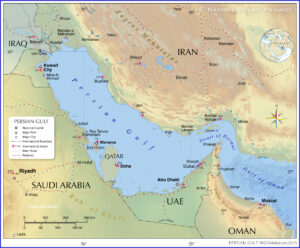
The Persian Gulf is especially vulnerable to this kind of problem because it is warm, relatively shallow, highly saline, and heavily trafficked. In such waters, biological settlement can develop quickly when vessels remain static. A ship at anchor or drifting slowly provides an almost ideal surface for organisms such as slime, algae, barnacles, and other fouling communities.
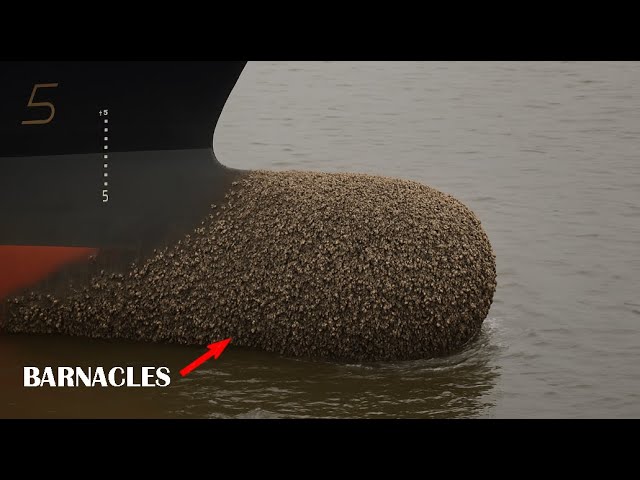
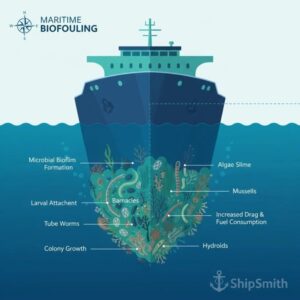
Biofouling usually begins with a thin biological film. Over time, more complex organisms attach. Barnacles are among the most damaging because they create hard, rough structures on the hull and propeller surfaces. Jellyfish create a different problem. They may not attach like barnacles, but they can gather around seawater intakes and contribute to blockages in cooling-water systems.
The risk becomes more serious when ships remain immobilized for several weeks. Normal vessel movement helps limit settlement on some exposed surfaces, while static conditions allow organisms to attach, grow, and spread. Anti-fouling coatings reduce the problem but do not eliminate it, especially during prolonged idle periods in warm waters.
Biofouling and Ship Performance
Biofouling increases hull roughness. Increased roughness increases hydrodynamic resistance. This means that a ship needs more engine power to maintain the same speed. If engine power is not increased, the ship slows down. If speed is maintained, fuel consumption rises.
IMO has warned that biofouling has negative economic and environmental effects because it increases fuel consumption and atmospheric emissions, including greenhouse-gas emissions. Recent research has also found that moderate hull fouling can increase annual fuel consumption and greenhouse-gas emissions significantly, especially for large commercial ships such as tankers and container vessels.
This matters because vessels leaving the Persian Gulf after weeks of immobilization may not immediately return to normal performance. A fouled hull or propeller can reduce speed, increase bunker consumption, and delay schedules. For container lines, this may disrupt rotations and port windows. For tankers and gas carriers, it can affect cargo timing, demurrage, and energy-supply chains.
Propeller Fouling: A Direct Propulsion Problem
Propeller fouling is particularly serious. A clean propeller blade is designed to produce thrust efficiently. When barnacles or marine growth attach to the blade surface, the propeller loses efficiency. This can cause lower speed, higher fuel consumption, vibration, reduced manoeuvrability, and abnormal loading on propulsion machinery.
In a sensitive area such as the Strait of Hormuz, manoeuvrability is a safety issue. Ships leaving the Persian Gulf may need reliable propulsion response while navigating congested, politically tense, or security-sensitive waters. If the propeller is heavily fouled, the vessel may require underwater inspection, propeller polishing, or hull cleaning before resuming normal operations.
Jellyfish, Sand, and Cooling-Water Systems
Jellyfish create a different but equally important operational hazard. Ships rely heavily on seawater cooling. Main engines, auxiliary engines, air-conditioning systems, refrigeration plants, freshwater generators, compressors, and other machinery may depend directly or indirectly on seawater circulation.
If jellyfish, algae, floating biological material, or sand restrict the sea chest, intake gratings, strainers, or cooling-water filters, cooling performance may decline. Engineers may then face high-temperature alarms, reduced cooling-water flow, overloaded pumps, auxiliary-engine problems, or emergency maintenance requirements.
This is especially serious in the Persian Gulf because air-conditioning and ventilation are essential for crew habitability. In hot conditions, a failure of cooling systems is not simply a machinery problem; it becomes a crew-welfare and safety issue.
Crew Welfare and Maintenance Pressure
The human dimension is central. Reuters reported that around 20,000 seafarers remain stranded on ships affected by the Hormuz disruption. Other reporting has described seafarers facing fear, lack of food, limited movement, and difficult evacuation conditions during the regional crisis.
Biofouling adds another layer of pressure. Crews must keep machinery running, clean strainers more frequently, monitor cooling-water temperatures, respond to alarms, and manage defects with limited access to spare parts or shore-based technicians. If ships remain delayed, certificates, employment contracts, crew changes, medical support, internet access, and mental health all become more difficult to manage.
Therefore, the barnacle and jellyfish problem should not be treated as a strange natural curiosity. It is part of a wider operational and humanitarian crisis affecting ships, crews, cargoes, and maritime supply chains.
Environmental Implications
Biofouling also has environmental consequences. First, it increases fuel consumption and emissions. A dirty hull forces the ship to burn more fuel for the same transport work. This directly affects CO₂ emissions, air pollution, and operational efficiency.
Second, biofouling can spread invasive aquatic species. Organisms attached to hulls and niche areas may be transported from one marine region to another. IMO’s 2023 Biofouling Guidelines aim to reduce the transfer of invasive aquatic species through better inspection, cleaning, maintenance, and record-keeping.
This creates a difficult balance. Ships may need urgent cleaning for safety and efficiency, but in-water cleaning must be carefully controlled. Poorly managed cleaning can release organisms, coating particles, and contaminants into the local marine environment. Operators must therefore follow port requirements, coating-maker guidance, environmental restrictions, and IMO biofouling-management principles.
Credit: ShipSmith
Commercial and Insurance Consequences
The costs of the Persian Gulf disruption will not end when ships are allowed to sail. Many vessels may need underwater inspection, hull cleaning, propeller polishing, sea-chest cleaning, spare parts, and technical surveys. Additional fuel may be needed if ships sail with fouled hulls before cleaning can be arranged.
Possible commercial consequences include:
| Risk area | Likely consequence |
|---|---|
| Hull and propeller fouling | Higher fuel consumption and reduced speed |
| Sea-chest blockage | Cooling-water restrictions and machinery alarms |
| Delayed cleaning | Longer off-hire periods and schedule disruption |
| Crew fatigue | Higher operational and safety risk |
| Spare-parts shortages | Longer repair time and technical uncertainty |
| Cargo delay | Demurrage, claims, and disrupted supply chains |
| Emissions impact | Worse CII and higher compliance pressure |
India’s shipping authorities have also indicated caution about sending more vessels west of the Strait of Hormuz before stranded ships return, showing how the crisis affects national energy logistics and wider supply-chain confidence.
Regulatory Relevance: IMO Biofouling Guidelines
The crisis underlines the importance of biofouling management. IMO’s revised 2023 Guidelines for the control and management of ships’ biofouling to minimize the transfer of invasive aquatic species provide a global framework for ship-specific biofouling management plans, inspections, cleaning, and record-keeping. IMO has also noted work toward a legally binding framework for biofouling control, which would move the subject beyond voluntary guidance and toward enforceable requirements.
For ships trapped in the Persian Gulf, this means managers should document the exceptional idle period, inspection results, fouling condition, cleaning decisions, and any operational deviations. This documentation may later matter for class, flag, port State control, charter-party discussions, environmental compliance, and insurance claims.
Practical Measures for Ship Operators
Ship operators affected by prolonged waiting in the Persian Gulf should treat biofouling as a high-priority technical risk. Key measures include:
Increase machinery monitoring. Engineers should monitor seawater intake pressure, strainer condition, cooling-water temperature, pump load, and cooler performance.
Inspect underwater areas. Where safe and permitted, underwater surveys should check the hull, propeller, rudder, bilge keels, thruster tunnels, sea chests, and niche areas.
Plan cleaning carefully. Propeller polishing, hull cleaning, and sea-chest cleaning may be necessary, but they must comply with environmental rules and coating requirements.
Prepare spare parts. Operators should prioritize sea-water pumps, strainers, gaskets, cooler plates, valves, filters, and cleaning tools.
Support the crew. Crew welfare must include food, communication, medical access, certificate management, contract support, mental-health support, and realistic crew-change planning.
Wider Lessons for Maritime Risk Management
The Persian Gulf biofouling crisis shows that maritime disruption creates cascading risks. A political and security crisis immobilizes vessels. Immobilization accelerates fouling. Fouling reduces efficiency and increases machinery risk. Machinery problems increase crew workload. Crew fatigue then increases operational risk.
This chain of consequences is important for future maritime planning. Shipowners, charterers, insurers, port authorities, and regulators should include biofouling and seawater-system vulnerability in contingency planning for prolonged anchorage, port closure, or chokepoint disruption.
The lesson is clear: a ship forced to wait for weeks in warm waters is not simply “standing by.” It is physically changing. Its hull becomes rougher, its propeller becomes less efficient, its sea-water systems become more vulnerable, and its crew faces growing pressure.
Conclusion
The infestation of trapped ships by barnacles, algae, jellyfish, and other marine life in the Persian Gulf is a hidden but serious maritime consequence of the Strait of Hormuz crisis. It affects propulsion, fuel consumption, emissions, machinery reliability, crew welfare, cargo schedules, and environmental risk.
The issue also demonstrates the importance of modern biofouling management. IMO’s biofouling guidelines, underwater inspection practices, cleaning procedures, and ship-specific management plans are no longer secondary environmental details. They are part of operational resilience.
When the security situation improves, many vessels may still need technical recovery before returning to normal service. The Persian Gulf crisis therefore shows that maritime emergencies do not stop at politics or trade. In warm seawater, biology becomes part of the crisis too.