
04/28/2026
The test exceeded the AUV’s published performance specifications, marking a turning point for long-endurance robotics.
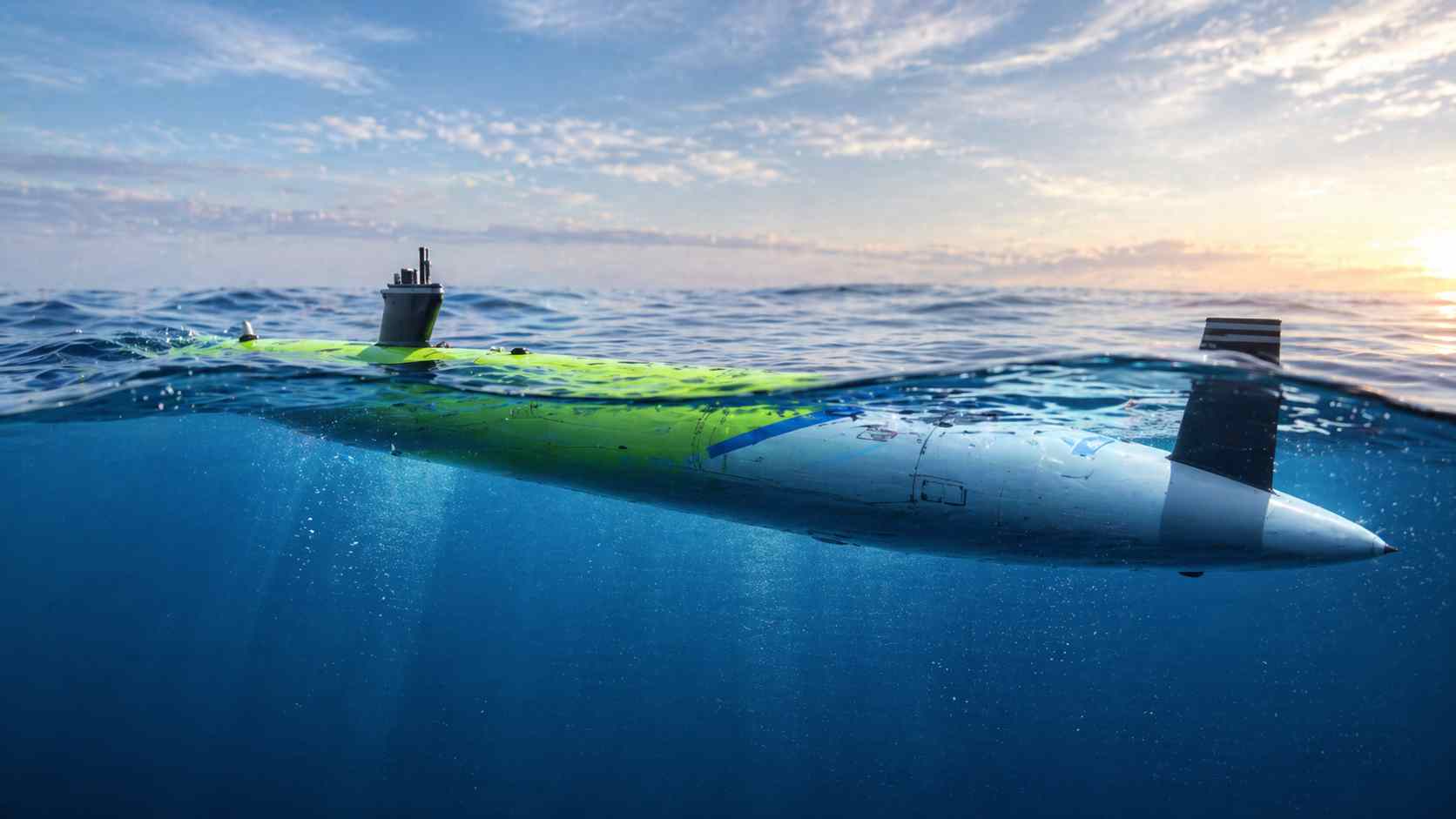
In a breakthrough for underwater autonomy, a Canadian company has successfully piloted a submarine drone more than 1,257 miles while fully submerged, powered entirely by hydrogen fuel cells. The Envoy autonomous underwater vehicle (AUV)—formerly known as the Solus-LR—completed a grueling 385-hour mission without surfacing once, shattering its own published performance specifications.
Built by Cellula Robotics Ltd, based in Burnaby, British Columbia, the vehicle didn’t just travel in a straight line. According to the company, the representative underwater mission offered a more realistic measure of usable range than a simple straight-line transit figure. Over the course of the operation, the Envoy executed more than 4,000 turns and maneuvers, each adding to its energy demand—proving the system’s viability for real-world subsea operations.
A mission that mirrors reality
Neil Manning, CEO of Cellula Robotics, stressed the significance of the feat. “The significance of this result is not just the distance traveled, but that it was achieved fully submerged in a mission profile that better reflects real subsea operations,” he said.
Real-world AUVs are rarely tasked with point-to-point sprints. Instead, they map the seabed, inspect underwater infrastructure, and navigate unpredictable currents. By completing over 4,000 course corrections, the Envoy demonstrated that hydrogen fuel cells can handle the stop-start, turn-heavy demands of actual underwater work.
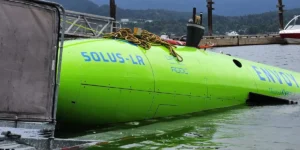
The Envoy is compact yet robust, measuring approximately 27.9 feet (8.5 meters) in length and 3.3 feet (one meter) in diameter, with a displacement of about 8,160 lbs (3,700 kilograms). Smaller configurations are also available, making the platform adaptable to a range of scenarios—from offshore energy inspection to defense reconnaissance.
How hydrogen powers the deep
Instead of relying solely on batteries, the Envoy was powered by hydrogen fuel cells from Infinity Fuel Cell and Hydrogen, Inc., a Connecticut-based firm that designs advanced PEM fuel cell and electrolyzer systems for aerospace, underwater, and defense applications. During the mission, the fuel cell generated electricity onboard, producing only water as a by-product.
That zero-emission, high-density energy source is what allows the Envoy to stay below for weeks on end. “That is what makes the endurance meaningful for operators, with the potential for fewer recoveries, more continuous operations and greater efficiency offshore,” Manning added.
William Smith, president and CEO of Infinity Fuel Cell and Hydrogen, echoed that sentiment. “We are proud to support a milestone that shows what hydrogen fuel cells can enable in real subsea operations,” he said in a press release. “This result highlights the role fuel cell technology can play in extending endurance, reducing intervention requirements, and supporting more capable long-range autonomous missions.”
Why endurance matters
For offshore operators, endurance is a direct driver of cost and efficiency. Longer fully submerged missions mean fewer recoveries and redeployments, reducing downtime and keeping data more continuous. This is especially critical in offshore environments, where operations can be limited by weather, vessel access, and complex logistics.
The Envoy is also equipped with a suction anchor, which can attach to the seabed for extended monitoring missions in harsh underwater environments. This enables continuous data collection for applications ranging from scientific research to national security.
“The result demonstrates persistent, long-range AUV performance in a real underwater operating context and reinforces hydrogen fuel cells as a practical enabling technology for extended autonomous subsea operations,” the firm stated.
With this world-first achievement, hydrogen-powered submarine drones move from experimental concept to operational reality—paving the way for a new era of silent, long-lasting, and truly autonomous exploration beneath the waves.