
Discover how smart ports, port automation, digital twins, automated container terminals, and port community systems are transforming global shipping and logistics.
From Traditional Ports to Smart Ports
Ports have always been critical nodes in global trade. However, the traditional port model—based on manual processes, fragmented communication, and limited data sharing—is no longer sufficient for today’s fast, complex, and data-driven logistics environment.
The concept of the smart port has emerged as a response to these challenges. A smart port uses digital technologies, automation, and integrated data systems to improve efficiency, safety, sustainability, and decision-making. Smart ports are not just about technology; they represent a shift toward connected, intelligent, and resilient port ecosystems that integrate ships, terminals, logistics providers, customs authorities, and hinterland transport.
What Is a Smart Port?
A smart port is a port that leverages digital technologies to optimise operations, enhance visibility, and support sustainable and efficient logistics flows. At its core, a smart port integrates:
- Real-time data from ships, terminals, and logistics systems
- Automated equipment and infrastructure
- Digital communication platforms connecting stakeholders
- Advanced analytics and decision-support systems
Organizations such as International Association of Ports and Harbors promote smart port development as a key enabler of efficient and sustainable maritime transport.
Port Digitalisation: The Foundation of Smart Ports
Port digitalisation refers to the transition from paper-based and manual processes to digital systems that allow real-time information exchange and automation. Traditionally, port operations involved multiple disconnected systems: shipping lines, terminal operators, customs, port authorities, and logistics providers often worked with separate databases and documentation processes. Digitalisation changes this by enabling:
- Electronic documentation (e.g., digital bills of lading)
- Real-time cargo tracking
- Automated reporting and compliance systems
- Integrated planning between stakeholders
The result is improved transparency, reduced delays, and better coordination across the supply chain.
Port Automation: Increasing Efficiency and Precision
Port automation is one of the most visible aspects of smart ports. It involves the use of automated equipment and control systems to handle cargo and manage terminal operations.
Key Areas of Port Automation
- Automated quay cranes for container loading and unloading
- Automated guided vehicles (AGVs) for container transport
- Automated stacking cranes in container yards
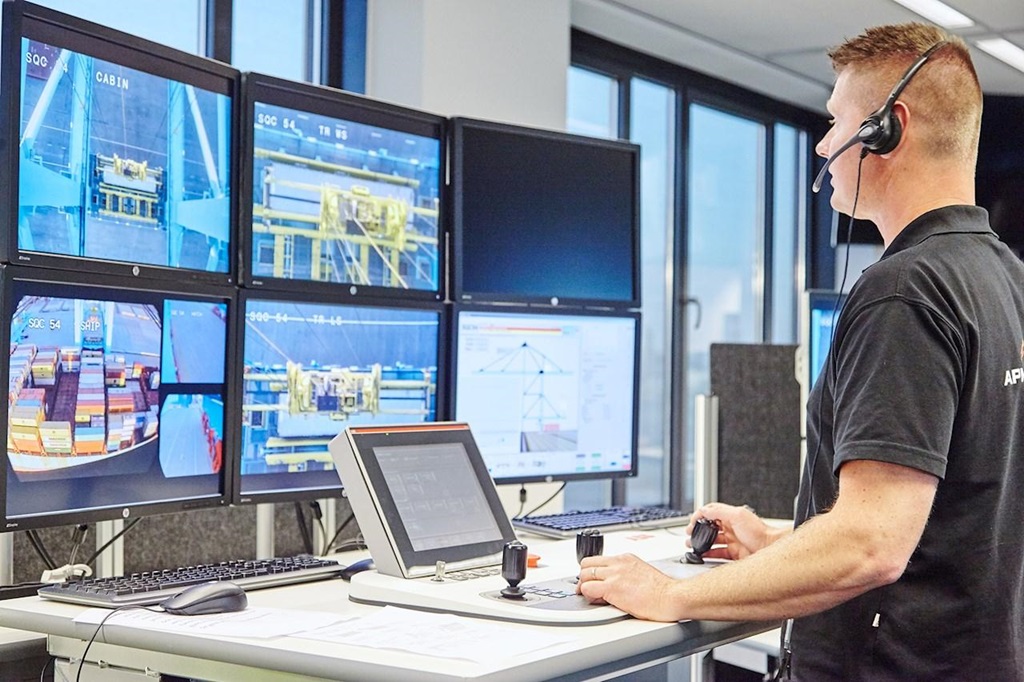
- Remote-controlled operations from central control rooms
Automated container terminals are already operating in major ports worldwide. These terminals reduce human intervention in repetitive tasks, improve precision, and increase operational efficiency. Automation also improves safety by reducing the need for personnel in hazardous environments.
Digital Twin Ports: A New Level of Simulation and Control
A digital twin is a virtual replica of a physical system. In ports, digital twin technology creates a real-time digital model of port infrastructure, operations, and logistics flows.
Digital twins allow port operators to:
- Simulate vessel traffic and terminal operations
- Predict congestion and bottlenecks
- Test infrastructure changes before implementation
- Optimise energy use and emissions
For example, a port can simulate the impact of increased vessel traffic or new terminal layouts before making physical investments. This reduces risk and supports better decision-making. Digital twins are becoming an important tool in long-term port planning and operational optimisation.
Automated Container Terminals: The Core of Smart Port Operations
Automated container terminals represent the most advanced stage of port automation. These terminals combine robotics, sensors, and control systems to manage cargo handling with minimal human intervention.

In these terminals:
- Cranes are often remotely operated or fully automated
- Containers are transported by driverless vehicles
- Yard operations are controlled by centralised software systems
The benefits include higher productivity, lower operational costs over time, improved safety, and more consistent performance. However, these systems require high initial investment and advanced technical expertise.
Port Community Systems (PCS): Connecting Stakeholders
One of the most important elements of port digitalisation is the Port Community System (PCS). A PCS is a digital platform that connects all stakeholders involved in port operations.
These stakeholders include:
- Shipping lines
- Terminal operators
- Freight forwarders
- Customs authorities
- Port authorities
- Trucking and rail operators
A PCS enables secure and real-time information exchange between these parties. Instead of multiple emails, phone calls, and paper documents, all data is shared through a single digital platform.
The European Maritime Safety Agency and European institutions highlight PCS as a key component in improving efficiency, transparency, and compliance in maritime logistics.
–
Benefits of Smart Ports
Smart ports provide multiple benefits across operational, economic, and environmental dimensions.
Operational Efficiency
Digital systems and automation reduce turnaround times for ships, improve cargo handling speed, and minimise delays caused by miscommunication or manual processes.
Improved Safety
Automation reduces human exposure to hazardous environments, while digital monitoring systems enhance situational awareness and incident prevention.
Environmental Sustainability
Smart ports support energy efficiency, emissions monitoring, and integration with shore power systems. They also reduce unnecessary vessel waiting times, which lowers fuel consumption.
Better Decision-Making
Real-time data and analytics allow port operators to make informed decisions quickly, improving overall system performance.

Challenges in Port Digitalisation
Despite its advantages, port digitalisation faces several challenges.
High Investment Costs
Automation systems, digital infrastructure, and cybersecurity solutions require significant capital investment.
Integration Complexity
Ports involve multiple stakeholders with different systems. Integrating these systems into a unified platform can be technically complex.
Cybersecurity Risks
As ports become more digital, they also become more vulnerable to cyberattacks. Protecting critical infrastructure is essential.
Workforce Transformation
Automation changes job roles in ports. While some manual jobs may decrease, new roles in IT, data analysis, and system management are created.
Practical Example: A Smart Port in Operation
A modern smart port may operate as follows:
A vessel approaching the port shares its estimated time of arrival digitally. The port’s system allocates a berth automatically based on real-time data. Terminal operations are prepared in advance, and automated cranes begin unloading containers as soon as the ship arrives.
Containers are transported by automated vehicles to the yard, where stacking is managed by software systems. Customs clearance is processed digitally through the port community system, and trucks or trains are scheduled for efficient cargo pickup.
This level of coordination reduces delays, improves throughput, and enhances overall supply chain performance.
Future Outlook: Towards Fully Connected Maritime Ecosystems
The future of ports lies in deeper integration with global logistics systems. Smart ports will increasingly connect with:
- Autonomous ships and smart navigation systems
- Digital supply chains and logistics platforms
- Energy networks supporting alternative fuels
- Smart cities and inland transport systems
Technologies such as artificial intelligence, blockchain, and the Internet of Things will further enhance port capabilities. The goal is to create a fully connected maritime ecosystem, where data flows seamlessly between ships, ports, and inland logistics networks.
Conclusion: Smart Ports as the Backbone of Modern Shipping
Smart ports and port digitalisation are transforming the maritime industry. By combining automation, digital platforms, and advanced analytics, ports are becoming more efficient, safer, and environmentally sustainable. For maritime professionals, understanding smart port technologies is essential. Ports are no longer just physical infrastructure—they are digital hubs that drive global trade. As shipping continues to evolve, smart ports will play a central role in shaping the future of maritime logistics.
Frequently Asked Questions (FAQ)
What is a smart port?
A smart port uses digital technologies and automation to improve efficiency, safety, and sustainability in port operations.
What is port automation?
Port automation involves using automated equipment such as cranes and vehicles to handle cargo with minimal human intervention.
What is a digital twin in ports?
A digital twin is a virtual model of a port that allows simulation and optimisation of operations.
What is a Port Community System (PCS)?
A PCS is a digital platform that connects all port stakeholders for real-time data exchange and coordination.
Why are smart ports important?
They improve efficiency, reduce costs, enhance safety, and support environmental sustainability.
References
- International Association of Ports and Harbors – Smart Port initiatives and guidelines
- European Maritime Safety Agency – Digitalisation and maritime safety reports
- World Bank – Port digitalisation and logistics performance studies
- UNCTAD. Review of Maritime Transport – Digitalisation and Ports
- PIANC. Smart Ports and Digitalisation Reports
- OECD. Digital Transformation of Ports and Logistics