
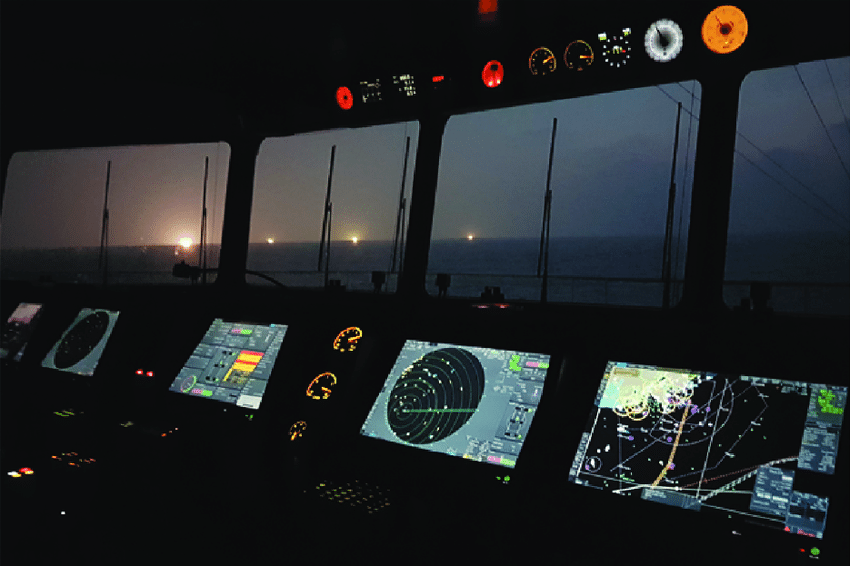
Master the best radar settings for night and restricted visibility navigation. Learn practical tuning techniques to improve target detection, safety, and COLREGs compliance.
On a dark night at sea, when the horizon disappears and visual cues fade into black, the marine radar becomes more than an aid—it becomes the navigator’s primary set of eyes. In restricted visibility caused by fog, heavy rain, snow, or haze, radar is often the only reliable tool for detecting land, traffic, and navigational hazards. Yet radar effectiveness is never automatic. Poorly adjusted settings can hide targets, create dangerous clutter, or generate a false sense of security. Knowing how to configure and continuously optimise radar settings is therefore a core professional skill for deck officers and maritime pilots worldwide.
This article explains, in clear and practical language, how to apply the best radar settings for night navigation and restricted visibility. It is written for international maritime professionals, including cadets, officers, and instructors, with a focus on real-world bridge operations rather than textbook theory.
Restricted visibility remains a major contributing factor in collisions and groundings. Investigations by flag states and marine accident boards consistently show that radar was available but not optimally used. In many cases, targets were present on the screen but were either filtered out, lost in clutter, or misinterpreted due to incorrect gain, sea clutter, or range scale settings. Effective radar use is therefore not just a technical matter—it is a safety, compliance, and professional competency issue under COLREGs and STCW requirements.
–
Understanding Radar Performance at Night and in Restricted Visibility
Radar Is Not “Set and Forget”
A common misunderstanding among less experienced watchkeepers is that radar can be left in an automatic mode to manage all conditions. While modern ARPA and integrated bridge systems provide powerful automation, radar performance still depends heavily on human judgement. Night navigation and restricted visibility demand frequent adjustment because environmental conditions change continuously. Sea state, rain intensity, traffic density, and vessel speed all affect how radar echoes appear.
The Human Factor on the Bridge
At night, human vision becomes less reliable, depth perception decreases, and fatigue increases. Radar must therefore compensate for reduced visual information, but only if it is tuned correctly. An improperly adjusted radar can overload the operator with noise or, worse, suppress weak but critical targets such as small vessels, fishing boats, or buoys.
–
Core Radar Controls Every Navigator Must Master
Gain: The Foundation of Radar Tuning
Gain controls the overall sensitivity of the radar receiver. It is the most important setting and the starting point for all radar adjustments. Too little gain causes weak echoes to disappear, while excessive gain fills the screen with background noise, masking real targets. In practice, gain should be increased until light background speckle appears, then reduced slightly until the noise just disappears. This method ensures that the radar is sensitive enough to detect small or distant targets without overwhelming the display. At night, this balance becomes even more critical because visual confirmation is limited.
Sea Clutter (STC): Managing Wave Reflections
Sea clutter suppression reduces echoes caused by wave tops near the vessel. In calm seas, minimal sea clutter is required. In rough conditions, especially at higher speeds, wave reflections can dominate the radar display if not controlled. The key principle is moderation. Excessive sea clutter suppression may remove genuine targets close to the vessel, including small craft. The control should be adjusted gradually while observing whether real echoes remain visible. Experienced navigators frequently re-adjust sea clutter as sea state changes.
Rain Clutter (FTC): Filtering Precipitation
Rain clutter control reduces echoes from rain, snow, or hail. In heavy precipitation, rain clutter can create large, cloud-like areas that obscure real targets. However, aggressive filtering may also reduce the radar’s ability to detect vessels beyond the rain area. A practical technique is to use rain clutter sparingly and rely more on gain and range adjustments. Switching between different ranges can also help distinguish real targets from weather-related echoes.
–
Best Radar Settings for Night Navigation
Selecting the Appropriate Range Scale
Range selection is a strategic decision rather than a fixed setting. At night, long-range scales are useful for early detection of land and traffic, while shorter ranges are essential for collision avoidance and precise manoeuvring. Professional practice involves using at least two radar displays, if available. One radar is typically set to a longer range (6–12 nautical miles) to provide situational awareness, while the second is set to a shorter range (1.5–3 nautical miles) for close-quarters monitoring. This layered approach improves decision-making and reduces the risk of surprise encounters.
Optimising Display Brilliance and Colour Modes
Modern radars offer various colour palettes and brightness controls. At night, excessive screen brightness can destroy night vision and increase fatigue. Displays should be dimmed to the lowest comfortable level while maintaining clear target definition. Many navigators prefer darker backgrounds with contrasting target colours for night use. Consistency matters more than personal preference; whatever mode is selected should allow rapid target recognition without eye strain.
North-Up, Head-Up, or Course-Up?
Display orientation affects situational awareness. North-up provides a stable, chart-like view that aligns well with ECDIS, while head-up offers intuitive relative motion for collision avoidance. At night and in restricted visibility, many operators favour head-up or course-up for immediate traffic assessment, switching to north-up when correlating radar with charts.
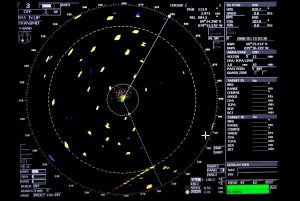
Radar Use in Restricted Visibility: Fog, Rain, and Snow
Maintaining Continuous Radar Watch
In restricted visibility, radar watchkeeping becomes continuous and intensive. This means constant monitoring, frequent tuning, and regular plotting or ARPA tracking. Radar should never be used passively. Every echo deserves interpretation.
Adjusting for Dense Fog
Fog itself does not affect radar signals, but it often coincides with calm seas and high traffic density. In such conditions, sea clutter can usually be reduced significantly, allowing better detection of small targets. Gain should be set carefully to ensure weak echoes are not lost.
Heavy Rain and Thunderstorms
Heavy rain presents one of the most challenging radar environments. Rain clutter may obscure targets, especially at longer ranges. Reducing range, fine-tuning gain, and comparing echoes across different scales helps confirm whether a contact is real or weather-related.
–
ARPA and Target Tracking at Night
Manual vs Automatic Acquisition
ARPA systems can automatically acquire targets, but manual acquisition remains essential, especially in congested waters. At night, manually selecting targets of concern ensures that critical contacts are not missed due to filtering thresholds or system limitations.
CPA and TCPA Interpretation
Closest Point of Approach (CPA) and Time to CPA (TCPA) values are only as reliable as the data input. Incorrect heading, speed, or sensor errors can produce misleading results. Navigators must cross-check ARPA information with visual bearings, AIS data, and common sense.
Vector Length and Relative Motion
Vector settings should be adjusted to provide meaningful information without cluttering the display. Shorter vectors may be useful in high-traffic areas, while longer vectors help anticipate developing situations in open waters.
–
Common Radar Errors During Night Navigation
Over-Reliance on Automation
Automation supports decision-making but does not replace professional judgement. Blind trust in ARPA or automatic clutter suppression has contributed to numerous accidents. Navigators must understand what the radar is showing—and what it might be hiding.
Infrequent Adjustment
Environmental conditions rarely remain constant. Failure to adjust radar settings as conditions change can gradually degrade situational awareness without the operator realising it.
–
Practical Bridge Team Techniques
Cross-Checking with ECDIS and Visual Lookout
Radar should be used in conjunction with ECDIS, AIS, and visual lookout. Each system has strengths and limitations. Cross-checking reduces the risk of single-source errors, particularly at night.
Clear Communication on the Bridge
When operating in restricted visibility, bridge team communication becomes critical. Changes to radar settings, identified targets, and collision avoidance decisions should be verbalised clearly to maintain shared situational awareness.
–
Case Studies and Real-World Lessons
Accident investigations by organisations such as the UK Marine Accident Investigation Branch and the US Coast Guard repeatedly highlight radar mismanagement as a contributing factor in night-time collisions. In several cases, targets were visible on radar but suppressed by excessive sea clutter settings or misinterpreted due to incorrect range selection. These incidents underline the importance of continuous radar optimisation rather than static settings.
–
Frequently Asked Questions
What is the most important radar setting at night?
Gain is the most critical setting. Without proper gain adjustment, other settings become ineffective.
Should radar always be used on maximum range at night?
No. Multiple ranges should be used simultaneously to maintain both long-range awareness and close-quarters safety.
Does fog affect radar performance?
Fog does not directly affect radar signals, but associated traffic density and environmental conditions increase operational complexity.
Can ARPA be trusted in restricted visibility?
ARPA is a valuable tool but must be cross-checked with other sensors and professional judgement.
How often should radar settings be adjusted?
Continuously. Any change in weather, sea state, or traffic situation may require adjustment.
Is automatic clutter suppression reliable?
Automatic modes are helpful but should always be monitored and overridden when necessary.
–
Conclusion and Key Takeaways
Effective radar use at night and in restricted visibility is not about memorising fixed settings. It is about understanding principles, observing the environment, and continuously fine-tuning the system to extract meaningful information. Mastery of radar settings enhances safety, supports compliance with international regulations, and reflects professional competence on the bridge. For maritime professionals, investing time in radar proficiency is an investment in safer navigation, stronger decision-making, and long-term career credibility.
Modern radar systems increasingly integrate with artificial intelligence, advanced signal processing, and sensor fusion. Features such as automatic target classification and adaptive clutter control are improving performance in challenging conditions. However, these advances do not eliminate the need for fundamental radar knowledge. Future navigators will still need to understand core principles to supervise and validate automated systems effectively.
–
References
International Maritime Organization (IMO). (2023). International Regulations for Preventing Collisions at Sea (COLREGs).
International Maritime Organization (IMO). STCW Code and Model Courses.
Marine Accident Investigation Branch (MAIB). Safety digests and investigation reports.
United States Coast Guard (USCG). Navigation and Vessel Inspection Circulars.
International Chamber of Shipping (ICS). Bridge Procedures Guide.
Bowditch, N. (American Practical Navigator). National Geospatial-Intelligence Agency.
Tupper, E. (2013). Introduction to Naval Architecture. Elsevier.
Marine Technology News and Maritime Reporter & Engineering News.