
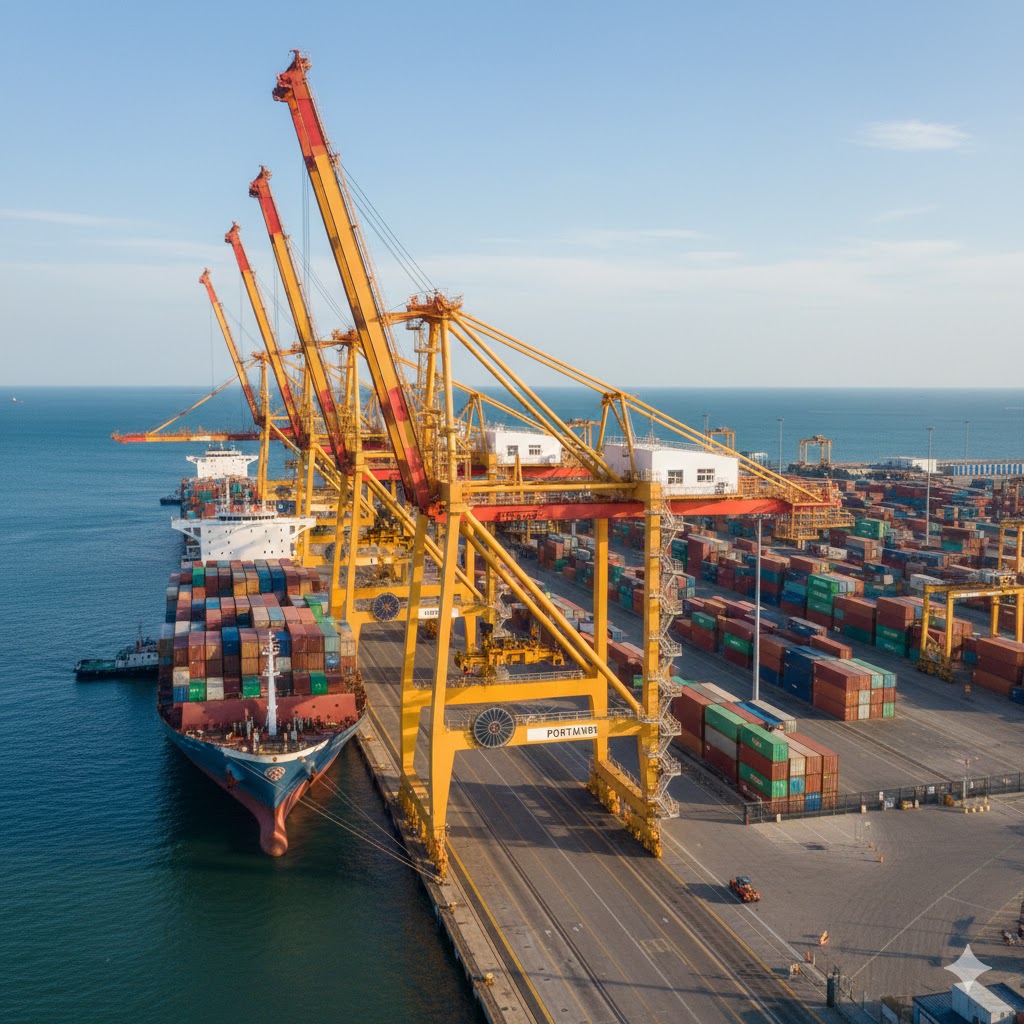
Discover what a Portainer crane is and how it revolutionizes container port operations. Learn about its design, automation, and role in global trade efficiency. Essential reading for maritime professionals.
Imagine a symphony of motion where colossal ships are emptied and filled in hours, not days. At the heart of this modern logistical ballet is a towering giant: the Portainer crane. These massive, shore-based structures are the undisputed workhorses of global trade, the critical link between vessel and land that keeps the world’s economy flowing. From the bustling ports of Shanghai and Rotterdam to regional hubs worldwide, Portainer cranes execute a precise, relentless dance of lifting and placing standardized containers. Their efficiency directly translates into the affordability of goods on your local store shelf and the stability of global supply chains. This article delves into the engineering marvel of the Portainer crane, explaining its mechanics, evolution, and indispensable role in making modern container ports the engines of efficient global commerce. We will explore how this single machine type, through relentless innovation and integration, has shaped the ports we know today and continues to define their future.
Why Portainer Cranes Matter for Global Maritime Operations
The invention of the standardized shipping container in the mid-20th century revolutionized transport, but it was the development of specialized handling equipment like the Portainer crane that unlocked its true potential. Before these cranes, loading and unloading break-bulk cargo was a labor-intensive, time-consuming, and often dangerous process involving gangs of longshoremen. The container introduced modularity, and the Portainer crane provided the speed and precision to exploit it. Today, these cranes are not just tools; they are the primary productivity gatekeepers of a port. The speed at which a crane can move containers from ship to shore—measured in moves per hour—is a key performance indicator that determines port competitiveness, vessel turnaround time, and ultimately, the cost of shipped goods.
The strategic importance of Portainer cranes extends far beyond the port fence. In an era where global supply chains are scrutinized for resilience and efficiency, the performance of these cranes is a critical node. Port congestion, often visualized by queues of ships waiting offshore, frequently originates from bottlenecks in crane operations. Efficient cranes minimize port dwell time for mega-vessels, which can carry over 24,000 twenty-foot equivalent units (TEUs). This efficiency ripples outward, affecting inventory levels for retailers, production schedules for manufacturers, and delivery timelines for consumers. Organizations like the United Nations Conference on Trade and Development (UNCTAD) meticulously track port performance and shipping connectivity as vital indicators of national economic health, with crane productivity being a core component. Furthermore, the design and operation of these cranes are influenced by international safety standards and best practices promoted by entities like the International Maritime Organization (IMO) and the International Association of Classification Societies (IACS), ensuring a baseline of global operational safety and interoperability.
Key Developments and Technological Principles of Portainer Cranes
The modern Portainer crane is a masterpiece of mechanical, electrical, and now digital engineering. Understanding its development requires looking at its core components, the drive for greater scale and speed, and the ongoing integration of advanced technologies.
Core Design and Operational Anatomy
A Portainer crane, most commonly configured as a ship-to-shore (STS) crane, is defined by its iconic structure. It runs on dedicated rails along the quayside, allowing it to traverse the length of a berthed vessel. The key components are the legs, which straddle the container-laden trucks and trains passing beneath; the booming, the horizontal arm that extends out over the ship; and the trolley, which travels along the boom carrying the spreader, the intelligent lifting device that locks onto a container’s corner castings.
This design creates a highly efficient three-dimensional movement system:
-
Traversal: The entire crane moves along the quay (on the X-axis).
-
Trolley Travel: The trolley moves along the boom (on the Y-axis), positioning the spreader over the correct ship bay.
-
Hoisting/Lowering: The spreader is raised or lowered (on the Z-axis) to pick up or set down a container.
This coordinated motion allows an operator, traditionally located in a cab on the trolley, to precisely pluck 30-ton containers from a complex, tightly packed cellular guide system on a ship and place them swiftly onto a waiting vehicle on the dock, or vice-versa.
The Evolution of Scale and Speed
The evolution of container ships is a story of relentless growth, from the first converted tankers to today’s mega-vessels. Portainer cranes have been in an arms race to keep pace. This has driven several key adaptations:
-
Increased Outreach and Height: Modern cranes must reach across vessels that are now over 24 containers wide (24+1 on deck) and tall enough to access stacks high above the quay level. This demands immense structural strength and stability.
-
Lifting Capacity: While a standard 40-foot container might weigh up to 30+ metric tons, cranes are often built with higher safe working loads (SWL) to handle multiple containers in tandem lifts or heavier project cargoes.
-
Drive Technology: The shift from traditional DC drives to AC drive systems has been transformative. AC drives offer smoother acceleration and deceleration, finer control for precise positioning, reduced mechanical stress, and significantly lower energy consumption. This technological leap, supported by guidance from classification societies like DNV and American Bureau of Shipping (ABS), has directly increased moves-per-hour potential and reduced maintenance downtime.
The Automation and Digitalization Revolution
The most significant contemporary development in Portainer crane technology is the move towards automation and digital integration. This shift is redefining port operations in fundamental ways.
-
Automated Stacking Cranes (ASCs) and Integration: While the STS crane handles the ship interface, its efficiency is wasted if the landside yard is congested. The rise of Automated Guided Vehicles (AGVs) and rail-mounted Automated Stacking Cranes (ASCs) in the container yard creates a synchronized flow. The Portainer crane becomes a node in a fully orchestrated system, receiving and delivering containers based on optimized software instructions rather than human radio calls.
-
Remote and Semi-Automated Operation: Many new-generation cranes are designed for remote operation. Operators now often work from ergonomic control centers away from the noisy, vibrating crane cab, controlling multiple cranes via high-definition screens and joysticks. This improves working conditions, attracts a wider workforce, and allows for centralized monitoring and data analysis. Semi-automated features, such as automatic hoist and trolley positioning or “return-home” functions, reduce operator cognitive load and optimize cycle times.
-
Data and Predictive Analytics: Modern cranes are sensor-rich. They generate vast amounts of data on motor performance, energy use, component stress, and cycle times. By applying predictive analytics, port engineers can move from preventative maintenance to condition-based maintenance. A system might flag an anomalous vibration in a hoist motor weeks before a failure, allowing for scheduled repair and avoiding costly unplanned downtime. Industry research from Clarksons Research and Lloyd’s List Intelligence consistently highlights data-driven efficiency as a key differentiator for leading global ports.
Challenges and Practical Solutions in Portainer Crane Operations
Operating a fleet of multi-million-dollar Portainer cranes at the frontier of global logistics is fraught with challenges. Port authorities and terminal operators must navigate a complex landscape of physical constraints, economic pressures, and environmental mandates. One of the most persistent challenges is the sheer scale of new vessel classes. As ships grow wider and taller, ports face the colossal capital expense of acquiring new cranes with longer outreach and higher lift capabilities, or extensively retrofitting existing ones. This is not just a purchase; it often demands quay wall reinforcement, deeper berths, and expanded yard infrastructure. The practical solution has been a combination of strategic long-term planning and modular design from manufacturers. Ports conduct detailed forecasts in collaboration with shipping alliances, while manufacturers like ZPMC and Konecranes offer cranes with upgradeable booms and future-proofed control systems, allowing for some level of adaptation without complete replacement.
Congestion and optimization present another layer of complexity. A Portainer crane is only as fast as the system supporting it. If yard trucks are delayed, ground slots are full, or customs clearance is slow, the crane’s productivity plummets, creating a costly domino effect of vessel delays. The industry’s solution lies in integrated Terminal Operating Systems (TOS) and Equipment Control Systems (ECS). These advanced software platforms act as the port’s central nervous system. They use complex algorithms to plan every container move, coordinate the real-time activity of cranes, trucks, and yard equipment, and optimize stacking to minimize future reshuffles. For example, by pre-planning the discharge sequence using stowage plans from the ship, the TOS can instruct the Portainer crane to place containers destined for the same hinterland train in adjacent yard blocks, streamlining the next phase of transport.
Furthermore, the industry faces mounting pressure to reduce its environmental footprint. Traditional diesel-powered rubber-tired gantry cranes (RTGs) in the yard are significant emitters. The solution driving the next wave of innovation is electrification and energy recovery. Modern Portainer cranes are almost always electrically powered from the quayside grid. The latest innovation is regenerative braking systems, where the energy generated from lowering a heavy container or braking the trolley is fed back into the port’s electrical grid, often to power adjacent ASCs or lighting. Leading ports, guided by the environmental standards of class societies like Lloyd’s Register (LR) and in support of the IMO’s decarbonization strategy, are investing in shore power (cold ironing) and exploring hybrid power systems for all port equipment, with the electrified Portainer crane as a central, efficient component.
Future Outlook and Maritime Trends for Portainer Cranes
The future of Portainer cranes is not merely one of incremental improvement but of transformative change, driven by digitalization, sustainability, and new cargo paradigms. Artificial Intelligence (AI) and Machine Learning (ML) will move from experimental projects to core operational tools. We will see AI-powered vision systems that not only identify container numbers but also assess container condition, detect improper lashing, and predict the optimal spreader path to avoid collisions in real-time, moving beyond pre-set automation to adaptive, intelligent control. Digital Twin technology, where a virtual, real-time replica of the crane and its systems is maintained, will become standard for design, simulation, and predictive maintenance. A port engineer could use a digital twin to simulate the impact of a new mega-vessel on crane stress loads or to train new operators in a risk-free virtual environment, a concept increasingly validated in research from institutions like the National Oceanography Centre (NOC) spin-offs focused on maritime engineering.
Sustainability will be the dominant design imperative. The next generation of cranes will be net-zero energy assets. This will be achieved through more efficient drives, wider use of energy recovery, and integration with local renewable microgrids featuring solar canopies and battery storage systems at the terminal. Furthermore, the industry is beginning to grapple with new cargo forms. The nascent but growing containerized green hydrogen and ammonia trade, crucial for global energy transition, may require specialized handling protocols or crane adaptations for safe management of these new energy carriers, with safety frameworks likely to be developed in collaboration with EMS and classification societies like Bureau Veritas (BV), which are already investing in rules for alternative fuels.
Finally, the trend towards port community systems and seamless data exchange will elevate the crane’s role. It will evolve from an isolated lifting machine into a fully integrated data source within a port’s Internet of Things (IoT) ecosystem. Real-time data on crane operations will be seamlessly shared with shipping lines, trucking companies, rail operators, and customs authorities, creating a truly transparent, frictionless supply chain where every stakeholder can optimize their plans based on the precise status of cargo movement. This interconnected, intelligent, and green future will ensure the Portainer crane remains the pivotal pillar of global trade for decades to come.
Frequently Asked Questions (FAQ)
1. What is the main difference between a Portainer crane and a gantry crane?
The term “gantry crane” is broad and describes any crane that uses a hoist fitted on a trolley that moves horizontally along a raised bridge structure. A Portainer crane is a specific type of large, rail-mounted gantry crane designed explicitly for loading and unloading containers from ships at a port. Key distinctions are its immense size, its fixed location on the quayside rails, and its specialized spreader. Other gantry cranes, like Rubber-Tired Gantry (RTG) or Rail-Mounted Gantry (RMG) cranes, are typically used for moving and stacking containers within the port yard.
2. How many containers can a Portainer crane move in one hour?
Cycle times vary based on the crane’s age, the operator’s skill, and the complexity of the ship’s stow. A modern, efficient Portainer crane typically averages 25 to 40 container moves per hour in sustained operations. However, under optimal conditions—such as moving containers from the ship directly to a waiting chassis with simple vertical cycling—peak rates can briefly exceed this range. This metric, Gross Moves Per Hour (GMPH), is a critical benchmark for terminal productivity.
3. How are Portainer cranes powered, and are they becoming more eco-friendly?
The vast majority of modern ship-to-shore Portainer cranes are powered by electricity from the local grid, delivered via cable reel or conductor bar systems along the quay. This makes them inherently cleaner than diesel-powered equipment. The eco-friendly evolution focuses on energy efficiency (e.g., regenerative drives that recover power) and integrating with green port initiatives like on-site renewable energy generation and providing shore-side electrical power to berthed vessels (cold ironing), thereby reducing overall port emissions.
4. What does the future hold for Portainer crane operators with the rise of automation?
Automation is transforming the role, not eliminating it. The job is shifting from hands-on crane cab operator to a system supervisor or remote operator. Future professionals will need skills in monitoring multiple automated systems, interpreting complex data dashboards, handling exception management, and performing remote interventions. The work becomes more technical and less physically demanding, often conducted from a central control room. Training programs, including those based on IMO model courses, are adapting to focus on these new digital competencies.
5. Can existing Portainer cranes be upgraded to handle larger ships?
Yes, within physical and structural limits, existing cranes can often be upgraded—a process more economical than purchasing new ones. Common retrofits include booming extensions to increase outreach, hoist system upgrades for higher lift capacity and speed, and complete control system modernizations to enable new automation features and improve reliability. Such upgrades must be carefully engineered and certified by a classification society like ClassNK or RINA to ensure structural integrity and safety.
Conclusion
From their inception as a simple solution to a complex handling problem, Portainer cranes have grown into the sophisticated, intelligent nerve centers of the global container port. They are the literal pivot point upon which the efficiency of maritime trade turns, balancing the demands of ever-larger vessels with the precise needs of landside logistics. As we have seen, their evolution from basic lifting machines to automated, data-generating, and energy-recovering assets mirrors the broader trajectory of the maritime industry towards greater integration, intelligence, and sustainability.
The story of the Portainer crane is ultimately the story of trade itself: a relentless pursuit of efficiency, scale, and connectivity. As ports worldwide embrace digital twins, artificial intelligence, and green technologies, the Portainer crane will continue to adapt, remaining an indispensable icon on the skyline of global commerce. For maritime professionals, understanding this key piece of equipment is not just about knowing its mechanics, but about appreciating its strategic role in a fluid, interconnected world. To continue deepening your knowledge of the technologies shaping modern maritime logistics, we invite you to explore our platform’s further resources on terminal automation, port community systems, and sustainable port design.
References
-
United Nations Conference on Trade and Development (UNCTAD). (2024). Review of Maritime Transport. https://unctad.org/rmt
-
International Maritime Organization (IMO). (2023). Maritime Safety Committee (MSC) and Marine Environment Protection Committee (MEPC) guidelines.
-
International Association of Classification Societies (IACS). Requirements and guidelines for container cranes.
-
DNV. (2023). Maritime Forecast to 2050. https://www.dnv.com/maritime/publications/maritime-forecast-2023/
-
American Bureau of Shipping (ABS). Guide for Certification of Container Cranes.
-
Clarksons Research. (2024). World Fleet Register and Shipping Intelligence Weekly.
-
Lloyd’s List Intelligence. Port and Terminal Data.
-
Bureau Veritas (BV). (2023). Rules for the Classification of Steel Ships (NR467) – Part D for lifting appliances.
-
National Oceanography Centre (NOC). Maritime Engineering and Digital Twin research initiatives.
-
MarineTraffic. (2024). Live vessel and port activity data. https://www.marinetraffic.com
-
Eyres, D. J., & Bruce, G. J. (2012). Ship Construction (7th ed.). Butterworth-Heinemann. (For fundamental principles of shipboard container stowage and loads).
-
Tupper, E. C. (2013). Introduction to Naval Architecture (5th ed.). Butterworth-Heinemann. (For stability and load concepts relevant to crane operations).