
Explore the critical clash between port automation and dockworker jobs fueling global labor strikes. Understand the technology, economic pressures, and real-world impacts on supply chains. Learn strategies for navigating this new era.
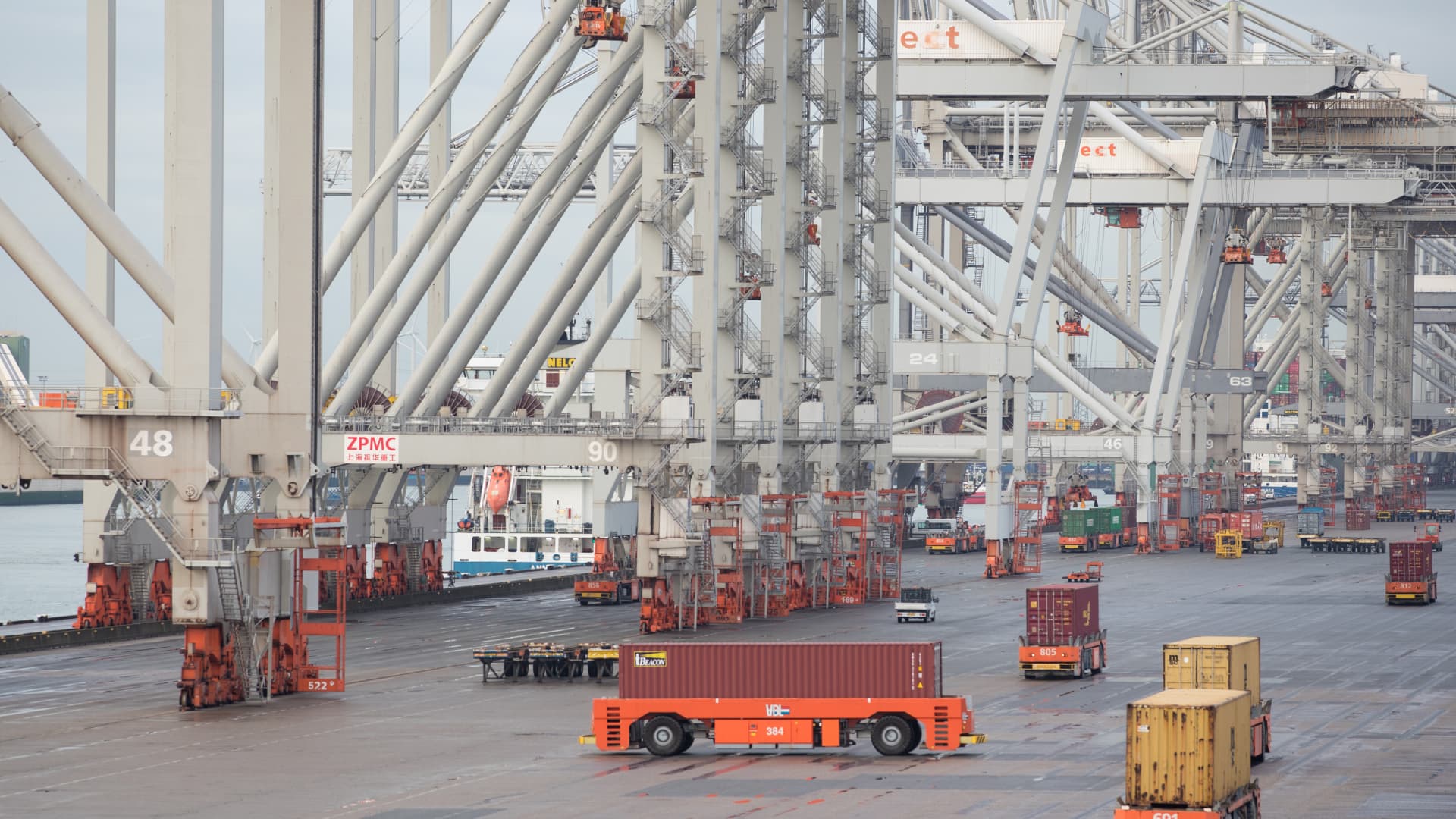
The towering automated stacking cranes at the Port of Rotterdam move with eerie, silent precision, orchestrating a ballet of containers untouched by human hands. Meanwhile, at ports from Felixstowe to Los Angeles, a very human tension simmers. The maritime industry stands at a historic crossroads, caught between an irresistible drive for technological efficiency and an immovable force of human labor rights. This clash is not just about machinery; it’s about the future of work at the world’s critical trade gateways. As terminals invest billions in automated systems to compete globally, dockworker unions are digging in, fighting to preserve jobs, communities, and their place in an industry transforming before their eyes. The result is an escalating cycle of labor disputes and port strikes that have become one of the most significant operational risks in global logistics today.
Understanding this conflict is essential for anyone in maritime operations, logistics, or global trade. These strikes are not random interruptions but symptoms of a profound structural shift. The push for port automation—driven by mega-ships, data analytics, and the need for 24/7 efficiency—directly challenges traditional dockwork. Unions, armed with decades of collective bargaining power, see automation not as progress but as an existential threat. This article will navigate the heart of this conflict. We will examine the technologies driving change, the legitimate fears of the workforce, the cascading impacts on fragile global supply chains, and the emerging models that might point toward a more balanced future. The journey through automated terminals and union halls reveals the human and economic realities defining the next chapter of maritime commerce.
Why the Automation vs. Jobs Debate is Central to Modern Maritime Operations
The stability of global supply chains hinges on port efficiency and reliability. In today’s interconnected economy, a delay at a single major port can idle factories, empty retail shelves, and trigger inflationary pressures thousands of miles away. Ports are therefore under immense pressure to become faster, more predictable, and more cost-effective hubs. This is the core argument for automation: technology as the essential tool to meet these demands. Proponents, including many port operators and shipping lines, argue that automation is not a choice but a necessity for maintaining global competitiveness, especially against highly automated foreign rivals in Asia and Europe.
Conversely, port labor represents a powerful, skilled, and historically vital community. Dockworkers are not simply resisting change; they are defending high-wage, middle-class jobs that have been built through generations of negotiation. Their work is physically demanding and technically complex, involving the operation of multimillion-dollar equipment and the meticulous planning of cargo movement. Unions contend that the promised efficiency gains from automation often overlook the social cost—job losses, de-skilling, and the erosion of community stability. They advocate for alternative methods to boost capacity and throughput that prioritize the workforce.
The tension creates a paradox. While automation aims to strengthen supply chains by removing human error and variability, the labor disputes it provokes can cause far more severe and immediate disruption. A single strike can halt billions in daily trade. This makes the automation debate more than an internal human resources issue; it is a critical strategic risk management challenge for the entire maritime and logistics sector. Finding a path forward that balances innovation with labor stability is now a prerequisite for operational resilience.
Key Technologies in Port Automation and Why They Are Contentious
The move toward the “autonomous port” is not about a single machine, but the integration of several interconnected systems that fundamentally change the nature of terminal work. Understanding these technologies is key to understanding labor’s concerns.
Automated Stacking Cranes (ASCs) and Remote-Operated Gantries are the most visible symbols of change. These massive steel structures navigate container yards without an operator in the cab, directed by software from a remote control center. They can work around the clock in most weather conditions, theoretically increasing yard density and reducing turnaround times. For labor, however, these cranes symbolize direct job displacement. What was once a job for dozens of skilled crane operators can become a task for a handful of remote controllers, often in a different location. Disputes over the manning agreements for such equipment—defining how many union jobs are required to operate them—are a frequent flashpoint in negotiations, as seen in recent strikes in Canada.
Beyond the quay, Automated Guided Vehicles (AGVs) or Autonomous Terminal Trucks shuttle containers between the ship and the stack. These driverless vehicles follow optimized digital pathways, communicating wirelessly with the terminal’s operating system. This automation streamlines the horizontal transport phase but directly impacts the jobs of drivers. The transition often requires a different skill set focused more on systems monitoring and exception handling than on physical vehicle operation, raising concerns about worker retraining and the future value of existing expertise.
The true brain of the automated port is the Terminal Operating System (TOS) and the integrated Equipment Control System (ECS). These complex software platforms use algorithms and real-time data to coordinate every moving part—ships, cranes, vehicles, and containers—into a single, optimized workflow. This represents a shift from hands-on, experience-based decision-making to data-driven, centralized control. For the workforce, this can feel like a disempowerment, as human judgment is supplanted by software logic. It also concentrates high-value jobs in the hands of software engineers and data analysts, potentially creating a new class of non-union technical staff.
The Ripple Effects: How Strikes Cascade Through Global Supply Chains
When negotiations over automation and contracts break down, the resulting strikes create immediate and long-lasting shocks that extend far beyond the picket line. The impacts are measurable, severe, and compound other existing disruptions in a fragile global system.
The first and most visible impact is crippling port congestion. When cranes stop moving, vessels rapidly queue at anchorage. During a 2022 strike at the UK’s Port of Felixstowe, average container dwell times at the terminal skyrocketed from 5.3 days to 9.9 days—an 87% increase in just over a week. Each idle ship represents hundreds of millions of dollars in cargo frozen in transit and accruing massive daily costs for fuel and charter rates. This congestion creates a domino effect, as seen when strikes at Canadian ports caused spillover congestion at U.S. West Coast alternatives like Los Angeles and Long Beach, which were already strained.
For businesses and consumers, the result is widespread disruption and inflationary pressure. Industries relying on “just-in-time” inventory, such as automotive and retail, are hit hardest. A prolonged strike threatens product availability, leading to shortages and higher prices. The 2024 strike threat on the U.S. East and Gulf Coasts put a wide range of goods at risk, from consumer products and apparel to crucial automotive components and industrial chemicals. Furthermore, the logistical chaos generates massive additional costs—detention and demurrage charges, emergency air freight expenses, and premiums for alternative routing—that ultimately filter down to the end consumer.
Perhaps the most strategic long-term effect is the permanent rerouting of trade. Shippers and carriers, desperate for reliability, begin to view strike-prone ports as unsustainable risks. This was evident during the protracted 2023 labor negotiations on the U.S. West Coast, which prompted a significant and lasting shift of cargo volume to East Coast ports like New York and New Jersey. This erosion of port competitiveness and market share can have decade-long consequences for regional economies and national trade profiles, making the stakes of labor relations higher than ever.
Case Studies: Automation at the Heart of Recent Global Disputes
Examining recent port strikes around the world reveals that automation is consistently a central, if not the primary, sticking point in negotiations.
Canada’s West Coast Port Strikes (2023-2024): A Direct Tech Dispute
In 2024, a strike that shut down Canada’s major West Coast ports, including Vancouver and Prince Rupert, had automation at its core. The conflict ignited over the port operator DP World’s proposal to implement remotely controlled rail-mounted cranes at its Vancouver terminal. The union, ILWU Local 514, was not opposed to the technology per se but was locked in a dispute over the manning agreement—the contract defining how many union workers would be required to operate the new automated systems. Despite employers offering substantial wage increases (over 19%), the failure to agree on this fundamental issue of job control led to a standstill that halted $800 million in daily trade and threatened U.S. supply chains.
U.S. East and Gulf Coast Strike Threat (2024): A Demand for an Automation Ban
The near-miss of a catastrophic strike encompassing 14 ports from Maine to Texas in 2024 was explicitly framed around automation. The International Longshoremen’s Association (ILA) made a ban on automated equipment a key demand in its negotiations. The union sought to prohibit the automation of cranes, gates, and container-moving trucks, signaling a defensive, hardline stance against the technological encroachment it witnessed on the West Coast and abroad. While a last-minute deal averted the strike, the issue was merely postponed, not resolved, setting the stage for future conflict.
Port of Felixstowe, U.K. Strikes (2022-2024): Efficiency vs. Job Security
Strikes at the UK’s busiest container port, Felixstowe, have been a recurrent issue. While pay was a direct cause, the underlying context was the port’s massive investment to double its capacity, a move heavily reliant on modern, technology-driven operations. Unions publicly expressed deep skepticism that automation was a definitive solution, arguing for alternative ways to improve efficiency without sacrificing long-term job security. The strikes demonstrated that even in regions with a strong push for modernization, labor retains the power to disrupt operations to defend its interests, causing significant delays and shifting cargo flows to European competitors like Rotterdam and Antwerp.
Navigating the Storm: Strategies for Mitigation and Future Solutions
In the face of this persistent risk, stakeholders across the supply chain cannot be passive observers. Proactive mitigation and a search for equitable solutions are essential for operational resilience.
For Shippers and Logistics Managers: The strategy must be diversification and visibility. Relying on a single port or trade route is now a high-risk proposition. Leading companies diversify their port usage, increase safety stock where feasible, and develop relationships with alternative carriers and terminals. Leveraging real-time supply chain visibility tools is crucial to track shipments and dynamically reroute cargo around disruptions. Furthermore, contractual foresight is vital; understanding force majeure clauses, detention/demurrage policies, and cargo insurance coverage for strike-related delays can prevent severe financial shocks.
For Ports and Terminal Operators: The path forward requires transparent transition planning. A “my way or the highway” approach to automation is a recipe for endless conflict. Successful models involve unions early in the planning process, not after investment decisions are made. This includes negotiating comprehensive technology transition agreements that guarantee current workers job security through retraining and redeployment. Investing in continuous, high-quality training programs to upskill the existing workforce for new, technology-augmented roles (like remote crane operator or systems analyst) can turn resistance into partnership.
A Collaborative Future Outlook: The ultimate solution lies in moving from a zero-sum conflict to a shared productivity model. This could involve agreements where a portion of the productivity gains and cost savings from automation are shared with the workforce through enhanced wages, benefits, and profit-sharing. Some industry thinkers advocate for a “human-in-the-loop” automation model, where technology handles repetitive, dangerous tasks but skilled workers oversee, manage exceptions, and perform complex problem-solving—roles that add higher value. Regulatory bodies and industry groups like the International Maritime Organization (IMO) and the International Labour Organization (ILO) could play a role in developing global guidelines for socially responsible port innovation.
FAQ: Your Questions on Port Automation and Strikes Answered
What specific types of port jobs are most at risk from automation?
Jobs involving repetitive, predictable physical tasks are most susceptible. This includes container truck drivers within terminals (replaced by AGVs), conventional crane and straddle carrier operators (replaced by remote-operated or automated cranes), and certain clerical roles for document processing (automated by software). Positions requiring high-level problem-solving, equipment maintenance, systems oversight, and management are less likely to be fully automated but will require significant new skills.
Do unions completely oppose all new technology in ports?
Not universally. Most unions oppose technology that directly eliminates jobs without a clear plan for the workforce. Many are open to technology that augments human labor, improves safety, or increases productivity if it is implemented with union partnership and guarantees for job security, retraining, and fair sharing of the benefits generated by that technology. The conflict often arises over the process and terms, not the mere presence of new machines.
How long does it take for supply chains to recover after a major port strike?
Recovery is not instantaneous when the strike ends. It can take weeks or even months to clear the backlog of waiting ships, work through congested container yards, and restore normal rail and trucking schedules. After a 13-day strike at Canadian West Coast ports in 2023, it took at least three months for the movement of U.S.-bound freight to return to normal.
Besides automation, what other issues are causing port strikes?
While automation is a major structural issue, immediate strikes are often triggered by wage disputes, benefit packages, and working conditions (such as safety protocols and shift schedules). These are the traditional subjects of collective bargaining, but they are now deeply intertwined with the larger anxiety about technological displacement and the future of the profession.
Can government intervention resolve these disputes?
Governments often intervene as mediators of last resort to prevent economic catastrophe, especially when strikes impact national trade and inflation. However, government intervention usually forces a temporary truce or imposes arbitration rather than solving the underlying tension between automation and jobs. A lasting solution requires direct, good-faith negotiation between labor and management.
Conclusion: Steering Toward a Balanced Future
The conflict between port automation and dockworker jobs is the defining labor challenge of modern maritime logistics. It is a complex story of technological imperative clashing with human dignity, of global competition impacting local communities. The increased frequency of port strikes is a clear signal that the industry’s current trajectory is unsustainable. Ignoring labor’s legitimate concerns in the race to automate will only lead to more frequent and devastating supply chain failures.
The future of our ports does not have to be a choice between efficiency and employment. The most resilient and competitive ports will likely be those that pioneer a third way: integrating technology while investing deeply in their human capital. This means ports and operators must view their workforce not as a cost to be minimized, but as a partner to be transitioned and upskilled. Likewise, labor unions must engage proactively with the technological reality, negotiating for a stake in the future rather than solely defending the past.
For maritime professionals worldwide, the task is clear: stay informed, plan for disruption, and advocate for balanced solutions. By fostering dialogue that acknowledges both the necessity of innovation and the value of skilled labor, the industry can navigate this turbulent water and build ports that are not only smarter and faster, but also more equitable and stable for the long voyage ahead.