
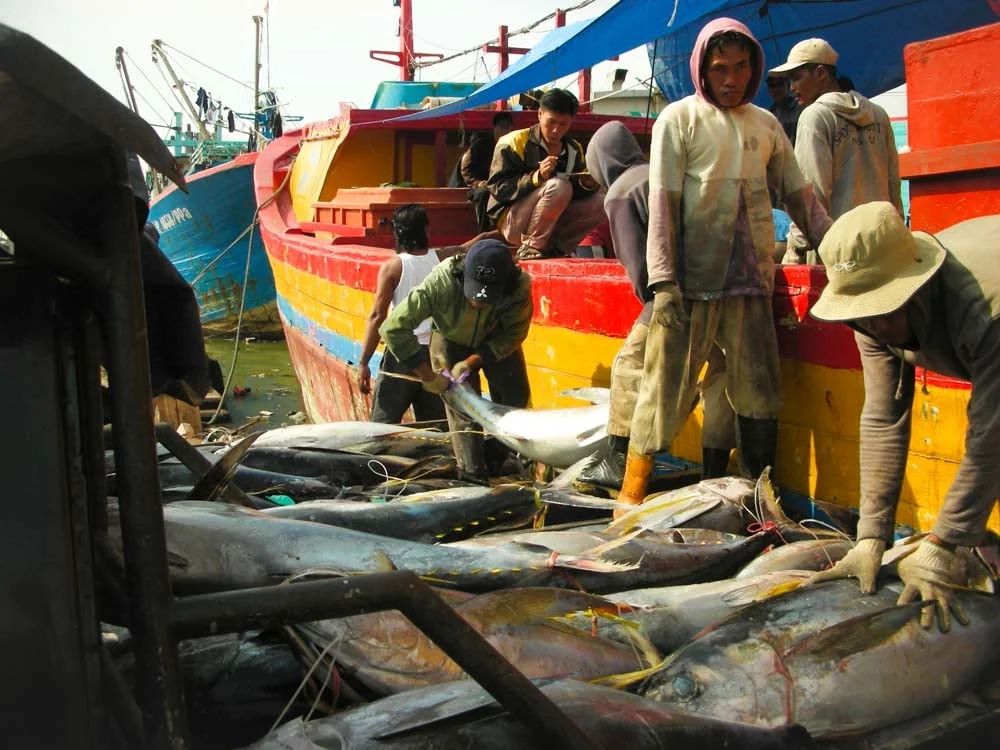
Where Urban Ports Sustain Global Seafood Supply and Coastal Economies
Fishing ports are more than landing points for vessels. In major coastal cities, they function as economic engines, food-security hubs, cultural anchors, and logistics nodes linking oceans to global markets. From artisanal fleets to industrial trawlers, these ports support millions of livelihoods and shape regional maritime identities.
This article highlights twelve of the world’s most important city ports for fishing and fisheries, selected for their catch volume, infrastructure, global trade relevance, processing capacity, and long-term influence on marine food systems.
1. Tokyo (Toyosu), Japan – The World’s Most Influential Fish Market Hub
Tokyo’s Toyosu Market, successor to the historic Tsukiji market, remains the nerve center of global seafood trade. Although Japan’s fishing fleet operates nationwide, Tokyo dominates high-value distribution, pricing, and quality standards. Tuna auctions here influence international markets, making the port a benchmark for premium fisheries logistics.
2. Busan, South Korea – Northeast Asia’s Fisheries Powerhouse
Busan combines industrial fishing, seafood processing, and export logistics at scale. It supports distant-water fleets operating across the Pacific and Indian Oceans and is a leading exporter of frozen and processed seafood. Its integration with container shipping makes Busan a strategic fisheries-trade hybrid port.
3. Vigo, Spain – Europe’s Largest Fishing Port
Vigo is widely recognized as Europe’s most important fishing port, hosting one of the world’s largest fish auctions by volume. It is also the headquarters of major global fishing companies and a hub for frozen seafood, processing industries, and fisheries research.
4. Qingdao, China – Industrial Fisheries and Aquaculture Gateway
Qingdao anchors China’s massive fisheries sector, blending capture fisheries with advanced aquaculture, processing, and export operations. The city port supports distant-water fleets and large cold-chain logistics systems, supplying seafood to Asia, Europe, and North America.
5. Reykjavik, Iceland – High-Value, Sustainable Fisheries Model
Despite its small population, Reykjavik is one of the most influential fishing ports globally due to Iceland’s science-based fisheries management. The port handles high-value cod, haddock, and pelagic species, with nearly full utilization of each catch through advanced processing.
6. Seattle, United States – North Pacific Fisheries Capital
Seattle serves as the primary home port for Alaska’s fishing fleet. It supports catcher-processors, freezer trawlers, and research vessels. The city combines fisheries operations with scientific institutions, making it a global reference for fisheries monitoring and management.
7. Bergen, Norway – Atlantic Pelagic and Aquaculture Hub
Bergen is central to Norway’s fishing and aquaculture industries. The port supports pelagic fisheries such as herring and mackerel, alongside salmon farming logistics. Its integration with cold storage and export routes positions Bergen as a key seafood gateway to Europe.
8. Chimbote, Peru – World Center of Small Pelagic Fisheries
Chimbote is one of the largest fishing ports by landed volume, driven primarily by anchoveta fisheries. These landings underpin Peru’s fishmeal and fish oil industries, which supply global aquaculture and livestock sectors, linking local fisheries to global food chains.
9. Cape Town, South Africa – Southern Ocean Fisheries Hub
Cape Town supports fishing fleets operating in the Benguela Current, one of the world’s most productive marine ecosystems. The port handles pelagic species, hake, and lobster, serving both domestic markets and international exports.
10. Kochi, India – Traditional and Industrial Fisheries Convergence
Kochi combines centuries-old artisanal fishing traditions with modern trawlers and processing plants. As one of India’s major fisheries ports, it plays a critical role in supplying domestic seafood markets and exporting shrimp, tuna, and cephalopods.
11. Valparaíso & Talcahuano, Chile – Pacific Fisheries and Processing Axis
Chile’s central ports support large-scale pelagic and demersal fisheries, closely linked with seafood processing and aquaculture exports. These ports connect South Pacific fisheries to Asian, European, and North American markets.
12. Casablanca, Morocco – Africa’s Leading Fishing Port City
Casablanca anchors Morocco’s fisheries sector, combining artisanal fleets with industrial fishing and processing. The port is vital for sardine, mackerel, and tuna landings, supplying regional food security and export markets across Europe and Africa.
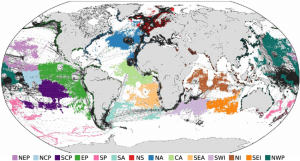
Global fishing network composed of ports and high seas fishing provinces. Provinces (represented with different colors) of strongly connected locations are identified with Infomap. Ports are depicted as circles with colors identified with the provinces they support. The 14 fishing provinces are North Eastern Pacific (NEP), Northern Central Pacific (NCP), Southern Central Pacific (SCP), Eastern Pacific (EP), Southern Pacific (SP), Southern Atlantic (SA), Northern Seas (NS), Northern Atlantic (NA), Central Atlantic (CA), South Eastern Atlantic (SEA), South Western Indian (SWI), Northern Indian (NI), South Eastern Indian (SEI), and North Western Pacific (NWP). Gray traces represent the trajectories of the vessels connecting ports and fishing locations.
Comparative Snapshot of Leading Fishing City Ports
| City Port | Region | Fisheries Strength | Global Role |
|---|---|---|---|
| Tokyo | East Asia | High-value seafood trade | Price benchmark |
| Busan | East Asia | Distant-water fleets | Export hub |
| Vigo | Europe | Frozen & processed fish | EU leader |
| Qingdao | East Asia | Industrial fishing | Global exporter |
| Reykjavik | North Atlantic | Sustainable cod fisheries | Management model |
| Seattle | North Pacific | Alaska fisheries | Science & logistics |
| Bergen | North Atlantic | Pelagic & salmon | Export gateway |
| Chimbote | South America | Anchoveta | Fishmeal supply |
| Cape Town | Southern Africa | Pelagic & demersal | Regional hub |
| Kochi | South Asia | Mixed fisheries | Domestic & export |
| Chilean Ports | South Pacific | Pelagic & aquaculture | Global trade |
| Casablanca | North Africa | Sardine fisheries | Regional food security |
Why City Fishing Ports Matter More Than Ever
These ports illustrate how fisheries are increasingly shaped by:
-
Urban logistics and cold-chain infrastructure
-
Sustainability regulations and stock science
-
Processing, value addition, and traceability
-
Global food security and nutrition demands
City fishing ports are no longer just landing sites—they are strategic nodes in global maritime food systems.
Conclusion
From Tokyo’s tuna auctions to Chimbote’s anchoveta landings, the world’s top fishing city ports reveal how oceans, cities, and global markets intersect. Their success depends not only on catch volumes but on governance, science, infrastructure, and community resilience. As pressure on marine resources intensifies, these ports will play a decisive role in shaping the future of sustainable fisheries.