
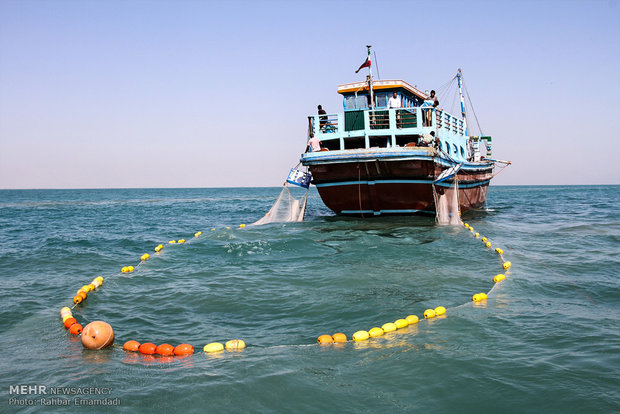
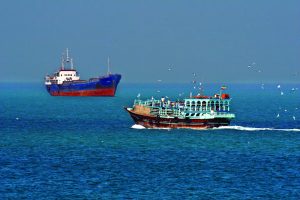
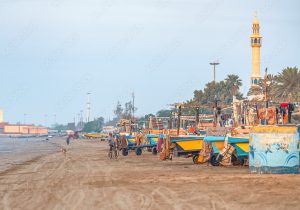
Stretching from the shallow, coral-rich Persian Gulf to the deeper, nutrient-flowing Oman Sea, the region’s waters have supported human life for millennia. Fishing is not merely an industry here—it is culture, family lineage, coastal identity, food security, and the economic foundation of countless villages and ports along Iran’s southern coast, Oman’s Makran belt, and the shores of Qatar, Bahrain, and the UAE.
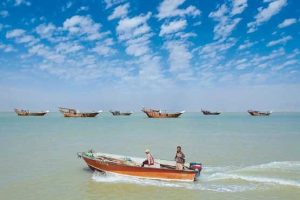
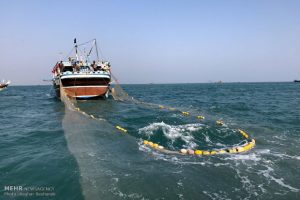
While global headlines often focus on the Strait of Hormuz, naval security, and oil tankers, a quieter story unfolds every sunrise: tens of thousands of artisanal and semi-industrial fishermen launching dhows, fiberglass vessels, and small cutter fleets to sustain markets, feed families, and keep alive a maritime tradition older than petroleum.
Coastal Dependence: A Social and Nutritional Lifeline
From Bandar Abbas, Qeshm, Bushehr, and Asaluyeh in Iran to Sur, Sohar, and Muscat in Oman, coastal diets rely heavily on fish protein. In many towns, seafood supplies between 40–70% of household protein intake—and during inflation spikes, it becomes the only affordable, reliable source.
Fishing sustains:
- daily family nutrition
- local fish markets and trading floors
- small cold-storage networks
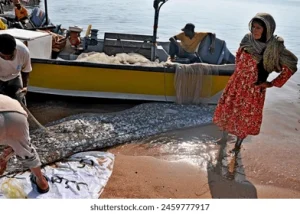
- women-run fish cleaning, drying, and processing units
- traditional fleet maintenance and net-mending economies
Communities in the Gulf do not see fishing as optional or seasonal—it is the permanent basis of food resilience in a region where agriculture is limited by heat, salinity, and desert conditions.
Employment and Indigenous Skill Networks
Fishing economies along the Persian Gulf and Oman Sea are deeply intergenerational. Skills are passed not through formal training schools, but through shoreline apprenticeship:
- dhow construction in Oman
- net weaving traditions in Hormozgan
- deep-water tuna runs coordinated in Musandam
- shrimp and cuttlefish seasonal calendars memorised by Iranian coastal tribes
- pearl-fishing legacy still preserved in Bahrain and Qatar coastal families
Tens of thousands of workers are tied to the fisheries chain without ever going to sea: ice suppliers, fibreglass repairers, rope merchants, engine mechanics, salt-drying cooperatives, auctioneers, port loaders, and fish-market vendors.
In these areas, the fishing sector is not a narrow blue-economy niche—it is the socio-economic backbone.
Key Species and Seasonal Reliance
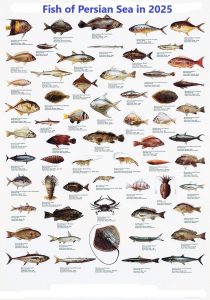
The Persian Gulf and Oman Sea host species that entire communities have historically depended on:
- Yellowfin tuna
- Kingfish (kanad)
- Shrimp
- Cuttlefish
- Sardines and anchovies
- Hamour (grouper)
- Mackerel and barracuda
Many villages rely on one seasonal catch to support an entire year of economic breathing room. Shrimp seasons in Bushehr or kingfish runs off Sur are not simply environmental cycles—they are the region’s informal fiscal calendar.
A bad season is not a commercial disappointment; it is an existential threat.
Climate Change, Warm Waters, and Stock Decline
A silent, pervasive crisis is unraveling the biological fabric of the Persian Gulf. The historic abundance of its waters is being systematically depleted by a convergence of pressures: relentless overfishing, the smothering footprint of coastal industrial expansion, the toxic salinity of desalination brine, and, most insidiously, the rising heat of the waters themselves. This warming is not a passive change but an active disruptor. It triggers widespread coral bleaching, destroying the complex nursery habitats essential for juvenile fish, while hotter summers fundamentally scramble the ancient migration and breeding patterns that fishermen have relied upon for generations.
The consequence is a stark decline in overall biomass, a thinning of the sea’s life. This ecological diminution translates directly into human hardship. As fish stocks fall, coastal communities are caught in a punishing cycle. Fishermen are forced to burn more fuel to travel farther offshore in search of dwindling schools, driving small boat owners into deeper debt. Local markets see a decline in the dazzling diversity of species, replaced by a monotonous and increasingly expensive selection. For poorer households, this scarcity manifests as protein insecurity, while for the region’s youth, it means the erosion of viable maritime jobs, severing a connection to their heritage.
The ultimate result is a brutal new arithmetic of survival. Climate pressure means fishermen must expend greater effort, assume higher costs, and bear more risk for smaller, unpredictable returns. This economic strain is more than a market shift; it actively weakens a cultural pillar that has for centuries stabilized and defined coastal life, leaving communities increas
Overfishing, coastal industrial expansion, desalination brine discharge, and warming waters have reduced biomass across much of the Persian Gulf. Coral bleaching disrupts nursery habitats, while hotter summers alter migration and breeding patterns.
As fish stocks fall, communities face:
- higher fuel usage to travel farther offshore
- increased debt burdens for small boat owners
- fewer species diversity in local markets
- protein insecurity in poorer households
- erosion of maritime jobs for youth
Climate pressure means fishermen must work harder for smaller, unpredictable returns—weakening a cultural pillar that once stabilized coastal life.
Pollution and Shipping Congestion Impact
The Persian Gulf is not only one of the world’s busiest tanker corridors but also a profoundly engineered and industrialized marine basin, where the relentless pursuit of energy export and coastal development creates a cumulative, suffocating pressure on its living systems. The sheer density of maritime traffic—superimposed on intense oil and gas production from the coastal fields of Saudi Arabia, Kuwait, Qatar, and the UAE, —generates a constant assault. Chronic pollution stems from heavy ballast discharge, toxic antifouling hull paints, operational spills, and petrochemical runoff from the very refineries and gas liquefaction plants that line the shores. This is compounded by the massive physical footprint of coastal megaprojects: the dredging and land reclamation for artificial islands, such as the UAE’s Palm Islands and The World, and the expansion of global hub ports like Jebel Ali, Hamad, and Sohar, which churn vast sediment plumes and permanently reshape the seabed.
These activities deliver a crippling blow to sensitive nearshore ecosystems, particularly spawning and nursery grounds. Fisheries operating near ports and industrial zones face a toxic triad: a persistent oily film that smothers plankton at the base of the food web; constant low-frequency engine and dredging noise that disorients marine life, pushing fish stocks deeper and farther from accessible fishing grounds; and the wholesale destruction of benthic habitats through dredging, devastating populations of shrimp, cuttlefish, and bottom-dwelling fish that depend on complex seabed ecology.
Furthermore, the region’s heavy reliance on desalination for fresh water—with massive plants drawing from and returning hyper-saline, chemically-treated brine to the Persian Gulf and Oman Sea—creates localized dead zones, altering salinity and temperature in ways that further stress marine life. The prosperity symbolized by glittering artificial coastlines and soaring gas production figures thus comes at a direct, often unaccounted cost: the systematic undermining of the Gulf’s biological productivity and the irreversible erosion of a way of life rooted in its natural abundance.
The Persian Gulf is among the world’s busiest tanker corridors. Heavy ballast discharge, antifouling toxins, port expansion, dredging, and petrochemical runoff create cumulative pressure on spawning grounds. Port-adjacent fisheries are especially vulnerable:
- oil film residues affecting plankton levels
- engine noise pushing fish deeper and farther
- dredging disrupting seabed ecology critical for shrimp and cuttlefish
For fishing communities, maritime industrialization often brings economic contradiction: refineries expand, ports modernize—but the very waters sustaining ancestral livelihoods degrade.

The Oman Sea: A Slightly More Resilient but Emerging Pressure Zone
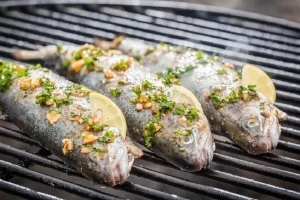
Unlike the shallow Persian Gulf, the Oman Sea is deeper, cooler, and nutrient-circulating—a natural replenishment corridor supporting tuna, sardines, and sharks.
But as Gulf stocks decline, fleets increasingly push into Oman Sea waters:
- Iran’s Hormozgan villages extend trips further south
- Emirati fleets use larger refrigerated holds
- Omani artisanal fishermen face competition from industrial purse-seiners
The Oman Sea is absorbing the ecological pressure displaced from the Persian Gulf—raising sustainability alarms for the entire northern Indian Ocean fish web.
Cultural Identity at Stake
Fishing is not merely a livelihood—it shapes music, boatbuilding lore, coastal architecture, festivals, dried-fish preparations, spice markets, and pearl heritage traditions.
If coastal fisheries collapse:
languages, chants, net-patterns, and communal rhythms collapse with them.
In Qeshm, Kish, Larak, and Oman’s Sur and Quriyat, the sea is the community’s biography. These are not economies that can simply “transition” to tourism or petrochemical labor without losing identity.
Future, Governance, and Survival
The long-term survival of the Persian Gulf’s marine ecosystems, and the coastal communities that depend on them, hinges on a fundamental recalibration—one that deliberately balances the urgent need for artisanal survival with the hard, non-negotiable ceilings of ecological science. This is not merely conservation; it is an exercise in intelligent and equitable governance. It requires moving from exploitation to stewardship through a suite of interlocking, enforceable measures.
Effective preservation begins with basic, scientifically-informed regulation: mandating specific net mesh sizes to allow juvenile fish to escape, and implementing strictly enforced seasonal closures that protect species during critical spawning and breeding periods. Habitat protection is equally vital, particularly the safeguarding of remaining mangrove forests in areas like Qeshm, Iraq’s Khor al-Zubair, and Qatar’s Khor al-Udeid, which serve as irreplaceable natural fish nurseries. On the practical economic front, upgrading the small-boat “ice fleet”—the infrastructure for rapid post-catch cooling—can dramatically reduce spoilage and waste, increasing both the value and quality of the catch for local fishermen.
Critically, however, no single nation’s policies can succeed in isolation. The interconnected marine biosphere of the Persian Gulf and the Gulf of Oman demands shared regional sustainability frameworks. The future must be built on cooperative quotas, collectively agreed upon and transparently monitored, replacing the current race of competitive depletion that leaves all parties poorer. The ultimate test of this new governance will be its ability to offer a compelling alternative to the region’s youth. For coastal communities to thrive, young people must be able to envision a viable, dignified, and prosperous future in sustainable fishing and marine stewardship—a future seen not as a relic of the past, but as a modern, tech-enabled profession—rather than viewing their only prospects in the monolithic industrial complexes of offshore rigs, refineries, and port logistics. The true measure of success will be a restored sea that sustains both its biology and its human culture for generations to come.
Conclusion
Across the Persian Gulf and the Oman Sea, fishing is not a marginal economic chapter—it is the foundation of food security, identity, and coastal resilience. Millions rely on daily catch flows that the world rarely sees behind oil headlines and tanker silhouettes.
The region may power the globe with petroleum, but it feeds itself with fish.
Safeguarding stocks, reducing pollution, and ensuring traditional access to marine space will determine whether these communities remain culturally intact or become displaced by industrial acceleration and ecological exhaustion.
If the Gulf is an energy artery for the world, its fisheries are the lifeblood of the people who live upon its shores.
References
- Iranian National Institute for Oceanography and Atmospheric Science (INIOAS), https://inio.ac.ir/en/node/91
-
FAO Regional Fisheries Report, Persian Gulf & Oman Sea
-
ROPME (Regional Organization for the Protection of the Marine Environment), Marine Habitat Assessments
-
UNEP West Asia, Marine Stock Decline and Coastal Livelihood Study
-
IUCN Red List, Persian Gulf and Northern Indian Ocean Species Vulnerability
-
UNESCO Coastal Cultural Heritage of Arabian Maritime Communities
-
WWF Marine Programme, Gulf Coral and Stock Stability Report
-
FAO Fishery Country Profiles: Iran, Oman, UAE, Qatar, Bahrain