
Source: Ecosat
Ports, harbours, marinas, tourism resorts, aquaculture facilities and coastal energy projects stand at the centre of global blue economy ambitions. Yet for decades, the conventional mooring infrastructure that secures vessels and buoys has also compromised the very marine environments it inhabits. Heavy concrete blocks, dragging steel chains and rigid mooring lines silently scour seabeds, crush coral formations and tear up seagrass meadows that act as critical carbon sinks and nurseries for marine life.
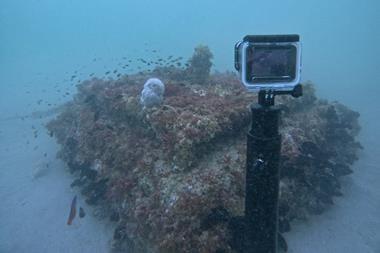
On World Oceans Day 2026, Ecocoast officially launched Ecoreef, a nature-based mooring block designed to replace conventional concrete mooring blocks with engineered reef structures that support young fish, encourage coral recruitment and enhance marine biodiversity. The launch event in Fujairah brought together researchers, government representatives and environmental specialists, and marked the culmination of more than 25 years of scientific pursuit by marine ecologist Dr Aaron Bartholomew. This article examines the scale of the challenge posed by conventional moorings, explores the design and scientific evidence behind Ecoreef, surveys the broader global movement towards biodiversity-friendly mooring infrastructure, and sets out the commercial and regulatory case for ports and coastal developers to adopt regenerative solutions.
The Silent Scourge Beneath Our Harbours
Marine infrastructure has historically prioritised operational performance, often with little consideration for ecological function. Nowhere is this trade‑off more visible than in standard mooring systems. A typical mooring consists of a dense concrete block or sinker resting on the seabed, connected by a heavy steel chain to a floating buoy or a moored vessel. As wind, tide and currents act upon the surface structure, the chain swings across the seabed, producing a distinctive “halo effect”. The mechanical process is simple and relentless: the chain drags in a circular path, continuously raking, gouging and abrading the benthic surface beneath.
The ecological damage accumulates quickly. Seagrass meadows, which absorb carbon up to 35 times faster than tropical rainforests and provide essential nursery habitat for commercially important fish, are ripped up and removed. Over time, repeated chain scour creates large circular bare patches around mooring blocks—areas from which seagrass cannot recover without active intervention. Coral reefs, often called the rainforests of the sea, suffer mechanical abrasion as chains grind against delicate calcareous structures, preventing settlement, growth and long‑term reef accretion. Even unvegetated sediments are not spared: constant sediment disturbance re‑suspends fine particles, clouds the water column and releases stored organic carbon—along with any buried contaminants—back into the marine environment.
The scale of the problem is substantial. In Sydney Harbour, more than 6,000 moorings have collectively scoured the seabed, damaging meadows of the endangered seagrass Posidonia australis. In the Channel Islands, studies have documented the direct link between conventional moorings and the progressive fragmentation of seagrass beds. Globally, a growing body of scientific literature identifies anchor and chain scour as a significant disturbance agent across five benthic habitats: unvegetated sediments, seagrass, rhodolith beds, coral reefs and rocky reefs. Researchers have warned that failure to recognise and manage anchor scour will ultimately risk the diversity of species in seabed environments and the ecosystem services they provide. Traditional moorings are failing our oceans, and the need for a robust, non‑invasive alternative has become critical.
Rethinking the Mooring Block – The Birth of Ecoreef
Against this backdrop, Ecoreef represents a deliberate departure from the status quo. The concept originated in 2023 as part of Ecocoast’s Drive Change philosophy during the UAE’s “Year of Sustainability”. From the outset, the company collaborated with Dr Aaron Bartholomew, a marine ecologist and artificial reef expert who had been exploring concepts for more effective reef structures since his PhD research in 2001. For Bartholomew, the essential flaw in conventional artificial reefs was clear: many of them were designed to attract adult fish, creating an illusion of productivity without genuinely increasing fish populations. “What you’re doing is attracting adult fish that already exist,” he explains. “You’re not producing new fish, you’re just rearranging existing fish”.
Bartholomew instead focused on juvenile survivorship. Natural nursery habitats—mangroves, seagrass beds and coral reefs—provide refuge for young fish during the most vulnerable stage of their lives. Ecoreef was conceived as an artificial version of that nursery environment. The structure incorporates engineered complex habitat surfaces, including small holes, overhangs and crevices that allow juvenile fish to shelter from predators while they grow. Where conventional concrete blocks present smooth, bare surfaces that offer little ecological value, Ecoreef deliberately mimics the structural complexity of a natural reef.
The development process was rigorous. Ecoreef underwent three years of dedicated research, engineering and iterative development, with the Fujairah Research Centre (FRC) collaborating on post‑design research. A team of interns from the American University of Sharjah and the University of Oxford supported post‑deployment monitoring. Trial deployments in the UAE commenced in August 2025, and the results have exceeded expectations. During initial underwater monitoring, researchers observed juvenile snappers and groupers (hammour) in large numbers around deployed Ecoreefs, while control blocks of conventional concrete showed markedly lower fish abundance. As Bartholomew recalls: “We just saw clouds and clouds of little juvenile fish surrounding these reefs compared with control treatments that were just concrete blocks. The difference was stark”.
Beyond fish refuge, the design encourages coral settlement. The engineered surfaces provide attachment points for coral larvae, enabling the gradual development of functioning coral ecosystems around operational infrastructure. Trials have also documented benefits for a wider range of biodiversity, including cryptic species and filter feeders that improve water clarity. In this way, Ecoreef moves beyond passive seabed infrastructure to become a living, growing marine asset.
No Seabed Contact – The Ecomoor Connection
A mooring block alone, however, is only half the solution. Even the most ecologically designed block can be undermined by a chain that continues to drag and scour. Ecoreef was therefore designed from the outset to be paired with Ecomoor, Ecocoast’s neutrally buoyant mooring line technology.
Conventional steel mooring chains are heavy and sink. They lie on the seabed and, as the vessel or buoy moves, they drag across the bottom, causing the halo effect described earlier. Ecomoor eliminates this problem entirely. Through a proprietary design featuring neutral buoyancy, the Ecomoor line is engineered to float in the water column between the subsurface buoy and the seabed anchor. It never touches the marine floor. This design eliminates seabed scour, prevents abrasion of coral and seagrass and removes physical disturbance as a source of habitat degradation.
Ecomoor also offers practical engineering advantages. It is lighter than traditional steel chains, simplifying transportation, installation and maintenance. The absence of chain links reduces abrasion and wear, lowering long‑term maintenance costs. With a lifespan of up to 15 years, it provides a durable alternative to conventional chains, which corrode and require frequent replacement. Ecoreef and Ecomoor together form an end‑to‑end Advanced Mooring System (AMS) that functions as both an environmentally friendly mooring (EFM) and a habitat‑creation tool. As the company describes it: “No seabed contact. No drag. No damage. Just infrastructure that actively gives back to the ocean”.
The Science of Juvenile Survivorship
Central to Ecoreef’s effectiveness is a subtle but important shift in artificial reef design philosophy. Many conventional artificial reefs are evaluated by the number and size of adult fish they attract. This metric, however, can be misleading. Adult fish are mobile; attracting them to a new structure does not necessarily increase the overall population. It merely redistributes existing individuals.
Ecoreef addresses a different question: how can infrastructure help produce new fish? By providing refuge for juvenile fish, the structure increases survivorship rates during the early development phase, when mortality is naturally highest. This focus on recruitment and early life history is supported by ecological theory and, increasingly, by field evidence. In Fujairah, the observed “clouds” of juvenile snappers and groupers suggest that the structures are functioning as effective nurseries, with potential to support local commercial fisheries. As Bartholomew notes: “I’ve been thinking about these sorts of issues since my PhD in 2001 … I told them from the start, this will work. You will see clouds of juvenile fish around these reefs. When we checked those reefs, there were even more fish than I was expecting”.
At the same time, the recruitment of filter feeders contributes to local water filtration, while coral settlement adds structural complexity over time. The result is a multi‑trophic effect: the physical structure supports primary colonisers, which in turn support grazers and predators, gradually building a complete marine ecosystem around an operational mooring.
From Concept to First Major Installation
The practical application of Ecoreef has already moved beyond research trials. In a landmark project, Ecocoast was commissioned by a major Saudi Red Sea giga‑project to deliver an end‑to‑end maritime solution for safe navigation combined with eco‑friendly mooring. The system includes navigation buoys, marine lanterns, Ecomoor environmentally friendly mooring lines and Ecoreef eco‑engineered mooring blocks. It marks the first time a safe navigation system has combined Ecomoor and Ecoreef in a single installation.
The choice of location is significant. The Red Sea contains some of the most resilient and biodiverse coral reefs on the planet, with scientifically recognised thermal tolerance that may offer a global refuge against climate change. Yet this sensitivity also makes the Red Sea highly vulnerable to conventional mooring impacts: heavy concrete blocks and dragging chains create permanent “mooring scars” that can destroy centuries of coral growth in a single season. For giga‑projects operating under Saudi Vision 2030, where sustainability is a core pillar, traditional mooring methods are no longer acceptable. The installation of Ecoreef and Ecomoor demonstrates that mooring infrastructure can be designed to protect ecosystems rather than degrade them, establishing a benchmark for future coastal developments in environmentally sensitive regions.
A Global Movement Towards Eco‑Moorings
Ecoreef is not an isolated innovation. It sits within a broader, accelerating global shift towards environmentally friendly mooring systems (EFMs) and advanced mooring systems (AMS). Around the world, port authorities, research institutions and conservation organisations are actively replacing or retrofitting conventional moorings with low‑impact alternatives.
In Cawsand Bay, United Kingdom, a trial of advanced mooring systems using screwpiles and floating risers resulted in a dramatic 212 percent increase in seagrass density in previously damaged areas, with natural regeneration occurring without any active replanting. In Jersey, Channel Islands, the Ports of Jersey has deployed eco‑moorings manufactured by Temano to protect the island’s largest seagrass meadow, providing an alternative to destructive anchoring and chain scour. In Australia, Project Restore at the Sydney Institute of Marine Science has installed 10 environmentally friendly moorings at Balmoral Beach, using low‑impact screw piling and neutral buoyancy to protect endangered Posidonia seagrass, complemented by an active seagrass restoration planting program. In the Mediterranean, the Altea Town Council and Redeia have joined forces to double the area covered by environmentally friendly anchoring systems in Altea Bay, installing 17 new mooring points designed to prevent damage to Posidonia oceanica meadows—an endemic species in decline.
Collectively, these projects send a clear signal: the maritime industry is moving away from archaic, damaging mooring designs. The transition is not speculative; it is already underway, supported by a growing literature review of environmentally friendly moorings which demonstrates that EFMs perform better on both engineering and environmental fronts compared to traditional options.
The Business Case for Biodiversity‑Focused Moorings
For port operators, marina owners and coastal developers, the decision to adopt eco‑engineered moorings is not solely an environmental one—it is increasingly a commercial and regulatory imperative.
Regulatory alignment is a key driver. Environmental regulations are tightening globally, particularly in areas designated as Marine Protected Areas, Special Areas of Conservation or zones with sensitive habitats such as seagrass and coral. Projects that incorporate nature‑positive infrastructure often benefit from faster permitting processes, reduced mitigation costs and lower environmental liability. In jurisdictions where ecological damage from conventional mooring methods can incur significant penalties or require costly remediation, the upfront investment in an EFM such as Ecoreef can be quickly offset by avoided risks and compliance costs.
Blue economy branding offers another powerful incentive. For tourism resorts, marinas and aquaculture facilities, a clean, biodiverse marine environment is a tangible asset. Mooring infrastructure that actively supports marine life—visible through clearer water, fish abundance and coral recruitment—provides a compelling marketing story for sustainability‑conscious customers. Developers of coastal real estate and high‑value tourism destinations can differentiate their offerings by demonstrating genuine ecological enhancement rather than mere impact mitigation.
Operational savings also favour eco‑moorings. Ecomoor’s neutrally buoyant design reduces maintenance requirements: there are no heavy chain links to corrode, no abrasive dragging to cause wear, and no need for frequent seabed inspections to assess scour damage. Installation is simpler and faster due to the lighter weight of the mooring line. These factors translate directly into lower long‑term operational costs, as well as reduced downtime for maintenance activities.
Resilience to climate change adds a further dimension. As sea‑level rise, storm intensification and ocean warming put pressure on coastal infrastructure, nature‑based solutions that incorporate ecological function may prove more durable and adaptive than purely grey infrastructure. By supporting coral growth and sediment stabilisation, eco‑engineered moorings can contribute to natural coastal defence, complementing engineered protection measures.
From Grey Infrastructure to Green Assets
The broader significance of Ecoreef and similar technologies lies in their ability to reframe the relationship between marine infrastructure and the environment. For generations, ports, breakwaters, piers and moorings have been designed as inert grey structures, valued solely for their load‑bearing capacity and durability. Ecoreef represents a different model: infrastructure that is itself an ecological asset, delivering measurable biodiversity benefits while performing its primary engineering function.
Dr Philip Sanders, aquatic ecologist and sustainability strategist at Ecocoast, captures this shift succinctly: “Marine infrastructure has traditionally been designed with little consideration for ecological function. Ecoreef represents a different approach, actively contributing to healthier marine ecosystems while still delivering the operational performance required by ports, marinas and coastal projects”. Dr Bartholomew adds: “With the potential to support fish, corals and wider marine biodiversity, Ecoreef demonstrates how mooring blocks can be designed to deliver both operational performance and measurable ecological value”.
This philosophy of “greening grey infrastructure” is gaining traction across the maritime sector. From the POLA CoolPort project in Rotterdam to the hybrid reefs off Miami Beach, from the NaturPorts initiative in Vigo to the first integrated installation of Ecomoor and Ecoreef in a Saudi Red Sea giga‑project, a common principle is emerging: the ports and coastlines of the future will be built on eco‑engineering, where every new structure is designed to be a net‑positive contributor to the marine environment.
A Pathway for Ports and Coastal Developers
For harbour masters, coastal developers and port authorities considering the transition to biodiversity‑focused mooring infrastructure, the pathway is increasingly well‑defined.
Assessment is the first step. Mapping existing mooring locations against sensitive habitats—seagrass meadows, coral reefs, rhodolith beds—identifies priority areas for intervention. Underwater surveys and habitat mapping can quantify existing damage and establish baselines against which future improvement can be measured.
Retrofit and replacement can then be prioritised. In many cases, conventional mooring blocks can be replaced with Ecoreef units during scheduled maintenance cycles, spreading the capital cost over time. Pairing Ecoreef with Ecomoor lines ensures that the entire mooring system—seabed anchor and connecting line—operates without causing scour or abrasion.
Monitoring confirms outcomes. Post‑deployment monitoring using diver surveys, underwater cameras or remote sensing provides data on fish abundance, coral recruitment and water clarity. This evidence not only verifies ecological benefits but also supports regulatory reporting, sustainability certifications and marketing claims.
Scaling follows naturally as experience grows. First installations in pilot areas can be expanded to entire mooring fields, and the lessons learned can be shared across port networks. For major coastal developments, integrating Ecoreef into the initial design phase is more cost‑effective than retrofitting later and allows the full ecological potential of the infrastructure to be realised from day one.
Looking Ahead – The Next Decade of Marine Infrastructure
The launch of Ecoreef on World Oceans Day 2026 arrives at a pivotal moment. The United Nations Decade of Ocean Science for Sustainable Development is underway, and global targets for biodiversity protection—including the 30×30 goal to protect 30 percent of the world’s oceans by 2030—demand practical, scalable solutions for reconciling human use of the sea with ecosystem health.
Mooring infrastructure may seem a small component of the wider maritime economy, but its cumulative impact is substantial. Thousands of moorings exist in ports, harbours and coastal waters worldwide, each one representing an opportunity—either to continue causing chronic seabed disturbance, or to become a site of ecological regeneration. Ecoreef demonstrates that the latter is not only possible but operationally and economically viable.
As manufacturing capacity expands (Ecoreef production is split between the UK and the UAE), and as more ports and developers adopt the technology, the cost of eco‑engineered moorings will continue to fall. At the same time, the regulatory pressure to phase out conventional moorings in sensitive habitats will only intensify. Early adopters stand to gain both competitive advantage and reputational benefit, while contributing to the recovery of marine ecosystems that underpin coastal livelihoods, food security and climate resilience.
Conclusion: An Infrastructure That Heals
For too long, the maritime industry has accepted a false choice: that operational performance must come at the expense of environmental health. Ecoreef and the broader family of biodiversity‑focused mooring infrastructure prove otherwise. By replacing a passive, damaging concrete block with an engineered reef that shelters juvenile fish, encourages coral settlement and supports a wider community of marine life, Ecoreef transforms a mooring from a source of impact into a tool for marine regeneration.
The evidence from Fujairah, the Red Sea and eco‑mooring projects around the world is clear: nature‑based infrastructure works. Juvenile fish use the structures in large numbers. Filter feeders colonise the surfaces. Corals settle and grow. Seagrass meadows, protected from chain scour, have the opportunity to recover. And throughout this process, the mooring continues to perform its primary function: securing vessels, buoys and floating installations safely and reliably.
For ports, marinas, coastal developers and maritime operators, the path forward is not uncertain. The technologies are available. The scientific principles are understood. The commercial and regulatory case is strong. The only question that remains is whether we will choose infrastructure that scars the ocean, or infrastructure that heals it. Ecoreef shows that with intentional, science‑based design, we can have both: thriving marine ecosystems and successful maritime operations, working together along the world’s coastlines.
References and Further Reading
-
Ecocoast, “Ecoreef Launch Dive – World Oceans Day, June 8 | Ecocoast,” May 2026.
-
Ecocoast, “A First for Saudi Arabia’s Red Sea Giga Projects: Safe Navigation Meets Reef Creation,” February 2026.
-
Ecocoast, “Ecomoor, an Advanced Mooring System (AMS) and Environmentally Friendly Mooring (EFM),” November 2025.
-
NSW Department of Primary Industries, “Block and chain moorings in sensitive habitats.”
-
Frontiers in Marine Science, “Impacts of Anchor Scour, Vessel Moorings and Associated Infrastructure on Marine Habitats.”
-
Martini, A., “Literature Review of Environmentally Friendly Moorings – Environmental and Engineering Performance,” 2023.