
How Local Action Restored Marine Ecosystems Around the World
Coastal pollution is often framed as a global problem beyond the reach of local communities. Yet across the world, coastal towns, fishing villages, and island states have demonstrated that community-driven action can reverse marine degradation, restore biodiversity, and protect livelihoods. From plastic interception to coral recovery and wastewater reform, these initiatives prove that lasting coastal cleanliness depends on governance, education, and sustained stewardship.

1. Kamikatsu, Japan – Eliminating Marine Litter at the Source
Kamikatsu’s zero-waste system requires residents to sort waste into dozens of categories, dramatically reducing plastic leakage into nearby rivers and coastal waters. By addressing pollution upstream, the community prevented marine debris before it reached the sea, resulting in visibly cleaner coastlines and improved nearshore ecosystems.
The remote town of Kamikatsu in Shikoku, Japan, launched its pioneering “Zero Waste Declaration” in 2003, establishing one of the world’s most rigorous municipal waste-sorting systems. Faced with the closure of its incinerator and the high environmental cost of open burning, the community committed to sorting its waste into 45 distinct categories (a number that has since expanded). This system ensures that recyclables like PET bottles, aluminum cans, and specific plastic types are meticulously separated, while organic waste is composted locally. The direct impact on marine litter is profound: by intercepting and responsibly managing nearly 80% of all town waste (with a goal of 100% by 2030), Kamikatsu prevents plastics and other non-biodegradables from entering the nearby Katsuura River system, which flows into the Pacific Ocean. This upstream intervention has led to visibly cleaner local waterways and a documented reduction in coastal debris. The town’s Zero Waste Center, a community hub built from upcycled materials, serves as both a sorting facility and an educational institution, attracting international visitors and demonstrating that intensive source separation is a viable, community-driven strategy to protect marine ecosystems from land-based pollution.
2. San Pedro La Laguna, Guatemala – Plastic Ban with Downstream Impact
This lakeside community banned single-use plastics and polystyrene, stopping waste from entering river systems that eventually reach the Pacific Ocean. Community enforcement and education transformed waste behavior and demonstrated how inland action can deliver coastal benefits.
Situated on the shores of Lake Atitlán, a vital water body and UNESCO reserve, the Indigenous Tz’utujil Maya community of San Pedro La Laguna took radical action in 2016 to combat a visible pollution crisis. The municipality enacted a comprehensive ban on the distribution and use of single-use plastics, including bags, straws, and polystyrene containers, enforced through local ordinances and supported by widespread community education. Vendors transitioned to natural alternatives like woven palm-leaf baskets and reusable cloth bags. The ban’s success, with over 90% compliance according to municipal reports, has had a measurable downstream impact. Lake Atitlán, which feeds into rivers reaching the Pacific, saw a dramatic decrease in shoreline plastic waste within two years. This inland action directly prevented thousands of kilograms of plastic from entering the oceanic watershed annually. The case is a powerful model of how traditional ecological knowledge, combined with strong local governance, can halt plastic pollution at its terrestrial source, protecting both freshwater and marine environments.
3. Tuscan Coastal Municipalities, Italy – Fishermen as Environmental Stewards
Along the Tuscan coast, local governments partnered with fishermen to collect marine litter during fishing operations. Waste brought ashore was properly sorted and recycled, reducing seabed debris while fostering shared responsibility between maritime workers and municipalities.
Initiated in the mid-2010s, a collaborative project along Italy’s Tuscan coast transformed local fishermen from harvesters into custodians of the sea. Municipalities such as Viareggio and Livorno formalized agreements with fishing cooperatives under the “Fishing for Litter” framework. Participating vessels were equipped with special bags to collect marine litter—primarily abandoned fishing gear (ghost nets), plastics, and other debris—caught in their nets during normal operations. The waste was brought back to port, where the municipality assumed responsibility for its sorting, recycling, and disposal, relieving the fishermen of the cost. In one year alone, the Tuscan fleet reported retrieving over 20 tons of marine litter. The program not only cleans the seabed of the Tyrrhenian Sea but also provides critical data on the types and sources of marine debris. It fosters a powerful sense of shared stewardship, turning the fishing community, which is most directly impacted by marine pollution, into active environmental agents, strengthening the link between maritime livelihoods and coastal ecosystem health.
4. Indus Delta Communities, Pakistan – Mangroves as Natural Filters
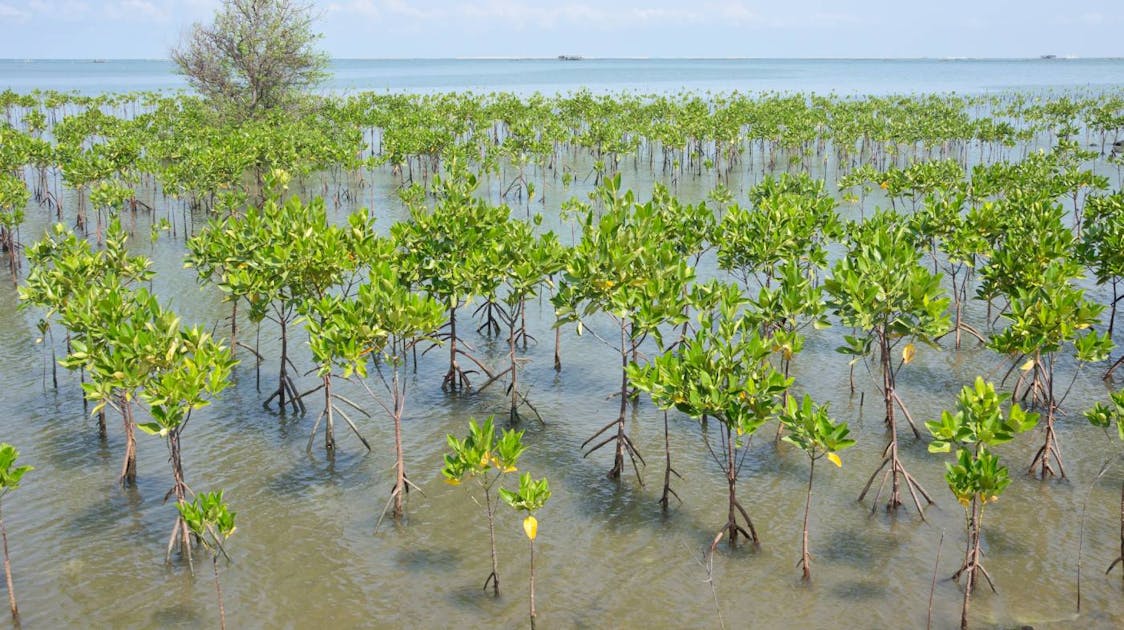
Fishing villages led one of the world’s largest mangrove restoration programs. Mangrove forests trapped plastic waste, filtered pollutants, stabilized coastlines, and revived fish nurseries—showing how ecosystem restoration can simultaneously clean seas and support livelihoods.
In the sprawling Indus River Delta, coastal communities faced a dual threat: vanishing mangrove forests and severe plastic pollution carried by the river from inland urban centers. Since the 1990s, led by the Sindh Forest Department and local NGOs like WWF-Pakistan, fishing villages have engaged in one of the planet’s largest mangrove restoration efforts, planting over 100,000 hectares of Avicennia marina and other native species. These reforested mangroves act as powerful biological filters: their dense root systems physically trap sediment-bound plastics and pollutants, preventing them from flowing into the Arabian Sea. This has led to observable reductions in beach litter in adjacent areas. Furthermore, the restored forests have revitalized critical nursery habitats for shrimp and fish, boosting local catches by an estimated 30% in some zones, while also stabilizing eroding coastlines against storm surges. This case exemplifies a nature-based solution where combating marine plastic pollution is intrinsically linked to ecosystem restoration, climate resilience, and direct economic benefit for vulnerable coastal populations.
5. Palau – Community Enforcement of Marine Protection
Palau’s coastal communities actively enforce strict marine protection laws, including pollution control and sustainable tourism rules. Local guardianship has preserved coral reefs, maintained water clarity, and positioned Palau as a global leader in community-led ocean governance.
The Pacific island nation of Palau has long been a global leader in marine conservation, formalizing its commitment through the Palau National Marine Sanctuary (PNMS) established in 2015, which protects 80% of its Exclusive Economic Zone. The success of this large-scale policy hinges on active, community-level enforcement. In coastal states like Koror and Peleliu, traditional leaders and community rangers work alongside the national government to monitor near-shore waters, enforce bans on illegal dumping and destructive fishing, and ensure compliance with strict, eco-conscious tourism regulations. This localized guardianship, rooted in the traditional concept of “bul” (a moratorium on taking resources), has maintained the exceptional water clarity and health of iconic sites like the Rock Islands. The result is a marine tourism industry that generates over 50% of the nation’s GDP, directly linking community vigilance to national prosperity. Palau’s model demonstrates that top-down marine policy is most effective when grounded in bottom-up, community-led surveillance and stewardship.
6. United Kingdom Coastal Towns – Citizen Pressure for Cleaner Waters
Grassroots coastal communities, supported by NGOs, mobilized public pressure for wastewater infrastructure upgrades and transparency in sewage discharges. Citizen science, legal advocacy, and cleanup campaigns led to measurable improvements in bathing water quality.
Facing chronic pollution from combined sewer overflows (CSOs), grassroots movements in UK coastal towns mobilized to hold water companies and regulators accountable. Organizations like Surfers Against Sewage (SAS), founded in Cornwall, spearheaded this effort through a multi-pronged campaign. They mobilized citizen scientists to regularly test water quality at hundreds of beaches, used legal advocacy to demand transparency on the frequency and duration of sewage discharges (leading to real-time public alerts), and organized mass beach clean-ups that visually highlighted the problem. This sustained public pressure was instrumental in pushing for major infrastructure investments. For example, in 2022, the UK government mandated a £56 billion capital investment by water companies to reduce storm overflow discharges by 2050. Measurable outcomes are already evident, with the number of beaches in England and Wales achieving the highest “Excellent” bathing water quality status under the EU Bathing Water Directive rising significantly over the past decade, a direct result of community-led advocacy for systemic change.
7. Bali, Indonesia – River Barriers and Coastal Cleanliness
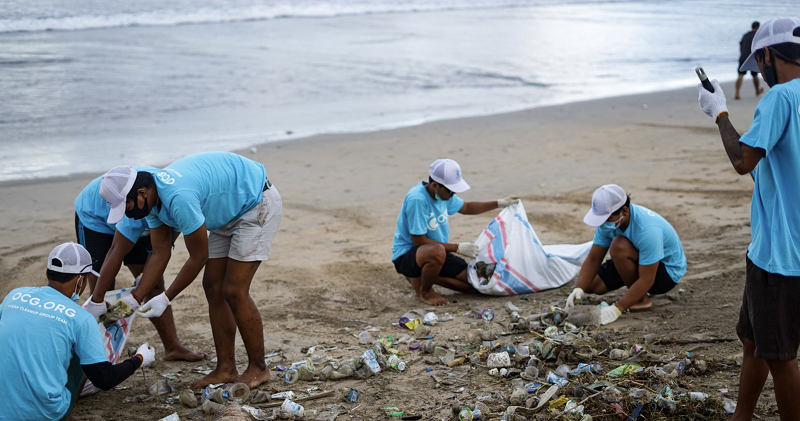
Coastal villages installed waste interception systems in rivers, preventing plastic from reaching beaches and coral reefs. Combined with recycling centers and education programs, these initiatives significantly reduced marine litter in one of the world’s most tourism-dependent coastal regions.
In response to severe plastic pollution threatening its tourism-dependent coasts and coral reefs, Balinese communities, NGOs, and the provincial government implemented an integrated interception strategy. Key to this effort are river boom and trap systems installed in major waterways like the Sungai River in Denpasar. Managed by local crews, these barriers have captured over 100 tons of plastic waste per year before it reaches the ocean. This infrastructure is complemented by community-run Material Recovery Facilities (MRFs) and education programs that promote waste separation at the village (desa) level. Pioneering projects like Mekar Sari’s “Eco-Bali” waste bank network have increased household recycling rates in participating communities. The combined effect has been a documented reduction in marine litter on popular beaches like Kuta and Legian, showcasing a practical model for other high-tourism islands. It underscores that in fast-developing regions, stopping plastic in rivers is often more feasible than entirely preventing its disposal, providing a critical last line of defense for coastal and marine ecosystems.
8. Kaikōura, New Zealand – Rebuilding Clean After Disaster
Following a major earthquake, Kaikōura rebuilt infrastructure with environmental protection at its core. Modern wastewater treatment, debris removal, and habitat restoration resulted in rapid marine ecosystem recovery and cleaner coastal waters.
The 7.8-magnitude earthquake in November 2016 devastated the coastal town of Kaikōura, rupturing its wastewater pipeline and scattering debris into the ecologically rich marine canyon. The recovery process became a benchmark for sustainable rebuilding. A new, state-of-the-art wastewater treatment plant with advanced UV filtration was commissioned, ensuring all community effluent is treated to a high standard before release. A massive coastal debris removal operation, involving the New Zealand Defence Force and volunteers, cleared thousands of tons of earthquake-generated waste from the shoreline and seabed. Simultaneously, habitat restoration projects for the endangered Hutton’s shearwater bird were accelerated. The results were striking: within three years, independent marine monitoring showed a rapid recovery of subtidal ecosystems and a return to pre-quake water quality levels. This demonstrated that integrating environmental protection as a core priority in post-disaster reconstruction can not only restore but improve coastal water integrity, safeguarding both marine life and the whale-watching tourism central to the local economy.
9. Apo Island, Philippines – One of the First Community Marine Sanctuaries
Local residents established a no-take marine reserve, controlled pollution sources, and protected shorelines. Coral reefs recovered, fish stocks rebounded, and coastal waters became cleaner—demonstrating the long-term benefits of community-managed marine protection.
Beginning in the early 1980s, the small community of Apo Island, with guidance from Silliman University marine scientists, established a no-take marine sanctuary covering about 10% of its surrounding reef. This was one of the Philippines’ first community-managed marine protected areas (MPAs). Local ordinances were passed to ban fishing in the sanctuary, limit destructive fishing methods elsewhere, and control pollution by managing solid waste and limiting runoff. The residents formed a volunteer guard association to patrol the waters. Decades of data show a remarkable ecological rebound: fish biomass inside the reserve increased by over 300%, and spillover effects enhanced catches in adjacent fishing grounds. Coral cover remained high, and water clarity was preserved due to reduced sedimentation and pollution. This long-term success, sustained through community ownership and direct economic benefit from ecotourism, has inspired hundreds of similar community MPAs across the country, proving that local governance is fundamental to achieving lasting coastal water cleanliness and biodiversity health.
10. Cap Vert Peninsula Communities, Senegal – Waste Cooperatives
Urban coastal communities organized waste cooperatives focused on beach cleaning and plastic recovery. These initiatives reduced marine debris while creating employment, improving sanitation, and strengthening social cohesion along heavily populated shorelines.
In the densely populated urban coastal neighborhoods of Dakar on the Cap Vert peninsula, informal waste pickers were organized into formal waste collection and recycling cooperatives in the 2010s. Initiatives like “Bokk Diom” (United for a Clean Environment) and “Set Setal” (Be Clean, Make Clean) empowered these groups, often composed of women and youth, to lead regular beach clean-ups and door-to-door collection campaigns. The cooperatives established sorting centers where collected plastics are baled and sold to recyclers, creating a stable income stream. This model has diverted hundreds of tons of plastic annually from the Atlantic Ocean and urban waterways while providing formal employment. It has also improved public health by reducing open dumping and burning. The social cohesion built through these cooperatives strengthens community resilience, showing that in urban marine pollution hotspots, linking waste management to livelihood creation is an effective strategy for cleaner coastlines.
11. Chilean Patagonia Fjord Communities – Removing Ghost Gear
Remote fishing communities collaborated to remove abandoned fishing gear and marine plastics from fjords. Recycling recovered materials reduced ghost fishing, protected marine mammals, and restored pristine coastal environments.
The remote, intricate fjords of Chilean Patagonia are both ecologically pristine and increasingly vulnerable to accumulating marine debris, particularly Abandoned, Lost, or otherwise Discarded Fishing Gear (ALDFG) from the region’s aquaculture and fisheries. Since 2018, communities like Puerto Gala and Puerto Edén have partnered with NGOs such as Omora Foundation and the Cape Horn International Center (CHIC) on systematic cleanup expeditions. Using small boats and manual labor, locals—many of them former fishermen—locate and retrieve tons of synthetic ropes, nets, and polystyrene floats from isolated coves. One expedition in the Falkner (or Kelly) Fjord alone removed over 15 tons of waste. Recovered materials are processed for recycling where possible. This direct action mitigates “ghost fishing,” protects endangered species like the Chilean dolphin, and restores the aesthetic and ecological integrity of a globally significant wilderness coastline, highlighting the critical role of local knowledge and effort in addressing pollution in inaccessible regions.
12. Okinawa, Japan – Reef-Safe Coastal Management
Okinawan communities tackled sediment runoff, untreated wastewater, and tourism impacts. Reef-safe policies, improved sewage systems, and public education led to clearer waters and healthier coral reefs.
The subtropical islands of Okinawa, home to Japan’s most biodiverse coral reefs, faced degradation from terrestrial sources: sediment runoff from development, nutrient loading from outdated sewage systems, and physical damage from intensive tourism. In response, a coalition of municipal governments, research institutes (like the Okinawa Institute of Science and Technology), and community groups implemented a “ridge-to-reef” management approach. This included: mandating sediment control ponds on construction sites; subsidizing the upgrade of household septic systems to advanced Johkasou treatment units; and establishing marine recreation guidelines for tourists and dive operators (e.g., no-touch policies, banning certain sunscreens). In Onna Village, a key tourism area, these combined measures contributed to a measurable stabilization and recovery of coral cover on several monitored reefs over the past decade. The case of Okinawa illustrates that protecting coastal water clarity and reef health requires integrated land-sea planning and community-wide adoption of reef-safe practices across multiple sectors.

Comparative Overview: What Worked and Why
| Coastal Community | Main Problem Addressed | Key Action Taken | Measurable Outcome |
|---|---|---|---|
| Kamikatsu, Japan | Plastic pollution | Zero-waste system | Reduced marine litter |
| San Pedro La Laguna | Single-use plastics | Plastic ban | Cleaner downstream coasts |
| Tuscany Coast, Italy | Seabed debris | Fishermen-led litter recovery | Improved water quality |
| Indus Delta, Pakistan | Coastal pollution & erosion | Mangrove restoration | Cleaner water, higher fish stocks |
| Palau | Reef degradation | Community enforcement | Coral recovery |
| UK Coastal Towns | Sewage pollution | Citizen advocacy | Safer bathing waters |
| Bali, Indonesia | Plastic inflow | River barriers | Cleaner beaches |
| Kaikōura, NZ | Post-disaster pollution | Infrastructure upgrade | Ecosystem recovery |
| Apo Island, Philippines | Overuse & pollution | Marine sanctuary | Reef and fish recovery |
| Cap Vert, Senegal | Urban waste | Waste cooperatives | Reduced beach litter |
| Patagonia Fjords, Chile | Ghost fishing gear | Gear recovery | Lower marine mortality |
| Okinawa, Japan | Runoff & tourism impact | Reef-safe management | Improved coral health |
Why These Coastal Cleanups Succeeded
Across regions and cultures, successful coastal cleanup initiatives share common foundations:
-
Local ownership and leadership
-
Integration of environmental and economic benefits
-
Long-term commitment rather than short campaigns
-
Alignment between traditional knowledge and modern science
-
Clear links between clean seas and livelihoods
Conclusion
These twelve coastal communities prove that clean seas are achievable when local people lead the effort. Their success challenges the notion that marine pollution is inevitable and shows that sustainable coastal management begins at the community level. As climate pressure and marine pollution intensify, these examples offer tested, scalable pathways for coastal regions worldwide.