
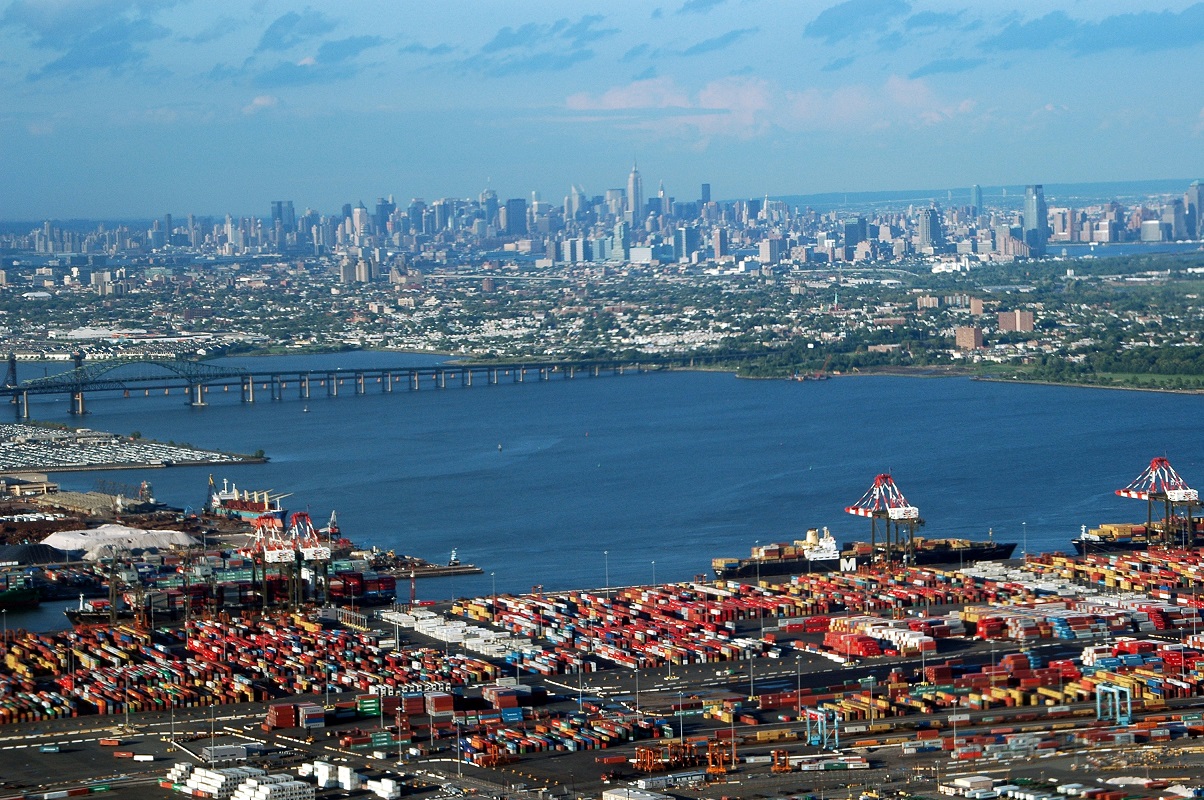

The United States is often described as a continental power, defined by highways, railroads, and vast inland markets. Yet this description hides a deeper truth: the United States is also one of the world’s most influential maritime nations. With more than 95,000 miles of coastline, access to both the Atlantic and Pacific Oceans, the Gulf of Mexico, and the Great Lakes, the USA’s maritime setting is central to its economy, security, and global influence.
From the historic docks of New York to the mega-container terminals of Los Angeles and Long Beach, from Mississippi River barges to offshore energy platforms in the Gulf, maritime activity shapes everyday life in ways many Americans barely notice. Globally, however, the United States’ maritime system is closely watched and widely studied—by shipowners, regulators, economists, and journalists alike, including long-standing coverage in outlets such as The New York Times (NYT), which frequently frames maritime issues within broader debates on trade, climate, labor, and national security.
This article offers a comprehensive, educational overview of the USA maritime setting. It explains how geography, ports, laws, institutions, and technology interact to make the United States a unique maritime actor, while using New York as a symbolic and practical gateway to America’s maritime story.
Why the USA Maritime Setting Matters for Maritime Operations
The maritime setting of the United States matters not only domestically, but globally. A significant share of world trade either originates in, terminates in, or passes near U.S. waters. Decisions made by U.S. authorities—on safety, security, environment, and trade—often ripple far beyond American shores.
A bridge between oceans and continents
Geographically, the United States sits between the world’s two largest oceans. On the east coast, ports connect North America to Europe, Africa, and the Middle East. On the west coast, shipping lanes link the U.S. directly to East Asia and the Pacific Rim. The Gulf of Mexico adds a third maritime front, deeply tied to energy production and petrochemical trade.
This positioning makes the USA a natural maritime bridge between global markets. Even disruptions thousands of miles away—such as congestion in Asian ports or instability in the Middle East—quickly affect U.S. port operations, freight rates, and consumer prices.
Economic scale and maritime dependency
More than 90% of U.S. overseas trade by volume moves by sea. Containers filled with electronics, clothing, machinery, and food flow through American ports daily, while bulk carriers deliver oil, LNG, grain, coal, and fertilizers. Inland waterways then extend maritime trade deep into the continent, with river systems acting like submerged highways.
Institutions such as the UNCTAD repeatedly highlight the USA as both a major importer and exporter, whose port efficiency and maritime policy decisions influence global supply chains.
Strategic and security dimensions
Maritime operations in U.S. waters are inseparable from national security. Commercial shipping, offshore infrastructure, and naval operations coexist within tightly regulated sea spaces. The role of the United States Coast Guard is particularly distinctive, combining military, law-enforcement, safety, and environmental responsibilities under a single service.
This dual commercial–security role makes the American maritime setting more complex than in many other countries, but also more resilient.
Geography of the United States Maritime Setting
Atlantic Coast: trade, history, and regulation
The Atlantic coast is the historic heart of American maritime trade. Ports such as New York–New Jersey, Savannah, Charleston, and Norfolk grew alongside early industrialization and immigration. Today, these ports remain essential gateways for containerized trade and vehicle imports.
New York Harbor, in particular, represents more than a port. It is a symbol of America’s maritime identity—where commerce, migration, finance, and culture intersect. Even now, the port complex handles millions of TEUs annually and connects seamlessly with rail and road networks serving the U.S. Northeast and Midwest.
Pacific Coast: scale and speed
On the Pacific side, ports operate at a different rhythm. The Port of Los Angeles and Port of Long Beach together form the largest container gateway in the Western Hemisphere. Their operations reflect the intensity of trans-Pacific trade, especially with China, South Korea, Japan, and Southeast Asia.
The Pacific maritime setting emphasizes speed, automation, and scale. It is also where labor relations, port congestion, and climate-related disruptions have repeatedly made international headlines.
Gulf of Mexico: energy and bulk trade
The Gulf of Mexico anchors America’s energy maritime system. Tankers, LNG carriers, offshore support vessels, and drilling units dominate these waters. Ports like Houston function as industrial hubs, where maritime logistics support refineries, chemical plants, and energy exports.
This region illustrates how maritime settings are not only about ports, but about entire industrial ecosystems tied to the sea.
Great Lakes and inland waterways
Often overlooked in global discussions, the Great Lakes–St. Lawrence Seaway system connects the American Midwest to the Atlantic Ocean. Grain, iron ore, coal, and manufactured goods move through this freshwater maritime corridor.
Meanwhile, the Mississippi River system supports one of the world’s largest inland shipping networks, reinforcing the idea that the U.S. maritime setting extends far beyond the coastline.
Governance and Regulatory Framework
Federal maritime institutions
Maritime governance in the United States involves multiple federal agencies with clearly defined but interconnected roles. The United States Coast Guard oversees safety, security, navigation, and environmental protection. The Maritime Administration (MARAD) focuses on commercial shipping, shipbuilding, and maritime workforce development.
Environmental oversight involves agencies such as the Environmental Protection Agency (EPA), particularly in relation to emissions, ballast water, and pollution prevention, aligned with international standards developed at the International Maritime Organization.
The Jones Act and cabotage
One of the most debated elements of the U.S. maritime setting is the Jones Act, which requires that cargo moved between U.S. ports be carried on U.S.-built, U.S.-flagged, and U.S.-crewed vessels. Supporters argue that it protects national security and maritime jobs; critics claim it raises transport costs.
Regardless of viewpoint, the Jones Act profoundly shapes the structure of domestic shipping and distinguishes the U.S. maritime environment from most other trading nations.
Classification and standards
Commercial vessels operating in U.S. waters often rely on classification societies such as American Bureau of Shipping, Lloyd’s Register, and DNV to demonstrate compliance with technical and safety standards. These organizations act as technical bridges between international rules and national enforcement.
Technology and Modern Maritime Applications
Port digitalisation and automation
U.S. ports are undergoing gradual digital transformation. Terminal operating systems, automated cranes, and data-sharing platforms aim to reduce congestion and improve cargo visibility. Compared with some Asian ports, automation has advanced more cautiously, reflecting labor agreements and complex stakeholder environments.
Nevertheless, digitalisation is becoming unavoidable as cargo volumes grow and environmental reporting requirements increase.
Vessel traffic services and safety systems
In busy waterways such as New York Harbor, San Francisco Bay, and the Houston Ship Channel, Vessel Traffic Services (VTS) play a critical role in preventing accidents. These systems resemble air traffic control for ships, coordinating movements through narrow or congested channels.
Such services align with international best practices promoted by the International Association of Classification Societies and supported by flag-state authorities.
Environmental monitoring and emissions control
The USA maritime setting is increasingly shaped by environmental expectations. Emission Control Areas (ECAs) along U.S. coasts impose stricter limits on sulfur oxides and nitrogen oxides. These rules affect fuel choice, engine technology, and operating costs, but also improve air quality in coastal communities.
Challenges and Practical Solutions
The scale and complexity of the U.S. maritime system bring significant challenges. Port congestion, aging infrastructure, labor shortages, cybersecurity risks, and climate-related disruptions all test the resilience of maritime operations.
Congestion during the COVID-19 pandemic revealed vulnerabilities in port coordination and inland logistics. In response, public–private investments have accelerated terminal upgrades, data-sharing initiatives, and rail connectivity improvements.
Climate change poses another long-term challenge. Rising sea levels, stronger storms, and heat stress affect ports and vessels alike. Adaptation measures—such as elevated terminals, resilient power supplies, and improved forecasting—are increasingly integrated into port planning.
Cybersecurity has also emerged as a critical concern. As ships and ports become more connected, protecting digital systems is now as important as maintaining physical hull integrity.
Case Studies and Real-World Applications
New York Harbor: complexity in action
New York Harbor exemplifies the layered nature of the U.S. maritime setting. Commercial shipping shares space with ferries, cruise ships, naval vessels, recreational craft, and offshore infrastructure. Coordinating these activities requires sophisticated traffic management and strong institutional cooperation.
Despite space constraints, the port continues to modernize, expanding container capacity while addressing environmental and community concerns.
West Coast supply chain recovery
Following severe congestion in 2021–2022, West Coast ports implemented operational reforms, extended gate hours, and improved data transparency. These measures demonstrate how systemic challenges can be addressed through coordination rather than isolated fixes.
Future Outlook and Maritime Trends
The future U.S. maritime setting will be shaped by decarbonisation, digitalisation, and geopolitical change. Alternative fuels, shore power, and emissions reporting will increasingly influence vessel and port design. Digital platforms will integrate shipping with rail, road, and inland waterways more seamlessly.
Geopolitical shifts may also reconfigure trade routes, reinforcing the strategic importance of resilient American ports. As global shipping becomes more complex, the U.S. maritime system is likely to remain a reference point for regulatory and operational practice worldwide.
Frequently Asked Questions (FAQ)
Why is the USA considered a major maritime nation?
Because of its extensive coastline, global trade volume, strategic ports, and regulatory influence.
What makes New York important in the U.S. maritime setting?
It is a historic and modern gateway linking commerce, finance, immigration, and global shipping.
How does the U.S. Coast Guard differ from maritime authorities elsewhere?
It combines military, safety, security, and environmental roles in a single service.
What is the Jones Act?
A U.S. law governing domestic shipping, requiring U.S.-built and crewed vessels for coastwise trade.
Are U.S. ports fully automated?
Automation exists, but at a slower pace than in some regions due to labor and regulatory factors.
How does climate change affect U.S. maritime operations?
Through sea-level rise, extreme weather, and stricter environmental regulations.
Conclusion
The USA maritime setting is vast, complex, and globally significant. It connects oceans, economies, and communities while balancing trade efficiency, safety, security, and environmental responsibility. From the iconic harbor of New York to the energy corridors of the Gulf and the mega-ports of the Pacific, maritime activity remains a foundation of American power and prosperity.
For maritime professionals, students, and policymakers worldwide, understanding the U.S. maritime setting is not just about one country—it is about understanding how global shipping works in practice.
References
-
International Maritime Organization – https://www.imo.org
-
United States Coast Guard – https://www.uscg.mil
-
UNCTAD – https://unctad.org
-
American Bureau of Shipping – https://ww2.eagle.org
-
Lloyd’s Register – https://www.lr.org
-
DNV – https://www.dnv.com
-
International Association of Classification Societies – https://iacs.org.uk