
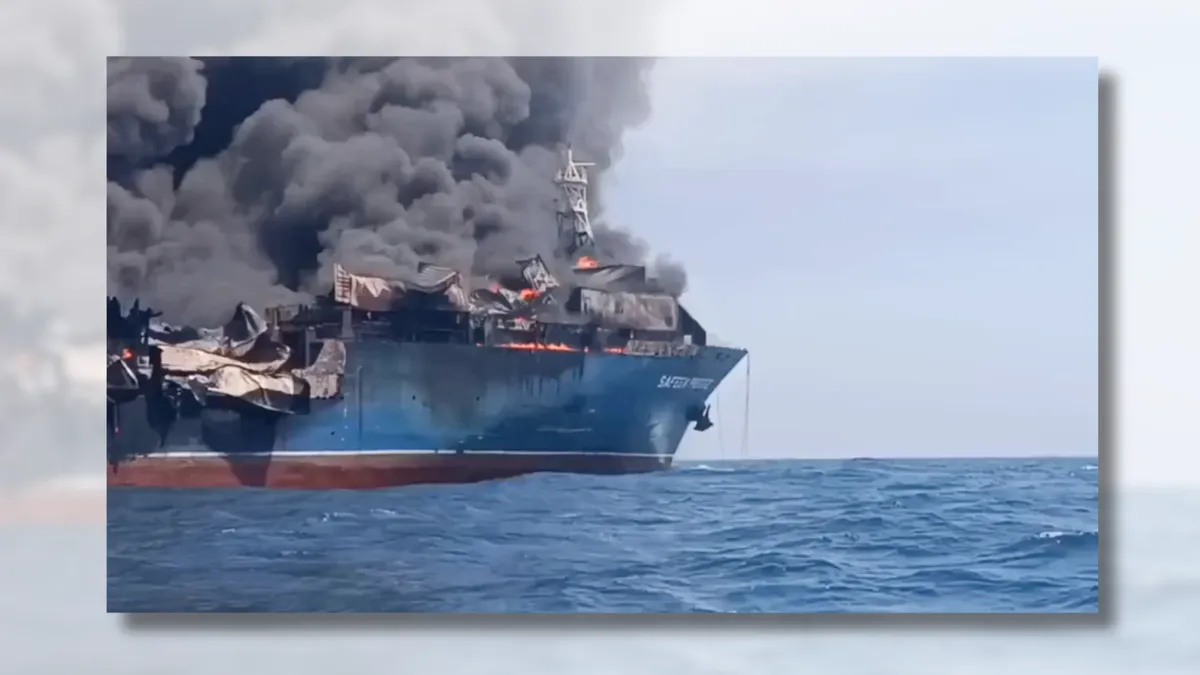
For decades, analysts have described the Strait of Hormuz as the world’s most dangerous maritime “fat-tail risk”—an unlikely event that, if realized, would trigger catastrophic consequences across the global economy. When the United States and Israe.l launched coordinated strikes against Iranian nuclear facilities in late February 2026, that long-theorized possibility became a brutal reality. Iran retaliated swiftly, declaring the Strait of Hormuz closed to all shipping not subject to its inspection regime. Within days, the narrow 21-mile waterway—through which roughly 20% of the world’s daily oil consumption passes—was effectively sealed.
The shockwaves have rippled through every sector of global trade, but nowhere have the effects been more immediate or devastating than in marine insurance. War risk premiums have exploded from symbolic percentages to figures that make entire trade routes commercially untenable. Insurers have issued cancellation notices, reinsurers have withdrawn capacity, and shipowners have been forced to choose between paying exorbitant premiums or abandoning the most strategic waterway on earth. The following analysis examines the mechanics of this insurance catastrophe, the cascading costs it has generated, and the likely long-term transformation of global shipping economics.
The Chokepoint That Holds the World Hostage
The Strait of Hormuz is not merely a strategic waterway—it is the singular jugular vein of global energy trade. In 2024, total oil transported through the Strait averaged approximately 20 million barrels per day, equivalent to 25% of global seaborne oil trade. By 2025, roughly 16 million barrels per day of crude and 3.8 million barrels per day of refined products transited the chokepoint, representing just over 30% of global seaborne crude trade and about 20% of refined product flows. Beyond oil, significant volumes of liquefied natural gas (primarily from Qatar) and fertilizers also pass through its narrow two-mile-wide traffic lanes.
The waterway is so narrow at its most constricted point—approximately 21 nautical miles wide—that ships transit through two distinct lanes, each just two miles wide, with a 2-mile buffer zone separating inbound from outbound traffic. When Iran announced its blockade, the logistical reality was immediate. Within the first ten days of the conflict, over 750 commercial vessels were trapped inside the Persian Gulf, unable to exit. By May 2026, more than two months into the conflict, approximately 1,550 ships with roughly 22,500 sailors remained in the Persian Gulf, with the US Navy simultaneously enforcing its own blockade outside the strait in the Gulf of Oman and the Arabian Sea.
Alternative routes exist but are woefully inadequate. Saudi Arabia and the UAE have east-west pipelines that can bypass Hormuz, but their combined capacity totals only about 6.5 million barrels per day—far short of the roughly 20 million barrels that depend on the Strait. The only other viable alternative is rerouting vessels around the Cape of Good Hope, which adds 15–20 days of transit time between India and Western markets and dramatically increases fuel consumption and operational costs.
The Architecture of War Risk Insurance: How Coverage Works in a Combat Zone
To understand the magnitude of the current crisis, one must first understand the peculiar architecture of marine war risk insurance. Standard hull and machinery (H&M) policies—which cover accidental physical damage to vessels—exclude war-related perils by default. War risk insurance is therefore purchased as a separate policy or endorsement, covering damage from missiles, drone attacks, mines, acts of terrorism, and, crucially, detention or diversion expenses.
At the operational center of this market stands the Joint War Committee (JWC) of London, a body comprising representatives from the Lloyd’s Market Association and the International Underwriting Association. The JWC designates geographical “Listed Areas”—zones deemed to present elevated war, terrorism, or piracy risks. When a vessel intends to enter a Listed Area, its owner must notify its insurer and negotiate an Additional War Risk Premium (AWRP) for that specific voyage. Without this additional premium, the vessel sails uninsured for war perils—a situation that violates financing covenants and port entry requirements, effectively making transit impossible.
Insurers also possess a devastating contractual weapon: the general cancellation clause, typically requiring only seven days’ notice to terminate war risk coverage entirely. Under the so-called “five powers clause”—which applies to wars involving any of the UK, US, France, Russia, or China—this notice period can be reduced to just 72 hours or, in the case of nuclear weapon use or direct conflict between two of the five powers, revoked immediately.
When the Iran war erupted, multiple Protection and Indemnity (P&I) clubs—including NorthStandard, Steamship Mutual, and Skuld—activated these clauses. Skuld issued a 72-hour cancellation notice for war risk cover across the Arabian/Persian Gulf, forcing owners to scramble for alternative arrangements at vastly higher costs. The message from the insurance market was unmistakable: if you choose to sail through a war zone, you will pay accordingly—if coverage is available at all.
The Premium Explosion: From Basis Points to Millions
The escalation in war risk premiums during the Iran conflict has no precedent in modern maritime history. Before the war, AWRPs for transit through the Strait of Hormuz were nominal—typically 0.02% to 0.05% of a vessel’s hull value. For a Very Large Crude Carrier (VLCC) valued at $120 million, a single passage might cost as little as $40,000 in additional war risk premium.
The escalation timeline reads like a financial horror story. On February 27, 2026, the day before the US-Israeli strikes, AWRPs stood at 0.1–0.25% of vessel value. During the three-day period of March 1–3, rates rose to 0.5–1%. By March 6, they had reached approximately 3%. Around March 19, premiums moved close to 5%, with some risk profiles commanding between 4% and 10%.
In percentage terms, the increases are staggering. Bloomberg reported that war-risk premiums for ships transiting Hormuz increased twelve-fold in some cases. Other reports described rises of 200% to 300% within the first weeks of the conflict. Marsh’s marine hull UK war leader, Dylan Mortimer, estimated that by mid-March, ratings were trending between 1% and 1.5% of vessel value, with significant variation depending on a vessel’s position relative to the Strait.
To translate these percentages into actual dollars, consider a standard Aframax tanker valued at approximately $250 million. At pre-war premium levels of 0.2–0.3%, a single transit might cost $500,000–$750,000. At 3% of hull value—the rate reached by March 6—the same voyage would incur a war risk premium of $7.5 million. For a VLCC valued at $300 million, a 5% premium yields a staggering $15 million per passage.
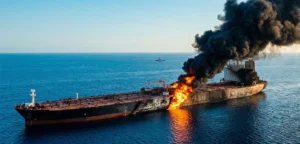
The Financial Times reported that some policies were not merely repriced but canceled outright, with insurers withdrawing capacity entirely amid heightened attack risk. As one industry observer noted, “What was once a disruption-sensitive environment has now shifted into a persistently hostile operating zone, where voyage viability, insurer acceptance, and real-time tactical conditions are major constraints”.
Beyond Percentages: The Mechanics of Premium Calculation in a War Zone
The headline percentage figures, however dramatic, tell only part of the story. Modern war risk pricing has become extraordinarily granular, with underwriters applying increasing differentiation across multiple risk vectors. Premiums now vary based on flag state (vessels under certain flags face steeper increases), ownership structure, cargo type, intended discharge port, and specific route through the Persian Gulf. Even ports in Oman and the eastern UAE—geographically outside the immediate conflict zone—now fall under the High-Risk Area category, attracting Enhanced War Risk Insurance costs of between $80,000 and $150,000 per port call, even for smaller feeder vessels.
The insurance market’s response has also been characterized by extraordinary speed. Premiums that were once adjusted quarterly are now recalibrated within 72 hours of a significant event. In some cases, rates are reviewed weekly or daily, with underwriters effectively pricing in real-time intelligence on missile attacks, naval deployments, and drone activity. This velocity of repricing creates profound operational uncertainty for shipowners, who cannot reliably budget for insurance costs beyond a single voyage.
The war risk insurance market has also faced a critical availability crunch. Beyond the price increases, the market has experienced periods where insurers simply “freeze” offers, refusing to provide quotes until they can assess newer security data. The Lloyd’s Market Association has clarified that the primary reason ships are not moving through the Strait is not the unavailability of insurance per se, but rather that captains and shipowners assess the risk to crew and vessel as excessively high even when coverage exists. When Hapag-Lloyd AG reported that the Hormuz situation was costing it $60 million per week—primarily from soaring fuel and insurance prices—the company was not merely signaling financial distress; it was articulating a fundamental reassessment of whether certain trade routes remain commercially viable at all.
Additional Direct Expenses: The Hidden Costs of Conflict Transit
The explosion in war risk premiums represents only the most visible component of a broader constellation of insurance-related expenses that have emerged since the conflict began. Shipowners transiting high-risk areas now face a comprehensive suite of additional costs that collectively transform the economics of each voyage.
Kidnap and Ransom (K&R) insurance has become mandatory for vessels operating in the Persian Gulf, covering the costs of negotiating and paying ransom for crew members seized by hostile forces. Premiums for this coverage have increased in lockstep with the escalation in boarding risks. The primary risks, according to Marsh’s Mortimer, now center on “the threat of vessel boarding and seizure by Iranian forces”.
Crew war bonuses have emerged as a standard requirement for any vessel entering designated high-risk areas. These bonuses—typically negotiated per voyage or per day in the zone—compensate seafarers for accepting elevated personal risk. For a vessel with 25 crew members and a 30-day transit through the Gulf, these bonuses can easily exceed $100,000 per voyage. The Swedish Club, like other P&I providers, explicitly requires that additional premiums for trading in Listed Areas include provisions for Crew War Bonus coverage.
Sue and labour expenses—costs incurred by an insured to mitigate a loss—have become a significant factor in the current environment. When a vessel comes under attack or faces imminent risk, the owner may incur substantial costs for emergency towing, firefighting, damage control, or deviation to a safe port. While standard policies cover such expenses up to the insured value, the process of proving that costs were reasonable and necessary has become highly contentious in the chaotic environment of the Persian Gulf.
Detention and diversion expenses represent perhaps the most operationally disruptive category of additional costs. When a vessel is delayed due to war risks—whether by military interdiction, port closures, or simply the requirement to await naval escort—the owner incurs significant daily operating costs (crew wages, fuel consumption for auxiliary systems, port fees, and charter party liabilities). These costs are generally recoverable under war risk policies only if specifically endorsed, and owners who failed to extend their coverage to include blocking and trapping provisions face potentially ruinous uncovered losses.
For ships forced to reroute around the Cape of Good Hope rather than transit the Strait—as Maersk and other major carriers have done—the insurance implications are equally severe. Extended voyages mean extended exposure to all perils, including piracy risks off the Horn of Africa and the Gulf of Guinea. The JWC has expanded its Listed Areas in the Gulf of Guinea in response to increased piracy, and vessels diverted to that route face additional AWRP assessments for that segment as well.
“Blocking and Trapping”: The Constructive Total Loss Time Bomb
Among all the novel risks introduced by the Iran war, none carries more potential for catastrophic claims than the blocking and trapping provisions embedded in war risk policies. Moody’s Ratings has highlighted this exposure as a particular concern for marine insurers, noting that vessels become exposed to “damage, detention and potential ‘blocking and trapping’ claims if transit through the Strait of Hormuz remains disrupted”.
The mechanism operates as follows: When a vessel is trapped in a conflict zone due to geopolitical restrictions, standard war risk policies typically do not treat the situation as a loss unless the vessel is physically damaged. However, blocking and trapping provisions—which must be specifically endorsed—allow the assured to claim a constructive total loss if the vessel remains detained for a prolonged period. The typical trigger period is approximately 12 months of continuous detention.
With over 1,500 vessels trapped in the Persian Gulf as of May 2026, the blocking and trapping exposure has reached staggering proportions. JPMorgan analysts estimated that total insurance exposure for vessels operating in the Gulf at the outbreak of conflict stood at approximately **$352 billion**. The Lloyd’s Market Association reported that roughly 1,000 vessels remained in the Gulf and surrounding waters, half of which were oil and gas tankers with an aggregate hull value exceeding $25 billion.
If the Strait remains closed for a full year—a scenario that Wood Mackenzie has modeled in its “Extended Disruption” case—the blocking and trapping claims alone could dwarf any marine insurance loss event in history. Moody’s has warned that while losses remain manageable under a short-lived conflict scenario, “longer hostilities would increase the likelihood of larger and more complex loss scenarios”. The ratings agency further noted that the concentration of high-value assets in the Gulf region “increases the potential for loss accumulation relative to other recent geopolitical tension, such as Russia’s invasion of Ukraine”.
The Reinsurance Crunch: When the Backstop Withdraws
Beneath the primary insurance market lies a deeper layer of complexity: the reinsurance industry, which provides the capacity that allows primary insurers to underwrite large risks. The Iran conflict has exposed critical fragility in the reinsurance chain that threatens the entire marine insurance edifice.
Multiple P&I clubs canceled war risk cover after their own reinsurers withdrew support. When the reinsurers—the ultimate risk bearers—decide that the potential liabilities from a regional war exceed their appetite, primary insurers have no choice but to follow suit. Morningstar DBRS warned in a recent analysis that reinsurers may respond to the Iran conflict by “raising attachment points or reducing capacity, leaving primary underwriters retaining more risk”.
The impact has been immediate and severe. Stephen Rudman, head of marine Asia at Aon, noted that the hull war market has reacted most intensely, with cargo war risk premiums also rising on a voyage-by-voyage basis. Supercede co-founder Ben Rose warned that the crisis is testing how well reinsurance structures can absorb geopolitical volatility, cautioning that “reinsurance is essential to a functioning insurance market, but it is not a blank check”.
The consequences of a reinsurance contraction extend beyond pricing. If reinsurance capacity withdraws entirely from certain segments, primary insurers may be unable to offer war risk coverage at any price. This scenario—known as a “hard market” in insurance industry parlance—would effectively halt all commercial shipping through the Gulf, as vessels would be unable to comply with the insurance requirements imposed by charterers, financiers, and port authorities.
Some relief has appeared in an unexpected form. President Trump announced that the US International Development Finance Corporation (DFC) would provide political risk insurance to “all shipping lines” at “a very reasonable price,” with a plan of up to $20 billion on a rolling basis for hull and cargo coverage. However, as of May 2026, clear details on eligibility criteria or specific terms had not been provided, leaving shipowners uncertain whether this government backstop would prove a genuine solution or merely a political gesture.
Cascading Costs: Freight, Fuel, and the Inflationary Spiral
The explosion in insurance costs has not occurred in isolation. It has combined with soaring fuel prices, extended voyage times, and disrupted supply chains to create a cascade of expenses that ripples through every link in the global logistics chain.
Freight rates have responded dramatically. Before the conflict began, freight rates were contracting at the start of 2026 following a period of post-pandemic normalization. Within weeks of the Hormuz blockade, rates had surged. In some special cases, freight increases reached eight-fold pre-conflict levels. S&P Global reported that war risk insurance premiums for ships in the Persian Gulf had hit record highs, and that most tankers were avoiding the Strait entirely, pushing freight and fuel costs sharply higher.
Fuel costs represent the second major component of the “pincer” effect identified by maritime economists. With vessels forced to take longer routes around Africa, bunker fuel consumption per voyage has increased by 30-50%. Simultaneously, the disruption of oil supplies through Hormuz has driven crude prices toward—and in some cases above—$100 per barrel, with diesel and jet fuel prices surging even more dramatically. The result is a double blow: more fuel consumed, at higher prices per ton.
Taken together, these cascading costs have transformed the economics of individual voyages. For a typical container ship rerouting from the Suez route to the Cape of Good Hope, the additional fuel cost alone can exceed $1 million per voyage. When combined with war risk premiums that may reach 5-10% of hull value, K&R coverage, crew bonuses, and extended operating days, the total additional expense can render certain trades commercially impossible.
Professor Ed Anderson of the University of Texas’s McCombs School of Business summarized the situation succinctly: insurance costs for ships in the region rose from less than 1% of cargo value to 3% to 10% during the conflict. The effect, he noted, is that even with insurance, most carriers still consider crossing the Strait too dangerous.
The Global Economic Earthquake: Oil Prices, Inflation, and Recessionary Risks
The insurance-driven increase in shipping costs is not merely a maritime industry problem—it is a global macroeconomic shock that threatens to tip the world economy into recession. The Strait of Hormuz blockade has effectively removed over 11 million barrels per day of Gulf crude and condensate from global markets, along with over 80 million tonnes per annum of LNG supply (roughly 20% of global output).
Wood Mackenzie has modeled three distinct scenarios for how the crisis might unfold. Under the most optimistic “Quick Peace” scenario—the Strait reopens by June 2026—global GDP growth would slow from 3% in 2025 to 2.3% in 2026, with recession confined to the Middle East. The “Summer Settlement” scenario—Strait largely closed until September—would drive a shallow global recession in the second half of 2026, with global GDP growth falling below 2% and permanent economic scarring relative to pre-war baselines.
The most severe “Extended Disruption” scenario—Strait remaining largely closed through end-2026—would be catastrophic. Brent crude prices could approach $200 per barrel by year-end despite global oil demand falling by 6 million barrels per day. Diesel and jet fuel prices could surge toward $300 per barrel in major refining centers. The global economy could contract by as much as 0.4% in 2026, marking the third global recession this century. The Middle East could see GDP shrink by 10.7%, while EU27 GDP declines by 1.5% and US growth falls below 1%.
Interestingly, as of June 2026, oil prices have remained below some analysts’ worst-case projections. A combination of record US exports, a sharp and unexpected slowdown in Chinese demand (which slashed inbound shipments by almost 40% in May), and the release of strategic reserves has helped absorb much of the shock. However, global inventories are being drawn down at a record pace. As one portfolio manager noted, “Each week that goes by, the system is tightening by 70 to 80 million barrels. You can’t do that forever”.
Short-Term Survival and Long-Term Transformation
For shipowners, insurers, and global supply chains, the immediate priority is survival. Carriers like Maersk, MSC, CMA CGM, and Hapag-Lloyd have suspended voyages through the Gulf or diverted cargo around Africa, accepting higher costs as the lesser evil compared to the risks of transit. Some shipping companies have incorporated geopolitical risk into operational planning, including closer monitoring of threat intelligence, reassessing transit timings, and ensuring vessels move through high-risk areas with appropriate situational awareness.
The insurance market itself is adapting through a combination of repricing, stricter underwriting terms, and—where possible—government backstops. The Lloyd’s Market Association emphasizes that war risk contracts include a reassessment mechanism that maintains low premiums in peacetime and adjusts when threats increase, as seen with Ukraine and the Red Sea. But the unprecedented nature of the Iran conflict has tested these mechanisms to their breaking point.
Looking beyond the immediate crisis, the shipping and insurance industries face fundamental structural questions. The concentration of global trade through a handful of maritime chokepoints—Hormuz, Bab el-Mandeb, the Suez Canal, the Malacca Strait—creates systemic vulnerability that the private insurance market alone cannot manage. The Iran war has demonstrated that when geopolitical risk crystallizes, the insurance response is not merely to raise prices but to withdraw capacity entirely, triggering a “de facto blockade” that no amount of premium can overcome.
Marco Forgione, director of the UK-based Chartered Institute of Export and International Trade, captured the lesson succinctly: “For businesses, the message is clear: strengthening supply chain resilience is no longer optional but an urgent strategic priority”. Diversification of supply chains, reduction of reliance on any single partner or route, and greater visibility into logistics networks are now imperatives rather than competitive advantages.
For the marine insurance industry, the crisis has forced a rethinking of how war risk is underwritten, priced, and capitalized. Moody’s has concluded that disciplined underwriting should allow large carriers to absorb losses under a baseline scenario, but warned that “a prolonged conflict would raise the probability of multi-asset losses”. The potential for blocking and trapping claims alone—should the Strait remain closed for a year—represents a tail risk of such magnitude that it may fundamentally alter how war risk insurance is structured and sold.
Conclusion: The New Normal of Maritime Risk
The Iran war and the blockade of the Strait of Hormuz have shattered the pre-conflict assumption that maritime trade could continue uninterrupted through the world’s most dangerous chokepoints. War risk insurance—once a routine add-on costing fractions of a percent of hull value—has become the single most consequential variable in shipping economics. Premiums that have risen from 0.02% to 5-10% of vessel value for a single transit are not merely an expense; they are a statement of fundamental uninsurability at any price that commercial shipping can bear.
The cascading costs—K&R coverage, crew bonuses, sue and labour expenses, detention and diversion costs, and the looming specter of blocking and trapping claims—have transformed the economics of global trade. Freight rates have surged, fuel costs have spiked, and supply chains have fractured. The inflationary pressure from higher energy and transport costs is already reaching consumers, and the risk of a global recession grows with each week the Strait remains closed.
But perhaps the most profound effect of the crisis is psychological. The insurance market’s response—canceling coverage, withdrawing capacity, and repricing risk in real-time—has demonstrated that the global shipping industry cannot rely on private insurance markets alone to absorb geopolitical shocks. The “de facto blockade” created by insurers withdrawing coverage for war zones may prove as effective at halting trade as any naval interdiction.
As the world navigates through the Iran war and its aftermath, one truth has become inescapable: the age of cheap, reliable, insurable maritime transit through the world’s strategic chokepoints is over. Shipowners, insurers, and the global economy must now adapt to a new normal in which the price of passage through the Strait of Hormuz is measured not in basis points but in the millions—and sometimes in the uninsurable risk to crew and vessel that no premium can fully compensate. The economic clock of war is ticking, and each passing day adds another layer of cost to the already exorbitant bill for global trade.