
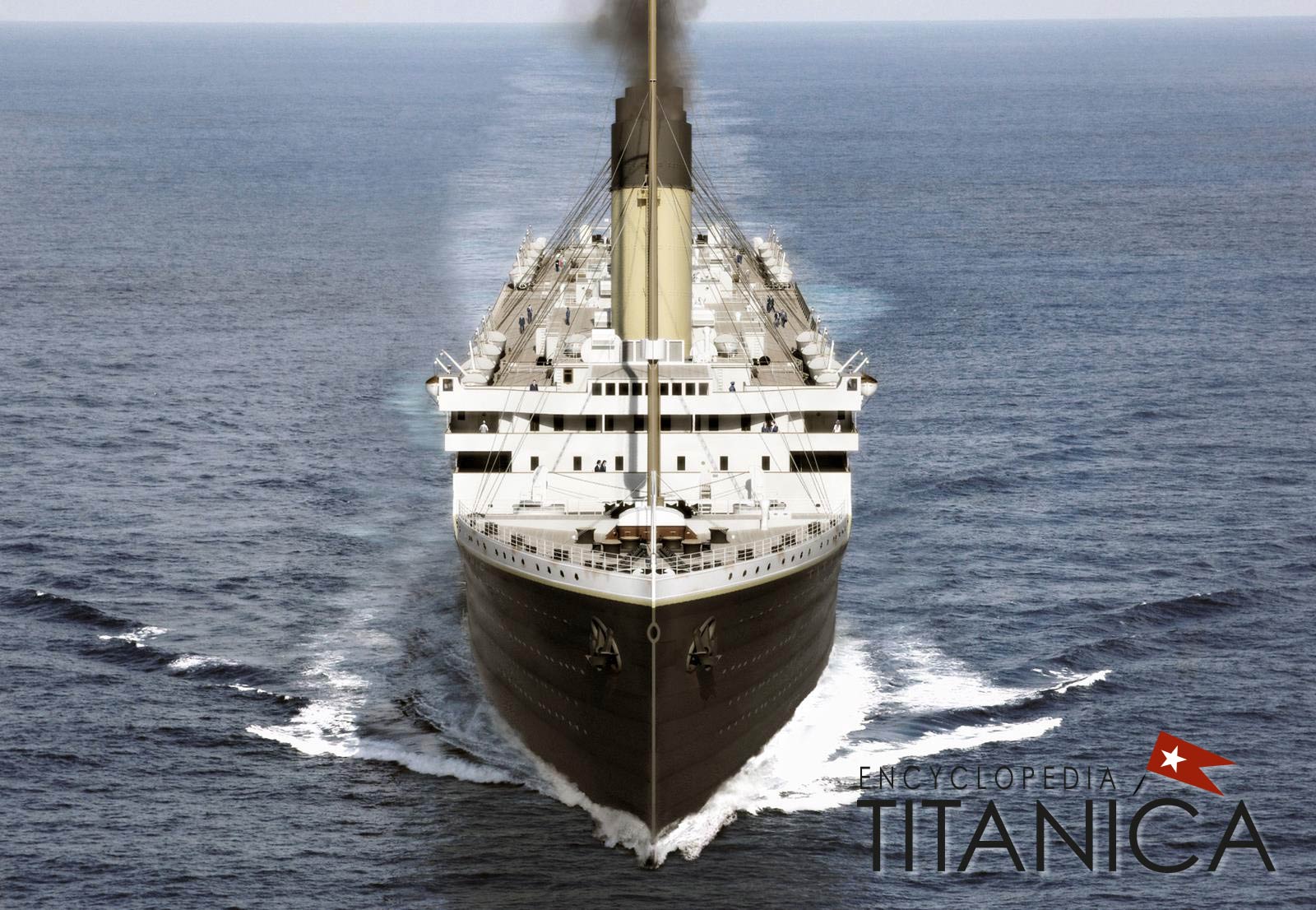
Discover how RMS Titanic became the world’s most famous ship disaster and how its sinking transformed lifeboat rules, wireless watchkeeping, ice patrols, and SOLAS maritime safety standards.
The Night the Sea Changed the Rules
On a cold April night in 1912, the North Atlantic became the stage for one of the most famous maritime disasters in history. RMS Titanic, the pride of the White Star Line, was not just another passenger liner. She represented luxury, engineering confidence, industrial ambition, and the belief that modern technology could conquer the sea.
Titanic was built for the transatlantic route between Europe and North America, a route filled with competition, prestige, and commercial pressure. She carried wealthy passengers in grand first-class suites, emigrants seeking a new life in America, experienced seafarers, engineers, stokers, stewards, musicians, and wireless operators. To many people, she symbolised the future of ocean travel.
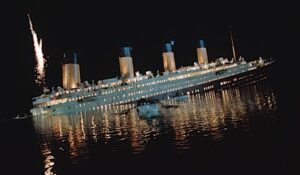
Then, shortly before midnight on 14 April 1912, Titanic struck an iceberg. Less than three hours later, at about 2:20 a.m. on 15 April, she disappeared beneath the surface of the Atlantic. Britannica describes Titanic as one of the largest and most luxurious ships of her time and notes that only 705 people were rescued in lifeboats after the sinking.
The disaster did more than shock the world. It exposed dangerous weaknesses in maritime regulation, emergency preparedness, lifeboat provision, wireless communication, ice reporting, and public confidence in ship design. In the years that followed, Titanic became more than a tragic shipwreck. It became a turning point in maritime safety.
This article explores why RMS Titanic remains so important, not only as a famous ship but as a catalyst for modern safety at sea.
Titanic Before the Disaster: A Symbol of Modern Confidence
RMS Titanic was part of an era when ocean liners were among the most advanced machines in the world. Before long-distance air travel, ships were the main connection between continents. The North Atlantic passenger trade was highly competitive, and shipping companies wanted vessels that were larger, safer, more comfortable, and more prestigious than their rivals.
Titanic was built by Harland and Wolff in Belfast for the White Star Line. She was one of the Olympic-class liners, along with Olympic and Britannic. These ships were not designed only for speed. They were designed to impress. Their scale, interiors, public rooms, dining spaces, and passenger facilities reflected the luxury of the early twentieth century.
For first-class passengers, Titanic offered a floating palace. For second-class passengers, she offered comfort that could rival first-class accommodation on smaller ships. For third-class passengers, many of whom were emigrants, she offered passage across the Atlantic in conditions that were considered better than many earlier immigrant ships.
Yet the story of Titanic is not only about luxury. It is also about the mindset of the period. Industrial society had growing faith in steel, steam, electricity, wireless communication, and engineering systems. Large ships were seen as proof that human design could manage the risks of the ocean.
Titanic’s safety reputation was partly connected to her watertight compartment arrangement. Britannica notes that the ship had 16 compartments with doors that could be closed from the bridge, but the bulkheads were not capped at the top. This design contributed to the belief that the ship could survive certain flooding scenarios.
That confidence was not entirely irrational. Titanic was advanced for her time. The problem was that confidence became dangerous when it exceeded realistic risk assessment.
The “Unsinkable” Myth and the Danger of Overconfidence
The word “unsinkable” is often associated with Titanic. It is one of the reasons the disaster still attracts public attention. The idea that a ship believed to be nearly impossible to sink could be lost on her maiden voyage is powerful and dramatic.
However, the real safety problem was not simply a marketing slogan. It was a culture of overconfidence. Titanic had strong construction, watertight doors, experienced officers, wireless equipment, and modern navigation tools for the time. But none of these features removed the need for full emergency readiness.
The disaster showed that advanced technology can create a false sense of security. If a ship is assumed to be extremely safe, officers, owners, regulators, and passengers may underestimate the consequences of rare but high-impact events.
In modern maritime language, Titanic teaches an important lesson about risk management: low probability does not mean low consequence. A serious collision, flooding event, fire, blackout, or evacuation failure may be unlikely, but if it occurs, the consequences can be catastrophic.
This is why modern safety culture does not rely only on design. It also requires drills, redundancy, communication, emergency procedures, training, regulation, inspection, and continuous improvement.
Titanic had technology. What she lacked was a safety system strong enough to match the risks of carrying more than 2,000 people across an iceberg-prone ocean.
The Iceberg Collision: A Chain of Small Failures
Titanic’s sinking was not caused by one single mistake. Like many maritime accidents, it resulted from a chain of technical, human, organisational, and environmental factors.
The ship was crossing the North Atlantic in April, a season when icebergs could drift into shipping lanes. Ice warnings had been received from other vessels. The sea was unusually calm, which may have made the iceberg harder to see because there were no waves breaking at its base. Visibility conditions, speed, warning management, lookout arrangements, and bridge decision-making all became part of the tragedy.
After the iceberg was sighted, evasive action was taken, but the ship’s starboard side was damaged. Water entered several forward compartments. Titanic’s design could survive flooding in a limited number of compartments, but not the extent of flooding that occurred after the collision. Britannica notes that water began entering areas such as the mail room and forward boiler spaces, and the ship sank in about two hours and forty minutes after the impact.
This is an important point for maritime education. Accidents often occur when several defences fail at the same time. Ice warnings alone were not enough. Lookouts alone were not enough. Watertight doors alone were not enough. Lifeboats alone were not enough. Wireless distress calls alone were not enough.
Safety at sea depends on layers. If one layer fails, another must still protect life. Titanic showed that her layers were not strong enough.
Lifeboats: The Most Visible Failure
The most remembered safety failure of Titanic is the lifeboat issue. The ship did not have enough lifeboat capacity for everyone on board. This seems shocking today, but at the time Titanic complied with outdated regulations based largely on ship tonnage rather than the actual number of persons carried.
The U.S. Senate report recorded that Titanic had 14 lifeboats with capacity for 65 persons each, two emergency sea boats with capacity for 35 persons each, and additional collapsible boats. The problem was not only the total number of boats. Several boats also left the ship without being filled to capacity.
This fact became one of the strongest symbols of the disaster. Passengers and crew were not just victims of an iceberg. They were victims of a regulatory system that had not kept pace with ship size and passenger numbers.
Table 1: Titanic Lifeboat Problem in Simple Terms
| Safety Issue | What Happened on Titanic | Why It Mattered |
|---|---|---|
| Lifeboat capacity | Not enough places for all passengers and crew | Many people had no realistic escape option |
| Regulation | Existing rules were outdated | Compliance did not equal safety |
| Boat loading | Some boats left partly filled | Available lifesaving capacity was not fully used |
| Drills and preparation | Emergency organisation was weak | Passengers and crew faced confusion |
| Public reaction | Lifeboat shortage shocked the world | It pushed governments toward stronger regulation |
The lesson remains relevant today: minimum compliance is not always enough. A ship may satisfy a regulation, but if the regulation is outdated or poorly designed, the real risk remains.
Modern maritime safety requires continuous review. Ship size, passenger capacity, operating area, evacuation time, crew competence, and emergency equipment must be considered together. Titanic forced the maritime world to confront this reality.
Wireless Communication: A New Technology with Old Habits
Titanic carried wireless telegraph equipment, which was advanced for the period. Wireless operators sent distress signals after the collision, and these signals helped RMS Carpathia come to the rescue. Yet the disaster also revealed weaknesses in wireless procedures.
In 1912, wireless communication was still treated partly as a commercial service for passenger messages. It was not yet fully integrated into a modern, compulsory, 24-hour maritime safety system. Some nearby ships may not have received or properly acted on distress communications because radio watchkeeping was not continuous or because signals and procedures were not handled with the urgency expected today.
The U.S. Senate inquiry examined Titanic’s distress calls, the handling of messages, and the role of wireless communication. It recommended that ships equipped with wireless sets should maintain communications at all times of day and night.
This recommendation was historic. It helped shift wireless from a useful commercial tool into a safety-critical system.
Today, maritime communication is governed by a much more advanced structure, including the Global Maritime Distress and Safety System, bridge communication procedures, radio watchkeeping standards, and distress alerting systems. Titanic’s tragedy helped create the understanding that communication at sea cannot depend on convenience. It must be continuous, disciplined, and safety-focused.
Carpathia: The Rescue Ship That Showed the Value of Preparedness
While Titanic is remembered for tragedy, RMS Carpathia deserves recognition for rescue. After receiving Titanic’s distress call, Carpathia changed course and steamed toward the disaster area. Her crew prepared to receive survivors, including medical assistance, blankets, food, and spaces for rescued passengers.
Carpathia arrived after Titanic had already sunk, but she rescued hundreds of survivors from the lifeboats. Britannica records that only 705 people were rescued in lifeboats, showing both the importance of the rescue and the scale of the loss.
Carpathia’s response remains a maritime example of good seamanship and emergency assistance. At sea, the duty to assist persons in distress is one of the oldest and strongest principles of maritime life. Titanic’s disaster showed the world that rescue depends not only on the ship in distress, but also on the readiness and response of nearby vessels.
In modern maritime operations, search and rescue coordination, distress alerting, emergency response plans, and international cooperation are much more developed. But the spirit remains the same: when life is in danger at sea, response must be immediate and professional.
The Human Story: Passengers, Crew, and Unequal Survival
One reason Titanic remains powerful is that it was a human tragedy involving people from many social classes and national backgrounds. The ship carried wealthy industrialists, families, workers, emigrants, officers, engineers, firemen, cooks, stewards, musicians, and children.
The evacuation reflected both courage and inequality. Many women and children were placed in boats first. Some passengers refused to leave loved ones behind. Many crew members stayed at their posts. Engineers and electrical staff worked to maintain power as long as possible, helping lights and communications continue during the emergency. Musicians are famously remembered for playing as the ship sank, although details vary in survivor accounts.
At the same time, survival was not equal. Access to information, location of cabins, class divisions, language barriers, crew instructions, and physical access to boat decks all influenced who survived. Third-class passengers and many crew members suffered heavy losses.
For maritime education, this matters. Emergency preparedness must consider all persons on board, not only those closest to the bridge or boat deck. Passenger ships today require muster lists, emergency signage, public address systems, crew training, evacuation procedures, crowd management, and drills. These systems exist because emergencies are not only technical events. They are human events.
Titanic reminds us that safety must be designed for real people under fear, confusion, darkness, cold, and time pressure.
Official Investigations: From Public Shock to Maritime Reform
After the disaster, official inquiries were held in the United States and Britain. These investigations examined ice warnings, ship speed, lifeboat numbers, evacuation procedures, wireless communication, lookout arrangements, and regulatory responsibilities.
The U.S. Senate inquiry began shortly after the sinking and questioned surviving passengers and crew, as well as other witnesses. The inquiry covered subjects such as ice warnings, lifeboats, ship handling, speed, distress calls, and evacuation.
The Senate report made several recommendations that now seem basic but were highly important at the time. These included slowing down in areas of ice, bringing navigational messages quickly to the bridge, providing enough lifeboats for everyone on board, maintaining continuous wireless communication, improving radiotelegraph rules, and conducting adequate boat drills.
These recommendations helped change the direction of maritime regulation. Titanic transformed safety from a matter of company practice and national rules into a stronger international concern.
The sea is international. Ships cross borders. Passengers come from many countries. A disaster in the North Atlantic can involve shipowners, builders, crews, passengers, insurers, governments, ports, and rescue services from different nations. Titanic showed that maritime safety needed international standards.
SOLAS: Titanic’s Most Important Regulatory Legacy
The most important regulatory result linked to Titanic was the development of the International Convention for the Safety of Life at Sea, known as SOLAS. The International Maritime Organization explains that the first version of SOLAS was adopted in 1914 in response to the Titanic disaster. Later versions followed in 1929, 1948, 1960, and 1974.
SOLAS is now widely regarded as one of the most important international treaties concerning the safety of merchant ships. It covers many areas of ship safety, including construction, fire protection, lifesaving appliances, radio communications, navigation safety, cargo carriage, safety management, and special measures for different ship types and risks.
Table 2: How Titanic Influenced Modern Maritime Safety
| Area of Safety | Problem Exposed by Titanic | Later Safety Direction |
|---|---|---|
| Lifeboats | Not enough capacity for all persons | Lifesaving appliances based on persons on board |
| Wireless communication | No universal 24-hour watchkeeping | Continuous distress communication standards |
| Ice navigation | Ice risk underestimated | Better ice reporting and patrol systems |
| Emergency drills | Weak evacuation readiness | Mandatory drills and crew training |
| International rules | National regulations were inconsistent | International safety conventions such as SOLAS |
| Passenger management | Confusion during evacuation | Muster lists, signage, crowd management, procedures |
| Safety culture | Overconfidence in design | Risk-based thinking and layered safety systems |
Titanic did not create modern maritime safety alone. But it accelerated change. It gave governments and the public a painful example of why strong international regulation was necessary.
International Ice Patrol: Watching the North Atlantic
Another major safety legacy of Titanic was the strengthening of iceberg monitoring. The North Atlantic shipping route was commercially important but seasonally dangerous. Icebergs drifting south from Greenland and Arctic waters could threaten passenger liners and cargo ships.
After Titanic, the need for organised ice observation became clear. The International Ice Patrol was established to monitor iceberg danger in the North Atlantic and provide warnings to ships. This became an important part of navigational safety for transatlantic shipping.
The principle is simple but powerful: ships should not face known environmental hazards blindly. Information must be collected, analysed, and shared.
Today, ships benefit from satellite data, weather routing, electronic charts, navigational warnings, ice charts, AIS information, and shore-based monitoring systems. But the basic idea is the same as after Titanic: good information saves lives.
Ship Design Lessons: Watertight Compartments and Damage Stability
Titanic’s watertight compartments were central to her safety reputation. However, the flooding pattern after the iceberg collision exceeded what the ship could survive. The water entered several forward compartments, and because the bulkheads did not extend high enough to fully contain progressive flooding, water could move from one compartment to another as the bow sank lower.
This created an important design lesson. It is not enough to have compartments. Designers must understand how flooding progresses, how stability changes, how free surface effects develop, and how long a damaged ship can remain afloat.
Modern ships are designed under more sophisticated damage stability requirements. Passenger ships, tankers, bulk carriers, offshore units, and other vessels must meet standards based on ship type, size, service, and risk. Modern naval architects use advanced calculations, probabilistic damage stability methods, model testing, simulations, and classification society rules.
Titanic’s loss helped shift the industry toward deeper thinking about survivability. A ship should not only be strong in normal operation. It should also give people enough time to survive after damage.
This is a major principle in maritime safety: the ship is the first lifeboat. Before abandoning ship, the vessel itself should provide protection, time, and emergency capability for as long as possible.
The Role of Crew Training and Emergency Drills
Equipment alone does not save lives. People must know how to use it. Titanic showed serious problems in emergency organisation and lifeboat handling. Some boats were lowered with empty seats. Some passengers did not fully understand the danger at first. Crew members faced uncertainty, time pressure, and inconsistent information.
The U.S. Senate inquiry recommended adequate boat drills for passengers and stronger emergency procedures. This point remains central to modern shipping.
Today, drills are mandatory in commercial shipping. Crews practice fire response, abandon ship, man overboard, enclosed space rescue, emergency steering, blackout recovery, pollution response, and other scenarios depending on ship type. Passenger ship crews receive additional training for crowd management and crisis response.
Training is not simply about memorising procedures. It is about building competence under pressure. In a real emergency, people may be afraid, tired, confused, or injured. Equipment may fail. Visibility may be poor. Time may be limited. Training prepares crews to act correctly when conditions are not ideal.
Titanic is a reminder that emergency plans must be realistic. A plan that looks good on paper but fails under stress is not enough.
Maritime Safety Culture: The Deeper Lesson
The most important lesson of Titanic is not only about lifeboats or icebergs. It is about safety culture.
A strong safety culture asks difficult questions before an accident occurs:
- What can go wrong?
- Are our assumptions realistic?
- Are we relying too much on technology?
- Do we have enough redundancy?
- Are emergency drills effective?
- Can all persons on board evacuate safely?
- Are warnings reaching decision-makers?
- Are commercial pressures influencing safety decisions?
- Are regulations keeping pace with ship design?
Titanic’s world had confidence in engineering, but safety culture was not mature enough. The disaster forced the industry to recognise that technology, regulation, human behaviour, and emergency preparedness must work together.
Modern maritime safety culture is built on this integrated view. It includes safety management systems, risk assessment, audits, incident reporting, near-miss learning, crew resource management, bridge resource management, engine-room resource management, port state control, classification surveys, flag state oversight, and international conventions.
In other words, Titanic helped move the industry from reactive safety toward systematic safety.
Why Titanic Still Matters to Maritime Students and Professionals
More than a century has passed since Titanic sank, but the disaster remains relevant in maritime education. It is a case study in design limitations, emergency management, communication failure, regulatory weakness, human behaviour, and accident investigation.
For maritime students, Titanic is not just a story from the past. It is a foundation for understanding why today’s rules exist. Lifeboat capacity, muster drills, radio watchkeeping, distress procedures, ice warnings, voyage planning, and passenger safety standards all make more sense when connected to real disasters.
For seafarers, Titanic is a reminder to respect the sea. Even the largest and most advanced ships can be vulnerable. Confidence must never replace caution.
For shipowners and managers, Titanic shows that commercial success and safety cannot be separated. A famous ship can become a global tragedy if risk is underestimated.
For regulators, Titanic proves that rules must evolve. Regulations based on older ship sizes, older technologies, and older assumptions can become dangerous when the industry changes.
For the public, Titanic remains a human story: a ship full of dreams, a night of fear, acts of courage, failures of preparation, and a legacy written into maritime law.
Titanic and the Modern Passenger Ship Industry
Today’s passenger ships are very different from Titanic. Modern cruise ships and ferries are larger, more complex, and equipped with advanced navigation, communication, fire detection, lifesaving, and stability systems. Yet they also carry thousands of people, making emergency planning extremely demanding.
The passenger ship industry must manage risks such as fire, flooding, grounding, collision, blackout, extreme weather, medical emergencies, cyber threats, crowd movement, and evacuation logistics. Modern ships operate under SOLAS, classification society rules, flag state requirements, port state control inspections, and company safety management systems.
Still, Titanic’s central question remains: Can everyone be protected if the unexpected happens?
This question is especially important for passenger vessels because passengers are not trained seafarers. They may not understand ship layouts, emergency signals, muster procedures, or evacuation routes. They may include children, elderly people, people with disabilities, and passengers who speak different languages.
Modern regulations and company procedures try to address these realities. But the principle comes from lessons learned through disasters: safety must be planned for the people actually on board, not for an ideal situation.
A Simple Timeline of Titanic’s Final Hours
The final hours of Titanic are often studied because they show how quickly a major emergency can develop.
Table 3: Simplified Timeline of the Titanic Disaster
| Time | Event |
|---|---|
| Evening, 14 April 1912 | Titanic continues across the North Atlantic after receiving ice warnings |
| Around 11:40 p.m. | Lookouts sight an iceberg; evasive action is taken |
| Shortly after collision | Water begins entering forward compartments |
| After damage assessment | Officers and designers realise the ship is in serious danger |
| Around 12:00–1:00 a.m. | Lifeboats begin to be prepared and lowered |
| Around 2:00 a.m. | Bow is deeply submerged; stern rises |
| About 2:20 a.m., 15 April | Titanic sinks beneath the Atlantic |
| After sinking | Survivors wait in lifeboats in freezing conditions |
| Early morning | RMS Carpathia rescues survivors |
Britannica records that Titanic sank at about 2:20 a.m., roughly two hours and forty minutes after striking the iceberg. That short time window is one reason the disaster remains so important for emergency planning. In a maritime emergency, minutes matter.
Titanic as a Case Study in Accident Causation
Modern accident investigation usually avoids blaming only one person. Instead, investigators look at a chain of causes. Titanic can be understood through this approach.
Immediate Cause
The ship struck an iceberg, causing fatal flooding.
Contributing Factors
The contributing factors included speed in an ice-risk area, insufficient lifeboat capacity, weak emergency preparation, limitations in watertight design, incomplete use of wireless safety potential, and outdated regulation.
Systemic Causes
The deeper causes included overconfidence in technology, regulatory lag, commercial pressure, and the absence of a strong international safety framework.
This layered approach is useful for modern maritime professionals. A collision, grounding, fire, or sinking is rarely “just” one event. It usually reflects decisions made long before the accident: design choices, training quality, inspection standards, management priorities, and regulatory assumptions.
Titanic therefore remains a valuable teaching case for safety management systems and human factors in maritime operations.
The Public Memory of Titanic
Titanic is remembered not only because of the number of lives lost, but because of the contrast between expectation and reality. The ship was new, luxurious, and technologically advanced. Her passengers represented many social worlds. Her loss occurred on her maiden voyage. The story included bravery, confusion, inequality, sacrifice, and institutional failure.
The discovery of the wreck in 1985 renewed global interest. Since then, Titanic has been studied through underwater exploration, documentaries, books, museum exhibitions, historical research, and films. Britannica notes that interest increased after the wreck’s discovery and was further strengthened by the success of James Cameron’s 1997 film.
Public memory can sometimes turn history into myth. But even when popular culture adds drama, the core lesson remains real: Titanic changed how the world thinks about safety at sea.
Key Lessons for Today’s Maritime Industry
Titanic’s legacy can be summarised in several practical lessons.
1. Regulations must match real risk
Rules based on outdated assumptions can create a false sense of safety.
2. Lifesaving appliances must serve all persons on board
Every passenger and crew member must have a realistic chance of survival.
3. Communication must be continuous
Distress communication cannot depend on convenience or partial watchkeeping.
4. Warnings must reach decision-makers
Ice warnings, weather alerts, navigational warnings, and technical alarms must be managed effectively.
5. Drills must be serious and realistic
Emergency preparedness cannot be improvised during a crisis.
6. Design must include survivability
Watertight subdivision, stability, fire protection, redundancy, and emergency power are essential.
7. Safety culture matters
Technology is valuable, but overconfidence is dangerous.
8. International cooperation is essential
The ocean is global, so maritime safety must also be global.
These lessons are not historical decoration. They remain part of daily maritime operations.
Conclusion: Titanic’s Tragedy Became Maritime Safety’s Turning Point
RMS Titanic began as a symbol of luxury and technological achievement. She ended as a symbol of human vulnerability at sea. Her sinking shocked the world because it exposed the gap between confidence and preparedness.
The ship had advanced features for her time, but not enough lifeboats for all. She had wireless equipment, but the maritime world had not yet fully built a continuous radio safety culture. She had watertight compartments, but not enough survivability for the damage sustained. She had officers and crew, but emergency organisation was not strong enough for the scale of the disaster.
From this tragedy came reform. The first SOLAS Convention was adopted in 1914 in response to the Titanic disaster, and later versions shaped the modern framework of international ship safety. Lifeboat rules, wireless watchkeeping, ice patrols, drills, and emergency procedures all changed because the world could no longer ignore the risks.
Titanic did not make the sea safe forever. No convention or technology can remove all danger from maritime operations. But Titanic forced the industry to learn that safety must be planned, regulated, trained, inspected, and constantly improved.
That is why RMS Titanic remains more than the world’s most famous shipwreck. She is one of the most important lessons in maritime history.