
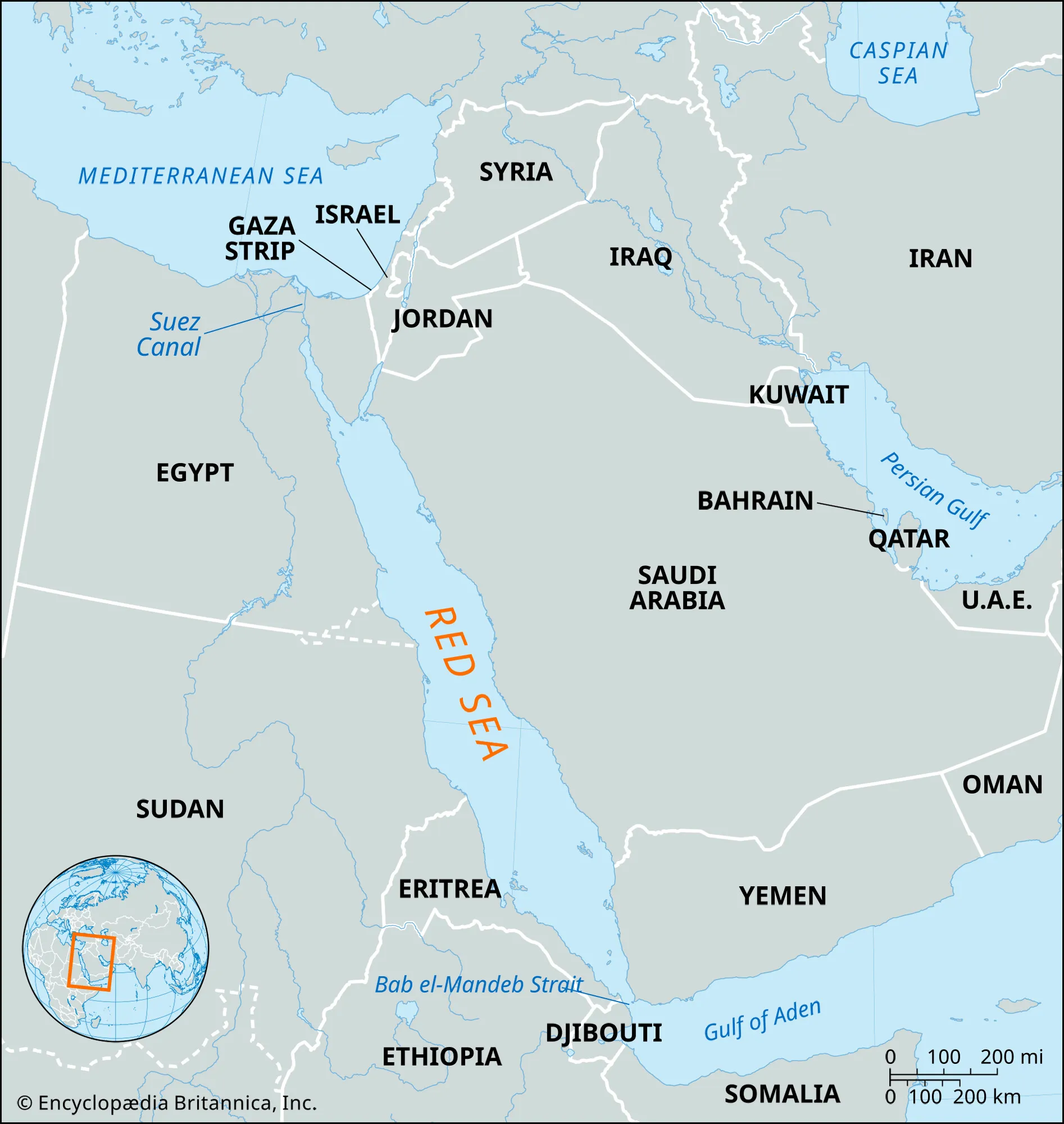
The waters of the Red Sea and the Gaza Strip are separated by over 1,500 miles, but from late 2023, they became inseparably linked in a crisis that choked one of the world’s most vital trade arteries. A military campaign by Yemen’s Houthi rebels, launched in declared solidarity with Palestinians during Israe.l’s war on Gaza, triggered a historic rerouting of global commerce. By targeting ships they deemed linked to Israe.l or its allies, the Houthis effectively turned the Bab al-Mandab Strait into a no-go zone for much of the world’s merchant fleet. The result was a stark geographical shift: the centuries-old Suez Canal shortcut between Asia and Europe was largely abandoned, sending hundreds of ships on a much longer journey around the African continent. This is the story of how a regional conflict reshaped global trade routes, strained supply chains, and exposed the fragile foundations of a connected world.
A Timeline of Disruption: From Gaza to the High Seas
The crisis unfolded in distinct phases, with each escalation further tightening the stranglehold on Red Sea shipping.
-
October-November 2023: The Campaign Begins. Following the outbreak of war in Gaza, the Houthis initiated missile and drone attacks toward Israe.l. By November, they began directly targeting commercial vessels in the Red Sea, starting with those they claimed had Israe.li links. Major shipping lines issued their first warnings.
-
December 2023-January 2024: Mass Diversions Begin. As attacks persisted, the world’s largest container shipping companies, including Maersk and MSC, announced they would indefinitely suspend transit through the Red Sea and Suez Canal. The U.S. launched Operation Prosperity Guardian, a multinational naval coalition aimed at protecting shipping. In retaliation for these strikes, the Houthis expanded their target list to include ships linked to the U.S. and United Kingdom.
-
First Half of 2024: The Cape Route Becomes the Norm. The rerouting became institutionalized. By the first two months of 2024, trade volume through the Suez Canal had plummeted by 50% year-over-year, while traffic around the Cape of Good Hope surged by an estimated 74%. The European Union launched its own naval mission, Operation Aspides.
-
January 2025: A Fleeting Ceasefire Brings a Pause. A U.S.-brokered ceasefire in Gaza, which began in October 2024, led to a significant development. The Houthis indirectly signaled they had halted their attacks on shipping, linking their campaign directly to the fate of the Gaza war. A cautious, partial return of some shipping traffic through the Suez was observed.
-
March 2025 Onward: Crisis Reignites. As the Gaza ceasefire unraveled, so did the calm in the Red Sea. The Houthis declared they would resume attacks, and violence between the group, the U.S., and I.srael flared again, underscoring the enduring link between the two conflicts.
The Scale of the Shift: Suez Canal Traffic Plummets
The diversion of shipping was sudden and severe. The Suez Canal, which typically handles 12-15% of global trade and 30% of global container traffic, saw its relevance evaporate almost overnight. The following table illustrates the dramatic decline in container ship transits, the lifeblood of global manufacturing supply chains:
| Period | Average Weekly Container Ship Transits (Suez Canal) | Key Event / Trend |
|---|---|---|
| Peak (Pre-Crisis) | Data Not Specified | Normal operations, ~30% of global container trade. |
| Week of Sept 15-21, 2025 | 25 transits | 2025 low point for container traffic. |
| July 2025 (Monthly Avg.) | 146 transits (approx. 4.7/day) | Low monthly point; slow recovery begins post-ceasefire. |
| November 2025 | 28-30 transits/week | Traffic remains fragile, well below pre-crisis levels. |
The impact went beyond containers. Dry bulk carriers transporting grain and ore saw transits drop by nearly 80%, and major energy companies like BP paused tanker transits. By October 2024, total ship transits through the canal were down 55% compared to the previous year.
–
The Ripple Effects: Costs, Delays, and Global Consequences
Choosing the 3,500-mile longer route around Africa’s Cape of Good Hope was a costly necessity, adding 10-14 days to a typical Asia-Europe voyage. This single decision set off a chain reaction with global implications.
Soaring Costs: Extended travel times consumed more fuel and tied up vessel capacity, effectively shrinking global shipping capacity. Freight rates skyrocketed, with the Platts Container Index hitting $5,272 per 40-foot container in early January 2024. While rates moderated, they settled at levels markedly higher than before the crisis. Insurance premiums for Red Sea voyages also surged.
Supply Chain Chaos: The unpredictable delays disrupted just-in-time manufacturing models, particularly in Europe. Industries like automotive and electronics faced production halts and inventory shortages. The crisis also forced a rethink of logistics, with some European producers relocating operations to hubs like Dubai to avoid the longer Africa route.
Economic and Environmental Toll: The crisis delivered a severe blow to Egypt, for whom Suez Canal tolls are a critical source of foreign currency. The IMF estimated the attacks reduced Egypt’s foreign exchange inflows from the canal by $6 billion in 2024 alone. Environmentally, the longer routes significantly increased greenhouse gas emissions. A single large container ship rerouting around Africa incurred roughly $400,000 in additional emissions costs under the EU’s carbon trading system.
Vulnerable Economies Hit Hardest: The United Nations Conference on Trade and Development (UNCTAD) warned that the smallest and most vulnerable economies bore the brunt. Small Island Developing States (SIDS), heavily reliant on maritime imports, faced the highest risk of increased consumer prices and food insecurity due to the global shipping disruption.
–
Strategic Fallout and an Uncertain Future
Beyond economics, the crisis altered strategic calculations. It triggered a multinational naval arms race in the Red Sea, with over fifteen nations deploying warships. It highlighted the extreme vulnerability of global chokepoints, with the Suez and Panama Canal disruptions occurring simultaneously in 2024. Furthermore, it demonstrated how non-state actors like the Houthis could wield disproportionate influence over the global economy with relatively low-cost asymmetric tactics.
As of late 2025, the situation remains tense and intrinsically tied to the conflict in Gaza. The Houthis have made clear their campaign is conditional on a permanent end to the war. While a ceasefire can bring a temporary pause, the search for lasting stability continues. UNCTAD and other bodies call for urgent investment in diversifying trade routes, strengthening international cooperation, and building more resilient supply chains to withstand future shocks.
The rerouting of the world’s ships around Africa stands as a stark testament to an interconnected world. It proved that a conflict in a narrow coastal strip can, within weeks, reshape global trade maps, drive up costs for consumers continents away, and remind the world that the shortest distance between two points is only viable when the waters between them are safe.
–
Reference List
1. Houthi Campaign & Connection to Gaza War
-
Al Jazeera. (2024, November 19). Yemen’s Houthis say they will continue attacks until I.srael stops war on Gaza. Retrieved March 28, 2025.
-
Reuters. (2024, January 12). Who are the Houthis and why are they attacking ships in the Red Sea? Retrieved March 28, 2025.
-
U.S. Naval Institute. (2025, January 22). Houthis Halt Red Sea Attacks as Gaza Ceasefire Holds. Retrieved March 28, 2025.
2. Shipping Diversions & Suez Canal Impact
-
United Nations Conference on Trade and Development (UNCTAD). (2025, January 23). Red Sea crisis deepens, imperiling global trade. Retrieved March 28, 2025.
-
Seatrade Maritime. (2025, March 18). Suez Canal container transits plummet to new low for 2025. Retrieved March 28, 2025.
-
Hellenic Shipping News. (2025, February 12). Suez Canal container traffic drops to a new low. Retrieved March 28, 2025.
-
Offshore Energy. (2025, January 6). Suez Canal’s 2024 ship transits, tonnage, and revenues take a massive blow. Retrieved March 28, 2025.
3. Economic, Supply Chain & Environmental Effects
-
Bloomberg. (2024, December 4). Red Sea Reroutings by Ships Drive Up Their Emissions by Millions of Tons. Retrieved March 28, 2025.
-
Reuters. (2025, January 21). Explainer: How could the Red Sea crisis affect the world economy? Retrieved March 28, 2025.
-
UNCTAD. (2024, February 27). Global trade disruptions from the Red Sea crisis and other factors impact developing countries hardest. Retrieved March 28, 2025.
-
Seatrade Maritime. (2025, January 30). Egypt’s Suez Canal revenues drop by $6bn in 2024 due to Red Sea attacks – IMF. Retrieved March 28, 2025.
4. Naval Operations & Military Response
-
European External Action Service. (2024, February 19). Launch of EUNAVFOR ASPIDES: the EU stabilises its maritime security in the Red Sea. Retrieved March 28, 2025.
-
U.S. Naval Institute. (2024, December 18). U.S., U.K. Strike Houthi Targets in Yemen After Red Sea Attacks Resume. Retrieved March 28, 2025.