
Three years into the Russia–Ukraine war, global trade flows, logistics corridors, fuel markets, shipping routes, grain supply, insurance, and supply chains have fundamentally changed.
When Russia launched its full-scale invasion of Ukraine in February 2022, few anticipated that the world’s energy flows, food routes, and shipping insurance markets would still be undergoing shockwaves three years later. What began as a regional military conflict rapidly metastasized into a global economic realignment affecting interest rates, supply chain security, commodity markets, and the basic geometry of world trade.
From the Black Sea grain corridor to Arctic LNG shipping, from diesel shortages in Europe to currency realignments in Asia, the war has permanently rewired how the world moves goods, fuels, data, and capital. The maritime industry sits at the center of this transformation: tankers, bulkers, container carriers, and insurers have all been forced to reposition fleets, recalculate risk, and rebuild transport systems that no longer resemble their pre-war equilibrium.
Energy Markets: From Stability to Fragmentation
Before 2022, Europe relied on Russia for over one-third of its natural gas and significant volumes of crude oil. Within months of the invasion, this reliance collapsed, initiating one of the fastest global energy diversifications ever recorded.
- Europe scrambled for LNG, driving record orders from the U.S., Qatar, and West Africa.
- Floating storage and regasification units (FSRUs) became emergency terminals in Germany, the Netherlands, Italy, and Finland.
- Russian crude re-routed to India and China, with long-haul voyages replacing short, pipeline-fed European deliveries.
This shift transformed tanker markets. To replace formerly short Baltic-to-EU voyages, Russian crude traveled via Cape of Good Hope or transshipments in Türkiye, Sri Lanka, or UAE. Voyage times multiplied, tightening tanker availability and driving up charter rates worldwide. Energy transport stopped being predictable; it became adaptive, opaque, and sanctions-structured.
Rise of the Shadow Fleet and Maritime Insurance Reconfiguration
The imposition of sanctions on Russian oil exports catalyzed more than a simple redirection of trade; it triggered the rapid, opaque emergence of an entire alternative maritime ecosystem. This new reality was defined by the assembly of a “shadow fleet”—hundreds of aging tankers, often of questionable seaworthiness, purchased by complex and opaque ownership networks designed to obscure ultimate control. Their operations became characterized by a dramatic rise in clandestine ship-to-ship transfers, conducted in zones stretching from the Aegean Sea and off the coast of Ceuta to the Mediterranean and near South Korea, effectively laundering the origin and destination of sanctioned cargoes.
Concurrently, the traditional bedrock of maritime liability, the Western Protection and Indemnity (P&I) insurance clubs, retreated from this high-risk trade. In their place emerged a new, layered insurance landscape, supported by non-G7 insurers offering fragmented and often opaque coverage. This parallel system did not merely add a new risk factor to the existing global shipping market; it fundamentally reinvented a significant portion of it. The consequences for maritime safety and environmental security were profound. The reliance on older vessels with potentially compromised hulls and limited maintenance transparency significantly increased the risk of catastrophic collisions and oil spills. Furthermore, the common practice of disabling or spoofing Automatic Identification System (AIS) signals by these vessels eroded reliable traffic monitoring, creating blind spots for coast guards and legitimate mariners alike. New, dense clusters of tanker activity materialized near strategic chokepoints, transforming areas that were not previously considered high-risk concentrations into zones of heightened navigational and environmental peril. In essence, the geopolitical conflict did not simply inject volatility into the shipping industry; it spawned a detached, parallel market that operates by its own rules, carrying with it a fundamentally reshaped—and greatly amplified—profile of global risk.
Food Security: The Grain Corridor and the Global South
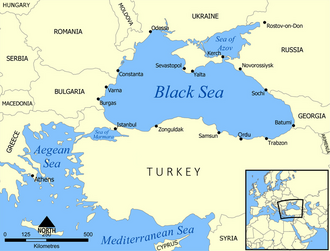
Ukraine supplied enormous quantities of wheat, sunflower oil, barley, and corn to Africa, the Middle East, and Asia. With Black Sea ports blockaded, grain markets experienced historic volatility:
- Egypt, Lebanon, Tunisia, and Kenya faced acute bread price inflation.
- UN-brokered Black Sea Grain Initiative temporarily restored flows, only to collapse amid renewed strikes.
- Romania, Poland, and Danube ports became emergency export corridors.
Instead of Odessa feeding the Mediterranean, grain moved by barge and rail to Constanța and Gdańsk, then onward by sea. What was once a stable, centralized supply chain became a multi-modal improvisation balancing war risk, insurance premiums, and political diplomacy.
The Arctic and Eurasian Pipelines: The Search for Alternative Corridors
As Europe decoupled from Russian energy, Moscow deepened its energy pivot eastward:
- Arctic LNG terminals expanded capacity despite sanctions.
- Northern Sea Route investments accelerated, with Chinese cooperation.
- Pipeline diplomacy intensified through Central Asia, Mongolia, and the South Caucasus.
The war indirectly accelerated Arctic commercial navigation as a long-term alternative corridor linking Russian exports to Asian demand. Ice-class fleets, LNG carriers, and China-Russia shipbuilding partnerships now anchor the northern maritime economy.
Global transport began to tilt vertically—North–South and Arctic–Asia—breaking the historical West–East dependence on Europe as a central routing hub.
Inflation, Interest Rates, and the New Cost of Transport
The war-driven shock to global energy prices triggered a powerful wave of synchronized inflation worldwide, pressuring central banks to respond with the steepest interest rate tightening cycle in decades. This abrupt shift in monetary policy fundamentally altered the economics of global shipping and logistics. The cost of credit for ship financing rose sharply, loans for port modernization and infrastructure became more expensive, and capital-intensive projects—such as vessel retrofits, fleet decarbonization, and the transition to green fuels—slowed or were deferred. Consequently, even during periods when ocean freight rates moderated, the underlying cost of transport remained elevated due to this new, more expensive cost of capital. The conflict revealed a critical, often overlooked vulnerability: that the modernization and sustainability of global maritime trade depend not just on technological innovation, but equally on the stability and affordability of financing—a stability that wartime inflation decisively eroded.
War-driven fuel shocks triggered synchronized inflation across the world. Central banks responded with the steepest interest rate tightening cycle in decades:
- Shipping credit costs rose.
- Port infrastructure loans became more expensive.
- Vessel retrofits, decarbonization projects, and green fuel transitions slowed.
The war made logistics more expensive even when freight rates fell; capital itself became the bottleneck. Global trade discovered that maritime modernization depends not only on technology but on financing stability, which wartime inflation eroded.
Currency Realignments and De-Dollarisation Waves
Three years of sustained conflict and financial sanctions have acted as a powerful accelerant for currency realignments in international trade, fostering distinct waves of de-dollarization. Russia–China trade pivoted almost entirely to transactions in renminbi and rubles, establishing a new bilateral template. India, seeking to maintain economic ties with Russia, actively explored and implemented rupee-rouble payment frameworks. Simultaneously, the strategic calculus of Gulf energy exporters evolved, making long-discussed contracts for oil and gas in non-dollar currencies—such as the Chinese yuan—appear more feasible and politically strategic than before. While the war did not dismantle the dollar’s global dominance, it successfully catalyzed the creation of significant, parallel payment ecosystems and demonstrated the tangible geopolitical utility of alternative currencies, thereby chipping away at the financial unipolarity that has defined the global economy for decades.
Three years of conflict accelerated currency shifts:
- Russia–China trade moved almost entirely to RMB and rubles.
- India explored rupee–rouble frameworks.
- Persian Gulf energy contracts in non-dollar currencies became more feasible.
The war did not kill dollar dominance, but it weakened guaranteed exclusivity. For the first time in decades, the future of energy and shipping settlement began to look multi-polar, not universal.
Safety of Navigation and Expanded Conflict Zones
Before 2022, the world identified a limited set of naval flashpoints: Hormuz, Bab el-Mandeb, Taiwan Strait, Malacca. Three years into the Russia–Ukraine war:
- The Black Sea became a missile theatre.
- The Baltic Sea witnessed infrastructure sabotage fears.
- Mediterranean tanker transfers became geopolitical events.
Maritime risk mapping expanded. Insurance underwriting now builds conflict probability models far beyond traditional zones. Global shipping is learning to live inside overlapping security geographies.
Conclusion
Three years after the invasion of Ukraine, the world economy is still reorganizing around the shock. Energy routes have been redrawn, grain pathways re-routed, currencies re-balanced, and shipping insurance reinvented. Nothing about global logistics today resembles its 2021 configuration.
The war did not merely disrupt trade; it rewired it.
Oil now flows farther, costs more to move, and requires more complicated insurance. Grain arrives through improvised multi-modal detours. Tankers sail longer legs under non-Western insurers. LNG terminals multiply along European coasts. Container flows reorient toward Asia and the Arctic.
The global economy has entered an era where transport is not just infrastructure but strategy. The war turned ships into diplomatic instruments, ports into negotiation tables, and supply chains into geopolitical maps.
In this new age, maritime actors must operate not only across oceans — but across power systems, sanctions regimes, and shifting alliances.
References
-
International Maritime Organization (IMO), Maritime Safety and Black Sea Guidance 2022–2025
-
UNCTAD, Global Trade Update 2022–2024
-
World Bank, Commodity Shock and Logistic Cost Briefing 2023
-
Lloyd’s List Intelligence, Shadow Fleet Structure and Tanker Risk Outlook 2024
-
IEA (International Energy Agency), Post-2022 Fuel Market Rebalancing 2023–2024
-
EU Transport Monitor, Danube Emergency Grain Corridors Report 2023
-
Maritime and Coastguard Agency (UK), War Zone Marine Insurance Advisory 2024
-
Clarksons Research, Tanker and LNG Route Reconfiguration Index 2024–2025
-
FAO (UN), Global Grain Supply and Food Security 2022–2024
-
RAND Corporation, Arctic Route and Strategic Energy Pivot 2023