
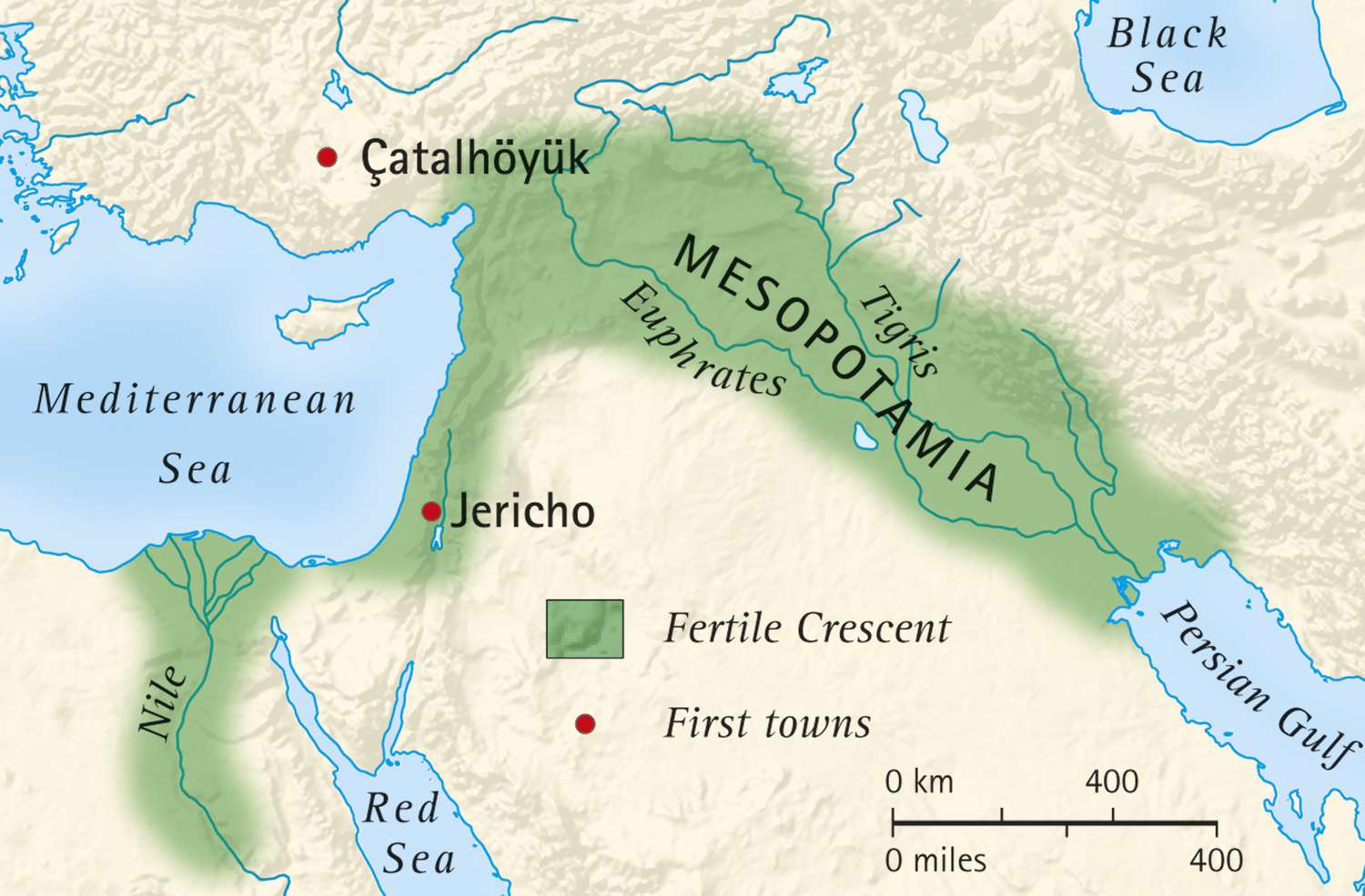
Human civilization did not emerge randomly. It arose where geography, water, climate, and connectivity aligned to support sustained settlement, agricultural surplus, trade, and cultural exchange. Few regions illustrate this better than ancient Mesopotamia, the land between the Euphrates and Tigris (Dijlah) rivers, and its maritime extension through the Persian Gulf. Together, these riverine and marine systems formed one of the most influential geographic engines of early civilization, often referred to as the Cradle of Civilization.
This article examines how these two rivers and the Persian Gulf collectively enabled the rise of early complex societies, state formation, long-distance trade, and enduring cultural legacies.

The Euphrates and Tigris: Lifelines of Early Mesopotamia
Geography and Hydrology
The Euphrates and Tigris originate in the highlands of eastern Anatolia and flow southeast through modern-day Turkey, Syria, and Iraq before converging near the head of the Persian Gulf. Unlike the predictable flooding of the Nile, these rivers were hydrologically volatile, flooding irregularly due to snowmelt and seasonal rains upstream.
This variability forced early inhabitants to develop engineering solutions—canals, levees, diversion channels, and reservoirs—laying the foundation for organized labor, governance, and technical knowledge.
Agricultural Revolution and Food Surplus
The river floodplains deposited nutrient-rich alluvial soils, enabling the cultivation of wheat, barley, dates, and legumes. Irrigated agriculture supported:
- Permanent settlements
- Population growth
- Food surpluses
- Occupational specialization
These conditions allowed societies to move beyond subsistence farming toward administration, craft production, religion, and science.
The result was the emergence of Sumerian city-states such as Uruk, Ur, Lagash, and Eridu, among the world’s first urban centers.
–
Rivers as Engines of State Formation
Water Management and Political Authority
Controlling water meant controlling life. Large-scale irrigation required coordinated planning, dispute resolution, and maintenance. This necessity contributed directly to:
- Centralized authority
- Codified laws
- Early bureaucratic systems
Institutions governing water distribution evolved into broader political structures, making the rivers not only ecological assets but also drivers of early statehood.
Cultural and Intellectual Development
Along the Euphrates and Tigris, early societies developed:
- Cuneiform writing for record-keeping and administration
- Mathematical systems for land measurement and trade
- Astronomical observations linked to agricultural cycles
- Legal frameworks, including early law codes
These innovations were inseparable from river-based economic and administrative life.
–
The Persian Gulf: Maritime Extension of Civilization
Gateway to the Wider World
While the rivers sustained inland societies, the Persian Gulf connected Mesopotamia to distant regions. Rather than a peripheral sea, the Gulf functioned as an integral maritime corridor linking:
- Mesopotamia
- The Arabian Peninsula
- The Indus Valley
- Later, East Africa and the Indian Ocean world
Archaeological evidence shows seaborne trade as early as the 3rd millennium BCE.
Trade, Resources, and Cultural Exchange
Mesopotamia lacked key raw materials such as timber, metals, and stone. Through the Persian Gulf, traders exchanged agricultural surplus and textiles for:
- Copper from Oman (Magan)
- Timber and precious stones from the Indus region (Meluhha)
- Pearls, fish, and marine products
This maritime trade expanded economic horizons and facilitated cultural diffusion, technology transfer, and shared religious motifs.

Integrated River–Sea System
From Irrigation to Global Connectivity
The Euphrates and Tigris fed agricultural cores and urban centers; the Persian Gulf extended these systems outward. Together, they formed an integrated river–sea civilization system:
- Rivers supported production and governance
- The Gulf enabled trade, diplomacy, and exploration
This integration allowed Mesopotamian societies to become regional powers, influencing neighboring civilizations rather than remaining isolated agrarian communities.
Environmental Constraints and Adaptation
The same system also imposed limits. Salinization from prolonged irrigation, shifting river courses, and coastal changes near the Gulf periodically undermined cities. These pressures forced adaptation, migration, and institutional reform—key dynamics in the long-term evolution of civilization.
Enduring Legacy of the Cradle of Civilization
The combined influence of the Euphrates, Tigris (Dijlah), and the Persian Gulf produced foundational elements of human civilization, including:
- Urban life
- State administration
- Written language
- Long-distance trade networks
- Legal and religious institutions
Modern concepts of governance, commerce, and infrastructure trace part of their lineage to this river–maritime system.
Conclusion
The Cradle of Civilization was not shaped by a single river or a single innovation. It emerged from the dynamic interaction between two great rivers and a strategic sea. The Euphrates and Tigris sustained life and order on land, while the Persian Gulf connected Mesopotamia to the wider ancient world. Together, they transformed geography into history—and laid the groundwork for civilization as we know it today.