
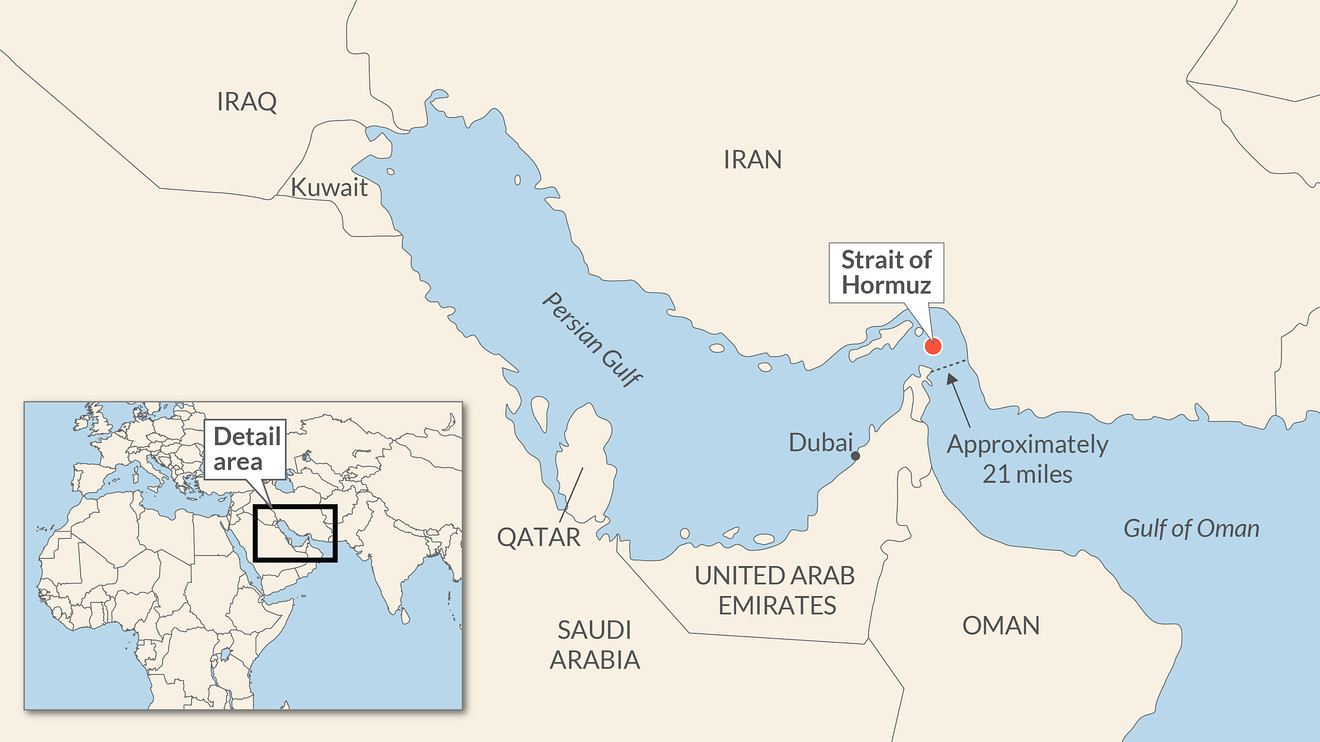
This article explains how disruption in one narrow maritime passage can move through LNG markets, fertilizer supply, port logistics, food prices, insurance, freight rates, and the daily lives of people far from the Persian Gulf.
How does Strait of Hormuz disruption affect global supply chains?
Disruption in the Strait of Hormuz affects global supply chains because the waterway is not only a route for crude oil. It also carries large volumes of LNG, petroleum products, fertilizers, petrochemicals, and other strategic cargoes. UNCTAD warns that disruption in the Strait can raise energy, fertilizer, transport, bunker fuel, freight, and insurance costs, which may increase food costs and intensify cost-of-living pressure, especially for vulnerable economies.
The Strait of Hormuz is not only an oil story
When people hear the words Strait of Hormuz, they usually think about oil tankers. That is understandable. The Strait is one of the world’s most important oil transit routes. EIA reported that oil flows through the Strait averaged about 20 million barrels per day in 2024, equivalent to around 20% of global petroleum liquids consumption.
But focusing only on oil gives an incomplete picture.
The Strait of Hormuz is also a gateway for LNG, fertilizers, petrochemicals, refined products, industrial feedstocks, offshore supplies, containerized goods, and port-dependent regional economies. When this passage is disrupted, the effects move through supply chains like a wave. First, ships slow down or stop. Then freight rates, insurance premiums, fuel prices, demurrage costs, and delivery schedules change. After that, energy markets, fertilizer markets, food systems, ports, factories, and households begin to feel the pressure.
This is why the Strait of Hormuz should not be understood only as an oil chokepoint. It should be understood as a global supply-chain pressure point.
A chokepoint is dangerous not only because it is narrow. It is dangerous because the world has built production, trade, energy, agriculture, and logistics systems around the assumption that the route will remain open. When that assumption weakens, businesses, governments, seafarers, and consumers all begin to pay the price.
In 2026, this wider supply-chain meaning has become especially clear. UNCTAD has directly linked Strait of Hormuz disruption to global trade and development, including the effects on LNG, fertilizers, energy prices, freight, insurance, and food costs.
That is why the real question is not only: What happens to oil if Hormuz is disrupted?
The better question is:
What happens to the global economy when energy, fertilizer, shipping, ports, insurance, and food systems all face stress at the same time?
Why supply chains are vulnerable to maritime chokepoints
Modern supply chains are efficient, but they are not always resilient. Many companies use just-in-time delivery, optimized inventory, global sourcing, long-distance shipping, and tightly scheduled port calls. These systems reduce cost during normal times. But they become vulnerable when a strategic maritime route becomes unsafe or uncertain.
A maritime chokepoint creates vulnerability because it concentrates risk. Instead of thousands of ships using many independent routes, a large share of cargo passes through one narrow sea lane. If that sea lane is disrupted, the effect is not local. It travels through the entire trade network.
The Strait of Hormuz is a classic example. It links the Persian Gulf with the Gulf of Oman and the wider Indian Ocean. Gulf producers export energy and industrial cargoes through this passage to Asia, Europe, Africa, and beyond. Import-dependent countries receive fuel, gas, fertilizers, and petrochemical inputs through ships that must pass through or be affected by the Strait.
EIA explains that the inability of oil to transit a major chokepoint, even temporarily, can create substantial supply delays and raise shipping costs, potentially increasing world energy prices.
That logic also applies beyond oil. If LNG cargoes are delayed, gas buyers may compete for alternative cargoes. If fertilizer exports slow, agricultural costs may rise. If insurance premiums increase, shipping becomes more expensive. If bunker prices rise, transport costs rise. If ports face congestion, manufacturers may wait for inputs. If seafarers are stranded, crew changes and vessel operations become harder.
Supply-chain disruption is rarely one single event. It is usually a chain reaction.
In the case of Hormuz, the chain may look like this:
Security crisis → reduced ship transits → higher insurance and freight costs → delayed LNG and fertilizer cargoes → higher energy and agricultural input costs → higher production and food costs → wider inflation and trade pressure.
This is why the Strait of Hormuz matters to more than shipping companies. It matters to electricity consumers, farmers, food importers, port authorities, manufacturers, logistics planners, and governments.
What actually passes through the Strait of Hormuz?
The cargo mix through the Strait of Hormuz is broader than many readers imagine. Crude oil is the most visible cargo, but it is not the only strategic flow.
The key cargo categories include:
Crude oil from Gulf producers.
Condensate and petroleum liquids used in energy and petrochemical markets.
LNG from major Gulf exporters, especially Qatar and the UAE.
Fertilizers including ammonia, urea, and other nitrogen-based products.
Petrochemicals and chemical feedstocks.
Refined products such as diesel, gasoline, and jet fuel.
LPG and gas liquids used in industrial and household energy systems.
Containerized cargo serving Gulf economies.
Dry bulk and project cargo linked to construction, industry, and energy infrastructure.
Offshore and marine-service cargoes supporting oil and gas operations.
UNCTAD’s 2026 analysis emphasized that the Strait carries crude oil and LNG, and that disruption affects fertilizer flows and global food-security risk. Its report also noted that daily ship transits through the Strait had fallen sharply during the crisis period it analyzed.
IEA reported that over 110 bcm of LNG passed through the Strait of Hormuz in 2025. It also stated that about 93% of Qatar’s LNG exports and 96% of the UAE’s LNG exports transited through the Strait, representing almost one-fifth of global LNG trade, with no alternative routes available to bring those volumes to market.
This is the key supply-chain message: Hormuz is not only a route for oil tankers. It is a route for energy security, industrial production, fertilizer supply, food systems, and port economies.
LNG: the hidden pressure point in the Hormuz crisis
LNG is one of the most important non-oil cargoes affected by Strait of Hormuz disruption. LNG stands for liquefied natural gas. Natural gas is cooled to extremely low temperatures so that it becomes liquid and can be transported by specialized LNG carriers. After arrival, it is regasified and sent into gas networks for electricity generation, heating, industry, and other uses.
The LNG supply chain is highly specialized. It depends on liquefaction plants, storage tanks, loading terminals, LNG carriers, receiving terminals, regasification capacity, and long-term commercial contracts. Unlike some dry cargoes, LNG cannot simply be loaded onto any available vessel. It requires dedicated ships and technical handling.
This makes LNG especially vulnerable to chokepoint disruption.
IEA stated that market conditions shifted abruptly in March 2026 as the Middle East conflict resulted in the de facto closure of the Strait of Hormuz to LNG cargoes. It reported that global LNG production declined by 8% year-on-year, with a sharp drop in exports from Qatar and the UAE only partly offset by higher output from other regions.
That is a major supply-chain signal. A reduction in LNG flow is not only a shipping issue. It affects electricity systems, industrial users, household gas prices, and national energy planning.
Qatar is one of the world’s most important LNG exporters. Many buyers in Asia and beyond depend on Qatari LNG. If cargoes from Qatar cannot move normally through the Strait, importers must seek alternative supply. But global LNG supply is not infinitely flexible. Cargoes are often committed under long-term contracts. Spot cargoes may be limited. Replacement cargoes may come from farther away. Prices may rise quickly.
Reuters reported in May 2026 that a second Qatari LNG tanker successfully crossed the Strait of Hormuz to Pakistan during the ongoing Iran war, following coordination that allowed limited passage for essential energy supply.
This example shows the practical reality of crisis logistics. Even when the Strait is disrupted, some cargoes may still move under special arrangements, route approvals, diplomatic coordination, or temporary windows. But this is not the same as normal trade. A supply chain cannot function efficiently if each cargo requires exceptional political or security negotiation.
Normal LNG trade requires predictability. Crisis LNG trade requires permission, timing, risk tolerance, and luck.
Why LNG disruption affects electricity and industry
LNG disruption matters because gas is not only used for heating. It is used for electricity generation, industrial processes, fertilizer production, petrochemicals, and power-system balancing.
When LNG supply is reduced or delayed, several consequences may follow.
First, gas prices can rise. Buyers may compete for available spot cargoes. Countries with less bargaining power may struggle to secure supply.
Second, electricity costs can increase. In countries where gas-fired power plants set marginal electricity prices, higher gas costs can feed into power bills.
Third, industries may reduce output. Energy-intensive sectors such as chemicals, steel, ceramics, glass, and fertilizers may face higher costs or supply uncertainty.
Fourth, some countries may switch temporarily to coal, oil, or other fuels, increasing emissions and air pollution.
Fifth, governments may intervene through subsidies, emergency procurement, strategic reserves, or rationing.
IEA’s assessment that disruption reduced LNG flows from Qatar and the UAE demonstrates why Hormuz cannot be treated as only an oil issue.
For maritime readers, the LNG dimension also has operational importance. LNG carriers are high-value vessels. They require specialized crews, cargo systems, safety procedures, boil-off gas management, emergency response planning, and port coordination. Sending LNG carriers through a conflict-affected chokepoint raises serious safety and commercial questions.
In normal times, LNG shipping is already complex. In a crisis, it becomes a high-stakes operation connecting navigation, security, energy markets, and diplomacy.
Fertilizers: the supply-chain link many people miss
The fertilizer dimension is one of the most important parts of the Hormuz story. It is also one of the least understood by the general public.
Fertilizers are essential to modern agriculture. Nitrogen fertilizers, especially ammonia and urea-based products, are closely linked to natural gas because gas is used as both fuel and feedstock in fertilizer production. When gas prices rise, fertilizer costs often rise. When fertilizer shipments are delayed, farmers may face higher prices, lower availability, or timing problems before planting seasons.
UNCTAD published a dedicated 2026 analysis titled “From gas to grain: Fertilizer disruptions raise risks for food security and trade.” It stated that the conflict affecting the Strait of Hormuz region is disrupting energy and fertilizer flows, with measurable impacts on costs and growing risks for food systems, trade, and vulnerable economies.
This is where the Hormuz crisis enters the food system.
The chain is simple but powerful:
Gas disruption → fertilizer disruption → higher farming costs → lower affordability or availability → food-price pressure.
Farmers do not use crude oil directly in every crop, but they do use diesel, electricity, irrigation, transport, machinery, and fertilizers. If the price of energy rises, farming costs rise. If fertilizers become expensive or unavailable, yields may suffer. If yields suffer, food supply tightens. If transport and shipping costs rise at the same time, consumers face higher food prices.
UNCTAD warned that higher energy, fertilizer, transport, bunker fuel, freight, and insurance costs may increase food costs and intensify cost-of-living pressures, especially for vulnerable populations.
This makes the Strait of Hormuz a food-security issue, not only an energy-security issue.
From gas to grain: how a maritime crisis reaches the supermarket
Most consumers do not think about sea lanes when buying bread, rice, fruit, vegetables, or meat. But maritime disruption can reach the supermarket through several channels.
The first channel is fertilizer cost. Fertilizers help farmers increase crop yields. If fertilizers become more expensive, farmers may reduce application or pass higher costs into food prices.
The second channel is fuel cost. Farm machinery, road transport, cold-chain logistics, fishing vessels, and food distribution all use energy. Higher fuel prices increase cost throughout the chain.
The third channel is shipping cost. Many food products, feed grains, fertilizers, and packaging materials move by sea. If freight rates and insurance rise, delivered cost rises.
The fourth channel is currency and import pressure. Countries that import fuel, fertilizer, and food may face pressure on foreign exchange reserves if global prices rise at the same time.
The fifth channel is government budget pressure. Some countries subsidize fuel, electricity, bread, or fertilizer. Higher import costs can strain public budgets.
This is why UNCTAD connects the Strait of Hormuz disruption with vulnerable populations. The poorest households spend a larger share of income on food and energy. A small price increase can be painful. A large increase can become a social and political problem.
The supply-chain lesson is that shipping routes are not separate from daily life. They are hidden infrastructure behind food security.
Ports and terminals: the first places where disruption becomes visible
Ports are where global trade becomes physical. When a chokepoint is disrupted, ports feel the effect quickly.
In the Persian Gulf, terminals may face reduced vessel calls, delayed departures, congested anchorages, storage pressure, and uncertainty over pilotage, tug availability, and berth planning. Outside the region, importing ports may face late cargoes, schedule gaps, bunching of arrivals, and sudden demand for replacement supply.
A port disruption does not always mean the port is closed. A port may be officially open while trade is still disrupted. Ships may be unwilling to enter. Insurers may require special conditions. Cargo owners may postpone loading. Crews may not be able to change. Naval authorities may recommend waiting. Terminals may fill storage because exports cannot leave.
This creates several operational problems.
Berth planning becomes uncertain.
If ships are delayed at the Strait, they may miss berth windows. Later, several delayed ships may arrive together, creating congestion.
Storage capacity becomes stressed.
Export terminals may fill tanks or warehouses if cargo cannot move. Import terminals may run low if cargoes are delayed.
Hinterland transport becomes unstable.
Truck, rail, and inland distribution systems are planned around expected vessel arrivals. Delays at sea create problems on land.
Port costs rise.
Waiting time, demurrage, security arrangements, overtime, and emergency procedures increase cost.
Cargo documentation may need revision.
Letters of credit, delivery windows, certificates, customs papers, and commercial contracts may be affected by delay.
Crew changes become harder.
Air connections, visas, port access, and shore leave can all become more complicated during a security crisis.
This is why port authorities and terminal operators should treat Hormuz not only as a distant geopolitical issue, but as a practical continuity-planning problem.
Freight rates and bunker fuel: the cost multiplier
Shipping disruption affects freight rates in several ways. If ships wait longer, effective vessel supply decreases. If voyages are delayed, fewer ships are available for new cargoes. If vessels deviate or avoid certain areas, voyage duration increases. If insurance and security costs rise, owners demand higher freight. If fuel prices rise, voyage costs rise again.
Bunker fuel is especially important. Ships consume large quantities of fuel. When oil prices rise, bunker fuel prices often rise too. That increases the cost of operating ships across many trades, not only in the Persian Gulf.
UNCTAD specifically warned that higher transport costs, including freight rates, bunker fuel prices, and insurance premiums, may increase food costs and cost-of-living pressure.
This is the cost multiplier effect. A disruption in Hormuz can raise energy prices. Higher energy prices raise bunker costs. Higher bunker costs raise freight costs. Higher freight costs raise delivered prices for traded goods. If fertilizers and food cargoes are affected at the same time, the impact on households becomes stronger.
For shipping companies, this creates commercial uncertainty. Owners may seek higher rates. Charterers may resist. Cargo buyers may delay purchases. Traders may build risk premiums into contracts. Ports may see uneven flows. The logistics system becomes less efficient.
A supply chain under uncertainty becomes more expensive even before cargoes are physically unavailable.
Marine insurance: the invisible gatekeeper of trade
Insurance is one of the least visible but most powerful parts of maritime trade. Without acceptable insurance, ships may not sail, cargo may not be financed, and ports may not accept normal operations.
In a high-risk area, several types of insurance become important:
Hull and machinery insurance.
War-risk insurance.
Protection and indemnity cover.
Cargo insurance.
Delay and business-interruption cover.
Reinsurance.
Port and terminal liability cover.
When the Strait of Hormuz becomes unstable, insurers reassess the likelihood of vessel damage, detention, seizure, missile attack, mine strike, crew injury, pollution, and cargo loss. Even if insurance remains available, premiums may rise sharply.
The London Market Association stated in 2026 that safety concerns, rather than lack of insurance availability, were driving reduced vessel traffic through the Strait of Hormuz. It also stated that war insurance remained available in the Lloyd’s and London company market for vessels wishing to transit, while P&I liability cover remained non-cancellable and reinsured in the London market.
That distinction matters. A route may be commercially disrupted even if insurance has not disappeared. If the premium is high enough, or if the conditions are strict enough, shipping companies may avoid the area.
Insurance therefore acts like an invisible gatekeeper. It does not physically block the Strait, but it can determine whether commercial traffic continues at normal scale.
Seafarers: the human supply-chain risk
Every supply chain depends on people. In shipping, those people are seafarers.
The Strait of Hormuz crisis has shown that supply-chain disruption is not only about cargo delay. It is also about crew safety, fatigue, mental health, repatriation, contract rights, and human dignity.
IMO said in May 2026 that around 20,000 seafarers, as well as port workers and offshore crews, were affected in the region. IMO emphasized that while disruption to global trade is significant, its primary concern remains the humanitarian and safety implications for seafarers onboard ships operating in the area.
This is an essential point. A ship delayed in a high-risk area is not just a delayed asset. It is a workplace with people onboard.
Seafarers may face:
Fear of attack.
Longer contracts due to crew-change delays.
Pressure to transit dangerous waters.
Uncertainty about high-risk pay.
Family anxiety.
Reduced shore leave.
Mental fatigue.
Physical danger from missiles, drones, mines, small craft, or gunfire.
Difficulty accessing medical care.
Communication problems.
Stress caused by conflicting orders and unclear security information.
A Washington Post report from May 2026 described a Filipino crew on a cargo ship that had been stranded in the Persian Gulf for more than a month and later faced gunfire while attempting to escape through the Strait during a temporary ceasefire. The report described the case as part of the wider challenge faced by more than 20,000 stranded sailors in the region.
This is why people-first maritime writing matters. The supply chain is not an abstract system. It is operated by crews, port workers, tug crews, pilots, terminal staff, logistics coordinators, truck drivers, surveyors, and emergency responders.
When the Strait is disrupted, they are the first to carry the risk.
Why Asia is highly exposed to Hormuz supply-chain disruption
Asia is especially exposed to Strait of Hormuz disruption because a large share of Gulf energy exports is destined for Asian markets.
UNCTAD’s 2026 report showed that disruptions compromise energy supplies particularly to Asia, presenting data on crude oil and LNG transported through the Strait in 2024 by destination.
IEA also stated that about 80% of oil and oil products transiting the Strait in 2025 was destined for Asia.
This has major implications for China, India, Japan, South Korea, Pakistan, and other Asian importers. Many Asian economies depend on Gulf crude and LNG for refineries, power generation, industry, transport, and petrochemical production.
If Hormuz flows decline, Asian buyers may seek alternative supply from the United States, Australia, Africa, Russia, or other regions. But alternative cargoes may be more expensive, farther away, already contracted, or unsuitable for specific refineries. Longer voyage distances can also tie up more ships and raise freight costs.
For countries with gas shortages or energy-security pressures, LNG disruption is particularly sensitive. Reuters’ May 2026 report about Qatari LNG tankers reaching Pakistan under special arrangements shows how essential energy cargoes may require diplomatic coordination during crisis conditions.
This is a key lesson: supply chains are not equally vulnerable everywhere. The same chokepoint disruption may have different consequences depending on national import dependence, storage capacity, alternative suppliers, currency strength, and government ability to subsidize energy or food.
Europe and the wider world: indirect but serious effects
Europe may not be as directly dependent on Gulf energy as some Asian economies, but it is still affected by Hormuz disruption.
European gas markets are connected to global LNG competition. If Asian buyers compete harder for LNG because Gulf supplies are disrupted, global LNG prices can rise. European buyers may need to pay more for replacement cargoes. Industrial gas users may face higher costs. Energy traders may respond to risk even before physical shortages appear.
European shipping, insurance, and trading companies are also deeply involved in Gulf-related cargoes. Shipowners, charterers, brokers, insurers, classification societies, banks, and commodity traders may all be exposed to the consequences of Hormuz disruption.
The wider world is affected through:
Energy prices.
LNG competition.
Fertilizer markets.
Food prices.
Shipping insurance.
Freight rates.
Port congestion.
Financial-market risk.
Development impacts in vulnerable economies.
This is why UNCTAD frames the issue as a matter of global trade and development, not merely regional conflict.
A supply-chain crisis can cross borders even when cargo does not. Prices travel faster than ships.
How disruption affects manufacturers and industrial supply chains
Manufacturers are affected by Strait of Hormuz disruption through energy costs, feedstock costs, shipping delays, and uncertain delivery schedules.
Industries that may be exposed include:
Petrochemicals.
Plastics and packaging.
Fertilizer production and distribution.
Automotive manufacturing.
Construction materials.
Metals.
Food processing.
Cold-chain logistics.
Textiles.
Consumer goods.
Electronics supply chains using petrochemical materials or energy-intensive components.
The connection may not be obvious. A European or Asian factory may not import cargo directly from the Persian Gulf, but it may depend on electricity, gas, plastic packaging, chemical inputs, transport fuel, or fertilizer-linked agricultural raw materials. If these costs rise, production costs rise.
Manufacturing supply chains are also time-sensitive. A delayed container, chemical shipment, or fuel supply can stop a production line. Companies may need to hold more inventory, find alternative suppliers, or pay higher transport costs. These adaptations reduce efficiency.
The lesson is that global supply chains are interconnected. Hormuz disruption can affect industries that never appear in oil-market headlines.
Why “near halt” in ship transits matters
A chokepoint crisis becomes serious when ship traffic falls sharply. UNCTAD’s 2026 report stated that ship transits through the Strait of Hormuz had come to a near halt during the period it analyzed, with daily transits dropping sharply compared with earlier February averages.
This matters because shipping is a flow system. The global economy does not only need cargoes to exist. It needs cargoes to move continuously.
When flows stop or slow, problems accumulate.
Export terminals fill.
Import terminals run low.
Ships wait.
Crews remain onboard longer.
Cargo owners miss delivery windows.
Contracts are renegotiated.
Storage becomes expensive.
Freight markets tighten.
Insurance costs rise.
Ports face uneven arrival patterns.
Emergency cargoes receive priority.
Less powerful buyers may lose access.
A near halt does not need to last long to create major consequences. Even a short disruption can disturb schedules for weeks because maritime supply chains operate with long voyage times and limited spare capacity.
Once ships are delayed, the delay does not disappear instantly when the route reopens. Vessels must be rescheduled. Ports must handle backlogs. Cargo owners must re-plan. Insurers must reassess. Crews may need relief. The system requires time to recover.
Selective passage: when some cargoes move and others wait
During a crisis, the Strait may not be equally open to all ships. Some vessels may receive permission or protection. Others may wait. Some cargoes may be treated as essential. Others may be delayed. Some flags or ownership structures may face more risk than others.
Reuters’ report on Qatari LNG tankers crossing to Pakistan during the conflict is a good example of selective passage. The vessels moved under specific coordination and diplomatic context, not as part of fully normal shipping conditions.
Selective passage creates supply-chain distortion. It may help certain urgent cargoes move, but it does not restore normal market functioning. It can create uncertainty about which cargoes will be allowed, which vessels are safe, and which routes are acceptable.
For traders and logistics planners, selective passage is difficult because it reduces predictability. You may know that some ships are moving, but not whether your ship, cargo, buyer, charterer, flag, or destination will be treated the same way.
In commercial shipping, uncertainty is cost.
Alternative routes and why they are not enough
Whenever Hormuz disruption occurs, attention turns to alternative routes. Some Gulf oil can move through pipelines to ports outside the Strait. The UAE, Saudi Arabia, and others have infrastructure that can reduce dependence on Hormuz for part of their exports.
But alternative routes have limits.
They may not have enough capacity.
They may not connect all producers.
They may not handle LNG.
They may not serve all cargo types.
They may have their own security risks.
They may require different port infrastructure.
They may increase cost.
They may not match refinery needs.
They may be unavailable for commercial or political reasons.
IEA’s statement that there are no alternative routes to bring the relevant LNG volumes from Qatar and the UAE to market is especially important.
A Guardian report in May 2026 stated that the UAE planned to complete a second oil pipeline bypassing the Strait of Hormuz by 2027, reflecting the strategic desire to reduce dependence on the Strait.
This kind of infrastructure can improve resilience, but it does not solve the immediate problem. Pipelines take time to build. They serve specific cargoes. They cannot replace all maritime flows. LNG export terminals cannot simply be moved outside the Gulf.
The world can reduce dependence on Hormuz, but it cannot quickly eliminate it.
The role of stockpiles, storage, and strategic reserves
Stockpiles help manage short-term disruption. Countries may hold strategic petroleum reserves. Companies may hold commercial inventories. LNG buyers may have storage. Fertilizer distributors may hold seasonal stocks. Ports may have tank farms and warehouses.
But storage has limits.
Oil storage can buy time, but not solve prolonged supply loss.
Gas storage depends on infrastructure and season.
LNG storage is limited and specialized.
Fertilizer storage is seasonal and may be geographically uneven.
Food stocks may protect some countries but not others.
Port storage can become congested if exports cannot move.
Strategic reserves are also political tools. Governments may release oil reserves to calm markets. But such releases are temporary. They cannot replace continuous maritime trade.
Storage is therefore a buffer, not a substitute for open sea lanes.
A prolonged Hormuz disruption would test not only how much stock exists, but where it is located, who controls it, how fast it can be released, and whether vulnerable countries can afford replacement supply.
Small and vulnerable economies face the highest pressure
Large economies often have more options. They may have strategic reserves, stronger currencies, diversified suppliers, diplomatic influence, and better access to shipping and insurance markets.
Small and vulnerable economies may have fewer options. They may depend heavily on imported fuel, food, fertilizer, and shipping services. They may lack storage. They may pay higher freight. They may face currency pressure. They may have limited bargaining power in LNG or fertilizer markets.
UNCTAD’s warning about cost-of-living pressures for the most vulnerable populations should be read in this context.
For a low-income, food-importing country, Hormuz disruption can create a combined shock:
Fuel becomes more expensive.
Fertilizer becomes more expensive.
Food imports become more expensive.
Shipping insurance and freight become more expensive.
Currency pressure increases import costs further.
Government subsidies become harder to finance.
This is why global supply-chain disruption is also a development issue. The countries least responsible for the crisis may suffer some of the heaviest consequences.
The maritime legal and contractual dimension
Global supply-chain disruption also creates legal disputes. When cargoes are delayed or routes become dangerous, commercial contracts are tested.
Relevant issues include:
Force majeure.
Safe port and safe berth obligations.
War-risk clauses.
Deviation rights.
Demurrage and detention.
Laytime interruptions.
Frustration of contract.
Insurance exclusions.
Sanctions compliance.
Cargo delivery deadlines.
Letters of credit.
Port closure clauses.
Crew high-risk-area terms.
A shipowner may argue that proceeding through the Strait is unsafe. A charterer may argue that the vessel must perform the voyage. An insurer may require compliance with security instructions. A bank may require evidence that the cargo is lawful and insured. A port may delay clearance. A crew may object to entering a high-risk area.
These disputes can become costly. They may continue long after the immediate crisis ends.
This is one reason why supply-chain resilience requires legal preparedness, not only operational preparedness. Companies should review contracts before crises, not during them.
Maritime security and supply-chain resilience
Maritime security is often discussed as protection against attack, piracy, terrorism, or unlawful interference. But in chokepoint crises, maritime security also becomes supply-chain security.
A secure route allows cargo to move. An insecure route raises cost, delay, uncertainty, and human risk.
Practical resilience measures include:
Updated voyage risk assessments.
Clear company security instructions.
Flag-state and coastal-state coordination.
War-risk insurance planning.
Alternative supplier mapping.
Inventory buffers for critical cargoes.
Port contingency planning.
Crew welfare protocols.
Emergency communication plans.
Crisis monitoring teams.
Scenario planning for partial and full closure.
Contract clauses for high-risk routes.
For governments, resilience may include strategic reserves, diversified energy sources, pipeline alternatives, port security, naval coordination, and food-security planning.
For ports, resilience may include storage planning, digital visibility, emergency scheduling, anchorage management, tug and pilot continuity, and communication with shipping lines.
For maritime educators, this crisis should be used as a teaching case in integrated logistics, not only as a geopolitical event.
What port authorities should learn from Hormuz disruption
Port authorities inside and outside the Persian Gulf can learn several lessons from the Hormuz crisis.
First, port resilience depends on visibility. Ports need early warning when vessels are delayed, diverted, or waiting for security clearance.
Second, ports need flexible berth planning. Crisis traffic may arrive irregularly, creating both idle periods and congestion peaks.
Third, ports need storage strategies. Cargo disruption can create both shortages and overflow.
Fourth, ports need stakeholder coordination. Terminal operators, customs, coast guards, pilots, tug operators, agents, shipowners, and cargo owners must communicate clearly.
Fifth, ports need crew-change contingency planning. Seafarer welfare is part of port resilience.
Sixth, ports need cyber and information resilience. In a crisis, misinformation and incomplete data can disrupt decision-making.
Seventh, ports need environmental emergency readiness. A tanker casualty, LNG emergency, or chemical spill during a conflict could require rapid response.
A port is not only a cargo-handling facility. It is a node in a global risk network.
How companies can prepare for future chokepoint disruption
Companies that depend on global trade should not treat the Strait of Hormuz crisis as a one-time event. It is part of a wider pattern of chokepoint risk affecting the Red Sea, Suez, Panama, Black Sea, Malacca, and other strategic routes.
Useful preparation steps include:
Map critical cargo exposure to maritime chokepoints.
Identify suppliers dependent on Gulf energy, LNG, fertilizers, or petrochemicals.
Build alternative supplier options.
Review inventory levels for critical inputs.
Add flexibility to contracts.
Review insurance and war-risk terms.
Monitor freight and bunker cost exposure.
Strengthen port and logistics visibility.
Plan for delayed cargoes and sudden price increases.
Include seafarer welfare in maritime risk assessment.
Coordinate with brokers, insurers, forwarders, and carriers.
Use scenario planning for one-week, one-month, and three-month disruptions.
The goal is not to predict every crisis. The goal is to avoid being surprised by predictable vulnerabilities.
Frequently asked questions
Is the Strait of Hormuz only important for oil?
No. Oil is the most visible cargo, but the Strait is also critical for LNG, fertilizers, refined products, petrochemicals, and regional trade. UNCTAD’s 2026 analysis links disruption in the Strait to energy supplies, fertilizer flows, freight, insurance, and food-cost pressure.
Why does Hormuz disruption affect LNG?
A major share of LNG exports from Qatar and the UAE passes through the Strait. IEA reported that over 110 bcm of LNG passed through the Strait in 2025 and that about 93% of Qatar’s LNG exports and 96% of the UAE’s LNG exports used this route.
Can LNG cargoes use alternative routes?
For the main LNG export volumes from Qatar and the UAE, IEA states there are no alternative routes to bring these volumes to market. LNG export infrastructure is fixed and cannot simply be rerouted like some road cargo.
How does the Strait affect fertilizer prices?
Fertilizer production is closely linked to natural gas, and fertilizer shipments are part of the wider Gulf trade system. UNCTAD warned that disruption affecting the Strait is disturbing energy and fertilizer flows, with risks for food systems, trade, and vulnerable economies.
Why can food prices rise because of a maritime chokepoint?
Food prices can rise because energy, fertilizer, transport, bunker fuel, freight, and insurance costs all affect the cost of producing and moving food. UNCTAD specifically warned that these rising costs may increase food costs and intensify cost-of-living pressures.
Are seafarers affected by supply-chain disruption?
Yes. IMO reported that around 20,000 seafarers, port workers, and offshore crews were affected in the region, and emphasized that the humanitarian and safety implications for seafarers remain its primary concern.
Does a partial reopening solve the supply-chain problem?
Not completely. If only some ships move under special arrangements, the system remains uncertain. Normal trade requires predictable, safe, insured, and commercially viable passage.
Key takeaways
The Strait of Hormuz is not only an oil chokepoint. It is a global supply-chain chokepoint.
Disruption affects LNG, fertilizers, petrochemicals, refined products, ports, freight, insurance, and food systems.
LNG is especially vulnerable because major Gulf LNG export volumes have no practical alternative route to market.
Fertilizer disruption can move from gas markets into farming costs and food prices.
Insurance and freight costs can increase the price of many traded goods, even when cargoes are not directly connected to oil.
Seafarers are central to the crisis. Supply chains depend on people, not only ships and cargo.
The most vulnerable economies and households may suffer the strongest effects because food and energy take a larger share of income.
The 2026 Hormuz disruption shows that supply-chain resilience must include maritime security, port planning, energy diversification, fertilizer security, legal preparedness, and crew welfare.
Conclusion: one narrow passage, many global consequences
The Strait of Hormuz is often described as an oil chokepoint, but that phrase is too narrow. Oil is only the beginning of the story.
The real importance of Hormuz lies in the way it connects energy, agriculture, logistics, industry, ports, insurance, seafarers, and consumers. When the Strait is stable, the world often forgets it exists. LNG reaches power plants. Fertilizers reach farmers. Tankers reach refineries. Ports maintain schedules. Freight rates remain manageable. Seafarers pass through without becoming headline news.
When the Strait is disrupted, the hidden connections become visible.
A delayed LNG carrier can affect gas markets. A fertilizer shortage can affect planting decisions. Higher bunker prices can increase freight costs. Higher war-risk premiums can change routing decisions. A stranded ship can become a humanitarian concern. A port delay can become a factory delay. A maritime crisis can become a food-price crisis.
This is the lesson of the 2026 Strait of Hormuz disruption: global trade does not depend only on production. It depends on passage. It depends on safe water, insured voyages, functioning ports, protected crews, and predictable logistics.
Beyond oil, the Strait of Hormuz is a test of global supply-chain resilience.
If the world wants stable energy, affordable food, reliable shipping, and safer maritime work, it cannot treat chokepoints as distant geography. It must treat them as critical infrastructure of the global economy.
Reference list
UNCTAD. Strait of Hormuz Disruptions: Implications for Global Trade and Development. 2026.
UNCTAD. Implications for Global Trade and Development. PDF, 2026.
UNCTAD. From gas to grain: Fertilizer disruptions raise risks for food security and trade. 2026.
U.S. Energy Information Administration. Amid regional conflict, the Strait of Hormuz remains critical oil chokepoint. 2025.
International Energy Agency. The Middle East and Global Energy Markets. 2026.
International Energy Agency / IEU Monitoring. IEA: Middle East conflict disrupts global natural gas markets, delays LNG supply wave. 2026.
International Maritime Organization. Middle East: Strait of Hormuz and shipping/seafarers information. 2026.
Reuters. Second Qatari LNG tanker successfully crosses Hormuz to Pakistan as Iran war continues. 2026.
The Guardian. UAE to complete second oil pipeline bypassing Strait of Hormuz by 2027. 2026.
Washington Post. Inside a cargo ship braving gunfire to escape the Strait of Hormuz. 2026.