
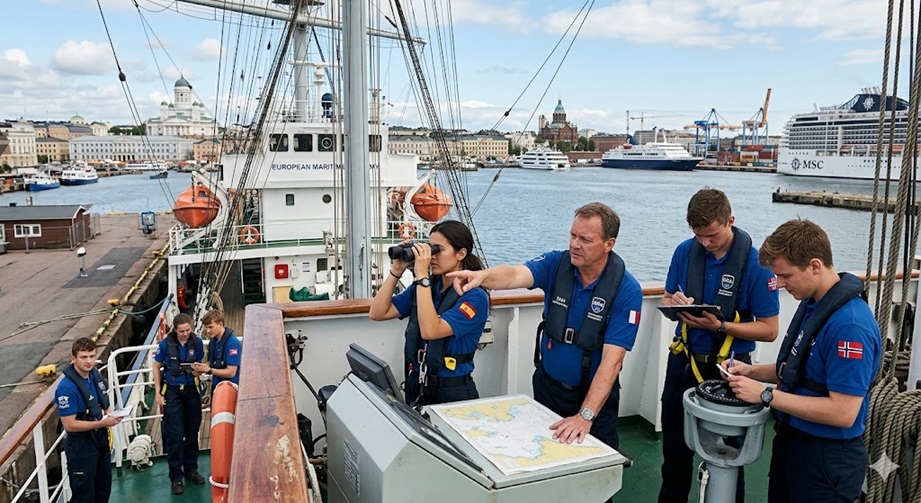
Europe has long held a prominent position in global maritime education and training. This leadership is rooted in the continent’s deep seafaring heritage, its extensive network of maritime academies and universities, and its continuing role in international shipping, port operations, shipbuilding, maritime technology, and marine policy. From traditional officer training to advanced studies in maritime law, logistics, sustainability, and digitalisation, European maritime education offers a broad and structured pathway for students and professionals seeking careers at sea and ashore.
This article examines the historical importance, institutional landscape, academic pathways, certification requirements, career opportunities, and future trends shaping maritime education in Europe.
Historical Significance and Economic Relevance
Europe’s maritime identity is closely connected to centuries of navigation, trade, exploration, shipbuilding, and port development. Countries such as Portugal, Spain, the Netherlands, the United Kingdom, Greece, Norway, Denmark, Germany, Italy, and France have played major roles in shaping global maritime transport and naval architecture.
Today, Europe remains one of the world’s most influential maritime regions. Major ports such as Rotterdam, Antwerp-Bruges, Hamburg, Piraeus, Valencia, Genoa, and Marseille-Fos support international trade flows and connect European markets with global supply chains. The maritime sector also contributes significantly to employment, innovation, energy transition, offshore industries, logistics, and the wider blue economy.
As shipping becomes more technologically advanced and environmentally regulated, the demand for highly trained maritime professionals continues to grow. European maritime education institutions therefore play a critical role in preparing officers, engineers, port specialists, logistics managers, maritime lawyers, researchers, and policymakers for a rapidly changing industry.
Leading Maritime Education Institutions in Europe
Europe is home to many respected maritime academies, universities, applied sciences institutions, and specialised training centres. These institutions provide education and professional development in areas such as navigation, marine engineering, naval architecture, port management, maritime law, logistics, safety, sustainability, and maritime administration.
Examples of well-known institutions include:
| Institution | Country | Main Areas of Focus |
|---|---|---|
| World Maritime University | Sweden | Maritime policy, administration, safety, environmental management, ocean governance |
| Maritime University of Szczecin | Poland | Navigation, marine engineering, maritime transport, logistics |
| University of Southampton | United Kingdom | Ship science, naval architecture, marine engineering, ocean technology |
| Netherlands Maritime University / STC Group-related maritime education | Netherlands | Shipping, port management, logistics, maritime operations |
| Turku University of Applied Sciences | Finland | Maritime technology, safety, engineering, applied maritime education |
| Constanta Maritime University | Romania | Navigation, marine engineering, maritime transport, logistics |
| University of Genoa | Italy | Naval architecture, marine engineering, maritime systems, transport and logistics |
| Chalmers University of Technology | Sweden | Shipping, marine technology, naval architecture, maritime management |
Many European maritime institutions work closely with shipping companies, classification societies, port authorities, technology providers, research centres, and international organisations. This industry connection helps ensure that graduates develop both academic knowledge and practical competence.
Main Pathways into Maritime Careers
Maritime education in Europe supports several professional routes. Some pathways lead directly to seagoing careers, while others prepare graduates for shore-based roles in shipping companies, ports, maritime administration, legal services, shipbuilding, research, and logistics.
Deck Officer Pathway
The deck officer pathway is designed for students who want to work in ship navigation, cargo operations, bridge watchkeeping, voyage planning, and eventually ship command.
Typical study programmes include nautical science, maritime navigation, maritime transport, or ship operations. Students usually study subjects such as terrestrial and celestial navigation, electronic navigation systems, COLREGs, meteorology, ship stability, cargo handling, bridge resource management, maritime communications, and emergency response.
A common career progression is:
Deck Cadet → Officer of the Watch / Third Officer → Second Officer → Chief Officer → Master / Captain
This pathway requires both academic training and approved sea service before candidates can obtain the relevant Certificate of Competency.
Marine Engineering Pathway
The marine engineering pathway prepares students to operate, maintain, troubleshoot, and manage shipboard machinery and technical systems. This includes propulsion plants, auxiliary engines, boilers, pumps, compressors, electrical systems, automation, control systems, fuel systems, and environmental protection equipment.
Typical programmes include marine engineering, mechanical engineering with maritime specialisation, maritime technology, or naval engineering.
A common career progression is:
Engine Cadet → Junior Engineer / Fourth Engineer → Third Engineer → Second Engineer → Chief Engineer
Marine engineers are essential to safe vessel operation, energy efficiency, maintenance planning, machinery reliability, and compliance with environmental regulations.
Maritime Logistics and Port Management Pathway
Not all maritime careers are at sea. Europe also offers strong academic and professional pathways in port operations, maritime logistics, supply chain management, intermodal transport, terminal operations, and shipping business.
Students in this field may study subjects such as maritime economics, port management, freight logistics, customs procedures, supply chain optimisation, digital port systems, shipping markets, and international trade.
Typical career roles include:
Shipping Coordinator → Logistics Manager → Port Operations Manager → Terminal Manager → Supply Chain or Trade Specialist
This pathway is particularly relevant as ports become increasingly digital, automated, and integrated with rail, road, inland waterway, and short-sea shipping networks.
Maritime Law, Policy, and Administration Pathway
Europe is also a major centre for maritime law, policy, governance, and regulatory education. This pathway is suitable for students with backgrounds in law, political science, public administration, international relations, or maritime studies.
Typical areas of study include maritime law, admiralty law, marine insurance, ship registration, maritime labour law, environmental regulation, international conventions, port state control, and ocean governance.
Career opportunities may include:
Maritime Lawyer → Legal Advisor → Claims Specialist → Policy Officer → Maritime Administrator
Graduates may work for shipping companies, law firms, insurers, classification societies, port authorities, international organisations, flag administrations, or government agencies.
–
Curriculum and Practical Training
European maritime programmes typically combine theoretical education with practical training. This blended approach is essential because maritime professions require not only technical knowledge but also operational judgement, teamwork, leadership, and decision-making under pressure.
Core study areas often include:
Navigation and Ship Operations
Students learn voyage planning, bridge watchkeeping, radar and ARPA use, ECDIS operation, ship manoeuvring, cargo handling, collision avoidance, and maritime communications.
Marine Engineering and Technical Systems
Engineering students study propulsion systems, auxiliary machinery, thermodynamics, electrical systems, automation, maintenance management, fuel systems, and environmental protection technologies.
Safety, Emergency Response, and Risk Management
Training covers firefighting, survival at sea, first aid, emergency procedures, crisis management, enclosed space safety, pollution prevention, and safety management systems.
Maritime Law and International Regulations
Students are introduced to major international conventions and regulatory frameworks, including SOLAS, MARPOL, STCW, MLC 2006, COLREGs, and relevant European maritime policies.
Simulation and Competence-Based Training
Modern European institutions increasingly use full-mission bridge simulators, engine-room simulators, cargo-handling simulators, GMDSS simulators, crane simulators, and digital learning platforms. These tools allow students to practise realistic operational scenarios before working onboard ships or in port environments.
For seagoing programmes, approved sea-time training remains a key requirement. Cadets must complete supervised onboard training to gain practical experience, develop professional discipline, and meet certification requirements.
Certification and Licensing Requirements
Graduates who wish to work onboard merchant ships must obtain the appropriate professional certification. The most important framework is the International Convention on Standards of Training, Certification and Watchkeeping for Seafarers, commonly known as STCW.
In Europe, certificates are issued by national maritime administrations according to international and national requirements. The most important credential is the Certificate of Competency, which confirms that a seafarer meets the required standards for a specific rank and function.
Key certification elements may include:
| Certification / Requirement | Purpose |
|---|---|
| STCW Basic Safety Training | Provides essential safety training for all seafarers |
| Certificate of Competency | Allows officers and engineers to serve in specific ranks |
| Medical Fitness Certificate | Confirms that the seafarer is medically fit for service |
| GMDSS Certificate | Required for radio communication duties |
| Tanker, passenger ship, or specialised vessel endorsements | Required for certain ship types and cargo operations |
| Approved sea service | Demonstrates practical onboard experience |
These certifications support international employability and allow European-trained seafarers to work with shipping companies operating across global routes.
Career Opportunities and Industry Demand
European maritime graduates can pursue careers across a wide range of sectors. These include commercial shipping, cruise operations, offshore energy, shipbuilding, marine equipment manufacturing, port operations, maritime logistics, classification societies, marine insurance, maritime law, and public administration.
Typical employers include:
- Shipping companies
- Cruise operators
- Port authorities
- Terminal operators
- Shipyards
- Classification societies
- Maritime technology companies
- Offshore energy companies
- Logistics and freight-forwarding firms
- Maritime administrations
- Research and training institutions
Large international shipping groups, including companies such as Maersk, MSC, CMA CGM, Hapag-Lloyd, Stena, Grimaldi, and many others, continue to rely on well-trained maritime professionals. Demand is also increasing for specialists in decarbonisation, alternative fuels, digital ship operations, cybersecurity, smart ports, and energy-efficient vessel management.
Technology in Maritime Education
Technology is transforming how maritime education is delivered in Europe. Traditional classroom teaching is increasingly supported by simulation, digital platforms, data-driven assessment, and remote learning tools.
Important developments include:
Full-Mission Simulation
Bridge, engine-room, cargo, GMDSS, and port-operation simulators allow students to practise realistic scenarios, including emergencies, machinery failures, collision avoidance, blackout recovery, heavy-weather navigation, and cargo incidents.
Smart Port and Logistics Training
Students are increasingly exposed to port community systems, digital terminal management, automation, intermodal logistics, data analytics, and digital twins.
Virtual and Blended Learning
Online modules, virtual classrooms, learning management systems, and digital assessment tools are now common in maritime education, especially for theoretical subjects and continuing professional development.
Cybersecurity Awareness
As ships and ports become more connected, maritime cybersecurity is becoming an essential part of modern training. Future officers and managers must understand the risks associated with ECDIS, GNSS, AIS, port systems, remote monitoring, and digital communication networks.
Case Example: World Maritime University
The World Maritime University in Malmö, Sweden, is one of the most internationally recognised maritime education institutions. Established under the auspices of the International Maritime Organization, WMU focuses strongly on maritime policy, safety, environmental protection, ocean governance, port management, and maritime administration.
Its students and alumni come from many countries and often move into leadership positions in maritime administrations, international organisations, shipping companies, research institutions, and port authorities. WMU illustrates the international character of European maritime education and the importance of linking technical maritime knowledge with governance, sustainability, and policy development.
Challenges Facing Maritime Education in Europe
Despite its strong reputation, European maritime education faces several important challenges.
First, maritime curricula must keep pace with fast technological change. Automation, alternative fuels, digital navigation, artificial intelligence, remote operations, cybersecurity, and data-driven ship management are changing the competence profile required from future maritime professionals.
Second, environmental regulation is reshaping the industry. Training institutions must prepare students for decarbonisation, energy efficiency, emissions monitoring, ballast water management, waste reduction, and the safe use of new fuels such as LNG, methanol, ammonia, hydrogen, and biofuels.
Third, maritime education must remain attractive to younger generations. Seafaring careers can involve long periods away from home, demanding working conditions, and high responsibility. Institutions and employers therefore need to promote career development, wellbeing, diversity, and clear progression opportunities.
Finally, European institutions operate in a competitive global training market. Maintaining quality requires continued investment in simulators, laboratories, faculty development, research, industry partnerships, and international collaboration.
Future Trends in European Maritime Education
The future of maritime education in Europe will be shaped by the transformation of the maritime industry itself. Several trends are already visible.
Green and Sustainable Shipping Education
More programmes are integrating decarbonisation, alternative fuels, emissions reduction, energy management, life-cycle thinking, and environmental compliance.
Digital and Autonomous Ship Operations
Students will increasingly need competence in automation, sensor systems, remote monitoring, decision-support tools, artificial intelligence, and digital ship management.
Maritime Cybersecurity
Cyber-risk awareness will become a standard competence for officers, engineers, port personnel, and maritime managers.
Interdisciplinary Training
Future maritime professionals will need to understand the connection between ships, ports, logistics, energy systems, environmental regulation, and digital infrastructure.
Lifelong Learning and Upskilling
As regulations and technologies evolve, continuous professional development will become increasingly important for officers, engineers, managers, and maritime administrators.
Stronger Industry-Academia Collaboration
Partnerships between maritime academies, shipping companies, ports, classification societies, technology providers, and public authorities will be essential to ensure that training remains relevant and future-oriented.
Conclusion
Maritime education in Europe offers a strong and internationally respected foundation for careers at sea and across the wider maritime industry. Its combination of academic study, practical training, simulation-based learning, sea service, and internationally recognised certification gives students access to diverse professional pathways.
From deck officers and marine engineers to logistics managers, maritime lawyers, port specialists, and sustainability experts, European maritime education supports the development of professionals who can contribute to safe, efficient, digital, and environmentally responsible shipping.
As the maritime sector moves toward decarbonisation, automation, smart ports, and new energy systems, Europe’s maritime institutions will need to continue adapting. With sustained investment, modern training facilities, international cooperation, and close links with industry, Europe is well positioned to remain a leading centre for maritime education and professional development.