

What is European “Fit for 55” for maritime industry?

Under the Paris Agreement, Parties are requested to prepare, communicate and maintain successive Nationally Determined Contributions (NDCs) they intend to achieve. The EU has set the target to reduce the net greenhouse gas (GHG) emissions by at least 55 % by 2030 (compared to 1990 levels) and pursue carbon neutrality by 2050.

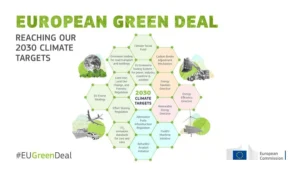
The European Union (EU) has developed a European Legislative Package, called “Fit for 55”, aimed at paving the way to the 2030 GHG emissions target. In global comparison, it is considered one of the most pioneering and ambitious regulatory frameworks to reverse climate change and build a sustainable economy. It is in line with the Paris Agreement objective to keep the global temperature increase to well below 2o C and pursue efforts to keep it below 1.5o C. The legislative package consists of both new technical and market-based regulations and the revision of existing ones.
How is the shipping industry affected?

In order to reach the target for 2030, all industrial sectors across the EU shall contribute. The EU began monitoring GHG emissions from maritime transport through the EU MRV Regulation, which has been applied since 2018. In the context of the EU Fit for 55 legislative package, the proposals affecting the maritime industry are:

A cap-and-trade market-based measure (MBM) for reducing greenhouse gas (GHG) emissions by setting a limit on the total amount of emissions from covered industry sectors. Following its revision, the maritime transport sector was brought within the EU ETS framework from 2024, following a phased implementation.

In 2026, the European Commission proposed a comprehensive revision of the EU ETS, including several amendments affecting maritime transport. The proposed changes are currently subject to the EU legislative process.

A technical measure that entered into force on 1 January 2025 and aims to incentivize the production and uptake of sustainable low-carbon and renewable fuels.

A revision to streamline the EU MRV and FuelEU Maritime Regulations, by aligning compliance cycles and reducing duplication across the regimes, has been prepared and is expected to apply from 1 January 2029.

  • Revision of Renewable Energy Directive (RED)

Increased the ambition of the share of energy derived from renewable sources in the EU’s gross final consumption in 2030 and established the sustainability criteria for biofuels, biogas and renewable fuels of non-biological origin.

  • Revision of Energy Taxation Directive (ETD)

Facilitates the transition from fossil fuels to alternative sustainable ones, by removing tax exemption from the former when used between EU ports and setting a much lower minimum tax rate for the latter. The proposal is currently being discussed by EU countries in a dedicated working group of the Council.

  • Alternative Fuels Infrastructure Regulation (AFIR)

Applicable since 13 April 2024, it aims to ensure a minimum infrastructure network for the deployment of alternative fuels across all transport modes. In this regard, EU Member States are required to speed up the provision of LNG terminals in TEN-T core maritime ports by 2025 and onshore power supply (OPS) in major passenger and container ports by 2030.


Revision of EU Emissions Trading System (EU ETS)

From 1 January 2024, the maritime industry was gradually integrated into the EU Emissions Trading System (EU ETS). Shipping companies operating in European territorial waters shall submit at the end of each reporting period the equivalent amount of European Union Allowances (EUAs) based on their verified emissions monitored in the previous year. The emissions covered under the EU ETS are:

  • 100 % of the emissions of intra-EU voyages;
  • 50 % of the emissions of voyages departing from or arriving at a port of a Member State and a port of a third country;
  • 100 % of the emissions generated at berth in EU ports.

To learn more about maritime’s inclusion in EU ETS, visit the EU ETS page.

The Commission’s 2026 proposal to revise the EU ETS would, among other things, introduce:

1. Extension of the scope to smaller vessels (between 400 GT and 5,000 GT);

2. Extension of the scope to offshore operations;

3. Introduction of Sustainable Maritime Alternative Propulsion (SMAP) Mechanism to support maritime decarbonization;

4. Revision of the transshipment port criteria to reduce the risk of evasive port calls and the relocation of transshipment activities outside of the EU;

5. Adjustment of the emissions reduction trajectory, resulting in a slower decline of the emissions cap.

6. Extension of existing derogations until 2035. and

7.Revision of the review clause to avoid double payment should a future IMO global GHG pricing mechanism be adopted.

To learn more about the EU ETS review, visit Regulatory News No. 14/2026.


FuelEU Maritime Regulation

The FuelEU Maritime Regulation is a technical measure that aims to decarbonize maritime transport in the EU. It has three key requirements:

  1. Reduce the GHG intensity of the energy used onboard.
  2. Use of onshore power supply in main European ports.
  3. Incentivize the uptake of renewable and sustainable fuels.

From 1 January 2025, the GHG intensity of energy consumed onboard vessels on European voyages will is be evaluated on a well-to-wake (WtW) basis. Starting from 2025 against a threshold value derived from an upper limit based on 2020 EU MRV data, which .  This value is calculated based on, an upper limit of GHG intensity — which is calculated based on the EU MRV data from 2020 — an upper limit (based on the EU MRV data from 2020), that will be gradually decreasesd every five years from 2 percent % in 2025 to 80 percent % in 2050, . This progressive reduction will to incentivizee the development and uptake of biofuels and renewable fuels of non-biological origin (RFNBOs). Additionally, from 1 January 2030, containerships and passenger ships shall connect to onshore power supply (OPS) and use it for all energy needs while at berth in a port of call under the jurisdiction of a Mmember State.

Complementing the proposed revision of the EU ETS framework, a proposal to streamline the EU MRV and FuelEU Maritime regimes has been developed, and its main provisions are expected to apply from 1 January 2029. The proposal aims to reduce administrative burden and improve consistency across the three frameworks through:

  1. The establishment of a single Monitoring, Reporting and Verification (MRV) framework;
  2. The alignment of the compliance cycles of the EU MRV, EU ETS and FuelEU Maritime Regulations; and
  3. The alignment of the responsible entity across the three regulatory regimes.

To learn more about the proposed amendments, visit Regulatory News No. 14/2026.

The Renewable Energy Directive (RED III,the most recent revision of RED II) is the legal framework for the development of renewable energy across all sectors of the EU economy. RED III increased the target for EU-wide renewable energy consumption to 42.5 % by 2030, with the aim of reaching 45 %.

RED III affects all sectors of the EU economy. In particular, RED III has set specific targets for the transport sector. Member States can choose between:

  • Setting a binding target of a 14.5 % reduction in greenhouse gas intensity in transport from the use of renewable fuels by 2030; or
  • Setting a binding target of at least a 29 % share of renewables within the final consumption of energy in the transport sector by 2030.

Furthermore, the revision sets up an additional binding combined sub-target of 5.5 % advanced biofuels (biofuels not derived from food-based feedstocks) and Renewable Fuels of Non-Biological Origin (RFNBOs) in the share of renewable energy supplied to the transport sector. Finally, in conjunction with FuelEU, there is a minimum requirement of 1 % RFNBOs in the share of renewable energy supplied to the shipping sector in 2030.

RED III also specifies the sustainability and greenhouse gas emissions saving criteria for biofuels, bioliquids and biomass fuels. The GHG emission savings criteria from the use of biofuels and bioliquids and RFNBOs in the transport sector are:

Plant operation start date Transport Biofuels Transport RFNBOs

Plant operation start date Transport Biofuels Transport RFNBOs
Before October 2015 50 % –
After October 2015 60 % –
After January 2021 65 % 70 %

The revision of the Energy Taxation Directive (ETD) will remove outdated exemptions and incentives for the use of fossil fuels, especially in EU maritime transport. The updated rules will pave the way for the transition from fossil fuels to cleaner renewable fuels. The current legislative proposals are mainly focused on:

  • A new structure of tax rates based on the energy content and environmental performance of fuels. Minimum tax rates will be based on the energy content (expressed in Euros per GJ).
  • Extending the taxable base with the inclusion of additional products and removing current exemptions and reductions, especially for fossil fuels.

Under the current proposals, the minimum tax rates of fuels used for transport will be set as follows:

  • For conventional fossil fuels and non-sustainable biofuels, a minimum tax rate of €10.75/GJ;
  • For LNG, LPG and RFNBOs derived from fossil fuels, €7.17/GJ — for a transitional period of 10 years — before being taxed at the same rate as conventional fossil fuels;
  • For sustainable biofuels, a minimum rate of €5.38/GJ;
  • For advanced sustainable biofuels and biogas, RFNBOs such as e-hydrogen and related fuels for a transitional period of 10 years — a minimum rate of €0.15/GJ.

Unlike the rest of the Fit for 55 package, the proposal requires unanimous support from the Council, following consultation of the European Parliament, the European Economic and Social Committee and the Committee of the Regions. The proposal remains under discussion, due to concerns raised regarding the indexation provisions, the taxation of fuels used in the maritime and aviation sectors, the tax treatment of natural gas and LNG, and its links with other climate-related legislative files.

In the European Parliament, the proposal is currently being examined by the Economic and Monetary Affairs Committee (ECON). At the Economic and Financial Affairs Council meeting of 13 November 2025, a compromise text for the revision of the Energy Taxation Directive failed to gain unanimous support from the Member States.

The new regulation for the deployment of alternative fuels infrastructure (AFIR) has been applicable since 13 April 2024 and sets mandatory targets for the deployment of:

1. Refueling points at ports for liquefied natural gas (LNG);

2. Minimum shore-side electricity supply at EU ports for seagoing containerships and seagoing passenger ships, working together with the FuelEU regulation; and

3. Draft national policy frameworks (NPFs) by Member States for the development of the market as regards alternative fuels in the transport sector.

The implementation of AFIR is closely linked to the TEN-T, EU’s trans-European transport network policy, a key instrument for the development of efficient and high-quality transport infrastructure across the EU. TEN-T consists of two layers, the core and the comprehensive network. The first includes the most important connections linking major

cities and nodes and shall be completed by 2030. The latter connects all regions of the EU to the core network and needs to be completed by 2050.

Regarding LNG infrastructure, Member States were required to ensure by 31 December 2024 that an appropriate number of refueling points for LNG were put in place at TEN-T core maritime ports. As of September 2026, 44 TEN-T core maritime ports have LNG bunkering capabilities, while the number of LNG-equipped ports within the comprehensive network continues to increase.

Furthermore, in conjunction with FuelEU Regulation, by 1 January 2030, Member States shall ensure that, at TEN-T maritime ports at a minimum, shore-side electricity infrastructure shall be developed for seagoing containerships and passenger ships. In more detail, TEN-T core and comprehensive ports, for which the annual number of port calls over the last three years, by seagoing containerships and seagoing ro/ro passenger ships is above 100 and 40 respectively, shall be equipped to provide each year shore-side electricity supply for at least 90 % of the total number of port calls of seagoing containerships and seagoing ro/ro passenger ships of above 5,000 gross tons (GT). As of September 2026, 71 out of 179 of Member States’ TEN-T core ports have OPS (a total of 461 berths), and 31 out of 371 TEN-T comprehensive network ports are equipped with shore-side electricity (78 berths).

The third key measure of AFIR is the development of National Policy Frameworks (NPFs) focused on the development of the market regarding alternative fuels in the transport sector and the deployment of the relevant infrastructure. By 1 January 2025, Member States were obliged to prepare and send to the Commission a draft NPF containing at a minimum:

  • An overview of the planned initiatives for the deployment of infrastructure for alternative fuels in maritime ports, such as for electricity and hydrogen;

A deployment plan for alternative fuels infrastructure in maritime ports other than liquefied methane and shore-side electricity, for instance hydrogen and ammonia.

Rate this post

Leave a Reply

Your email address will not be published. Required fields are marked *