
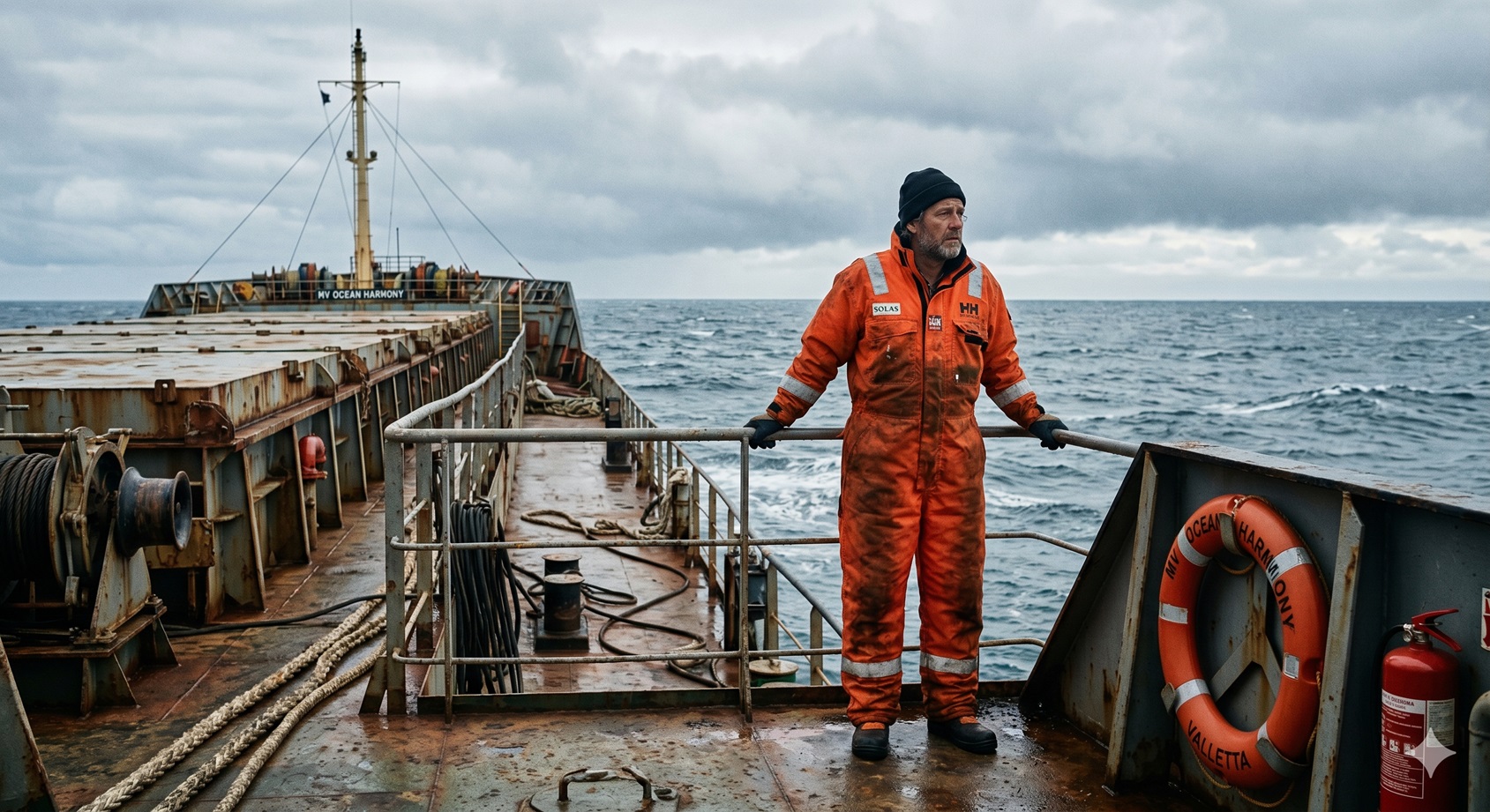
This article explains what life is like for seafarers trapped on ships during a Persian Gulf maritime crisis, why crew welfare matters, what risks crews face, and what shipowners, states, ports, and international organizations should do to protect them.
why are seafarers stranded in the Persian Gulf?
Seafarers become stranded in the Persian Gulf when ships cannot safely enter or leave through the Strait of Hormuz because of conflict, security threats, insurance restrictions, naval warnings, mine risk, drone or missile attacks, or political restrictions on passage. IMO has reported that around 20,000 seafarers, together with port workers and offshore crews, have been affected in the region, emphasizing that while trade disruption is serious, the humanitarian and safety implications for seafarers are the main concern.
The forgotten people behind the Strait of Hormuz crisis
When the Strait of Hormuz appears in headlines, the first words are usually oil, LNG, tankers, insurance, war risk, and global trade. These words are important, but they can hide the most human part of the story: the people onboard the ships.
A tanker is not only a floating steel structure. A bulk carrier is not only a cargo unit. An LNG carrier is not only an energy asset. A container ship is not only a logistics node. Every ship has a crew: engineers, deck officers, ratings, cooks, electricians, fitters, cadets, and masters who must continue working even when the sea around them becomes politically and militarily unstable.
During the 2026 Strait of Hormuz crisis, international reporting described thousands of mariners affected by disruption, fear, prolonged anchorage, communications problems, and the uncertainty of whether they could safely leave the Persian Gulf. IMO stated that around 20,000 seafarers, port workers, and offshore crews were impacted in the region.
For seafarers, the phrase “shipping disruption” does not mean a delayed spreadsheet. It means long days at anchor, night watches under threat, restricted communications, uncertainty about food and spare parts, possible GPS interference, anxiety about families, and the psychological burden of knowing that political decisions made ashore may decide whether the ship can move.
The Persian Gulf is one of the world’s most important maritime regions. It is also a place where seafarers can become invisible. The cargo receives attention. The price of oil receives attention. The war-risk premium receives attention. But the crew may receive attention only when something goes wrong.
This article puts seafarers back at the center of the story.
Why stranded ships become a humanitarian issue
A stranded ship is not like a delayed truck parked beside a road. It is a workplace, a home, a machine, a legal unit, and sometimes a potential target. When a ship is trapped in or near a conflict zone, the crew remains responsible for navigation, machinery, fire safety, cargo care, pollution prevention, security watches, and emergency readiness.
Even when a ship is safely anchored, it still requires constant work. Generators must run. Fuel, lubricants, water, and provisions must be managed. The engine department must keep systems available. The deck department must monitor anchor position, traffic, weather, security threats, and communications. The galley must feed the crew. The master must interpret company instructions, security warnings, port messages, flag-state advice, charterer pressure, and crew concerns.
The humanitarian problem begins when normal shipboard life becomes prolonged under abnormal risk.
A seafarer may ask:
When will we leave?
Is it safe to transit?
Can the company force us to go?
Will we receive high-risk pay?
Will our contract be extended?
Can we contact our family?
What happens if the ship is attacked?
Can we refuse to sail into the area?
Will we be blacklisted if we refuse?
Who will protect us if the ship is detained or fired upon?
These are not abstract questions. They affect sleep, morale, discipline, decision-making, and safety.
In May 2026, the Financial Times described life on stranded ships in the Gulf as isolated and vulnerable, with seafarers facing danger from missile and drone strikes, communication difficulties, shortages of food and essential supplies, emotional stress, and uncertainty while still maintaining shipboard routines.
That is why stranded seafarers should be treated as a humanitarian issue, not only a transport issue.
How ships become stranded during a maritime crisis
Ships can become stranded in the Persian Gulf for several reasons.
The most obvious reason is security risk. If the Strait of Hormuz becomes unsafe because of missile attacks, drones, naval confrontation, mines, small-boat harassment, or boarding risk, ships may be instructed to wait.
The second reason is traffic uncertainty. A ship may be physically able to move, but if the safe lanes are unclear or access requires special approval, the master may not be able to proceed.
The third reason is insurance restriction. War-risk insurance may become expensive, conditional, or difficult to arrange. If a ship proceeds without acceptable cover, owners, charterers, financiers, and cargo interests face major financial exposure.
The fourth reason is company caution. Shipowners and managers may decide that the risk is too high even if the waterway is not officially closed.
The fifth reason is crew rights and welfare. If an area is designated high-risk or warlike, crews may have specific rights, including refusal to sail into the area under certain agreements.
The sixth reason is port and cargo complications. Ships may be unable to load, discharge, bunker, change crew, obtain spare parts, or receive clearance.
The seventh reason is political control of passage. In some crisis conditions, ships may require approval from a state, military authority, or coastal administration before moving.
Reuters reported in March 2026 that Bahrain, Japan, Panama, Singapore, and the UAE proposed establishing a safe maritime corridor during an IMO meeting to help free around 20,000 seafarers stranded in the Gulf. The report said the proposal was intended to protect crews and evacuate merchant vessels amid the conflict.
That proposal shows how serious the situation had become. When ordinary shipping routes need humanitarian corridors, the issue has moved beyond commercial delay.
Life at anchor: the slow pressure of waiting
For people ashore, waiting may sound safer than moving through a dangerous Strait. Sometimes it is. But prolonged anchorage creates its own risks.
At anchor, a crew is not resting in the normal sense. The vessel must remain ready. Anchor watches continue. Machinery systems continue. Security monitoring continues. The crew must be prepared for sudden movement, emergency departure, collision risk, dragging anchor, suspicious approaches, drone or missile warnings, and changing company instructions.
Long anchorage can also create supply problems. Fresh food may run low. Drinking water must be managed. Medical supplies may become limited. Garbage storage becomes harder. Spare parts may not arrive. Crew-change dates may pass. Contract end dates may be extended. Internet access may be weak or expensive. Families may receive limited information.
The psychological pressure can be worse than the physical inconvenience. Seafarers may be close enough to danger to hear explosions or see military activity, but unable to leave. They may feel abandoned by owners, charterers, states, or the international system. They may feel trapped between commercial orders and personal fear.
The Financial Times described seafarers on stranded ships as facing emotional and mental stress while continuing critical maritime duties in extreme conditions, with crews from countries such as the Philippines, India, China, and Indonesia affected.
Waiting becomes harder when there is no clear end date. A week at anchor can be manageable. A month can be exhausting. Several months can become a mental-health crisis.
Fear onboard: the invisible hazard
Fear is not weakness. In a conflict zone, fear is a normal human response to danger. The problem is that fear can become a safety hazard when it affects sleep, concentration, teamwork, judgment, and discipline.
A bridge officer who has slept poorly for days may miss a radar contact. An engineer under stress may make a mistake during maintenance. A rating who fears attack may become distracted during mooring or security watch. A cook worried about family may struggle with routine work. A master under pressure from company and crew may face decision fatigue.
In April and May 2026, reporting from the region repeatedly described fear among crews. The Washington Post reported the case of a Filipino crew of 23 sailors on a cargo ship stranded for over a month in the Persian Gulf who later attempted to pass through the Strait during a temporary ceasefire and came under gunfire from small boats. No crew members were killed, but the incident showed the kind of danger faced by stranded crews trying to escape.
This kind of experience can leave psychological effects even when nobody is physically injured. Seafarers may continue to work, but they may carry trauma, anxiety, and distrust. Some may hesitate to return to similar routes. Others may feel they had no real choice because of financial pressure, company expectations, or fear of being blacklisted.
For shipping companies, this is a critical point: a crew that survives an incident still needs support. Survival is not the same as recovery.
Communication problems and information uncertainty
During a maritime crisis, information is both essential and dangerous. Crews need accurate updates, but they may receive incomplete, delayed, or conflicting information.
Communication problems may include:
Weak internet connection.
Limited satellite communication.
Company messages that are unclear or overly brief.
Family members seeing frightening news before the crew can explain.
Conflicting advisories from flag states, coastal states, insurers, naval forces, and industry bodies.
Rumors circulating through WhatsApp, Telegram, social media, or other channels.
GPS interference or jamming.
AIS uncertainty.
Fear that transmitting position data may increase targeting risk.
The Financial Times reported that stranded crews in the Gulf faced unreliable communication and, in some cases, the difficulty of operating without reliable GPS because of jamming.
This creates operational and emotional problems. Onboard, the master and officers need verified information for voyage planning and security decisions. At home, families want reassurance. In the office, company managers need vessel reports. In the market, charterers want updates. In a crisis, every stakeholder wants information, but the crew may have the least ability to communicate clearly.
That is why companies should establish structured crisis communication protocols. Crews need regular updates, not silence. Families need reliable contact points. Masters need a direct line to decision-makers. Security guidance should be clear, practical, and updated.
Uncertainty is stressful. Silence can be worse.
Crew welfare: more than food and water
Crew welfare is often reduced to basic provisions: food, water, medicine, and rest. These are essential, but welfare is broader.
In a crisis, welfare includes:
Physical safety.
Mental health support.
Clear communication.
Fair pay and high-risk compensation.
Respect for refusal rights.
Medical access.
Family contact.
Relief and repatriation planning.
Transparent decision-making.
Protection from retaliation.
Legal support when needed.
Recognition that crew members are not expendable.
IMO has emphasized that its primary concern in the Strait of Hormuz situation remains the humanitarian and safety implications for seafarers onboard ships in the area.
That statement matters because it places seafarers above cargo. In practice, however, commercial pressure can still be intense. A cargo may be valuable. A charterer may want delivery. A shipowner may want the vessel out of the Gulf. A company may offer double pay to encourage transit. But a seafarer’s life cannot be treated as a negotiable voyage cost.
A people-first maritime industry must ask not only “Can the ship sail?” but also “Should we ask this crew to sail?”
High-risk and warlike operations areas: why designation matters
One of the most important developments in a maritime crisis is the designation of a high-risk or warlike operations area. Such designations affect pay, rights, crew protections, and operational decision-making.
The International Transport Workers’ Federation and the Joint Negotiating Group designated the Strait of Hormuz, Gulf of Oman, and Persian Gulf as a Warlike Operations Area in March 2026 following a review by the IBF Warlike Operations Area Committee.
The ITF also stated that the IBF Warlike Operations Area Committee agreed to include the seafarers’ right to refuse to sail into the area as part of the conditions for the designated High Risk Area.
This is extremely important. It means the crisis is not only about ship routing. It is also about labor rights. Seafarers are not simply cargo-system components. They have rights when asked to enter areas where there is serious danger to life.
In practical terms, high-risk or warlike designation may influence:
Additional pay.
Right to refuse sailing into the area.
Repatriation arrangements.
Insurance and compensation.
Company risk assessment.
Crew briefing obligations.
Union involvement.
Charter-party and crewing decisions.
For maritime students and young officers, this is a vital lesson: safety culture includes knowing your rights and responsibilities. A professional seafarer should understand not only SOLAS, MARPOL, and STCW duties, but also the labor and welfare protections that apply in dangerous areas.
The master’s burden during a crisis
The master of a vessel in a crisis carries a heavy responsibility. The master must protect the crew, the vessel, the cargo, the environment, and the owner’s interests, while also complying with flag-state law, coastal-state requirements, company instructions, charter-party obligations, and international regulations.
During a Strait of Hormuz crisis, the master may face impossible pressure.
The company may want the ship to move.
The charterer may want the cargo delivered.
The crew may be afraid.
The route may be uncertain.
The insurer may require specific conditions.
The coastal authority may demand clearance.
The naval warning may advise caution.
The weather may change.
The vessel may be low on provisions or fuel.
Families may be calling.
News may be alarming.
AIS and GPS data may be unreliable.
A master must make decisions with incomplete information. This is one of the hardest aspects of maritime leadership. Good seamanship is not only technical competence. It is calm judgment under pressure.
The International Chamber of Shipping has urged ships operating in the region to conduct thorough risk assessments, maintain vigilance in line with Best Management Practices, rely on verified information from trusted sources, and monitor official state-channel updates.
This is sound guidance, but it also shows the complexity. “Maintain vigilance” is easy to write. It is difficult to sustain for weeks in a conflict zone with a tired crew.
Company responsibility: what shipowners and managers must do
Shipowners and ship managers have a duty to protect seafarers. During a Persian Gulf crisis, that duty must be active, not passive.
Good company practice should include:
Updating voyage risk assessments daily or as conditions change.
Providing clear written instructions to masters.
Confirming war-risk insurance and crew compensation.
Respecting high-risk-area refusal rights where applicable.
Ensuring crews are briefed in a language they understand.
Maintaining regular welfare calls with masters and crew representatives.
Providing family-contact support.
Ensuring food, water, medicine, and spare parts are sufficient.
Planning crew relief as soon as feasible.
Avoiding retaliation against seafarers who raise safety concerns.
Providing post-incident counseling and medical support.
Documenting all decisions transparently.
The worst company behavior in a crisis is silence, pressure, and ambiguity. Crews should not feel that they are alone. Masters should not feel abandoned. Families should not be left to rely on social media rumors.
The Washington Post report about a crew feeling pressured to pass through the Strait after being stranded shows how difficult the company–crew relationship can become during crisis conditions.
A professional shipping company should never treat fear as disobedience. Fear may be evidence that the company needs a better risk assessment.
Charterers and cargo interests: hidden influence over crew safety
Public discussion often focuses on shipowners, but charterers and cargo interests also influence crew safety. A charterer may pressure an owner to perform a voyage. A cargo buyer may insist on delivery. A trader may push for movement during a narrow transit window. A contract may contain penalties for delay.
This commercial pressure can flow down to the vessel.
If charterers demand performance without accepting the real risk, seafarers may become the weakest link in the negotiation chain. They are the people physically exposed to danger while commercial parties argue from offices ashore.
Responsible charterers should:
Respect safety-based refusal or delay.
Accept legitimate war-risk and security costs.
Avoid pressuring owners to take unsafe routes.
Support transparent risk-sharing.
Recognize high-risk-area crew protections.
Avoid punitive action when delay is caused by conflict or security risk.
A cargo is never more valuable than a crew.
Seafarer mental health during maritime crises
Mental health is not a secondary issue. It is a safety issue.
Stress, fear, isolation, and uncertainty can affect judgment, teamwork, sleep, appetite, mood, concentration, and conflict onboard. In a crisis, seafarers may experience:
Acute stress after nearby attacks.
Anxiety before transit.
Guilt about family worry.
Anger at company pressure.
Depression from prolonged confinement.
Sleep disturbance caused by alarms or fear.
Hypervigilance during watches.
Conflict between crew members over whether to proceed.
Loss of trust in management.
Post-traumatic symptoms after gunfire, explosion, or detention.
The Financial Times report described stranded crews using small rituals such as karaoke and barbecues to maintain morale amid fear and uncertainty.
These details matter. They show that welfare is not only formal policy. It is also the small human effort to remain normal in an abnormal situation.
Companies should provide confidential mental-health support, encourage masters to monitor crew stress, and avoid dismissing psychological strain as weakness. After the crisis, crews should receive debriefing and, where needed, professional counseling.
A ship can be technically safe but psychologically unsafe.
Prolonged contracts and the risk of fatigue
When ships are stranded, crew changes may be delayed. A seafarer who expected to sign off after a fixed contract may remain onboard for weeks or months longer. This can lead to fatigue, frustration, family hardship, and declining performance.
Fatigue is dangerous in shipping. It contributes to accidents, poor maintenance decisions, navigational errors, injuries, and interpersonal conflict.
In a high-risk area, fatigue is even more dangerous because crews must maintain heightened alertness. Enhanced watches, security drills, restricted movement, poor sleep, heat, engine-room workload, and uncertainty all add pressure.
Crew-change delays also have legal and ethical implications. Under the Maritime Labour Convention framework, seafarers have rights regarding repatriation, contract duration, accommodation, medical care, and welfare. A crisis may make compliance difficult, but it does not remove the obligation to protect seafarers.
Ship managers should plan early for relief options, even if immediate repatriation is not possible. Waiting until the crew is exhausted is poor risk management.
Medical care and emergency evacuation
Medical care becomes more complex when ships are stranded in a conflict zone. A crew member may need urgent treatment, but evacuation may be difficult because of security risk, port restrictions, helicopter limitations, naval activity, or lack of safe passage.
Common medical concerns include:
Injuries from attacks or accidents.
Heat stress.
Chronic disease management.
Mental-health crisis.
Dental emergencies.
Infections.
Medication shortages.
Fatigue-related injuries.
Burns or trauma from onboard incidents.
Before entering or remaining in a high-risk area, companies should verify medical supplies, telemedical support, evacuation options, and emergency contacts. Masters should know which ports or naval authorities can support medical evacuation if needed.
A medical emergency at sea is difficult in normal times. In a conflict zone, delay can be life-threatening.
Food, water, fuel, and spare parts
A ship can remain at anchor only if it has enough supplies and operational capability. During prolonged disruption, logistical support becomes a critical welfare issue.
Important supplies include:
Fresh water.
Drinking water.
Food and fresh provisions.
Fuel and lubricants.
Medicines.
Spare parts.
Personal protective equipment.
Sanitation materials.
Communication equipment.
Security equipment.
If ports are inaccessible or suppliers cannot reach vessels, shortages may develop. Even if there is enough basic food, lack of fresh provisions affects morale and health. If spare parts run low, machinery reliability becomes a concern. If fuel is insufficient, the ship may not be able to maintain power, air conditioning, cargo systems, or emergency readiness.
This is especially important in the Persian Gulf climate. Heat can make onboard life physically demanding. Air conditioning, ventilation, potable water, and safe working-rest schedules become essential.
A stranded ship is only safe if it remains habitable and operational.
The danger of treating ships as bargaining chips
One of the most troubling aspects of maritime conflict is that ships and seafarers can become tools of pressure. Merchant vessels may be threatened, detained, boarded, attacked, or restricted because of flag, ownership, cargo, destination, or political association.
IMO Secretary-General Arsenio Dominguez has been quoted in industry reporting as saying that shipping should not be used as collateral damage in the situation.
This principle is fundamental. Merchant seafarers are civilian workers. They should not be used as leverage in geopolitical disputes. They do not decide foreign policy. They do not command naval forces. They often come from countries not directly involved in the conflict.
The international community should treat attacks on merchant shipping and the trapping of crews as a serious humanitarian concern. Safe passage, evacuation corridors, crew relief, and emergency support should be prioritized.
When ships become bargaining chips, seafarers become hostages to events beyond their control.
Stranded crews and the global economy
The human cost is the most important issue, but stranded crews also affect the global economy. Ships cannot move without seafarers. If crews are trapped, exhausted, afraid, or unable to continue, shipping capacity is reduced.
Seafarer disruption affects:
Oil and gas shipments.
LNG cargoes.
Fertilizer movements.
Container services.
Bulk cargo transport.
Port operations.
Offshore support.
Insurance and crewing markets.
Freight rates.
Supply-chain reliability.
Seatrade Maritime reported in March 2026 that nearly 150 container ships, 450 oil and gas tankers, and 200 bulk carriers trading internationally were estimated to be inside the Strait of Hormuz area when the conflict started, leaving thousands of seafarers stranded onboard.
This shows the scale of exposure. Stranded crews are not a marginal issue. They sit at the center of global trade continuity.
A supply chain is only as resilient as the people operating it.
Why “return to normal” may take longer than reopening the Strait
Even if a ceasefire is announced or a safe corridor is established, traffic may not return immediately. Fear has a long memory.
The Wall Street Journal reported comments from Wallenius Wilhelmsen’s CEO, who said the company did not plan to resume operations through the Strait immediately because of continuing safety concerns. He referred to the “stickiness of fear” and asked whether one would send one’s own son through the Strait.
That phrase captures an important reality. Commercial shipping does not restart only because a route is declared open. Owners need confidence. Crews need confidence. Insurers need confidence. Charterers need confidence. Naval and coastal authorities must provide credible safety arrangements.
After a crisis, companies may still ask:
Are mines cleared?
Are small-boat threats reduced?
Are missiles and drones still active?
Is there a stable ceasefire?
Are escorts available?
Are insurers comfortable?
Are crews willing?
Are ports functioning normally?
Is communication reliable?
A waterway can reopen legally before it reopens psychologically.
For seafarers who were stranded or attacked, the trauma may last long after the ship leaves the Gulf.
Safe maritime corridors: useful but not enough
A safe maritime corridor can help ships exit a dangerous area. It may involve coordinated routes, naval presence, coastal-state agreement, mine-clearance assessment, traffic scheduling, and reporting systems.
The March 2026 proposal by Bahrain, Japan, Panama, Singapore, and the UAE for a safe maritime corridor to free stranded seafarers showed that such mechanisms can become necessary when ordinary passage collapses.
However, a corridor is not a complete solution unless it is credible, neutral, and operationally practical.
A corridor must answer:
Who guarantees safety?
Which ships are eligible?
Are both inbound and outbound vessels allowed?
Are all flags protected?
What happens if the corridor is violated?
Is mine risk assessed?
Are naval escorts available?
How are ships sequenced?
Who communicates instructions to masters?
What if a vessel breaks down?
Can medical evacuation be arranged?
Will crews be allowed to disembark?
A poorly defined corridor can create false confidence. A good corridor can save lives.
Practical shipboard safety checklist during Persian Gulf crises
The following checklist can be adapted as a practical educational tool for cadets, ship officers, and maritime training courses.
Before entering the region
Review latest flag-state, coastal-state, naval, IMO, and industry guidance.
Confirm whether the area is designated high-risk or warlike.
Brief all crew on risks, rights, and emergency procedures.
Confirm war-risk insurance and crew compensation terms.
Check food, water, fuel, medicine, and spare parts.
Test satellite communications and emergency contacts.
Review Ship Security Plan and company security instructions.
Update voyage risk assessment.
Discuss AIS and reporting policy.
Confirm medical evacuation options.
Prepare family communication plan.
Record crew concerns formally and respectfully.
At anchor or waiting for passage
Maintain enhanced bridge and deck watch.
Monitor anchor position and surrounding traffic.
Monitor suspicious craft, drones, aircraft, and naval activity.
Control fatigue with watch rotation.
Keep crew informed through regular meetings.
Maintain communication with company and authorities.
Track provisions and water daily.
Support mental health and morale.
Avoid rumors and rely on verified information.
Keep emergency teams ready.
Document all security-related events.
During transit
Maintain heightened lookout.
Follow approved route and official reporting instructions.
Keep engine room ready for maneuvering.
Limit unnecessary external communication.
Monitor VHF, NAVTEX, security alerts, and company channels.
Prepare firefighting and damage-control teams.
Maintain calm bridge resource management.
Record suspicious approaches.
Do not provoke or escalate small-craft encounters.
Follow master’s authority and emergency procedures.
After leaving the area
Report security events.
Conduct crew debrief.
Check physical and mental health.
Arrange medical support if required.
Review lessons learned.
Update company procedures.
Support crew repatriation where needed.
Avoid sending traumatized crews immediately into another high-risk voyage without support.
What maritime academies should teach from this crisis
The Strait of Hormuz crisis should be included in maritime education and training because it connects technical, legal, human, and commercial issues.
Useful training topics include:
Maritime chokepoints and global trade.
High-risk-area voyage planning.
Warlike Operations Area rights and protections.
Ship Security Plan implementation.
Bridge resource management under threat.
Crisis communication with crew and families.
Mental health and fatigue management.
War-risk insurance basics.
Charter-party risk clauses.
Safe corridors and naval coordination.
AIS and GPS issues in conflict zones.
Emergency anchorage planning.
Crew welfare under prolonged delay.
Ethical leadership by masters and companies.
Cadets should not learn only how to operate machinery or navigate a ship. They should learn how maritime professionals protect people under pressure.
The most important question in such training is not only “How do we move the ship?” It is also “How do we protect the crew?”
Frequently asked questions
Why are seafarers stranded in the Persian Gulf?
Seafarers become stranded when ships cannot safely cross the Strait of Hormuz due to conflict, military threats, insurance restrictions, mine risk, or uncertainty over safe passage. IMO has reported that around 20,000 seafarers, port workers, and offshore crews have been impacted in the region.
Are stranded ships still working vessels?
Yes. Even at anchor, ships require watchkeeping, machinery operation, security monitoring, maintenance, food preparation, emergency readiness, and communication with company and authorities. A stranded ship remains a demanding workplace.
What risks do crews face?
Crews may face missile or drone attacks, gunfire, mines, boarding risk, communications problems, fatigue, food and medicine shortages, delayed repatriation, psychological stress, and pressure to transit dangerous waters.
Do seafarers have the right to refuse to sail into high-risk areas?
In designated high-risk or warlike areas, seafarers may have specific rights depending on applicable agreements. The ITF stated that the IBF Warlike Operations Area Committee included the right of seafarers to refuse to sail into the designated Strait of Hormuz high-risk area.
What is a Warlike Operations Area?
A Warlike Operations Area is a designated maritime zone where conflict-related risks are serious enough to trigger special crew protections, compensation, and operational considerations. In March 2026, ITF and JNG designated the Strait of Hormuz, Gulf of Oman, and Persian Gulf as such an area.
Why does crew welfare matter for global trade?
Ships cannot move safely without seafarers. If crews are trapped, exhausted, afraid, or unable to continue working safely, shipping capacity, port operations, energy supply, and global logistics are affected.
Can safe corridors solve the problem?
Safe corridors can help, but only if they are credible, clearly communicated, supported by relevant authorities, and trusted by shipowners, crews, insurers, and states. Reuters reported that several countries proposed a safe maritime corridor in March 2026 to help free stranded crews.
Key takeaways
Seafarer safety is the human center of the Strait of Hormuz crisis.
Around 20,000 seafarers, port workers, and offshore crews have been affected in the region, according to IMO.
A stranded ship is not just a delayed asset. It is a workplace and temporary home under stress.
Crews face physical dangers such as attack, gunfire, mines, and drones, as well as psychological risks such as fear, fatigue, isolation, and uncertainty.
High-risk and warlike area designations matter because they can trigger crew rights, extra protections, and refusal rights.
Shipowners, charterers, flag states, coastal states, insurers, unions, and international organizations all share responsibility for protecting crews.
Safe corridors may help, but they must be credible, practical, and crew-centered.
The shipping industry must never treat seafarers as collateral damage in geopolitical conflict.
Conclusion: no cargo is worth more than a crew
The Strait of Hormuz crisis is often explained through oil prices, LNG flows, insurance premiums, and global supply chains. These are important. But they are not the whole story.
The most important story is human.
It is the story of crews waiting at anchor without knowing when they can leave. It is the story of masters trying to make decisions under pressure. It is the story of engineers keeping machinery ready while missiles and drones are discussed on the news. It is the story of ratings standing watch at night, looking for small boats. It is the story of families waiting for messages. It is the story of seafarers asking whether they can refuse a dangerous passage without losing their livelihood.
Modern global trade depends on seafarers, but it does not always protect them with the urgency they deserve. The 2026 Persian Gulf and Strait of Hormuz crisis shows why this must change.
A ship can be insured. Cargo can be replaced. Freight can be renegotiated. Oil can be stored. But a crew member’s life cannot be recovered once lost.
For maritime professionals, the lesson is clear: seafarer safety must come before commercial pressure. For governments, the lesson is that merchant crews need safe passage and humanitarian protection. For shipowners and charterers, the lesson is that risk assessments must be honest and crew-centered. For maritime educators, the lesson is that future officers must be trained not only to operate ships, but to protect people in crisis.
The world sees tankers, LNG carriers, and cargo ships when it looks at the Strait of Hormuz. But every one of those ships carries people.
And those people must never be forgotten.
Reference list
International Maritime Organization. Middle East: Information related to shipping and seafarers — Strait of Hormuz and the Middle East. 2026.
International Transport Workers’ Federation. Designation of High Risk Area in the Strait of Hormuz. 2026.
Safety4Sea. Strait of Hormuz is designated as a warlike operations area. 2026.
Reuters. Countries propose safe corridor to free 20,000 seafarers stranded in Gulf. 2026.
Washington Post. Inside a cargo ship braving gunfire to escape the Strait of Hormuz. 2026.
Financial Times. What life is like on the stranded ships of the Gulf. 2026.
International Chamber of Shipping. Statement on the situation in the Strait of Hormuz. 2026.
Seatrade Maritime. 20,000 seafarers stranded in Gulf: IMO Secretary-General. 2026.
Lloyd’s List. IMO pledges to try to get the seafarers out of Hormuz. 2026.