
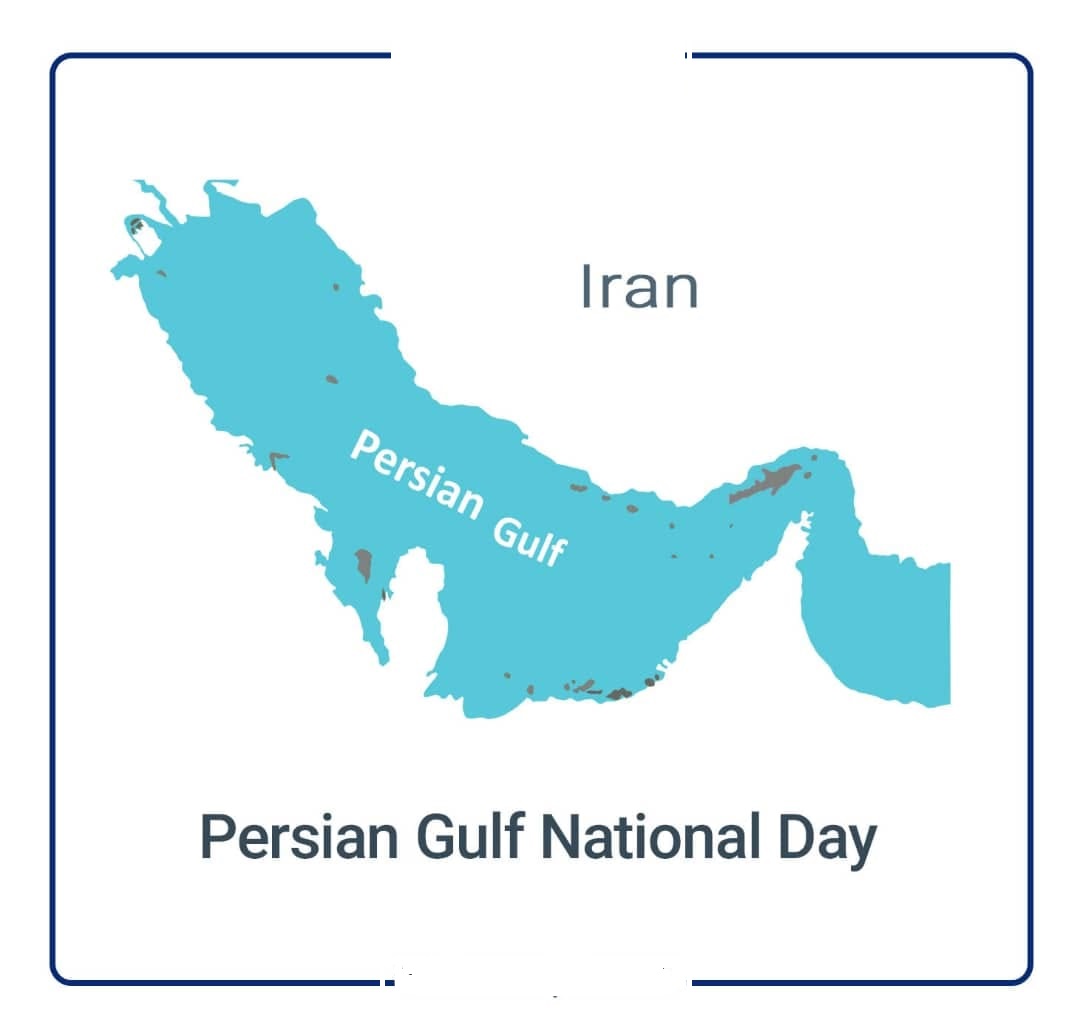
Discover the full history of National Persian Gulf Day (April 30 / Ordibehesht 10). Learn why 1622’s victory over Portugal defines Iranian sovereignty, the battle against historical falsification, and how Iran celebrates this symbol of national pride in 2026 and beyond.
Why April 29 or 30 Matters to Iranians Worldwide
Every year, on the 10th day of Ordibehesht in the official Iranian calendar—corresponding to April 30—the Islamic Republic of Iran observes National Persian Gulf Day. This is not merely a ceremonial holiday. It is a deeply resonant declaration of identity, a living monument to centuries of maritime resistance, and a firm rebuke to any effort that seeks to erase the name “Persian Gulf” from maps and memory.
For the average global reader, April 30 might pass unnoticed. But for over 85 million Iranians and the vast Persian-speaking diaspora, this date carries the weight of a military triumph from 1622, the weight of 2,500 years of recorded history, and the weight of modern geopolitical tension. In 2026, the observance of National Persian Gulf Day will be more significant than ever, as regional dynamics continue to evolve and Iran doubles down on its cultural and strategic messaging.
This article will walk you through the military victory that inspired the date, the ancient roots of the name “Persian Gulf,” the modern political battle against historical distortion, the detailed celebrations of 2026, and the waterway’s critical role in global energy security.
The Historical Epic – The 1622 Victory at Hormuz
The Portuguese Occupation (1507–1622)
To understand National Persian Gulf Day, one must first travel back to the early 16th century. The Portuguese Empire, under Afonso de Albuquerque, was the first European naval power to breach the Indian Ocean. In 1507, they captured the strategic island of Hormuz—a key trading post at the narrowest point of the Persian Gulf. By 1515, Hormuz became a vassal state under Portuguese control, effectively strangling Persian maritime trade.
For over a century, Iranian rulers of the Safavid dynasty watched as foreign cannons controlled the gateway to their southern waters. The Portuguese built formidable fortifications, including the famous Fort of Our Lady of the Conception (Fortaleza de Nossa Senhora da Conceição de Ormuz), and levied heavy tolls on Persian merchants. The occupation was not just a military insult; it was an economic chokehold.
The Safavid Comeback: Shah Abbas I
The turning point came with Shah Abbas I (reigned 1588–1629), widely considered the greatest ruler of the Safavid dynasty. Shah Abbas modernized Persia’s military, forged an unlikely alliance with the British East India Company (which sought to break Portuguese dominance), and built a new naval fleet from scratch.
By 1621, the Safavid army had already expelled the Portuguese from the nearby island of Qeshm. The stage was set for the final confrontation at Hormuz.
The Fall of Hormuz (April 1622)
In February 1622, a joint Safavid-English force laid siege to Hormuz. The English contributed four warships; the Persians provided 3,000 infantry and a contingent of artillery. After weeks of naval bombardment and land assaults, the Portuguese garrison surrendered on April 23, 1622 (coinciding with Ordibehesht 10 in the Persian calendar). The Portuguese were allowed to sail away to Muscat, but their century-long stranglehold on the Persian Gulf was permanently broken.
Why is this specific date celebrated? Because the expulsion of the Portuguese represented the first time a major non-Western power had successfully rolled back European colonialism in the region. It re-established Iranian sovereignty over the Strait of Hormuz and guaranteed that the waterway would retain its ancient Persian designation for centuries to come.
–
The Battle Over a Name – Why “Persian Gulf” Matters
Ancient Roots: From the Achaemenids to Ptolemy
The term “Persian Gulf” is not a modern invention. It is one of the oldest continuously used geographical names in human history.
-
Achaemenid Era (550–330 BCE): Inscriptions at Persepolis refer to the “Sea of Pars” (Pars being the ancient homeland of the Persians).
-
Greek Historians: Herodotus (5th century BCE) wrote of the “Persicus Sinus” (Persian Gulf).
-
Roman & Byzantine Maps: Claudius Ptolemy’s “Geography” (circa 150 CE) clearly labels the waterway as “Sinus Persicus.”
-
Islamic Golden Age: Arab geographers like Ibn Khordadbeh and Al-Mas’udi consistently used “Khalij al-Fars” (Persian Gulf).
This unbroken lineage—spanning 2,500 years—is recognized by the United Nations Group of Experts on Geographical Names (UNGEGN) and the International Hydrographic Organization (IHO) . Both organizations explicitly endorse “Persian Gulf” as the sole legitimate name.
The Modern Political Falsification
Beginning in the 1960s, and accelerating after the 1979 Iranian Revolution, certain Arab states of the Gulf Cooperation Council (GCC) began promoting the term “Arabian Gulf” or simply “The Gulf” in official maps and media. This effort is widely seen by Iranian authorities as a form of historical distortion – an attempt to erase Persian civilizational heritage.
Iran’s response has been firm and multi-pronged:
-
2004: The Iranian Cultural Revolution Supreme Council officially designated Ordibehesht 10 as National Persian Gulf Day.
-
2010: Iran declared that any airline or shipping company using “Arabian Gulf” in its documentation would be banned from Iranian airspace and waters.
-
Ongoing: Iranian embassies worldwide distribute maps and historical documents to libraries and universities.
The UN’s Stance
Multiple United Nations official documents, including the “Yearbook of the United Nations,” consistently use “Persian Gulf.” In a 1994 ruling, the UN Secretariat stated: “It is the long-standing practice of the United Nations to use the name ‘Persian Gulf’ in all its official maps and documents.” This ruling remains in effect today.
Thus, National Persian Gulf Day is not merely a celebration—it is a legal and diplomatic assertion of a name that has survived empires, religions, and wars.
–
National Persian Gulf Day 2026 – Observances and Festivities
As of this writing, April 30, 2026 (Ordibehesht 10, 1405 in the Solar Hijri calendar) falls on a Thursday. This makes the 2026 National Persian Gulf Day a prime opportunity for long-weekend celebrations across Iran’s southern provinces. Below is a detailed guide to the anticipated events, based on previous years’ patterns and official announcements from the Iranian Cultural Heritage, Handicrafts and Tourism Organization (ICHTO) .
Flag Hoisting on Hormuz Island (The Main Ceremony)
The symbolic heart of the celebration takes place on Hormuz Island – the very ground liberated in 1622. At exactly 9:00 AM local time, a contingent of the Iranian Navy (Nedaja) raises the Iranian flag atop a makeshift ceremonial platform overlooking the Strait of Hormuz.
-
The Navy Orchestra: In a unique tradition, the Islamic Republic of Iran Navy Orchestra performs the national anthem (“Soroud-e Melli-e Jomhouri-e Eslami-e Iran”) followed by marching music special for the Persian Gulf.
-
404-Year Salute: 2026 marks 404 years since the 1622 victory. A 21-gun salute is typically fired from an offshore naval vessel.
-
Official Speeches: High-ranking officials (often the Minister of Defense or the Navy Commander) deliver addresses emphasizing Iran’s role as the “guardian of Gulf security.”
International Cultural-Artistic Festival of the Persian Gulf
First launched in 2010, this festival has grown into a premier regional event. The 16th edition will take place in Bandar Abbas and Bushehr between April 25 and May 2, 2026.
Key components include:
-
Bandari Music Nights: Live performances of the energetic, African-influenced folk music of southern Iran, featuring the neyanban (bagpipe) and dammam (drum). Traditional Liwa dances are performed.
-
Maritime Craft Exhibitions: Shipbuilders from Qeshm and Kong display lenj (traditional wooden fishing vessels), which are UNESCO-listed intangible heritage.
-
Calligraphy & Painting Competitions: Artworks that spell “Persian Gulf” in ancient Pahlavi, Persian, and English scripts.
-
Academic Seminars: Historians from the University of Tehran and Shiraz University present new evidence on the Persian Gulf’s ancient name.
Tehran Events: “That Persian Blue” Concert
In the capital, the Vahdat Hall (Tehran’s premier opera house) traditionally hosts a patriotic musical performance. For 2026, the National Music Orchestra of Iran will perform “That Persian Blue” – a symphonic suite composed to evoke the colors and waves of the Gulf. Tickets typically sell out within hours, and the event is attended by members of parliament, military brass, and foreign diplomats.
Naval Parades in the Strait of Hormuz
On the morning of April 30, the Islamic Revolutionary Guard Corps Navy (IRGCN) and the regular Navy (Nedaja) conduct a joint flotilla parade. Fast-attack craft, frigates, and submarines (including the new Fateh-class) sail in formation from Bandar Abbas to the Hormuz Island anchorage.
-
Helicopter Flyovers: Navy aviation helicopters carry large banners reading “Persian Gulf: Eternal Name” in Persian, English, and Arabic.
-
Open Ship Days: In Bandar Abbas and Bushehr, naval vessels are opened to the public, allowing families to tour the decks and learn about Iran’s maritime defense capabilities.
Social Media Campaigns (#PersianGulfDay)
Iran’s Ministry of Culture and Islamic Guidance launches a vigorous digital campaign. Expect to see:
-
Custom Instagram and Twitter filters with Persian Gulf map overlays.
-
Live-streamed lectures from the National Library and Archives of Iran showing ancient maps.
-
Citizen-participation drives: Iranians are encouraged to post photos holding placards that say “It has always been the Persian Gulf.”
–
The Strategic Importance of the Persian Gulf Today
The World’s Energy Arteries
National Persian Gulf Day is also a reminder of the waterway’s contemporary strategic weight. The Strait of Hormuz, which Iran partially controls, is a global chokepoint.
-
20-25% of the world’s petroleum passes through the strait daily (U.S. Energy Information Administration data).
-
30% of global LNG (liquefied natural gas) transits from Qatar’s North Field past Iranian waters.
-
Iran’s own Kharg Island terminal handles roughly 90% of Iranian crude exports.
Thus, when Iran celebrates the Persian Gulf, it is also implicitly asserting its role as a maritime gatekeeper – a reality that Washington, Beijing, and Brussels watch carefully.
Environmental Stewardship
Iran uses National Persian Gulf Day to raise awareness about the Gulf’s fragile ecosystem. The Persian Gulf is shallow (average depth 50 meters), warm, and highly saline, making it vulnerable to:
-
Oil spills: The Gulf hosts 8,000 oil tanker movements per year.
-
Desalination pollution: Coastal desalination plants discharge brine that harms coral reefs.
-
Habitat loss: Mangrove forests (Hara in Persian) in the Strait of Hormuz are under threat.
On April 30, the Department of Environment (DOE) organizes coastal cleanups in Mahshahr and Asaluyeh. Schoolchildren plant mangrove saplings in the Hara Protected Area – a photogenic event heavily covered by Iranian state television.
The Military Dimension: Iran’s Gulf Doctrine
Iran’s military posture in the Persian Gulf is defensive but highly assertive. The official doctrine states: “The Persian Gulf is a waterway for all, but its security is the responsibility of the coastal states – especially Iran.”
During the 2026 celebrations, one can expect statements reaffirming:
-
Iran’s opposition to extra-regional naval forces (i.e., the U.S. Fifth Fleet in Bahrain).
-
Iran’s right to levy “transit fees” or inspections on foreign vessels under UNCLOS.
-
The completion of new naval bases at Jask and Pasabandar, which monitor all traffic in and out of the Gulf.
–
How Is National Persian Gulf Day Celebrated in the Iranian Diaspora?
Iranians outside the country – from Los Angeles (Tehrangeles) to Toronto, London to Sydney – have turned April 30 into a day of cultural pride and political awareness.
Community Events
-
Map Exhibitions: Persian cultural centers display reproductions of 17th-century Dutch maps (e.g., Blaeu’s Persicus Sinus) that clearly label the Gulf as Persian.
-
Documentary Screenings: The 2021 documentary The Blue Treasure of History (focusing on Hormuz 1622) is frequently shown.
-
Poetry Recitations: Verses from Hafez and Saadi that mention the “sea of Pars” are recited.
The “Name Battle” in Academia
Many Iranian diaspora academics deliberately challenge textbooks that use “Arabian Gulf.” For example, when a university library adopts ambiguous naming, Iranian student unions file formal complaints citing UN documentation. National Persian Gulf Day has become a rallying point for these advocacy efforts.
Culinary Celebrations
Seafood plays a starring role. Families cook mahi shekampur (stuffed fish), ghaliyeh mahi (spicy fish stew from Bushehr), and khalije fars (a festive rice dish layered with shrimp and tamarind). Private gatherings often end with everyone chanting “Javidan Khalij-e Fars” (Long live the Persian Gulf).
–
Critiques and Counterpoints – Addressing the “Arabian Gulf” Narrative
For the sake of SEO and journalistic balance, it is necessary to acknowledge that some Arab states and western media outlets occasionally use “Arabian Gulf” (though the latter is discouraged). What is the counterargument?
The Historical Record
No historical map before 1960 uses “Arabian Gulf” to refer to the body of water between Iran and the Arabian Peninsula. Even classical Arab geographers (e.g., Yaqut al-Hamawi) referred to it as Bahr Fars (Sea of Persia). The term “Arabian Gulf” was invented in the 20th century for political reasons.
The Legal Position
The IHO’s “Limits of Oceans and Seas” (3rd edition, 1953) uses “Persian Gulf.” The 4th draft (1986) attempted to add “Arabian Gulf” in parentheses, but Iran, Iraq, and Saudi Arabia could not agree, and the draft was abandoned. Consequently, the 1953 standard – Persian Gulf – remains binding.
Iran’s Offer of Negotiation
Interestingly, Iran has offered a compromise: use “Persian-Arabian Gulf” (a dual name). This was rejected by some Arab states, as they insisted on “Arabian Gulf” alone. Iran maintains that “Persian” must come first, given the historical precedence.
Thus, National Persian Gulf Day is also Iran’s way of saying: We are open to discussion, but we will not surrender 2,500 years of history.
–
How to Follow National Persian Gulf Day 2026 – Practical Guide
If you are a journalist, researcher, or traveler interested in observing April 30, 2026, here is your action plan:
For Travelers to Iran
-
Visa: Apply for an Iranian tourist visa at least 3 weeks in advance. Citizens of most countries (except US, UK, Canada) can get a visa on arrival at select airports.
-
Destinations: Hormuz Island (access via Bandar Abbas ferry), Qeshm Island (UNESCO Global Geopark), and Bushehr.
-
Accommodation: Book eco-lodges (ekolodge) on Hormuz months in advance – they fill up for the flag-hoisting ceremony.
For Virtual Observance
-
Live stream: IRIB (Islamic Republic of Iran Broadcasting) often airs the Hormuz ceremony on its English-language channel, Press TV.
-
Official hashtags: #PersianGulfDay #KhalijeFars #10Ordibehesht.
-
Digital archive: The National Cartographic Center of Iran releases free high-resolution historical maps for download on April 30.
For Media Professionals
-
B-roll footage of the 2026 naval parade will be available on the Iranian Ministry of Defense’s media portal (defapress.ir). Ensure you credit properly.
-
Academic interviews: Contact the Institute for Iranian Historical Studies in Tehran for quotes from historians.
–
Beyond the Celebration – The Future of the Persian Gulf
As we look beyond 2026, several trends will shape how National Persian Gulf Day is observed:
BRICS and the New World Order
With Iran’s full membership in BRICS (as of 2024), the Persian Gulf’s importance is no longer viewed solely through a Western lens. China and India import the majority of their oil via this route. Future National Persian Gulf Day celebrations may include BRICS naval observers, symbolizing a multipolar maritime order.
Environmental Challenges
The Persian Gulf is warming twice as fast as the global average. By 2030, summer temperatures could make outdoor celebrations impossible. Iran’s government is already discussing moving the main outdoor festival to November – while keeping April 30 as the official symbolic date.
Digital Heritage
Iran’s Digital Archaeology Center is creating a 3D virtual reconstruction of the Portuguese Fort of Hormuz as it appeared in 1622. By 2027, this VR experience will be accessible globally, allowing anyone to “witness” the siege that led to the first National Persian Gulf Day.
–
Conclusion: More Than a Day – A Civilization’s Stand
National Persian Gulf Day (April 30 / Ordibehesht 10) is a rare phenomenon: a national holiday that fuses military history, geographical naming rights, environmental awareness, and contemporary geopolitics into a single, powerful narrative. It commemorates the expulsion of Portuguese colonists in 1622 – a victory that restored Persian sovereignty over the Strait of Hormuz. It reaffirms the 2,500-year-old name “Persian Gulf” against modern political falsification. And it showcases Iran’s maritime culture to the world through music, art, and naval displays.
In 2026, as the world watches the Middle East navigate new alignments and old rivalries, Iran’s message on April 30 will be clear: The Persian Gulf is not just a body of water – it is the mirror of Iranian history, the artery of global energy, and a name that no force can erase.
Whether you stand with Iran on this issue or not, understanding National Persian Gulf Day is essential to understanding the soul of modern Iran: proud, historical, and unyielding when it comes to its identity.
Frequently Asked Questions (FAQ)
Q1: When is National Persian Gulf Day 2026?
A: April 30, 2026, corresponding to Ordibehesht 10, 1405 in the Solar Hijri calendar.
Q2: Why was April 30 chosen?
A: It commemorates the expulsion of the Portuguese from Hormuz Island in late April 1622 (specifically Ordibehesht 10).
Q3: Is the term “Persian Gulf” recognized by the UN?
A: Yes. The United Nations officially uses “Persian Gulf” in all maps and documents.
Q4: Can tourists visit the Persian Gulf celebrations in Iran?
A: Yes. Bandar Abbas, Hormuz Island, and Bushehr welcome tourists, though advance planning and visa arrangements are necessary.
Q5: What is the main symbol of National Persian Gulf Day?
A: The Iranian flag raised over Hormuz Island, alongside traditional lenj boats and Bandari music.
Q6: How can I learn more about the 1622 victory?
A: Read Rudi Matthee’s “The Politics of Trade in Safavid Iran” (Cambridge University Press) or visit the National Library of Iran’s digital archive.