
2 February 2026
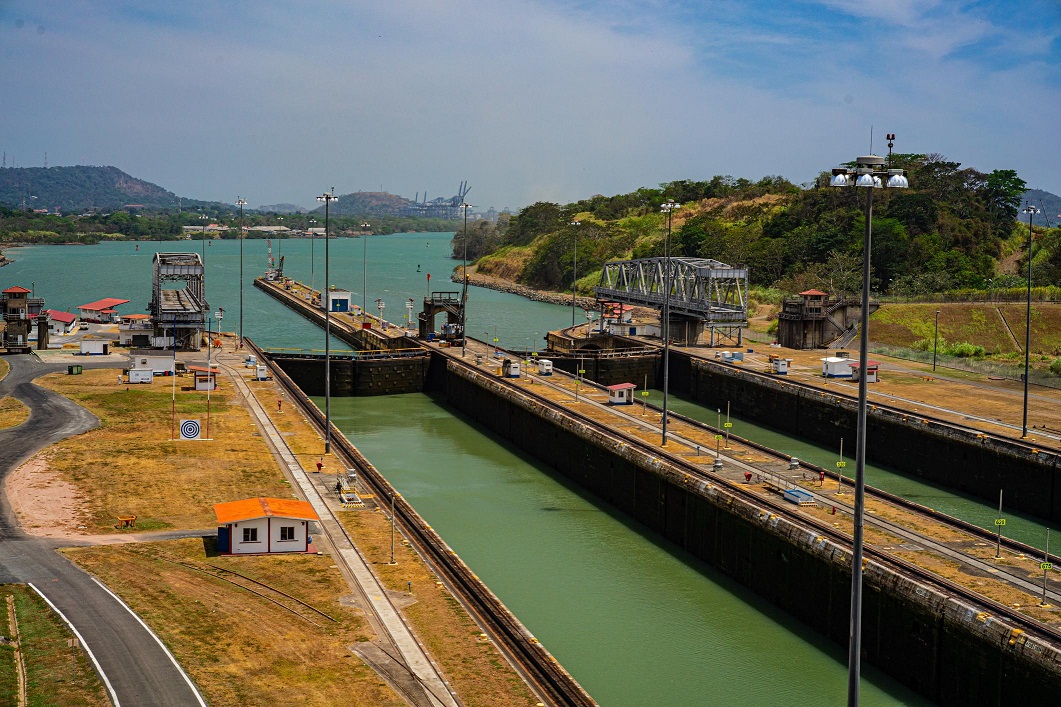
The Supreme Court of Panama’s announcement in late January that the laws underpinning CK Hutchison’s terminal concessions at either end of the Panama Canal are unconstitutional has opened a new and potentially protracted chapter in one of the most politically charged infrastructure disputes in the hemisphere.
At issue are the long-standing concessions held by Hutchison subsidiaries at Balboa (Pacific side) and Cristóbal (Atlantic side). These terminals have been central to Panama’s container transshipment model since the late 1990s and are deeply embedded in global liner networks. The court’s ruling does not, by itself, terminate the concessions. Instead, it invalidates the legal framework under which they were granted, creating a constitutional vacuum that now must be filled by legislative and executive action.
A dispute with geopolitical overtones
It is widely acknowledged in Panama City and Washington that the case gained momentum after Donald Trump publicly complained of “undue Chinese influence” over the canal and associated logistics assets, and went so far as to threaten that the United States could seek to “take it back” under US control. Those remarks effectively internationalised what might otherwise have remained a technical dispute over concession law.
For the Panamanian government, the court’s decision creates a delicate balancing act. On one hand, it must respect the judiciary’s finding that the original enabling legislation was unconstitutional. On the other, it must reassure global investors that Panama remains a predictable and rules-based hub for maritime trade. Any perception that concessions can be unravelled retroactively for political reasons would chill future port, rail and energy investments.
Legal complexity, commercial risk
From Hutchison’s perspective, the fight is far from over. The group is expected to argue that even if the enabling laws are invalid, its contractual and investment rights are protected under both Panamanian administrative law and international investment treaties. Arbitration, rather than domestic courts, could become the next battleground, particularly if Panama seeks to revoke or re-tender the terminals.
Shipping lines, meanwhile, are watching closely. Balboa and Cristóbal are not marginal assets; they are integral to east–west and north–south service strings. Operational uncertainty could force carriers to consider alternative hubs in Colombia, the Caribbean or Mexico, with knock-on effects for Panama’s logistics cluster and employment.
Domestic politics enters the frame
Inside Panama, the ruling has also energised nationalist voices who have long argued that strategic infrastructure should not be in foreign hands. For them, the court’s decision validates claims that the original concessions were rushed through with insufficient scrutiny. Business groups counter that Panama lacks the capital and expertise to run world-class container terminals on its own and warn that politicising the issue risks turning the country into a proxy battleground for US–China rivalry.
The government’s immediate task is to draft new legislation that can withstand constitutional challenge while preserving operational continuity. Transitional arrangements—allowing Hutchison to continue operating under revised terms—are one option. A competitive re-tender, potentially attracting US or European port operators, is another, but would almost certainly provoke legal retaliation from Hutchison.
More rounds likely
What is clear is that this will not be a short fight. The Supreme Court has settled one question—the constitutionality of the old legal framework—but raised many more about property rights, state authority and Panama’s strategic posture between great powers.
In that sense, the Hutchison case has become more than a ports dispute. It is a test of how Panama navigates its role as steward of one of the world’s most important trade arteries while caught between competing geopolitical narratives. With billions of dollars in trade flows and decades of investment credibility at stake, further legal and political rounds now look inevitable.